(Phnom Penh): If every plant in a field has nearly the same traits, management can be efficient and the harvest uniform. Yet a single pest, disease, drought, or heat event may affect many plants in similar ways.
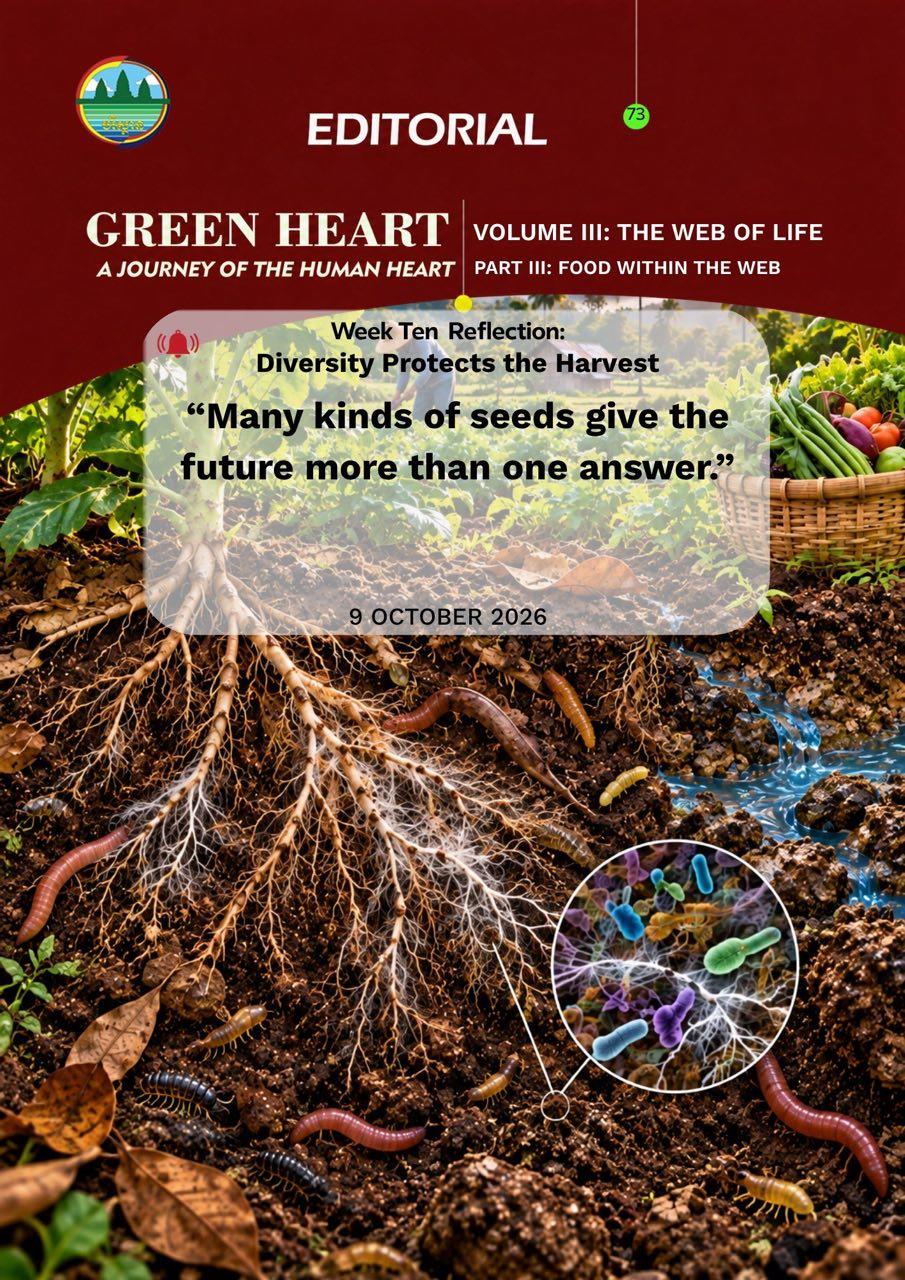
“Many kinds of seeds give the future more than one answer.”
Diversity can provide options. Different crop species, varieties, planting times, field locations, and farming practices may respond differently to stress. If one fails, another may perform better.
Genetic diversity within crops is especially valuable. Traditional varieties, modern varieties, wild relatives, and breeding collections contain traits related to taste, nutrition, disease resistance, water use, maturity, or climate tolerance.
Seed banks preserve samples under controlled conditions. Farmers also conserve diversity by growing, selecting, exchanging, and adapting seeds in fields. Both formal science and community practice contribute to food security.
Diversity does not mean planting everything everywhere. Farmers need crops suited to soil, climate, markets, culture, labor, and household needs. Too much complexity without support can make management difficult.
Landscape diversity matters too. Hedgerows, trees, ponds, grass strips, and uncultivated patches may support pollinators, pest predators, water management, and wildlife when thoughtfully designed. They can also harbor pests or take land from production, so placement and evidence matter.
Livestock and aquatic farming also depend on genetic and species diversity. Relying on a narrow range can increase vulnerability. Responsible breeding and conservation preserve future choices.
Food culture protects diversity when people value different grains, vegetables, fruits, fish, and recipes. When diets and markets become uniform, farmers may lose reasons to maintain less common varieties.
Students can help by asking elders about foods that were common in the past. A forgotten seed may carry both genetic value and family memory.
Diversity is not a guarantee against loss. It is a wider set of possibilities. In a future we cannot fully predict, possibilities are precious.
Protecting seed diversity is like keeping many keys. We do not know which door the next season will ask us to open.
Those keys should remain accessible. Conservation must respect farmer rights, community knowledge, and fair sharing of benefits when genetic resources contribute to new crops. Diversity protected without justice leaves an important relationship broken.
Home gardens, markets, school meals, and cultural festivals can keep uncommon foods in living use. A seed stored in a vault is protected differently from a seed still participating in cuisine and community.
Both forms of conservation strengthen one another when knowledge, seed access, and benefits are shared fairly.
Buddhist Reflection
Non-attachment allows us to avoid insisting on one solution forever. Wisdom preserves alternatives and adapts as conditions change. Diversity embodies this flexibility.
Today’s Reflection
Which local crop variety, food, or recipe might disappear if no one continues using it?
Today’s Action
Ask an older person about one traditional crop or variety. Record its name, use, season, and special qualities.
Today’s Pledge
Today I will respect diversity as memory, resilience, nourishment, and hope.
When we protect nature, we protect all beings, including ourselves.
=FRESH NEWS