(Phnom Penh): Military forces can seize control of territory in a relatively short period. But physical occupation does not automatically confer lawful sovereignty over the land.
The history of Battambang, Siem Reap and surrounding areas illustrates how territorial control has shifted over time—and how treaties, diplomacy and international pressure have helped resolve territorial disputes between France and Siam, now Thailand.
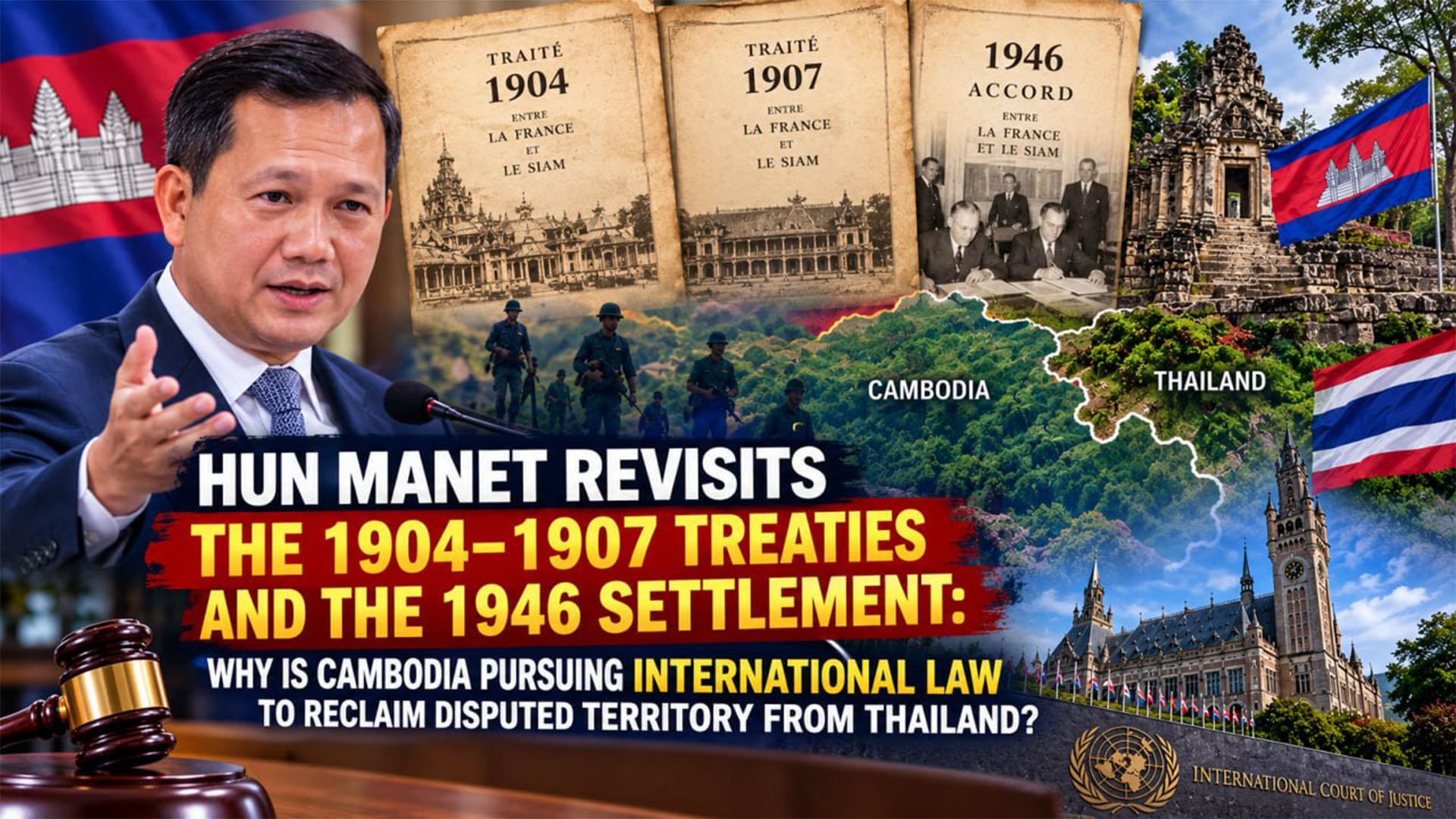
More than a century later, Cambodian Prime Minister Hun Manet has invoked that history to explain why his government continues to pursue diplomatic and legal avenues to recover territory it claims Thailand has occupied unlawfully, rather than risk another war.
Territorial Claims Require Legal Evidence
Speaking at a graduation ceremony for students of the University of Management and Economics in Battambang province, Prime Minister Hun Manet stressed that losing effective control of certain areas does not mean Cambodia has agreed to surrender them to Thailand.
He drew a distinction between physical control and lawful sovereignty, arguing that Cambodia has neither signed away the territory it claims nor abandoned the historical treaties and maps on which those claims are based.
“Losing control of certain places does not mean we have agreed to cede them,” he said.
“In practical terms, the two situations may look the same. We can no longer go there or gain access. But does that mean the other side has ownership? No.”
The prime minister said Cambodia was seeking only territory it considers its own under the 1904 Convention, the 1907 Treaty and their associated maps—not Thai provinces such as Surin or Buriram.
“We are not claiming Buriram or Surin,” he said. “We are asking only for what is provided under the 1904 Convention and the 1907 Treaty, together with the annexed maps.”
His remarks highlight a fundamental distinction in international law: effective territorial control and legal sovereignty are not necessarily the same.
A state's inability to exercise control over a particular area does not, by itself, establish that it has lost legal title. Equally, refusing to recognize another state's control is not sufficient, on its own, to prove sovereignty.
Territorial claims must be supported by applicable treaties, maps, historical records and other relevant legal evidence.
This raises two central questions: What historical and legal foundations support Cambodia's territorial claims, and how can diplomacy and international law help resolve disputes without triggering another armed conflict?
The answers require an examination of the 1904 Convention, the 1907 Treaty, the 1946 Franco-Siamese settlement, the International Court of Justice's judgments of 1962 and 2013, and the 2000 Memorandum of Understanding governing the survey and demarcation of the Cambodia–Thailand land boundary.
Together, these instruments provide important historical context, legal principles and diplomatic precedents. However, determining sovereignty over any particular disputed area still requires evidence specific to that location.
The 1904 and 1907 Treaties: Historical Foundations of the Cambodia–Thailand Boundary
In the early twentieth century, France, which administered Cambodia as a protectorate, and Siam concluded agreements that helped establish the territorial framework of their shared frontier.
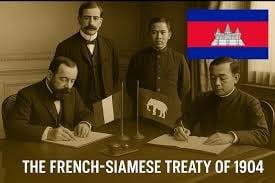
The Convention of February 13, 1904, established provisions for boundary delimitation and the work of a mixed boundary commission.
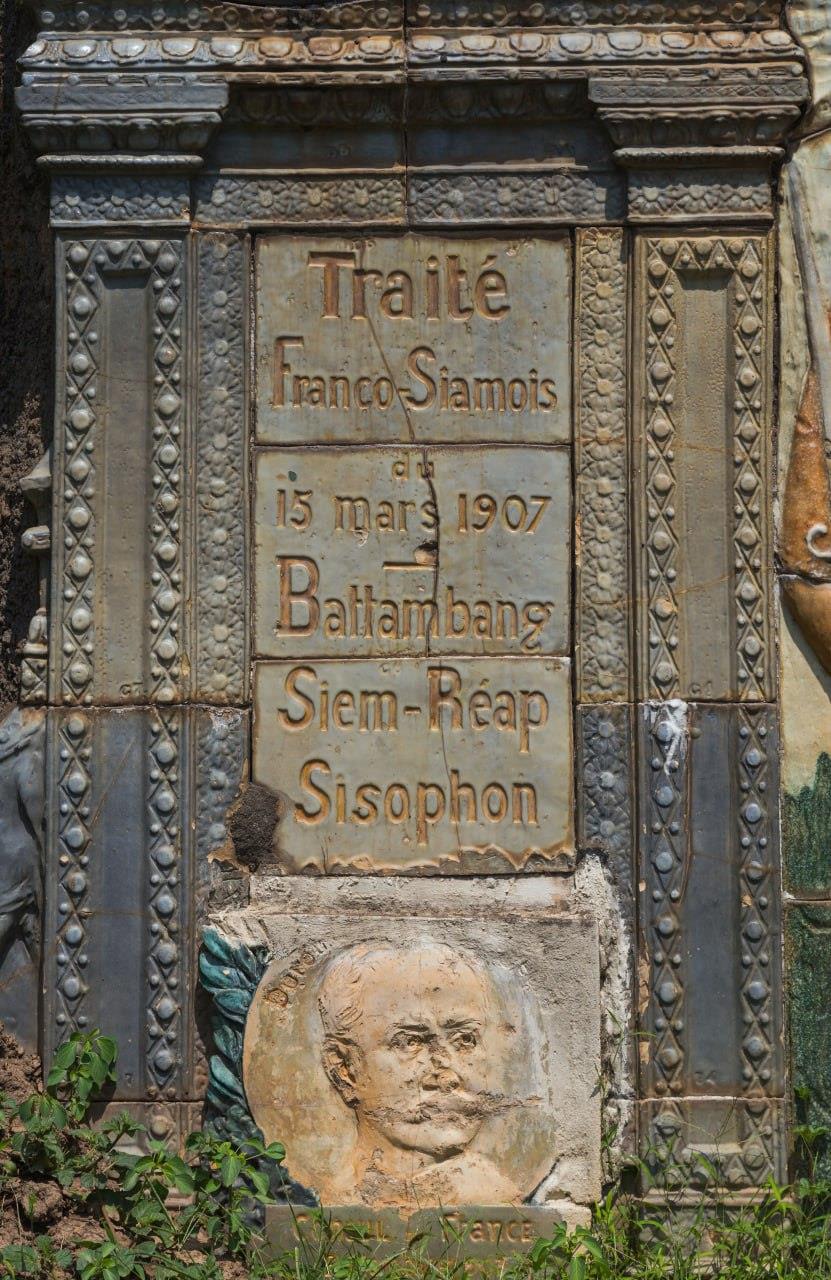
The Treaty of March 23, 1907, subsequently provided for an exchange of territories between France and Siam.
Under Article I of the 1907 Treaty, Siam ceded Battambang, Siem Reap and Sisophon to France. In exchange, France transferred other territories to Siam.
The arrangement brought these Cambodian provinces back under the administration of French-protected Cambodia.
Importantly, this territorial change resulted from a negotiated treaty rather than a Cambodian military campaign to recapture the provinces.
The 1904 and 1907 agreements remain relevant because they form part of the historical and legal documentation used in the present-day Cambodia–Thailand boundary process.
Their significance lies not simply in the territories exchanged at the time, but also in their continuing role as reference instruments for examining the location of the international boundary.
The 1946 Settlement: When Diplomacy Restored Territorial Administration
The history of Battambang and Siem Reap took another turn during the Second World War.
Following the 1940–1941 Franco-Thai War, and under Japanese pressure, France agreed to transfer several territories in Cambodia and Laos, including Battambang and Siem Reap, to Thailand.
The transfer was formalized under the peace treaty signed in Tokyo on May 9, 1941.
However, Japan's defeat in 1945 transformed the international political environment.
France subsequently sought the reversal of the wartime territorial settlement.
On November 17, 1946, France and Siam signed an agreement in Washington that annulled the 1941 territorial arrangements and provided for the restoration of the territories transferred during the war.
The agreement led to the return of the affected territories to French administration, including areas that are now part of Cambodia.
The 1946 settlement illustrates how territorial arrangements established under wartime conditions can subsequently be reversed through diplomatic negotiations and international agreements.
Hun Manet referred to this historical episode to explain Cambodia's decision to continue pursuing its territorial claims through diplomatic and legal channels.
His central argument was that the loss of effective territorial control at a particular moment does not necessarily mean the abandonment of a legal claim.
Nevertheless, the circumstances of 1946 differed substantially from those of today. Cambodia was still under French protection, and France—not an independent Cambodian government—negotiated the settlement with Siam.
The episode therefore demonstrates the potential value of diplomacy, but it does not guarantee that contemporary territorial disputes will produce similar outcomes.
The ICJ Judgments of 1962 and 2013: International Law and Sovereignty
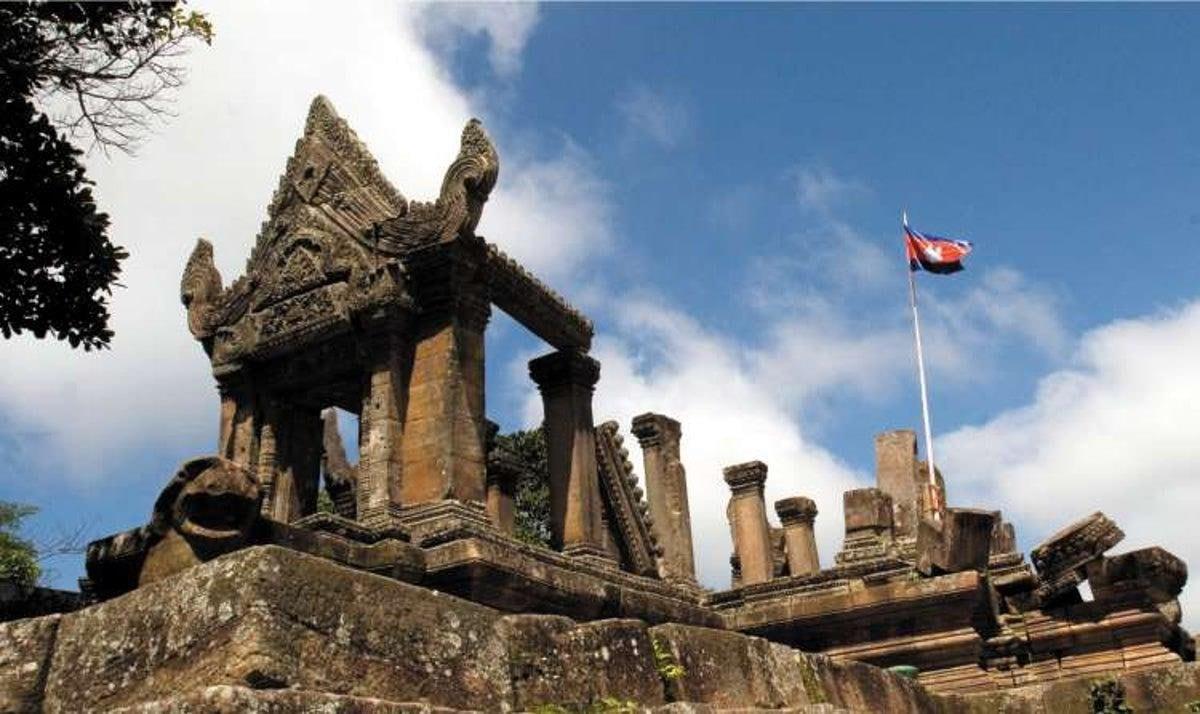
Another major example in Cambodia–Thailand relations is the dispute over the Temple of Preah Vihear.
On June 15, 1962, the International Court of Justice (ICJ) ruled that the temple was situated in territory under Cambodian sovereignty.
The Court also ordered Thailand to withdraw military or police forces, or other guards or keepers, stationed at the temple or in its vicinity on Cambodian territory.
The judgment examined several forms of evidence, including the Annex I map and the conduct of the parties in relation to that map.
On November 11, 2013, the ICJ interpreted its 1962 judgment, clarifying that Cambodia's sovereignty extended to the whole territory of the promontory of Preah Vihear, as defined by the Court.
The judgments demonstrate the importance that treaties, maps, state conduct and judicial interpretation can carry in territorial disputes.
They also illustrate a broader legal principle: effective control is not necessarily decisive where other evidence establishes lawful territorial sovereignty.
However, the two judgments must be understood within their specific geographical and legal scope.
The ICJ did not determine the entire Cambodia–Thailand boundary. Its rulings cannot automatically establish sovereignty over every other disputed area along the frontier.
Each territorial claim must be assessed on its own legal and factual merits.
The 2000 MOU and the JBC: From Historical Treaties to Modern Boundary Demarcation
One of the principal frameworks for addressing the Cambodia–Thailand land boundary is the Memorandum of Understanding signed in 2000 concerning the survey and demarcation of the land boundary.
The MOU refers to historical treaties, maps and related boundary documents as foundations for the two countries' joint technical work.
The Joint Boundary Commission (JBC) provides a bilateral mechanism for coordinating boundary surveys and demarcation activities.
Speaking in Battambang, Hun Manet referred to survey work involving boundary markers numbered 52 to 59 and reaffirmed the government's intention to continue using the JBC mechanism to address outstanding issues.
His remarks suggest that Cambodia intends to connect its territorial claims with existing legal documentation and technical boundary procedures.
The distinction between surveying a boundary, agreeing on its precise alignment and physically demarcating it is important.
Survey work in a disputed area does not automatically mean the parties have resolved their disagreement over sovereignty or the boundary's location.
Likewise, continued participation in the JBC process does not, by itself, amount to recognition of another state's territorial claims.
The key test is whether the commission can translate historical treaties, maps and technical findings into mutually accepted boundary arrangements that can be implemented on the ground.
That remains a central question for the future of Cambodia–Thailand boundary negotiations.
Why Legal Claims Can Take Time—but Still Matter
Military action may change territorial control quickly, but it can also bring renewed fighting, casualties, displacement and economic damage.
Moreover, acquiring physical control through force does not automatically create lawful sovereignty.
Diplomacy, boundary surveys and international legal processes generally take longer.
They require the examination of treaties, maps, historical records and competing interpretations, as well as negotiations over how any eventual agreement will be implemented.
Nor do these processes guarantee that either party will obtain everything it claims.
In Battambang, Hun Manet defended his government's decision to continue pursuing territorial claims through diplomacy and law, emphasizing that avoiding an immediate military confrontation should not be interpreted as abandoning Cambodia's position.
“We are still fighting, but we are fighting through diplomacy and legal means to reclaim what we seek,” he said.
“Some people say the territory has already been lost. No. As long as we have not signed an agreement recognizing or ceding it, we will continue to defend our legal position.”
He referred to the historical settlements of 1907 and 1946, while expressing the hope that Cambodia would not have to wait decades—or even years—to resolve its present disputes.
“We want to resolve the matter,” he said. “That is why we continue our efforts and diplomatic pressure. We understand that without agreement, fighting could continue endlessly.”
His remarks underscore the government's stated commitment to pursuing legal and diplomatic mechanisms even when the timetable for a settlement remains uncertain.
But the absence of an agreement to cede territory is not, by itself, conclusive proof of sovereignty.
The legal strength of each claim must still be established through treaties, maps and other evidence relevant to the disputed location.
For that reason, the effectiveness of Cambodia's approach should be measured through verifiable developments: the preservation of evidence, formal diplomatic protests, progress in boundary surveys and agreements that can be implemented in practice.
For communities living along the frontier, the stakes go beyond the precise location of a boundary line.
They include physical security, the possibility of returning home, access to land and the restoration of livelihoods.
A durable settlement must therefore address both territorial rights and the human consequences of prolonged instability.
The legal path may be slower, but its potential value lies in producing a defensible and implementable outcome while reducing the risk of renewed bloodshed.
Conclusion: Territorial Claims Require Evidence; Peace Requires Responsibility
From the 1904 and 1907 treaties to the 1946 settlement and the ICJ judgments of 1962 and 2013, history demonstrates the important role of international law and diplomacy in addressing territorial disputes between Cambodia and Thailand.
These precedents show that legal and diplomatic processes can produce meaningful results, but they do not guarantee success in every contemporary territorial claim.
Hun Manet's remarks in Battambang reaffirmed his government's commitment to pursuing the territory Cambodia claims through diplomatic and legal means.
Ultimately, however, the effectiveness of that commitment will depend on credible evidence, sustained negotiations and measurable outcomes.
Defending sovereignty is not measured solely by military strength. It also depends on a state's ability to establish and protect its legal rights—and to seek a lasting settlement that safeguards both territory and human lives.