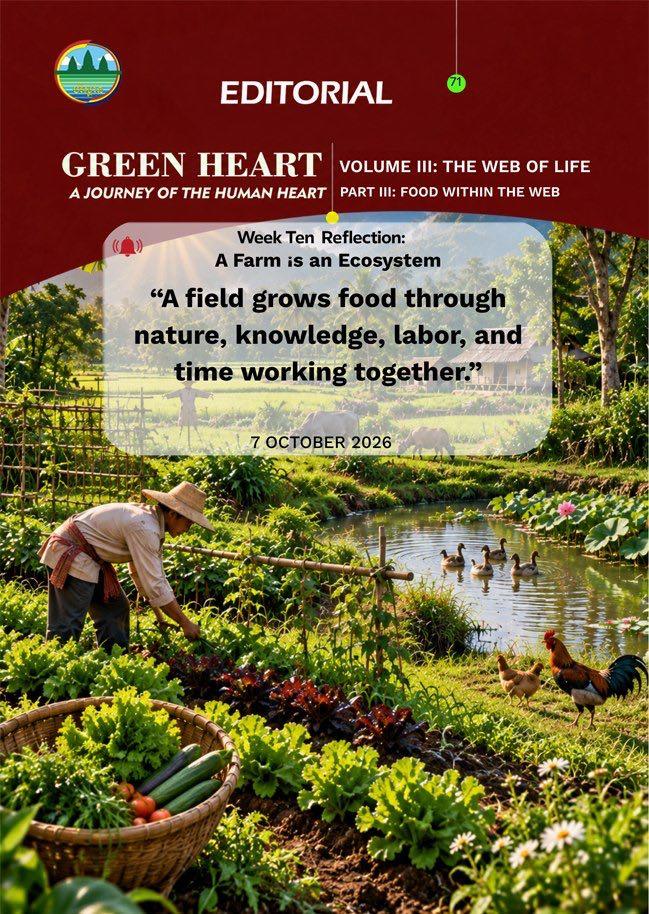
(Phnom Penh): A farm is designed to produce food, fiber, or other useful goods, but it remains an ecosystem. Crops, livestock, insects, weeds, microorganisms, soil, water, air, and people interact within it.
“A field grows food through nature, knowledge, labor, and time working together.”
Farmers guide many of these relationships. They choose crops, prepare soil, manage water, control pests, harvest, and respond to weather. Their decisions influence energy flow, nutrient cycles, habitat, and biodiversity.
Agriculture often simplifies natural ecosystems to make production efficient. A field may contain one crop over a large area. This can support reliable management, but it may also increase vulnerability to particular pests, diseases, erosion, or market changes if safeguards are absent.
Farm diversity can take many forms: crop rotations, mixed farming, trees with crops, livestock integration, habitat strips, varied crop genetics, or different fields across a landscape.
The best combination depends on climate, soil, culture, labor, markets, and food needs.
Inputs such as fertilizer, pesticides, machinery, irrigation, and improved seeds can raise production and protect crops. Misuse or overuse can harm soil, water, health, beneficial organisms, and farm finances.
Responsible agriculture uses the right input, amount, timing, and method based on evidence.
Farms are workplaces and homes. Environmental recommendations must respect farmer knowledge, safety, income, land rights, and the need to feed families. A practice that is scientifically promising but unaffordable or impractical will not endure.
Consumers participate in farm ecosystems through what we buy, accept, and waste. Demanding perfect-looking food may increase waste. Paying fairly, valuing seasonal foods, and supporting credible sustainable practices can help where choices exist.
Climate change adds uncertainty through heat, rainfall shifts, drought, floods, and pests. Resilient agriculture combines research, local knowledge, diversified strategies, insurance or support systems, and healthy natural resources.
Look at a field not as a factory floor, but as a managed web of life. The farmer is not controlling every thread. The farmer is making daily decisions within weather, biology, markets, and human needs.
Respect for food begins with respect for this complexity.
That respect should be expressed in policy as well as words. Access to trustworthy advice, credit, insurance, markets, storage, and fair prices can give farmers room to choose practices that protect long-term health instead of being forced toward immediate survival.
Young people can honor agriculture by listening before recommending. A farmer’s decision may reflect risks invisible from the classroom. Respectful questions create a bridge where science, experience, and new ideas can meet.
Buddhist Reflection
Right livelihood seeks to support life without unnecessary harm. Farming reveals how difficult and meaningful that practice can be. Compassion should extend to consumers, workers, farmers, animals, and the land together.
Today’s Reflection
Which ecological relationship does a farmer manage in order to grow food?
Today’s Action
Choose one crop and map its needs: soil, water, climate, nutrients, pollination, pest management, labor, and market.
Today’s Pledge
Today I will honor farmers and the living systems that make every harvest possible.
When we protect nature, we protect all beings, including ourselves.
=FRESH NEWS