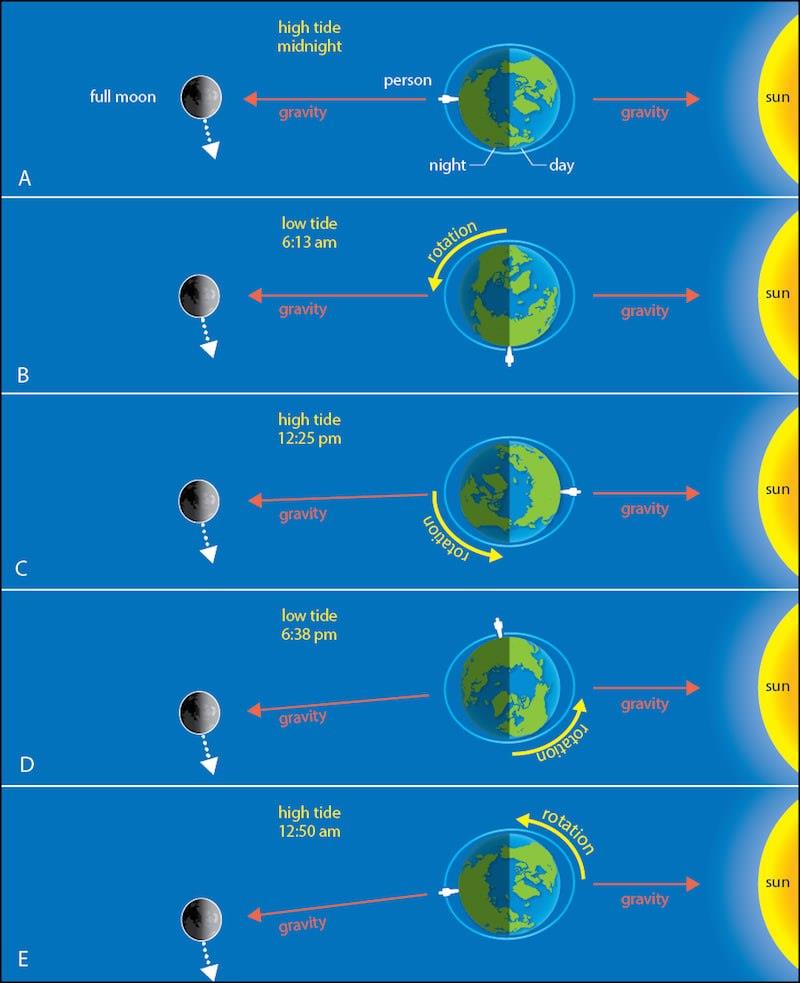
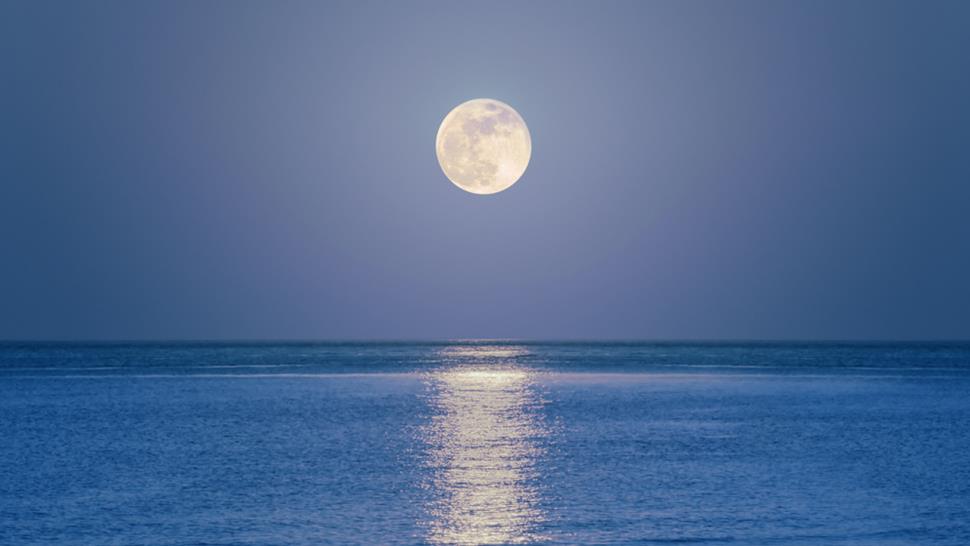
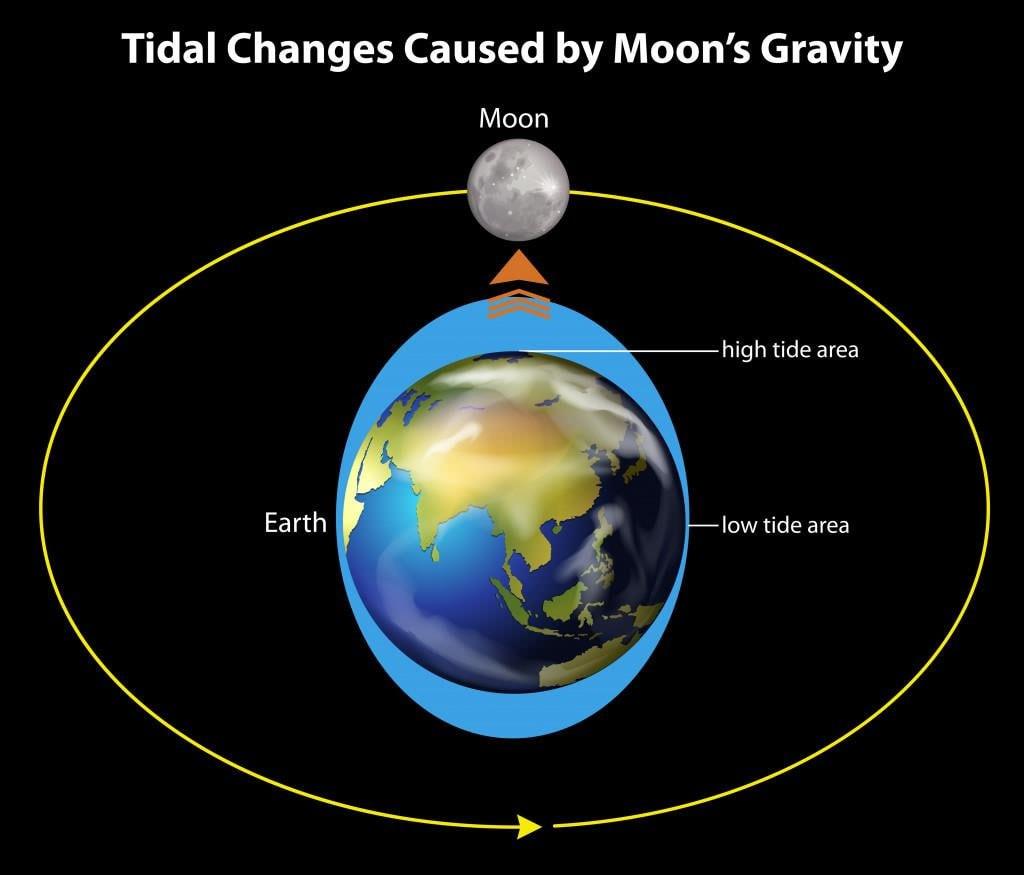
(PHNOM PENH): We know that the Moon’s gravity pulls on Earth’s oceans, producing the rise and fall of the tides.
But the Moon does not pull only on water. Its gravitational force also acts on the solid Earth, causing it to deform slightly.
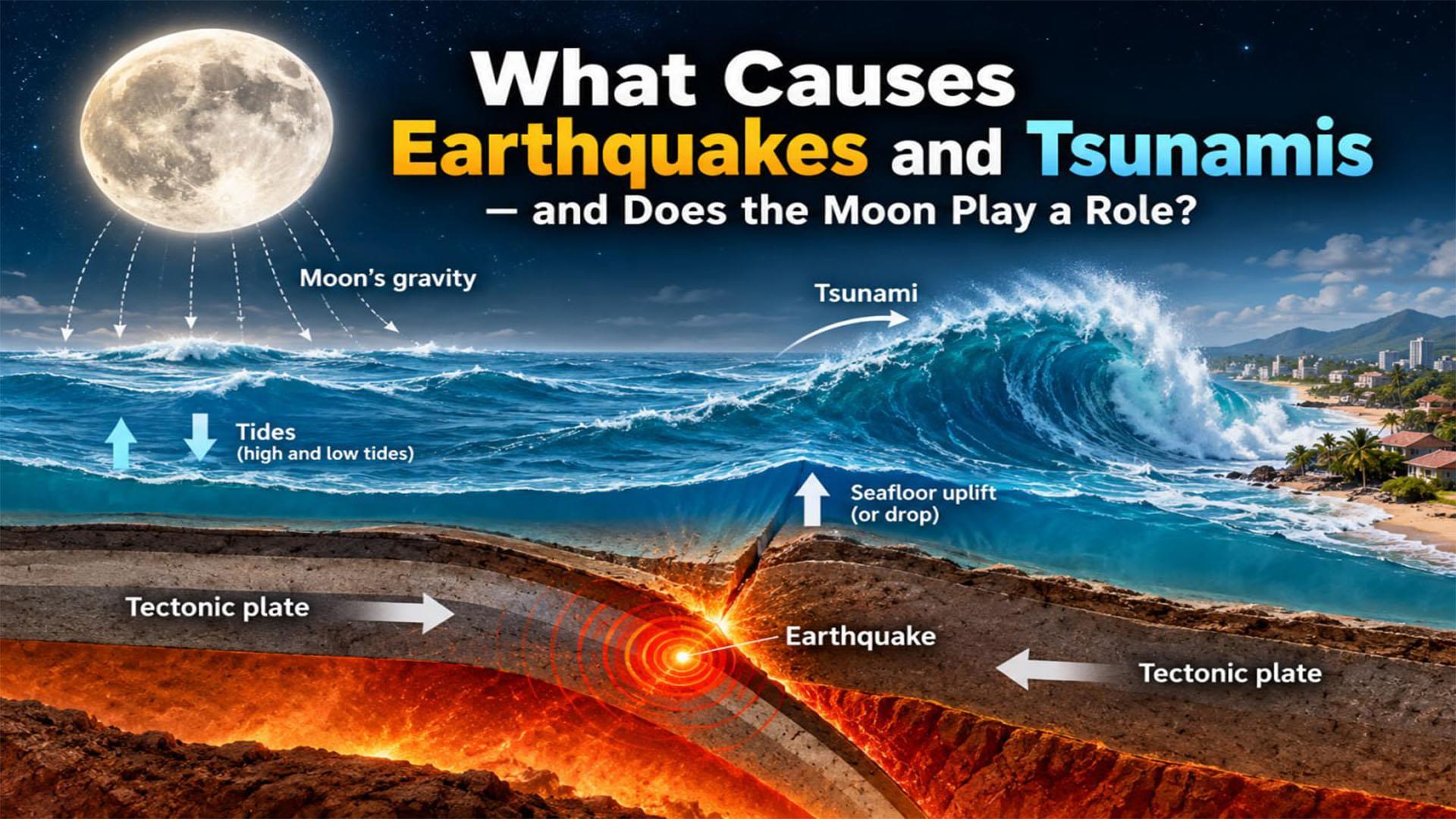
This raises an intriguing question: If the Moon can pull on both the oceans and the solid Earth, can its gravity help trigger earthquakes? And if an earthquake occurs beneath the ocean, can it generate a tsunami?
The scientific answer is nuanced: The Moon does affect the Earth, but it is not the primary cause of earthquakes.
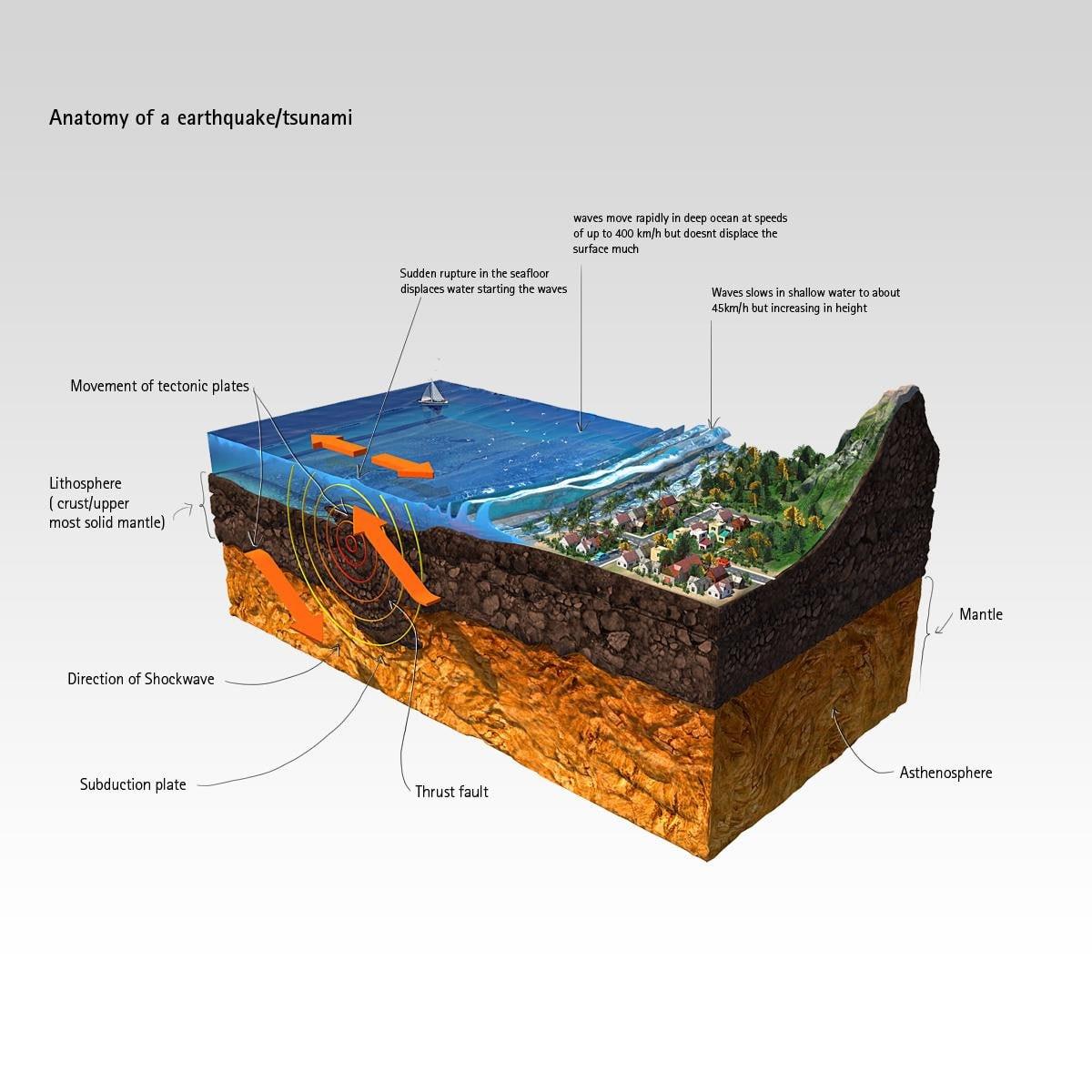
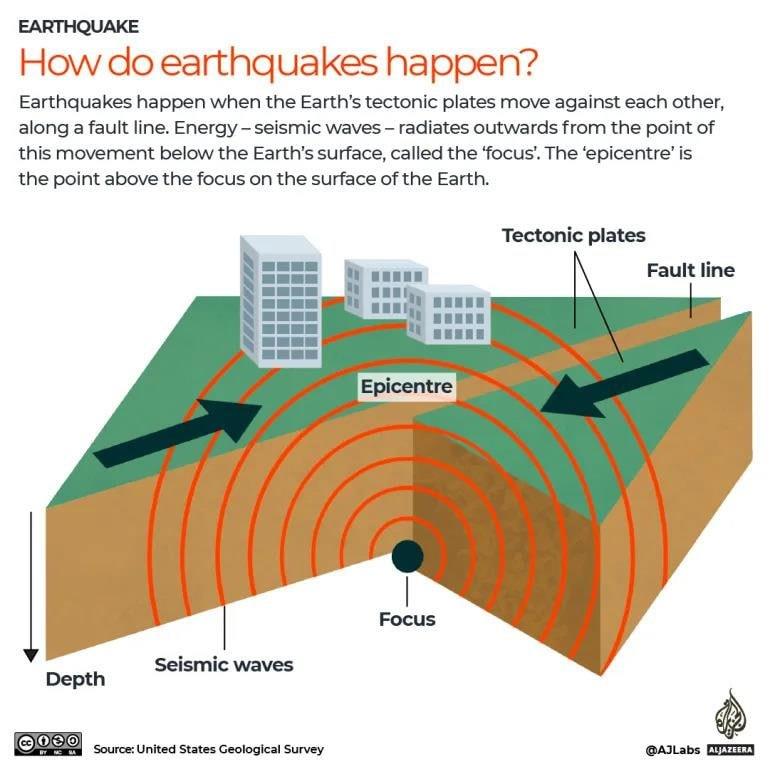
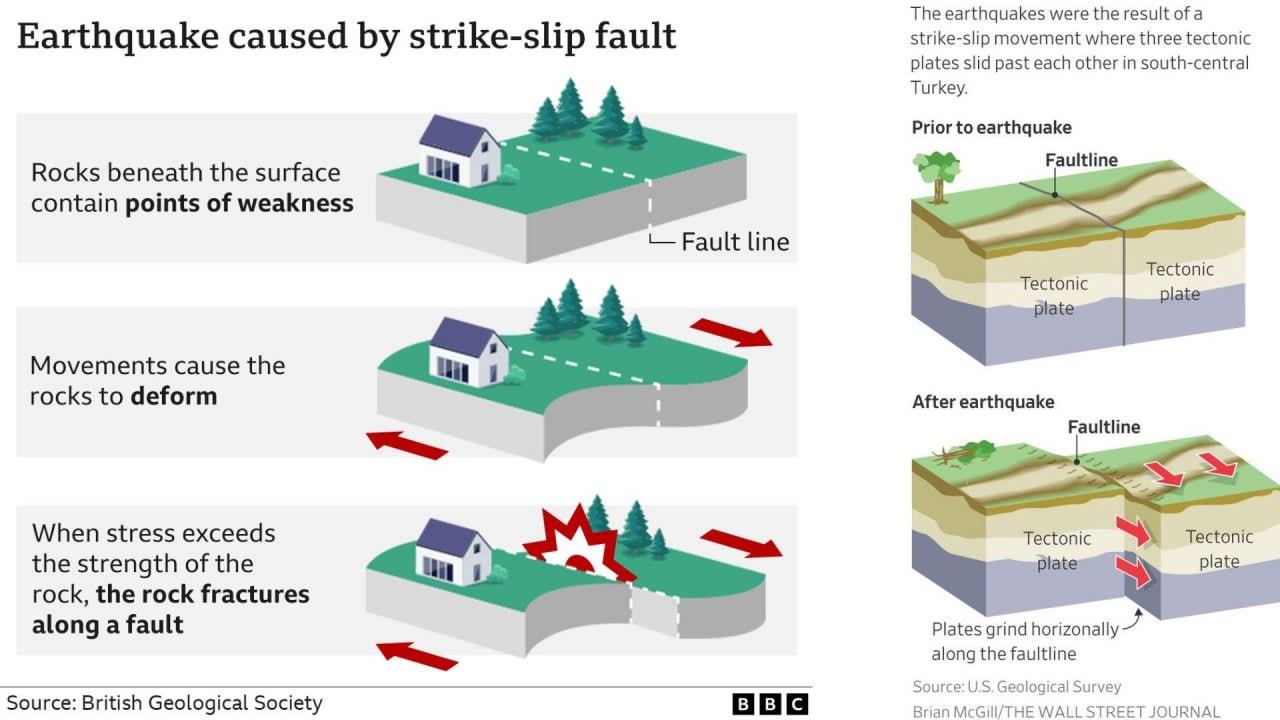
Most earthquakes are driven by the movement of tectonic plates. As these plates move, stress can build up in rocks along faults over decades, centuries or even longer. When the accumulated stress overcomes the friction holding the rocks in place, the fault can suddenly slip, releasing energy and producing an earthquake.
The gravitational forces of the Moon and the Sun, meanwhile, can produce small changes in stress within the Earth’s crust, known as tidal stress. Under certain conditions, these small stress changes may influence the timing of slip on a fault that is already close to failure. But this effect cannot be used to predict exactly where or when an earthquake will occur.
Why Does the Earth Shake?
The Earth’s rigid outer layer is divided into enormous sections known as tectonic plates, which are constantly moving, although usually only very slowly.
In some places, rocks along the boundaries or faults can become locked by friction even as tectonic motion continues. As a result, stress—compression, tension or shear—can gradually build up in the surrounding rocks for decades or centuries.
Eventually, if the accumulated stress becomes strong enough to overcome friction, the rocks along the fault can suddenly slip.
That sudden movement releases energy in the form of seismic waves, which travel through the Earth and cause the ground to shake.
That is an earthquake.
The Moon Pulls on More Than Just the Oceans
The gravitational forces of the Moon and the Sun cause ocean tides.
But their gravitational pull also affects the solid Earth. The ground beneath us can rise, fall and deform slightly in response to these forces—a phenomenon known as Earth tides, or solid-Earth tides.
In other words, although the ground beneath our feet appears completely solid and motionless, the Earth is not perfectly rigid. It can deform slightly under the gravitational influence of the Moon and the Sun, even though these changes are too small for us to notice directly.
Can the Moon Trigger an Earthquake?
Scientists do not consider it accurate to say that “the Moon causes earthquakes.” The main driver of most earthquakes is tectonic motion and the resulting buildup of stress in rocks along faults.
However, some scientific studies have found that tidal stress, produced by the gravitational pull of the Moon and the Sun, may have a small influence on certain faults that are already very close to slipping.
Think of a glass that is almost full of water.
The stress generated by long-term tectonic motion is like water being added to the glass little by little over decades or centuries.
If tidal stress has an effect, it can be compared to a tiny final drop added to a glass that is already nearly overflowing. The final drop did not fill the entire glass; it may simply help determine when the water spills over.
Similarly, the Moon is not the primary cause of the accumulated tectonic stress that produces most earthquakes. Under particular conditions, tidal forces may act only as a small additional influence on a fault that is already close to slipping.
From an Earthquake to a Tsunami
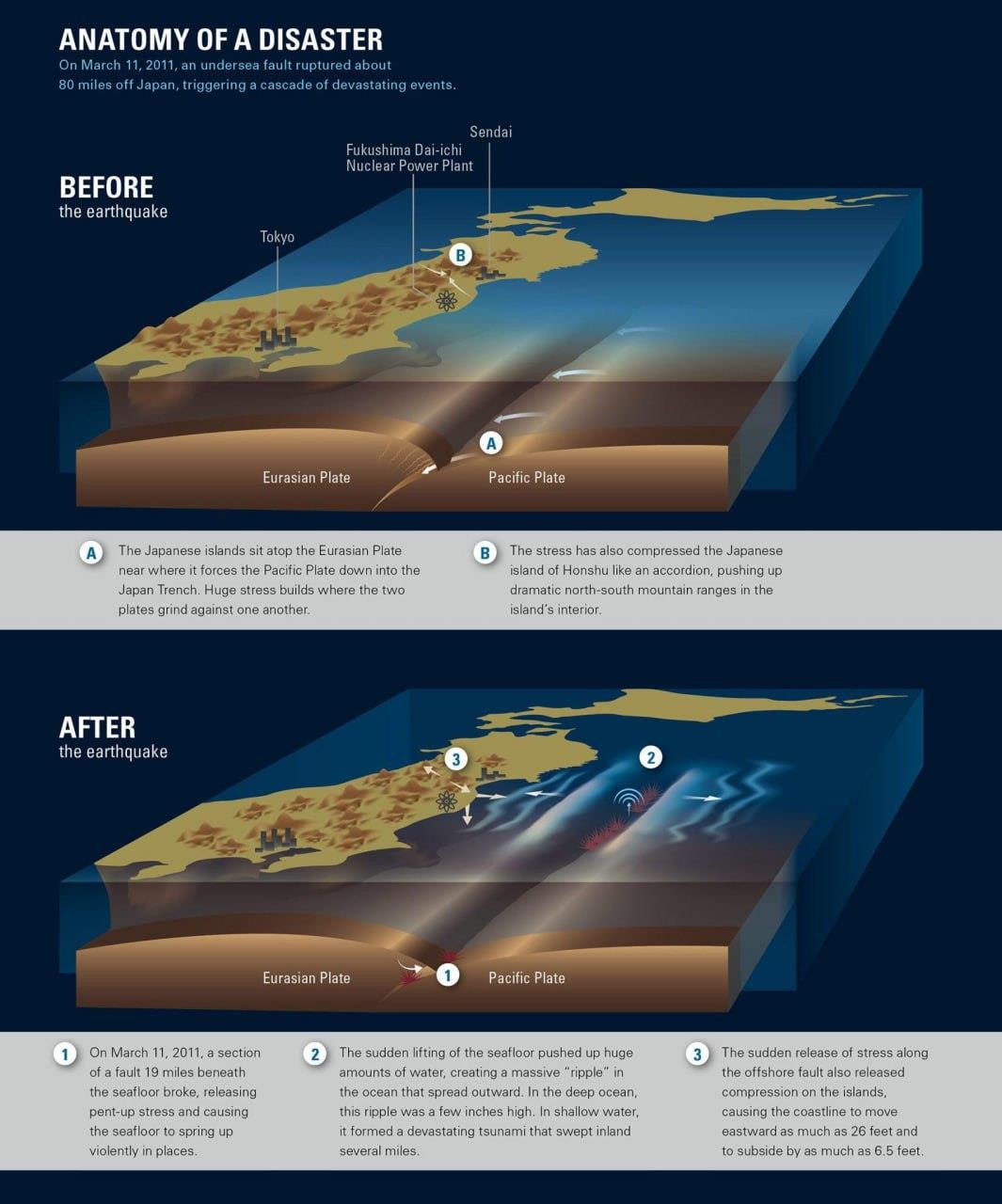
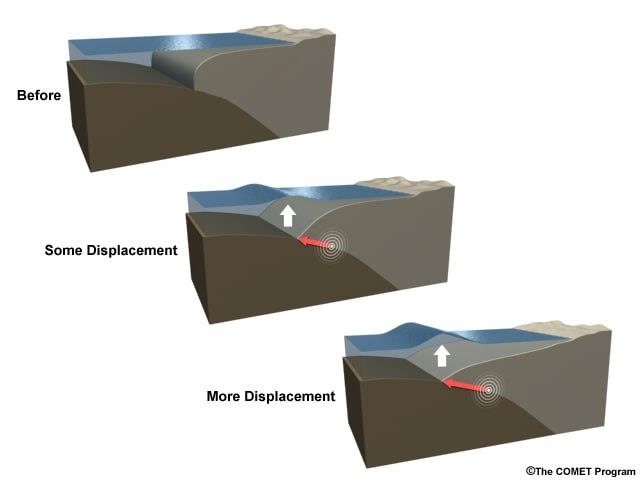
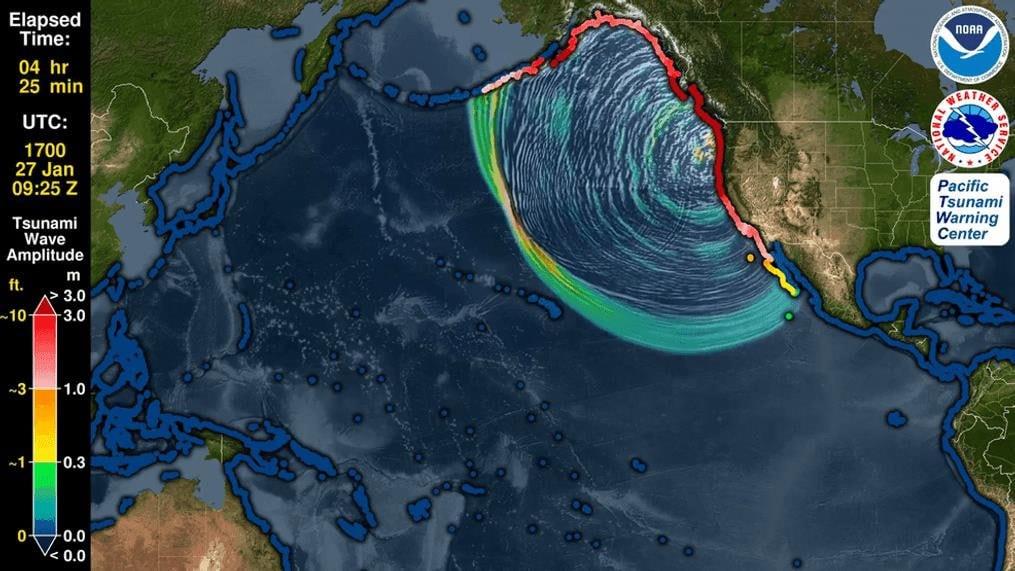
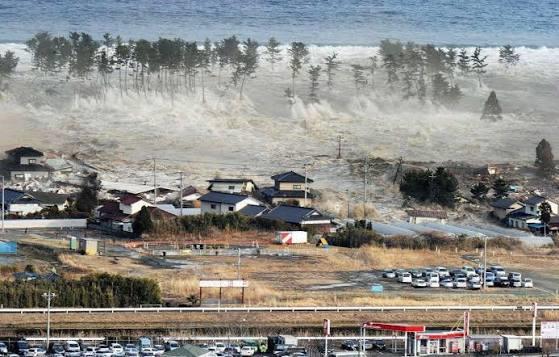
If a powerful earthquake occurs beneath the ocean and suddenly lifts or lowers a large area of the seafloor, it can displace an enormous volume of seawater and generate a tsunami.
The process can be summarized as:
Tectonic movement → Earthquake → Sudden seafloor displacement → Displacement of a large volume of seawater → Tsunami
However, not every undersea earthquake generates a tsunami. Generally, the earthquake must be strong enough and cause significant, rapid displacement of the seafloor—particularly vertical displacement—to move a large volume of water.
The Moon, by contrast, produces the regular rise and fall of ocean tides through its gravitational pull. It is not the direct cause of tsunamis.
Conclusion
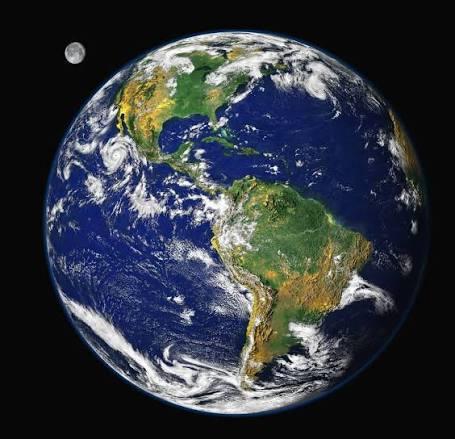
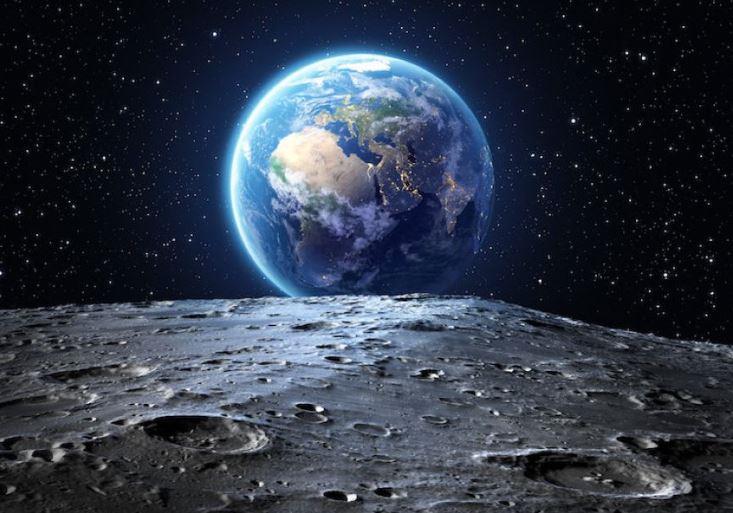
The Earth and the Moon are closely connected through gravity. The Moon pulls on the oceans, helping produce tides, and its gravitational force also causes small deformations of the solid Earth.
But the Moon is not the primary cause of earthquakes. The main process is tectonic: the movement of Earth’s plates causes stress to accumulate in rocks along faults. When that stress becomes sufficient to overcome friction, the fault may suddenly slip, releasing energy as an earthquake.
And when a powerful undersea earthquake causes a large, sudden displacement of the seafloor, the movement can displace a huge volume of seawater and generate a tsunami.
The key point to remember is:
“The Moon can pull on both the oceans and the solid Earth, but tectonic processes are the primary driver of earthquakes—and major undersea earthquakes that displace the seafloor can generate tsunamis.”