(Phnom Penh): A predator captures and eats another organism, called prey. The relationship may seem simple, but its effects reach beyond the meal.
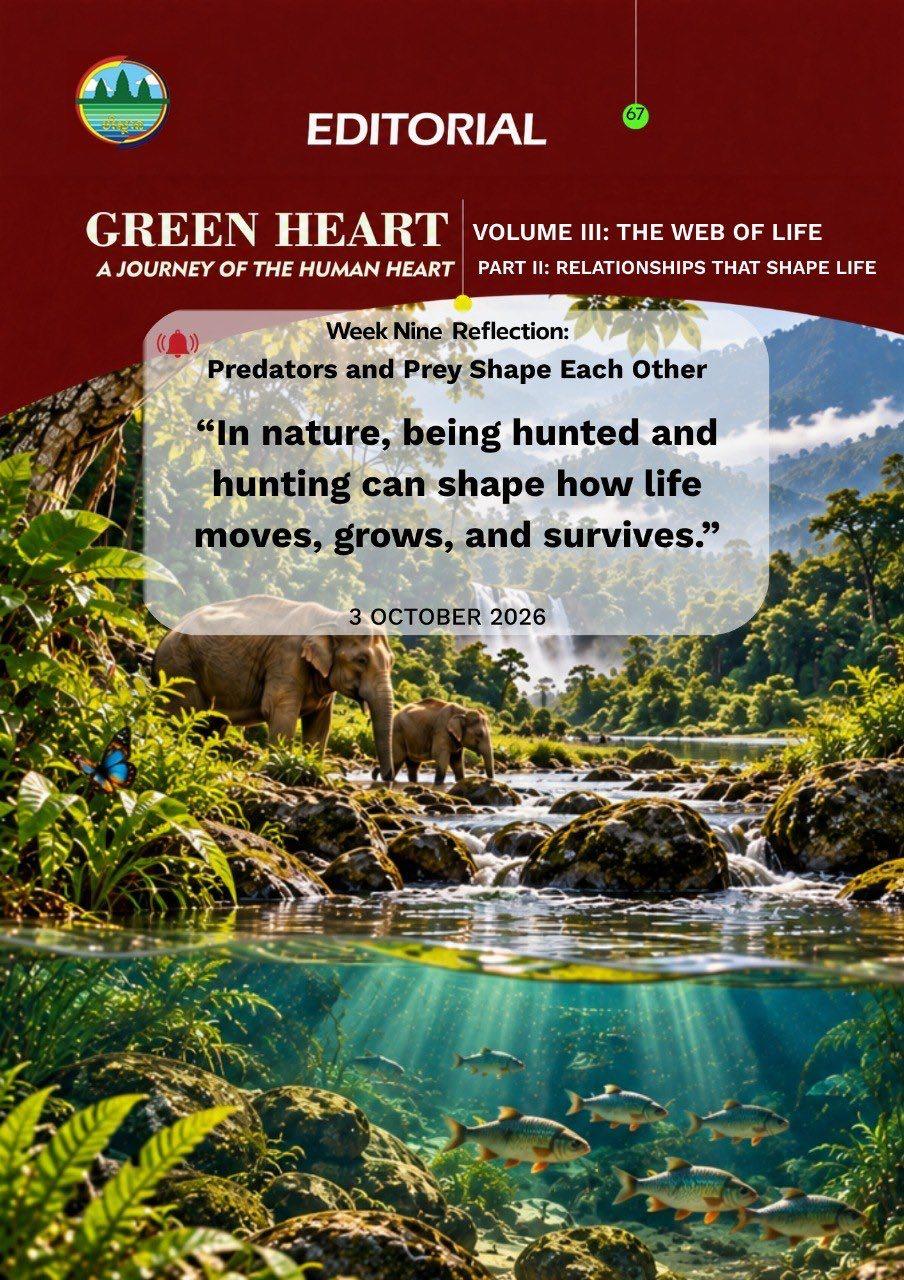
“In nature, being hunted and hunting can shape how life moves, grows, and survives.”
Predators can influence prey abundance, behavior, movement, and habitat use. Prey develop defenses such as camouflage, speed, warning colors, armor, group behavior, or vigilance. Across generations, each side can influence the evolution of the other.
Predators do not always control prey populations. Food, disease, weather, habitat, competition, and human activity also matter. Removing a predator may allow some prey to increase, but results vary among ecosystems. Simple stories should be tested with evidence.
Predators can affect plants indirectly. If herbivores change their numbers or where they feed, vegetation may respond. Such effects through several feeding levels are called trophic cascades. They are well documented in some systems but not equally strong everywhere.
Prey are not failures, and predators are not villains. Both pursue survival. A hawk feeding a chick, a spider catching an insect, or a fish chasing smaller fish participates in energy flow.
Human predator conflict is difficult. Large carnivores may threaten livestock, pets, or people. Compassion must include affected families. Solutions may involve secure enclosures, guarding, compensation, warning systems, habitat planning, and carefully managed intervention.
Killing predators without understanding can disrupt ecosystems and may not solve the underlying problem. Protecting predators without addressing community safety can create resentment. Wise coexistence requires evidence, fairness, and local participation.
Students should never approach predators, nests, dens, or captured animals. Observation through signs, reliable videos, or expert guidance is enough.
Predation teaches that ecological roles cannot be judged by human comfort alone. The life of one animal depends on the death of another, yet the system can remain healthy.
Compassion in nature is not pretending that no creature suffers. It is refusing to add unnecessary suffering while respecting the processes through which wild communities continue.
Predator research can improve coexistence. Tracks, camera traps, livestock-loss records, and movement data help identify patterns. When responses are based on evidence rather than fear, communities can target prevention and avoid harming animals that were not causing the problem.
Education also reduces mistaken identity. Harmless species are sometimes killed because they resemble dangerous ones. Learning local wildlife, keeping safe distance, and contacting trained authorities protect both human safety and ecological roles.
Understanding replaces panic with preparation, which is safer for everyone sharing the habitat.
Buddhist Reflection
The natural fact of predation reminds us that life includes unavoidable difficulty. Compassion does not deny reality. It guides human choices toward the least unnecessary harm and the greatest possible wisdom.
Today’s Reflection
How can a predator influence prey even when it does not catch them?
Today’s Action
Research one local predator and make a diagram of its prey, competitors, habitat, and one coexistence measure.
Today’s Pledge
Today I will replace simple judgment with careful understanding of nature’s difficult relationships.
When we protect nature, we protect all beings, including ourselves.
=FRESH NEWS