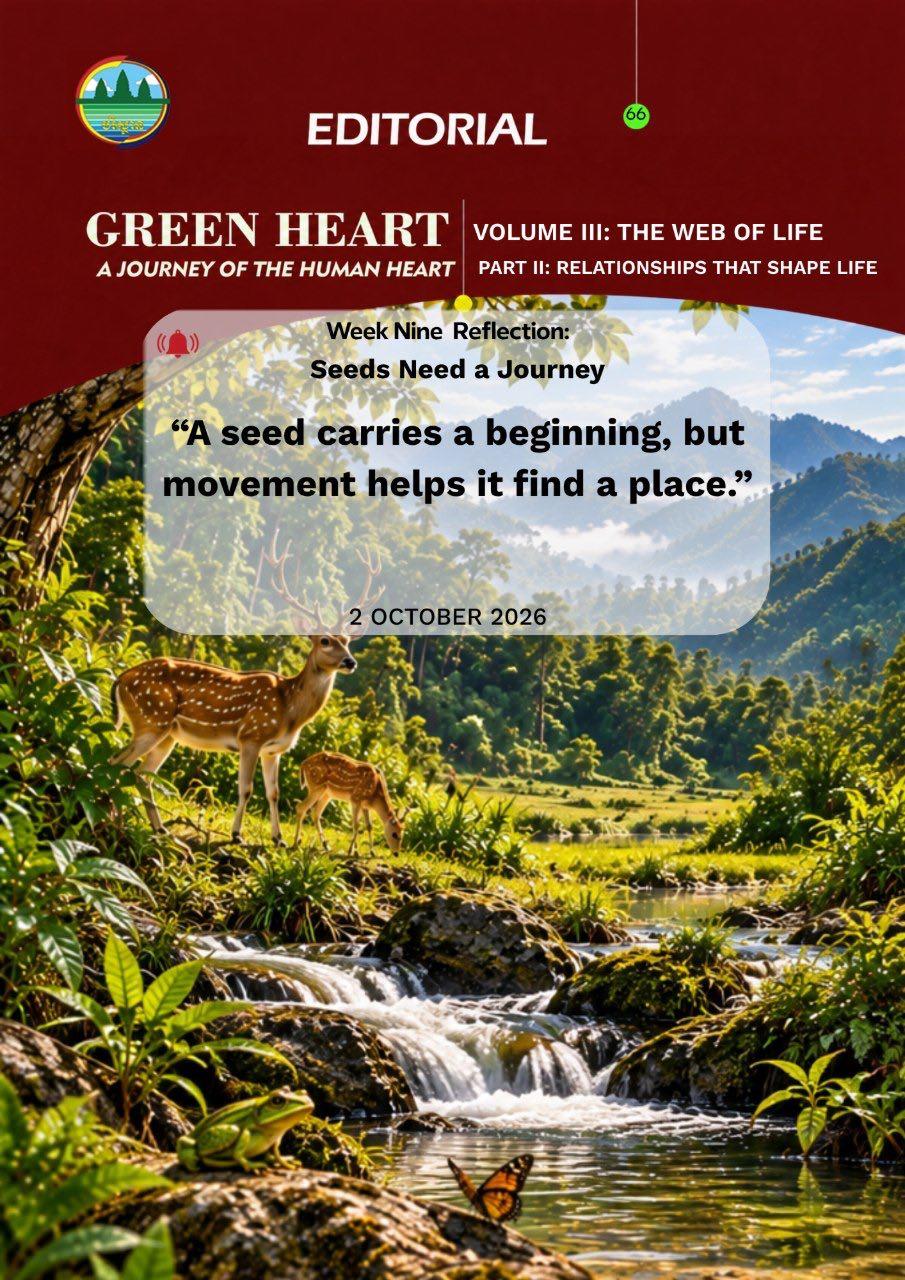
(Phnom Penh): If every seed fell directly beneath its parent, seedlings would compete intensely for light, water, nutrients, and space. Many plants therefore rely on dispersal to move seeds away.
“A seed carries a beginning, but movement helps it find a place.”
Wind carries light or winged seeds. Water moves floating seeds along rivers and coasts. Some fruits attach to fur or clothing. Others are eaten by animals, and their seeds later pass through or are dropped. Ants, rodents, birds, bats, fish, and many other animals can become dispersers.
Plants also move seeds by themselves. Pods may split suddenly and throw them. Gravity drops heavy fruit downhill. Human beings deliberately transport crop, garden, and forestry seeds and sometimes move unwanted species accidentally.
Dispersal does not guarantee survival. A seed must arrive where temperature, soil, moisture, light, disturbance, and competition allow germination and growth. Most seeds do not become mature plants. Producing many seeds is one strategy for facing this uncertainty.
Seed dispersal connects wildlife protection with forest recovery. If large fruit-eating animals decline, plants with large seeds may lose important carriers. A forest may still look green while its future composition quietly changes.
Fragmented habitats create barriers. A bird may cross an open field that a small ground animal cannot. Restoring corridors or stepping-stone habitats can help dispersers move and carry plants with them.
People must move seeds responsibly. A beautiful plant introduced outside its native range may spread and displace local species. Clean equipment, careful trade, quarantine, and informed planting help reduce invasive-species risks.
Seeds also carry genetic diversity. Movement between plant populations can support gene flow, though effects depend on species and context. Isolated populations may become more vulnerable over time.
Hold a fallen seed and imagine its possible routes. It contains stored resources, genetic instructions, and a chance, not a promise. Its future depends on movement and place.
We often praise roots for staying, but ecosystems also depend on journeys. Life continues through both belonging and the courage to travel.
Seed journeys can outlast the animal or wind that carried them. A seed may remain dormant until rainfall, fire, light, or temperature creates the right conditions. Movement and waiting are both strategies, reminding us that beginnings do not follow one timetable.
Seed banks in soil can help vegetation recover after disturbance. Yet if invasive seeds dominate or native sources are lost, recovery may follow another path. What waits underground can shape the visible future.
Buddhist Reflection
Causes need suitable conditions before potential becomes reality. A seed contains possibility, but soil, water, time, and place determine what unfolds. Human potential also needs supportive conditions and wise guidance.
Today’s Reflection
Which animal or physical force helps a local plant’s seeds travel?
Today’s Action
Collect only already-fallen seeds where permitted. Sort them by likely dispersal method without planting or moving them elsewhere.
Today’s Pledge
Today I will respect the journeys that help plants find their future.
When we protect nature, we protect all beings, including ourselves.
=FRESH NEWS