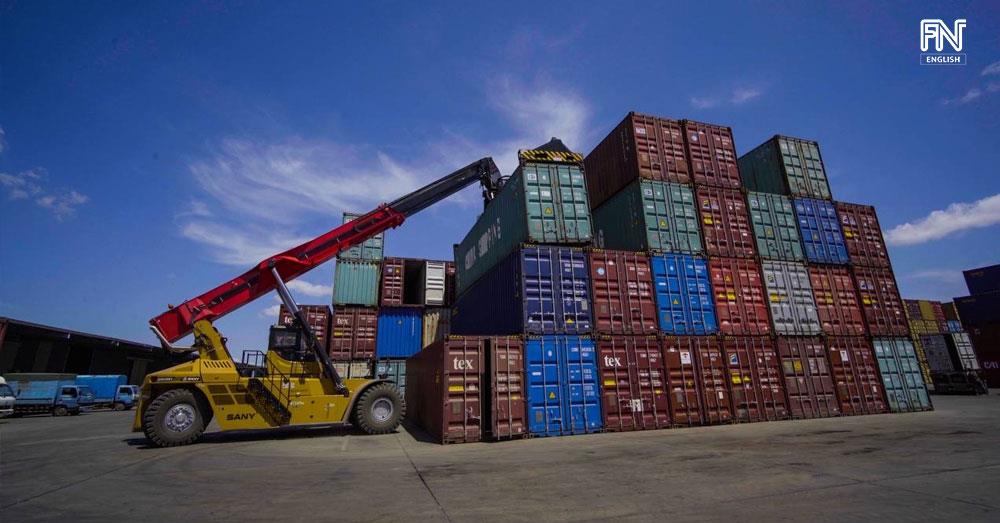
(Phnom Penh): Cambodia’s trade movement is increasing. Sihanoukville Autonomous Port handled nearly 1.35 million TEUs in 2025, up 30.6 per cent from the previous year, while Phnom Penh Autonomous Port handled more than 600,000 TEUs, up 25 per cent.
Together, the figures show the growing volume of goods moving through two of Cambodia’s major ports.
The increase in container traffic also means more import and export transactions moving through the customs process. The route, however, can differ from one shipment to another.
A customs declaration may be assigned to a green route and move ahead with fewer checks, while another may be assigned to a yellow route and require additional document review before the process continues.
For importers and exporters, each shipment may take a different route through customs. But when customs duties become due, the business still needs to decide whether to use its own funds or financing for the payment.
The Green Shipment Moves Ahead
A green result generally means fewer checks are required at that stage of the customs process.
For businesses handling international shipments, this can reduce the steps involved before the transaction moves forward and provide greater certainty around delivery and inventory planning.
However, a green result does not remove the financial obligations attached to the shipment. Customs duties and other eligible payments still need to be managed as part of the transaction.
The Yellow Shipment Takes Another Step
A yellow result means additional document review is required before the customs clearance process can move forward. This does not necessarily indicate a problem with the shipment, but it adds another step and may affect the timing of the transaction.
For businesses managing regular international shipments, that additional step can influence when related payments and other transaction requirements need to be handled.
Even with an additional customs step, how an eligible customs-related payment is funded remains a business decision.
This allows the financing choice to be considered separately from the customs route itself.
The Payment Decision Remains
Customs duty is one of several costs businesses need to manage when moving goods across borders.
How that payment is funded, however, is a decision the business can make based on the transaction and its priorities at the time.
Having sufficient funds does not mean they must always be used for the customs payment. A business may choose to pay directly for one transaction and consider financing for another, depending on where its funds are more useful.
This is where import and export financing provides another commercial option. It allows eligible businesses to manage qualifying customs-related payments without treating every transaction in the same way.
“Customs payments are part of doing international trade, but businesses can decide how they want to fund them,” said Chea Marat, Head of Business Development at Wing Bank. “Having a financing option gives businesses the choice to use their own funds or financing depending on the transaction and where their funds are more useful at that time.”
Another Way to Manage Customs Duty Payments
Wing Bank’s GDCE Financial Solutions give eligible importers, exporters, logistics companies and freight forwarders another way to manage qualifying import and export duty payments.
Through a Business Line of Credit, eligible businesses can access financing of up to USD 5 million with collateral or up to USD 500,000 without collateral.
The facility is available for a tenor of up to 12 months, giving businesses the option to finance eligible customs payments rather than use their own funds for the full amount.
Eligible Business Line of Credit drawdowns also receive an interest-free period for the first seven calendar days, subject to applicable promotional terms and approval.
Businesses can also access a Bank Guarantee in favour of GDCE for qualifying customs and excise requirements, with limits of up to USD 5 million for secured facilities and up to USD 500,000 for unsecured facilities.
For businesses using Wing Bank Payroll Service, the 0.5 per cent approval fee can be waived for eligible Business Line of Credit and Bank Guarantee facilities. These benefits give businesses more than one financing option when managing qualifying customs-related payments and requirements.
Make the Financing Decision Fit the Transaction
Not every shipment takes the same customs route, and businesses do not need to fund every customs payment in the same way.
The value of having financing available is the ability to decide, transaction by transaction, whether to use the business’s own funds or another financing option.
For eligible importers, exporters, logistics companies and freight forwarders, Wing Bank’s GDCE Financial Solutions provide that additional choice for qualifying customs-related payments.
Request a meeting with a GDCE specialist: https://bit.ly/4znwOI0
Explore the GDCE Financial Solution that fits your business. For more information, visit any Wing Bank branch, call 023 999 989, or visit https://www.wingbank.com.kh/en/form/gdce-form
=FRESH NEWS