(Phnom Penh): Floodwaters recognize no political boundaries. In late September 2026, both Cambodia and Thailand have been grappling with severe flooding, and the prime ministers of both countries have gone directly to affected communities.
Yet the images emerging from those visits have shown strikingly different reactions among some residents at the locations visited.
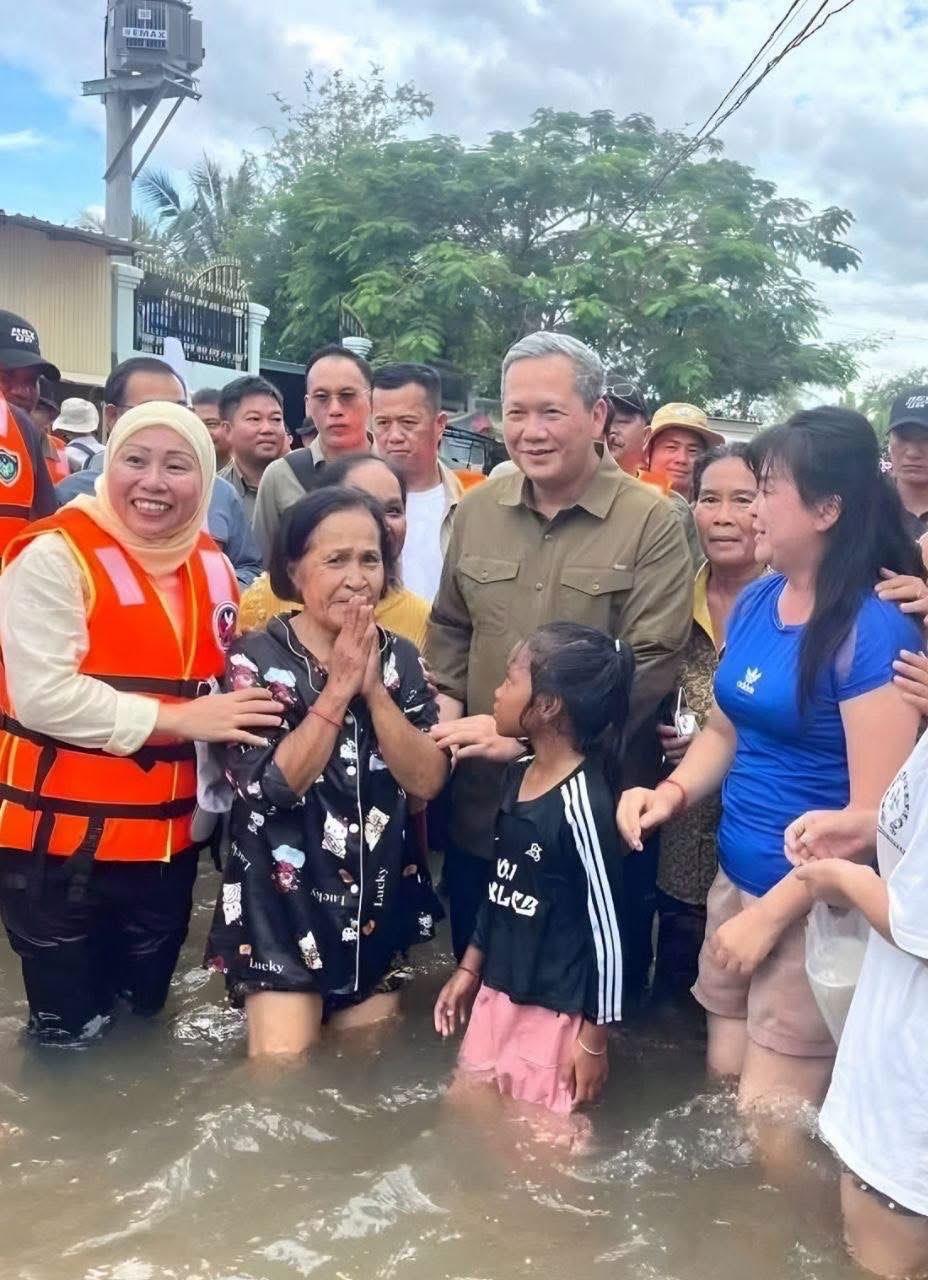
In Cambodia, Prime Minister Hun Manet visited flood-affected areas in Battambang and Banteay Meanchey provinces on September 28. Images and videos showed him wading through floodwaters and approaching affected residents. Some residents came forward to shake his hand, record videos and take photographs with him.
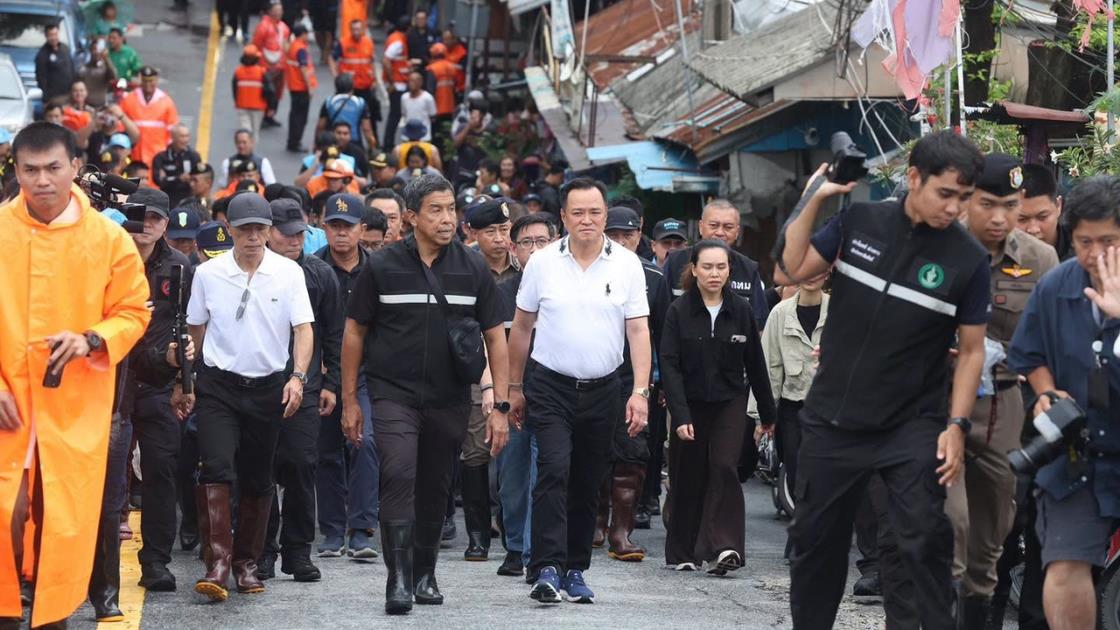
In Bangkok, Thai Prime Minister Anutin Charnvirakul also went into a flooded community and distributed relief supplies. But during his visit to Khlong Chan, he encountered a different reaction. Khaosod English reported that one man shouted, “Why did you come?” while residents also urgently requested water pumps to help drain flooded areas. Thai Newsroom similarly reported the angry exchange.
These two scenes raise an interesting question: Both countries are facing floods, and both prime ministers went directly to affected communities. Why, then, did cameras capture such different public reactions at the two locations?
Presence on the Ground: Similar Floodwaters, Different Reactions
As flooding affected several Cambodian provinces, Prime Minister Hun Manet did not limit his response to receiving reports from officials. On September 28, he went to flood-affected areas in Banteay Meanchey to meet residents and inspect conditions firsthand. Cambodia's state news agency reported that the visit was intended to encourage affected residents and facilitate timely assistance and relief measures.
Images and videos from the visit showed close interaction between the prime minister and residents. Some approached him, shook his hand, filmed the visit and posed for photographs as he walked through the floodwaters.
Hun Manet said that “saving people's lives is the Royal Government's top priority,” while thanking provincial and local authorities, the armed forces, volunteers, the National Committee for Disaster Management, and relevant ministries and institutions involved in rescue and evacuation operations.
The scale of the emergency can be seen in the figures. As of September 28, flash floods had affected approximately 44,800 families across Cambodia, forcing around 3,600 families to evacuate. In Banteay Meanchey alone, more than 1,300 families had been moved to safer locations.
The prime minister's presence where rescue operations were underway and residents were experiencing the crisis firsthand produced one notable set of images: some residents approached him, shook hands and took photographs.
The scene captured in Bangkok was different. At Khlong Chan, some residents questioned Prime Minister Anutin and pressed authorities for faster action as they continued to struggle with floodwater and shortages of clean water.
These contrasting scenes cannot be treated as evidence of nationwide public opinion in either Cambodia or Thailand. They do, however, illustrate how the physical presence of a leader during a crisis can generate very different reactions depending on the immediate circumstances and experiences of the people at a particular location.
Two Flood Images, 26 Years Apart
Another pair of images added symbolic meaning to Hun Manet's flood visit.
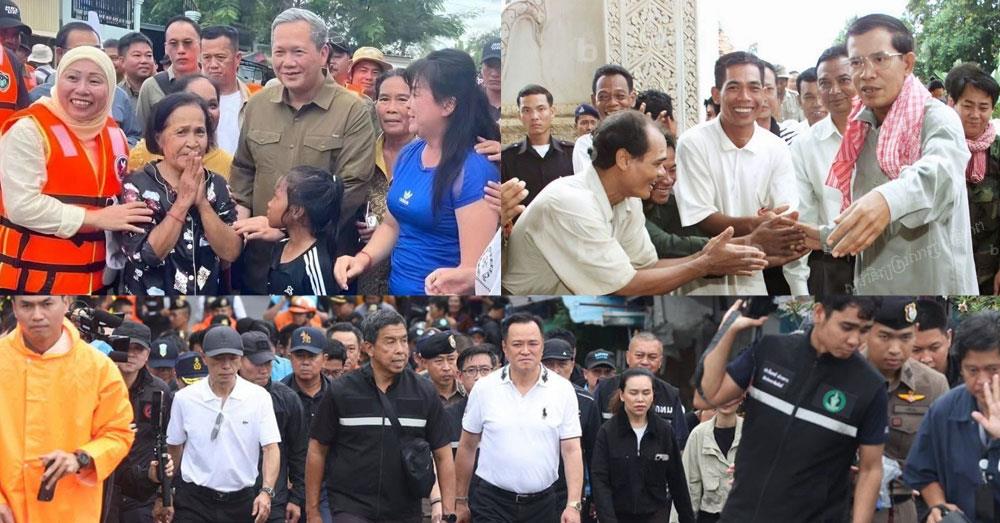
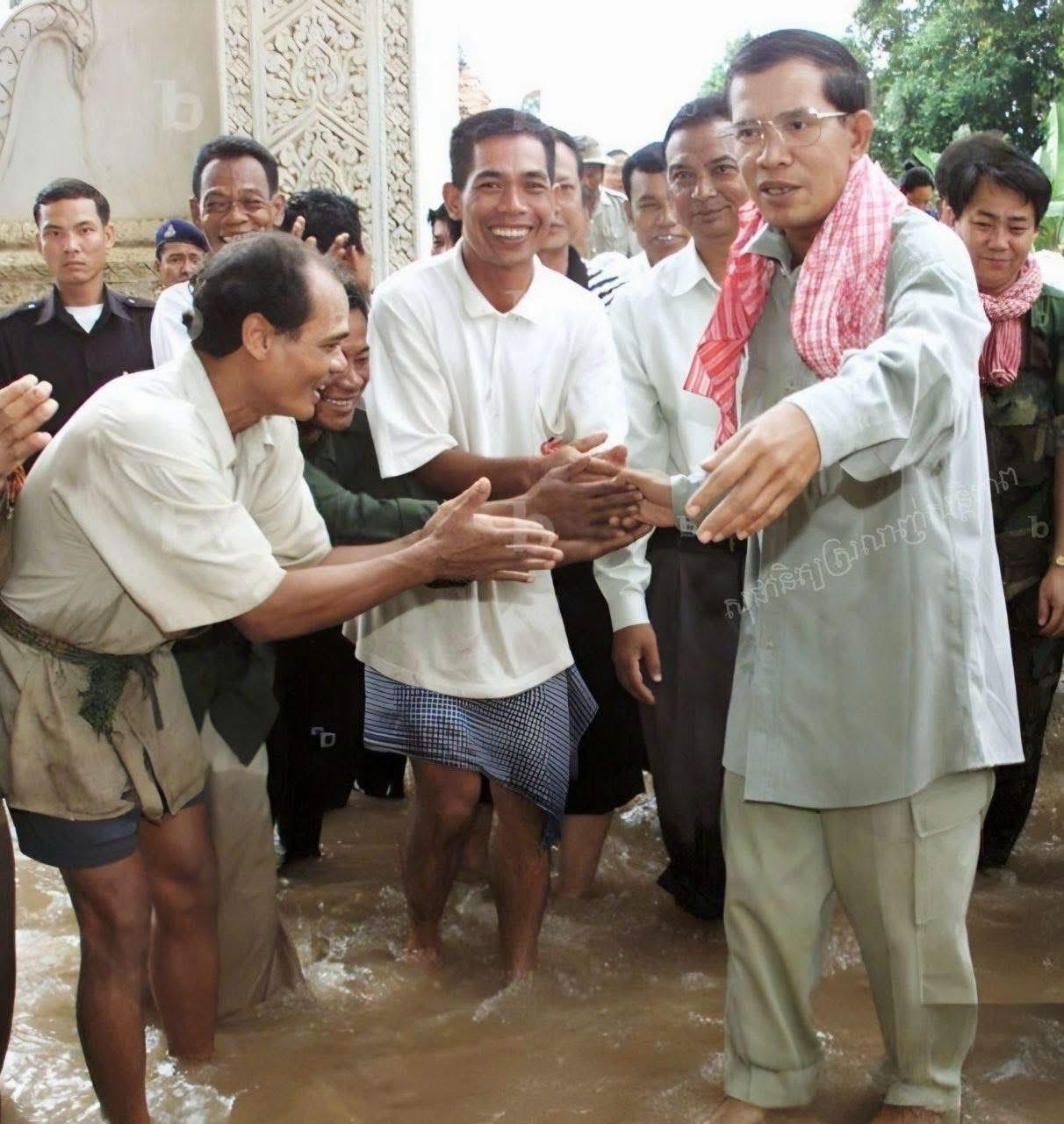
On the night of September 28, Acting Head of State and Senate President Hun Sen posted two photographs side by side: one showing himself visiting people during flooding in 2000 and another showing Hun Manet among flood-affected residents in 2026.
Alongside the images, Hun Sen wrote the Khmer proverb: “The fallen leaf does not land far from the tree.”
Separated by 26 years, the photographs carry a striking visual similarity: two generations of leaders standing in floodwaters alongside people affected by natural disasters.
Placing the 2000 and 2026 photographs together, accompanied by the proverb, creates a narrative of continuity in the way political leadership is presented as being physically present with citizens during times of crisis.
But the meaning of such images should not end with the symbolism of leaders standing in floodwater. When people face an emergency, the presence of national leaders can also signal that their situation is receiving attention at the highest level of government — from rescue and evacuation to food and clean-water supplies and, ultimately, the recovery of livelihoods after the waters recede.
The two photographs therefore carry symbolic significance beyond their visual similarity: they present an image of closeness to affected communities while also drawing attention to the broader responsibility of government to turn that presence into effective disaster response.
Why Did Anutin Face Angry Voices at Khlong Chan?
The images from Bangkok presented a different scene from those captured during the Thai prime minister's flood visit.
The angry exchange involving Anutin Charnvirakul cannot establish that Thai people as a whole are dissatisfied with their prime minister. It does, however, provide direct evidence of frustration among some flood victims at Khlong Chan, where residents were still waiting for water to recede and seeking immediate assistance.
Khlong Chan was facing serious flooding. Khaosod English reported that floodwater around the housing estate had reached about 1.5 metres. Residents asked authorities to urgently provide two pumps and said they lacked clean water for daily use. Anutin asked officials about the specifications of the pumps required. He also travelled by boat to distribute relief bags and met volunteers assisting vulnerable residents.
The broader scale of Bangkok's flooding was substantial. Bangkok authorities reported that approximately 329,000 households, or around 700,000 people, had experienced flooding to varying degrees. Authorities were continuing drainage operations while assisting residents who lacked food, drinking water or the ability to leave flooded communities.
Against that backdrop, the questions and demands directed at the Thai prime minister were immediate and practical: When will the water recede? When can it be pumped out? Where are the pumps? When will essential assistance reach residents?
The protests encountered during Anutin's visit therefore reflected frustration among some residents at that location who wanted a faster response to the conditions they were experiencing.
The contrast with Cambodia is visually notable. In one location, cameras captured residents approaching the prime minister, shaking hands and taking photographs. In the other, cameras recorded a resident angrily questioning the prime minister and others asking authorities for urgent equipment.
These are different reactions to political leadership during a similar type of emergency — but they remain snapshots of particular places and moments, rather than measures of national public opinion.
The Bigger Issue Beyond the Floods: Trust Is Tested in a Crisis
Flooding is a natural disaster, but public reactions to leaders and governments do not emerge in a vacuum. They are shaped in part by what people experience before and during a crisis.
When a leader walks into a flooded community, residents see more than a political figure standing in water. They may also judge the government's response through immediate questions: Did rescue teams arrive in time? How quickly did authorities respond? Have food and clean water reached those in need? And after the water recedes, how will families rebuild their homes and livelihoods?
A natural disaster can therefore become a test of public trust.
When people believe that government is present, assistance is reaching them and their concerns are being heard, trust may be reinforced. When victims believe the response is falling short of their immediate needs, frustration and demands for faster action can follow.
In that sense, the images captured in Cambodia and Thailand in late September 2026 can be viewed as glimpses of the relationship between citizens and government during a moment of crisis.
In Cambodia, cameras captured some residents approaching Hun Manet, shaking hands and taking photographs with him. At Khlong Chan, cameras captured a different response, with a resident angrily questioning Anutin and others pressing authorities for faster action.
These images are not opinion polls and cannot represent the views of all Cambodians or all Thais. But they illustrate a broader principle of crisis leadership: trust is not created by a leader's physical presence alone. It is also shaped by whether that presence is accompanied by listening, timely action and tangible results that people can experience directly.
Conclusion
The images from Cambodia and Thailand captured different reactions among some residents to the presence of their leaders during a natural disaster. In Cambodia, cameras showed residents approaching Hun Manet, shaking his hand and taking photographs with him. In Thailand, Anutin encountered an angry resident and urgent demands for faster action at Khlong Chan.
Both countries faced serious flooding, and both prime ministers went directly to affected communities. Yet the reactions captured at the two locations were markedly different.
That contrast offers a broader lesson about leadership during a crisis. A leader's presence on the ground matters, but public trust is also tested by what people experience around that presence — whether help arrives, whether their concerns are heard, and whether government action produces tangible results.
The angry exchange Anutin encountered at Khlong Chan is one example of that test: it showed the frustration of some flood victims who wanted faster relief from the conditions they were facing. At the same time, the wider Thai response included large-scale drainage, evacuation and relief operations, underscoring why a single encounter should not be treated as a verdict on an entire government or population.