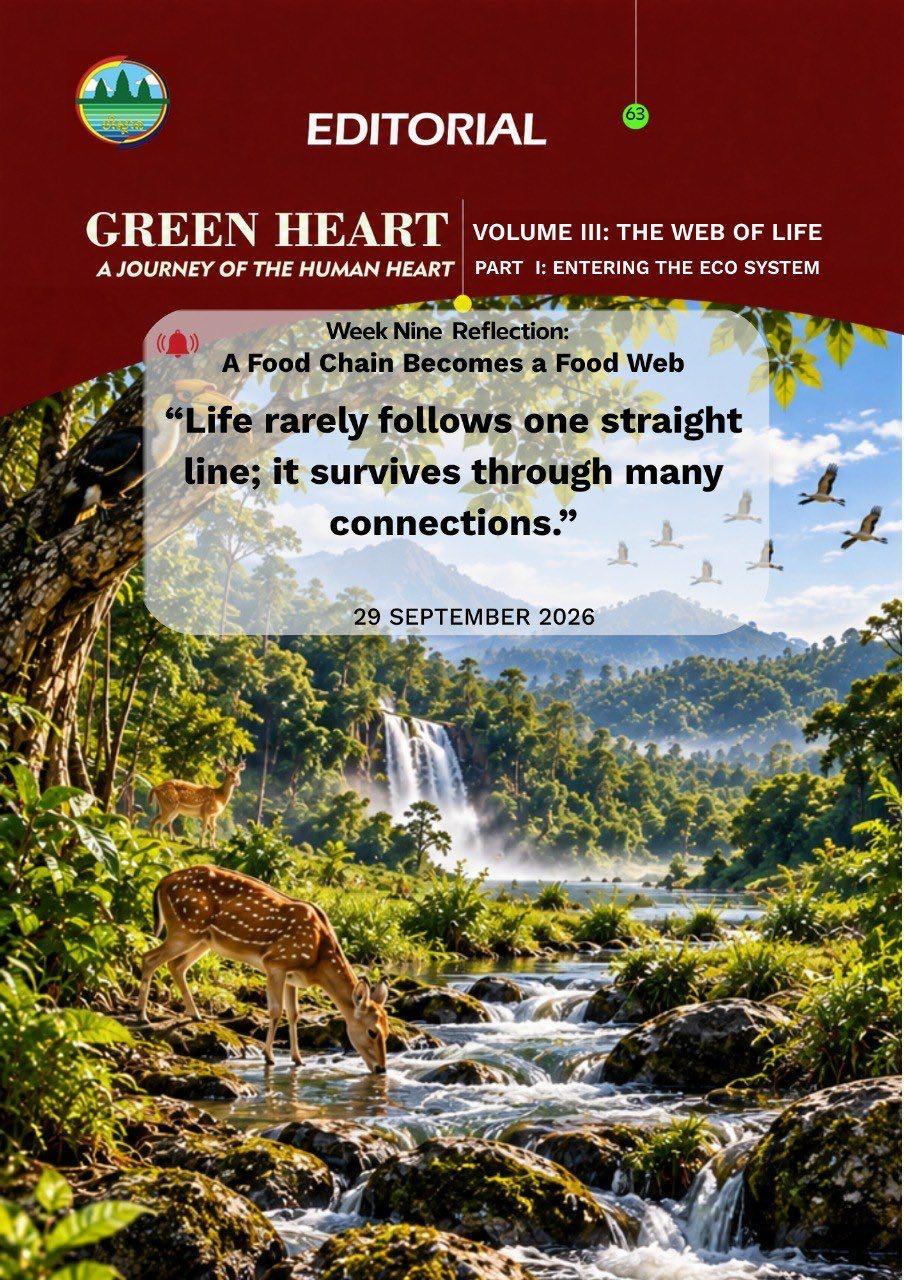
(Phnom Penh): People often say that nature is “in balance.” The phrase can create an image of every population remaining constant and every place returning to the same condition. Real ecosystems are more active.
“Nature’s balance is not a frozen moment; it is the ability to keep responding.”
Births, deaths, migration, seasons, disease, competition, predation, storms, floods, droughts, and fires all create change. Populations rise and fall. Rivers move.
Forest openings appear and close. Balance, when the word is useful, means a dynamic range of relationships rather than perfect stillness.
Some ecosystems are adapted to recurring disturbance. Certain grasslands depend on fire or grazing patterns. Floodplains are shaped by seasonal water. Preventing all disturbance can sometimes be as harmful as causing too much.
The type, timing, intensity, and frequency of disturbance matter. A natural fire pattern differs from repeated severe burning caused by changed conditions.
A seasonal flood differs from pollution or poorly planned drainage. Local ecology must guide management.
Resilience is the capacity of a system to absorb disturbance, reorganize, and continue essential functions and relationships.
Recovery may return a system toward an earlier state or lead it into a different one. Diversity, connectivity, healthy soil, and reduced pressures can support resilience.
There are limits. If change crosses certain thresholds, recovery may become difficult. A clear lake may become persistently dominated by algae; a forest may shift to another vegetation type. Prevention is important because some changes are costly or impossible to reverse.
Human communities also need dynamic balance. We cannot eliminate every challenge, but we can strengthen knowledge, trust, infrastructure, ecosystems, and cooperation so that we respond better.
This week, energy entered through sunlight, moved through producers and consumers, and materials returned through decomposers. Food chains became webs. The system was never still; it continued through movement.
Do not ask nature to remain like a photograph. Ask whether its relationships, diversity, and processes can continue through change.
A green heart does not fear every change or accept every damage. It learns the difference, protects resilience, and prepares the living web to respond.
This requires long-term attention. A system may look recovered because vegetation returns while soil, species diversity, or water processes remain altered. Monitoring several indicators prevents quick appearances from being mistaken for complete healing.
Resilience also depends on the kind of future arriving. A system able to recover from one storm may struggle under repeated heat or drought. Protection must therefore reduce existing pressures while preparing for new conditions.
Buddhist Reflection
Equanimity is not stillness or indifference. It is a steady mind capable of responding wisely as conditions change. Ecosystem resilience offers a natural reflection of this strength without rigidity.
Today’s Reflection
What is the difference between natural change and harmful pressure in one ecosystem I know?
Today’s Action
Observe one place at two different times of day or season. Record what changes and what functions continue.
Today’s Pledge
Today I will respect change, protect resilience, and avoid demanding that life remain still.
When we protect nature, we protect all beings, including ourselves.
=FRESH NEWS