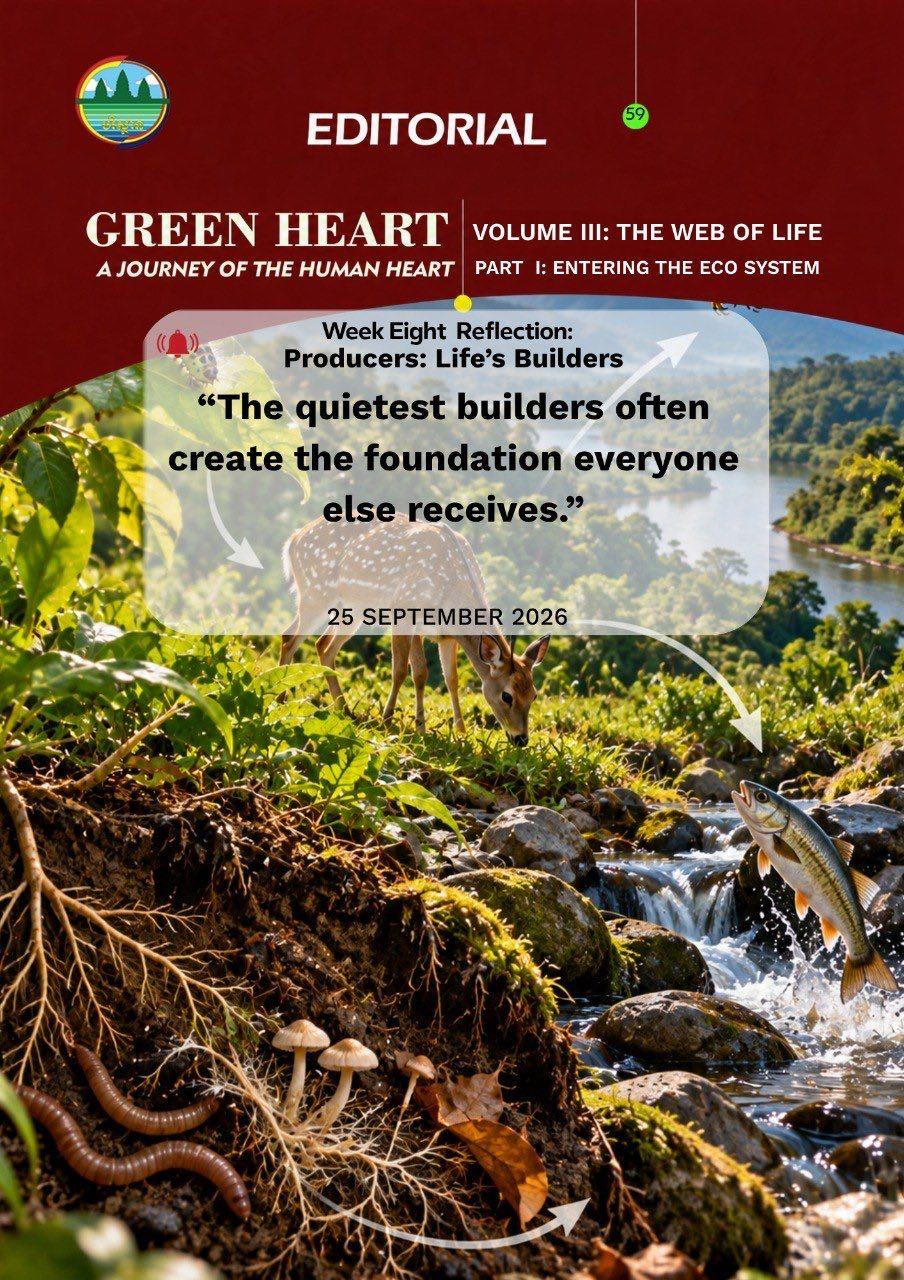
(Phnom Penh): Ecologists call organisms that make organic material from inorganic sources primary producers. Plants, algae, and some microorganisms perform this role. They do not create matter from nothing; they transform water, carbon dioxide, minerals, and energy into living tissue.
“The quietest builders often create the foundation everyone else receives.”
In a forest, trees and smaller plants form the visible foundation. In lakes and oceans, microscopic phytoplankton and larger algae can support food webs. On grasslands and farms, grasses and crops capture energy that feeds insects, animals, and people.
Primary production differs among places and seasons. Light, nutrients, temperature, water, and the kinds of organisms present all matter. A dark forest floor, nutrient-poor ocean region, dry field, and fertile wetland each have different patterns.
More production is not always healthier. Excess nutrients entering water may stimulate large algal blooms. When algae die and decompose, oxygen can decline, harming aquatic life.
Context and balance matter more than a simple desire for maximum growth.
Producers also shape habitat. Trees create shade and structure. Grasses hold soil and provide cover. Aquatic plants shelter young fish and invertebrates. Their bodies become both food and living space.
People depend heavily on producers. Crops feed us, fibers clothe us, wood becomes useful material, and plant communities influence water, soil, air, and climate. Yet we often notice consumers, the bird, fish, cow, or person, more readily than the green foundation.
Protecting producers includes protecting soil, water, pollination, seed diversity, suitable habitat, and the conditions for regeneration. It also means using harvests at rates that allow renewal where renewal is possible.
The title “producer” should not make plants sound like machines made only for our use. They are living organisms pursuing their own growth and reproduction. Their ecological contribution arises from being fully alive.
Look across a green field, forest canopy, or pond surface. You are seeing builders at work. Their structures may be leaves or cells rather than bricks, but they construct the foundation on which much of life rests.
Protecting that foundation can be simple and profound: keep water clean enough for algae and aquatic plants, keep soil healthy enough for roots, and keep habitats connected enough for producer communities to recover after disturbance. The web begins where life first captures usable energy.
When producers decline, consumers cannot replace their work. Feeding animals directly may offer temporary help, but it cannot substitute for healthy plant and algal communities.
Protecting the base remains the most durable form of support.
Buddhist Reflection
Generosity can be expressed through creating conditions others can use. Producers demonstrate abundance without intention or pride. Their example invites us to contribute quietly to the foundations of shared well-being.
Today’s Reflection
Which producer supports the greatest number of lives in a place I know?
Today’s Action
Identify three local primary producers, one large, one small, and one aquatic if possible, and list what depends on each.
Today’s Pledge
Today I will respect life’s builders and protect the conditions that allow them to grow.
When we protect nature, we protect all beings, including ourselves.
=FRESH NEWS