(Phnom Penh): The building may be in Cambodia. The suspects may operate from Cambodia. But the victims could be in the United States, Europe, Asia or elsewhere. Fraud proceeds may move through banks, intermediary accounts and digital assets across several countries, while the people directing the criminal network may not be in Cambodia at all.
This is one of the central challenges in fighting online scams: a scam operation may be based in one country, but the criminal network behind it can extend across multiple borders.
That is why the crackdown on 8 Park in Kamchay Mear district, Prey Veng province, while significant, does not necessarily mean that the criminal network behind the online scam operation has been completely dismantled.
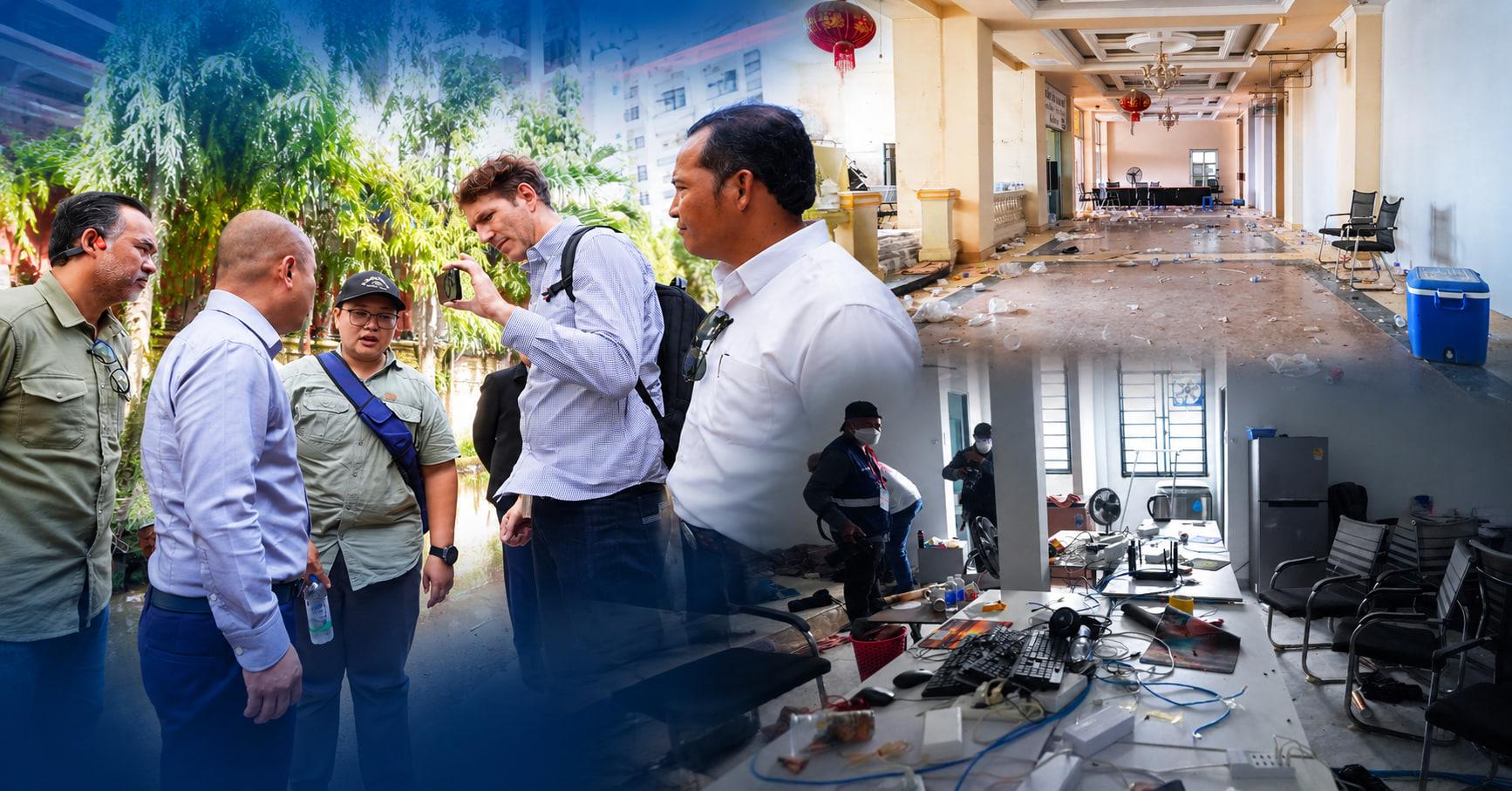
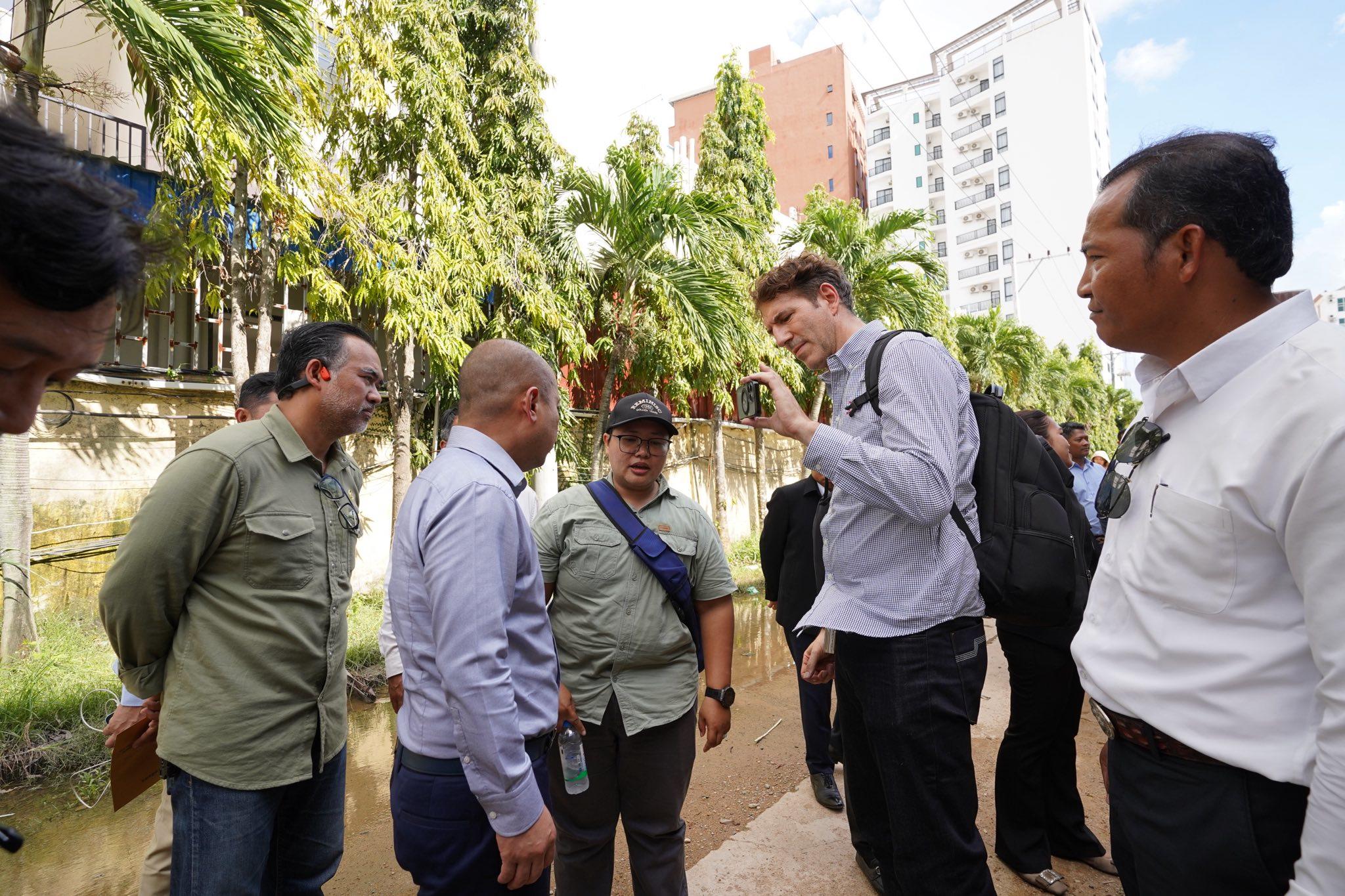
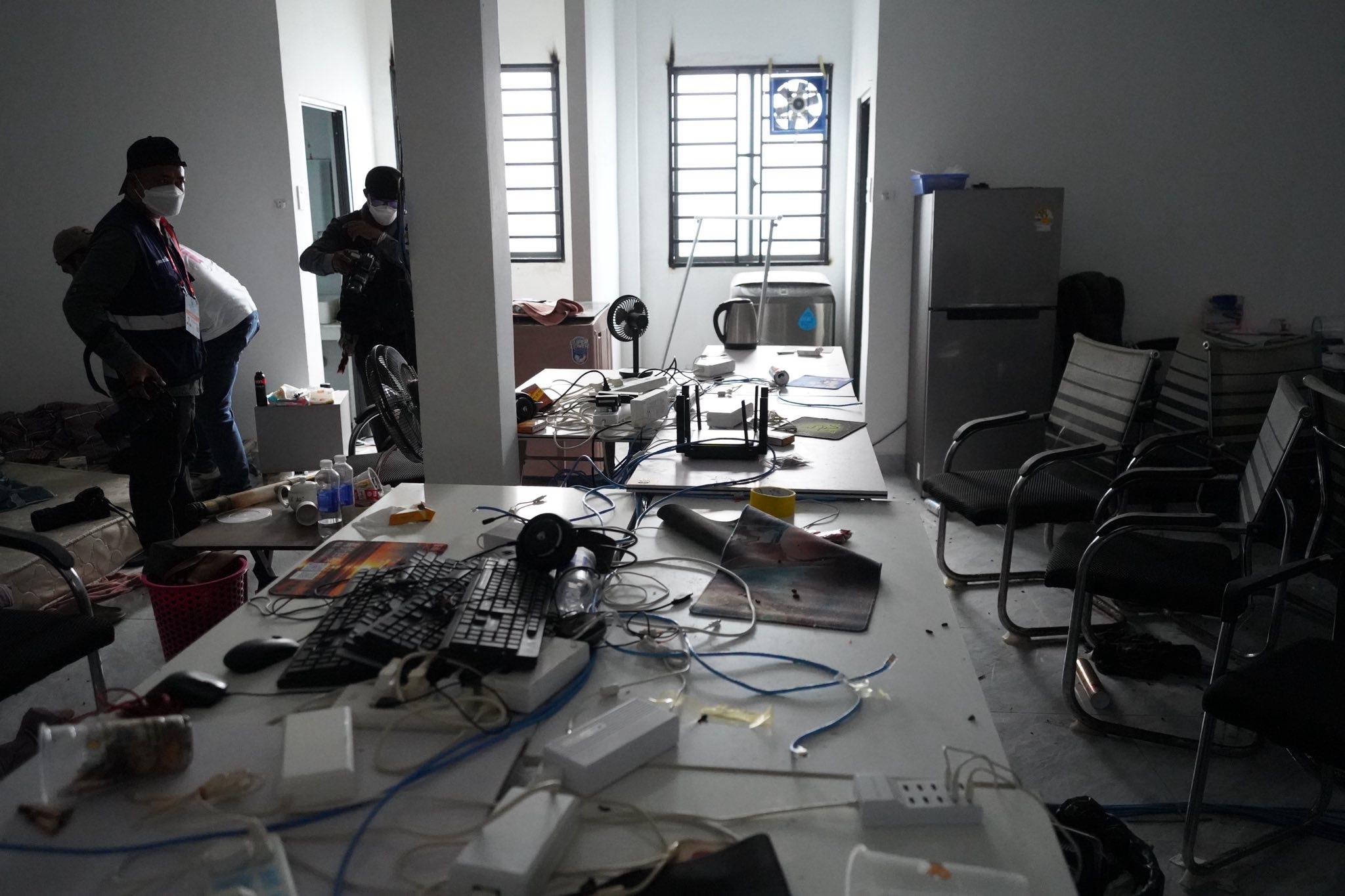
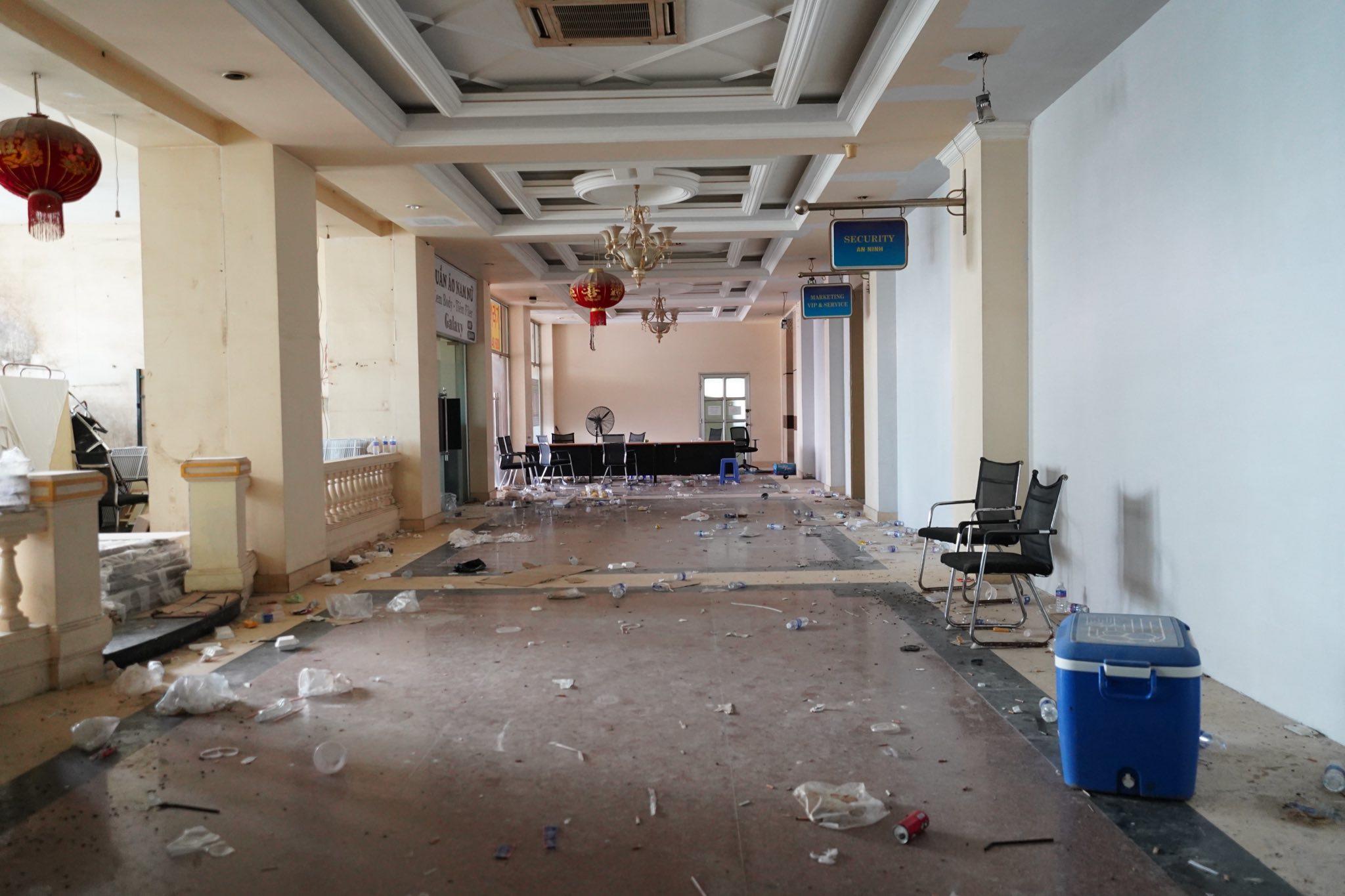
On September 21, 2026, 78 Cambodian and international journalists representing 39 media organizations visited the former online scam site at the Meanchey Commercial Center, known as 8 Park, in Prey Veng province.
The media visit came just two days before Cambodia was due to host the International Conference on Combating Online Scams (ICCOS-2026) on September 23–24. The conference focuses on strengthening cross-border cooperation among governments, international organizations, law-enforcement agencies, financial institutions and technology companies.
This raises a broader question: If Cambodia can shut down scam centers within its own territory, why does it still need international cooperation to dismantle online scam networks?
8 Park Is Only Part of a Much Bigger Picture
According to figures released by Cambodian authorities, between July 2025 and the end of August 2026, law-enforcement agencies inspected 832 suspected locations and conducted operations at 663 sites. Of these, 86 large-scale online scam centers were brought under control and dismantled.
Authorities also reported freezing more than $300 million in bank accounts and sending 446 cases involving 3,927 accused persons to court.
But shutting down large scam centers has not made online scams disappear.
Cambodian authorities say some operations have shifted away from large compounds and broken into smaller, more dispersed groups operating from rented rooms, guesthouses, condominiums, private homes, vehicles and cafés.
The shift highlights a critical distinction: shutting down a location is not the same as dismantling a network.
A site can be closed, but the people, money and technology connecting the wider network can move elsewhere and allow operations to re-emerge.
The fight against online scams must therefore move beyond tracking locations to tracking networks.
The Building May Be in One Country, but the Network Can Span Many
Modern online scams do not necessarily begin and end in one place.
In its Global Financial Fraud Threat Assessment 2026, INTERPOL warned that financial fraud has become a rapidly evolving transnational crime. The networks involved are increasingly interconnected across borders and can overlap with organized crime, cybercrime, money laundering and human trafficking.
INTERPOL also reported that scam centers, once heavily concentrated in Southeast Asia, have expanded into other parts of the world. By the end of 2025, trafficking victims linked to scam centers represented nearly 80 nationalities, while such operations had also been reported in the Middle East, Central America and West Africa.
This means investigators cannot stop at asking: “Where is the scam center?”
They must also ask: Who controls the network? Where are the victims? Where does the stolen money go? Who provides the technology? And who launders the proceeds?
The building may be in one country, but the people, money, technology and network leaders can be spread across many countries.
Arresting Operators Does Not Necessarily Mean Catching the Network Leaders
A raid on a scam center can lead to the arrest of operators, the seizure of computers and the closure of the premises.
But INTERPOL has warned that even as scam centers are shut down, identifying the people directing the networks behind them remains difficult. Criminal networks can use intermediaries and shell companies to conceal identities, ownership and connections.
This is the difference between “shutting down a site” and “dismantling a network.”
Closing a site stops operations at a particular location. Dismantling the network requires investigators to reach the people directing it, its financial flows, recruitment networks, digital infrastructure and money-laundering channels—which may all be located in different countries.
Arresting operators may shut down one scam center. Reaching the people who control the network strikes at the system that allows new scam centers to emerge.
To Find the Network, Follow the Money
The ultimate objective of online scams is money.
Investigations seeking to reach the core of a criminal network therefore cannot stop at tracking people. They must also follow the movement of the money—“follow the money.”
Fraud proceeds do not necessarily remain in the country where the crime takes place. Funds can be split and moved through multiple bank accounts, money-mule accounts, payment systems and digital assets before eventually reaching those controlling or benefiting from the network.
The Financial Action Task Force (FATF) reported in February 2026 that 156 jurisdictions, or around 90 percent of those it assessed, identified fraud as a significant money-laundering risk.
This demonstrates that fraud and the illicit financial flows associated with it are not problems confined to Cambodia or Southeast Asia.
Cambodia can close sites, arrest suspects and freeze assets within its jurisdiction. But once funds move into overseas bank accounts or digital wallets, tracing, freezing and recovering them requires cooperation from foreign authorities and financial institutions.
In short, a scam center may operate in one country, but its money can move through many. To reach the network leaders, investigators must follow not only the people—but the money.
AI Is Becoming a New Tool for Scammers
The challenge is becoming even more complex as artificial intelligence enters the picture.
INTERPOL reports that AI is being used to create fake images and profiles, generate AI-manipulated images, videos and voices known as deepfakes, and strengthen social-engineering scams designed to gain victims’ trust and persuade them to hand over money or sensitive information.
INTERPOL’s 2026 assessment also warns that AI and increasingly affordable digital tools can allow fraud to be conducted faster, more efficiently and on a much larger scale.
For criminal networks, this means that distance and physical location are becoming less of an obstacle.
A scammer in one country can use technology to impersonate someone in a second country, deceive a victim in a third and move the proceeds into an account or digital asset in a fourth.
This is where the limits of enforcement by a single country become clear: digital crime can cross borders in seconds, while investigations, asset tracing and law enforcement must navigate different jurisdictions and depend on cooperation among multiple countries.
Why Does Cambodia Need the World?
INTERPOL reported in 2026 that a coordinated operation involving 97 countries and territories resulted in 5,811 arrests, the interception of approximately $293 million in illicit assets, and the identification of more than 142,000 victims.
Cambodia can shut down scam centers and enforce its laws within its territory. But a state’s enforcement authority is bounded by its jurisdiction, while online scam networks operate across borders.
Cambodia therefore needs cooperation with other countries to exchange investigative intelligence, identify network leaders, trace and freeze criminal proceeds, and arrest suspects located abroad.
Cooperation with banks, technology companies and social-media platforms is equally important because much of the financial and digital infrastructure exploited by criminal networks lies beyond the control of any single government.
This is the broader context for Cambodia’s hosting of ICCOS-2026 in Phnom Penh, which seeks to strengthen international cooperation against transnational online scam networks.
Conclusion
The crackdown on 8 Park in Prey Veng province is one step in the fight against online scams—not the end of it.
The first step is to shut down the site. The harder task is to follow the people, the money, the technology and the networks across borders. When one scam center is closed, the network behind it may relocate, fragment into smaller operations or rebuild elsewhere.
Success, therefore, cannot be measured only by the number of sites shut down or people arrested. The deeper questions are: Have the network leaders been identified? Have the illicit financial flows been disrupted?
Cambodia can shut down scam operations within its territory. But it cannot, acting alone, dismantle networks that stretch across multiple jurisdictions.
Shutting down the site is the beginning. Dismantling the network is the ultimate goal.