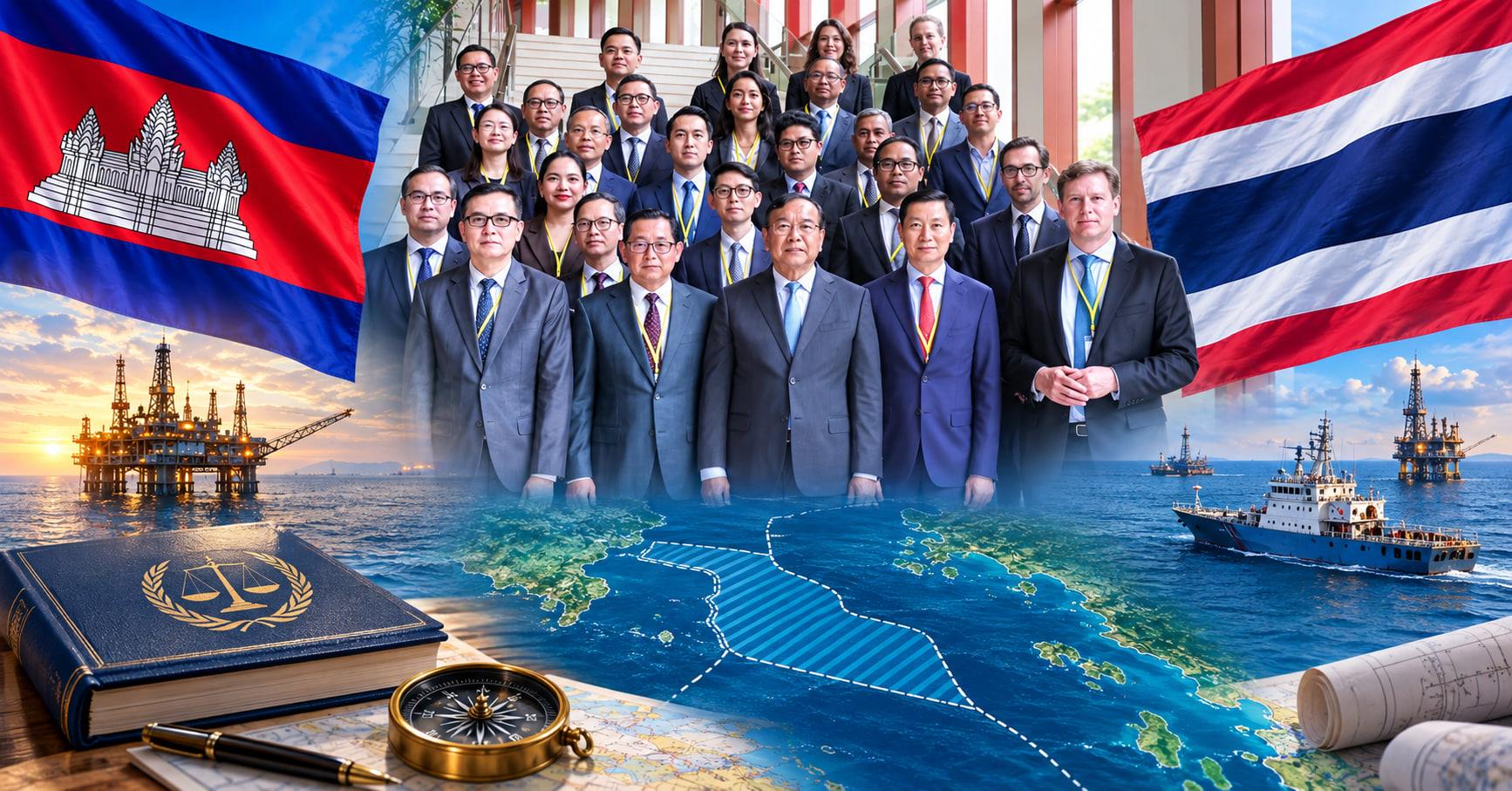
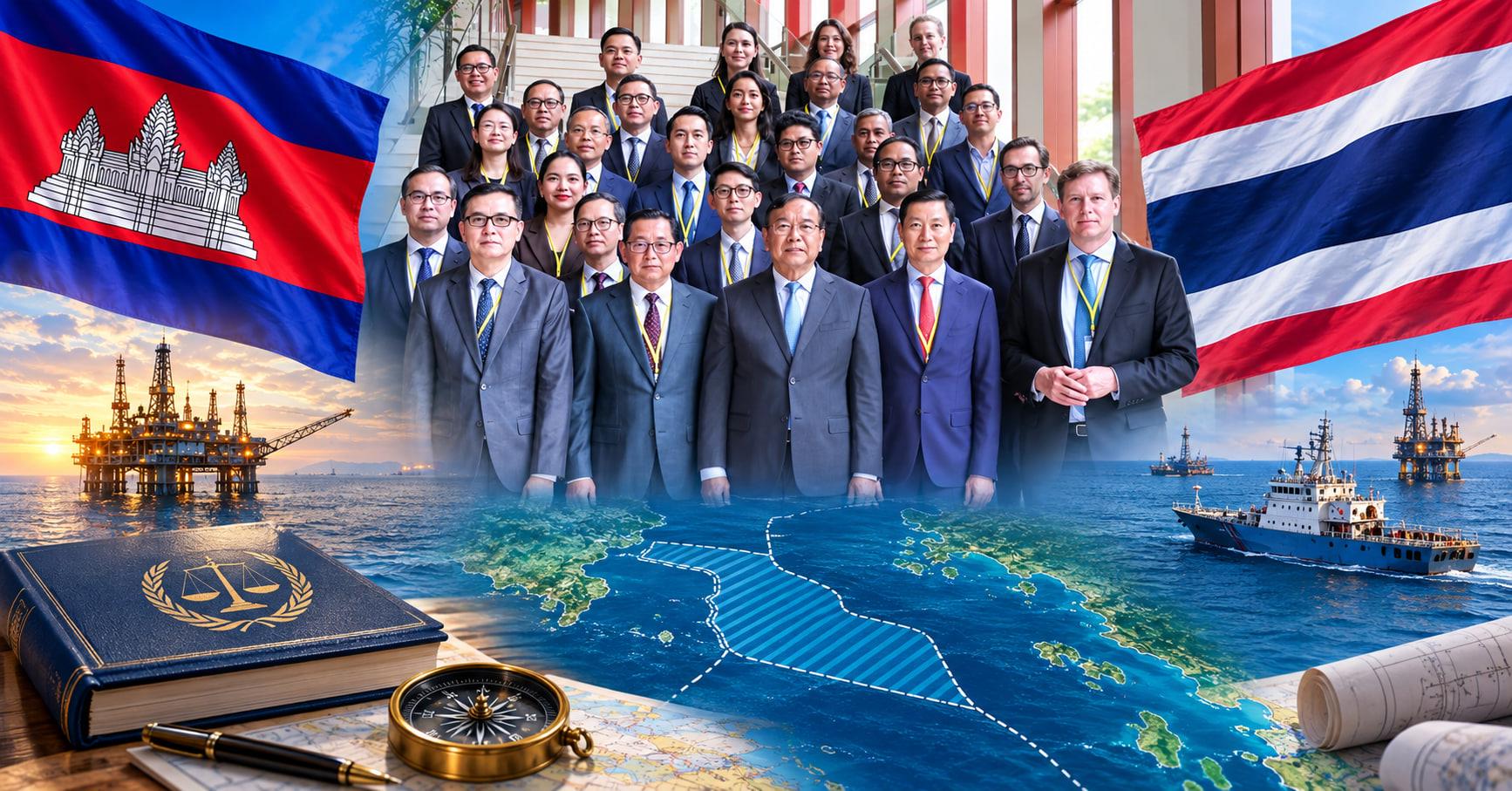
(Phnom Penh): Cambodia and Thailand have entered the same conciliation process under the United Nations Convention on the Law of the Sea, or UNCLOS, with both sides expressing their intention to resolve their maritime dispute peacefully.
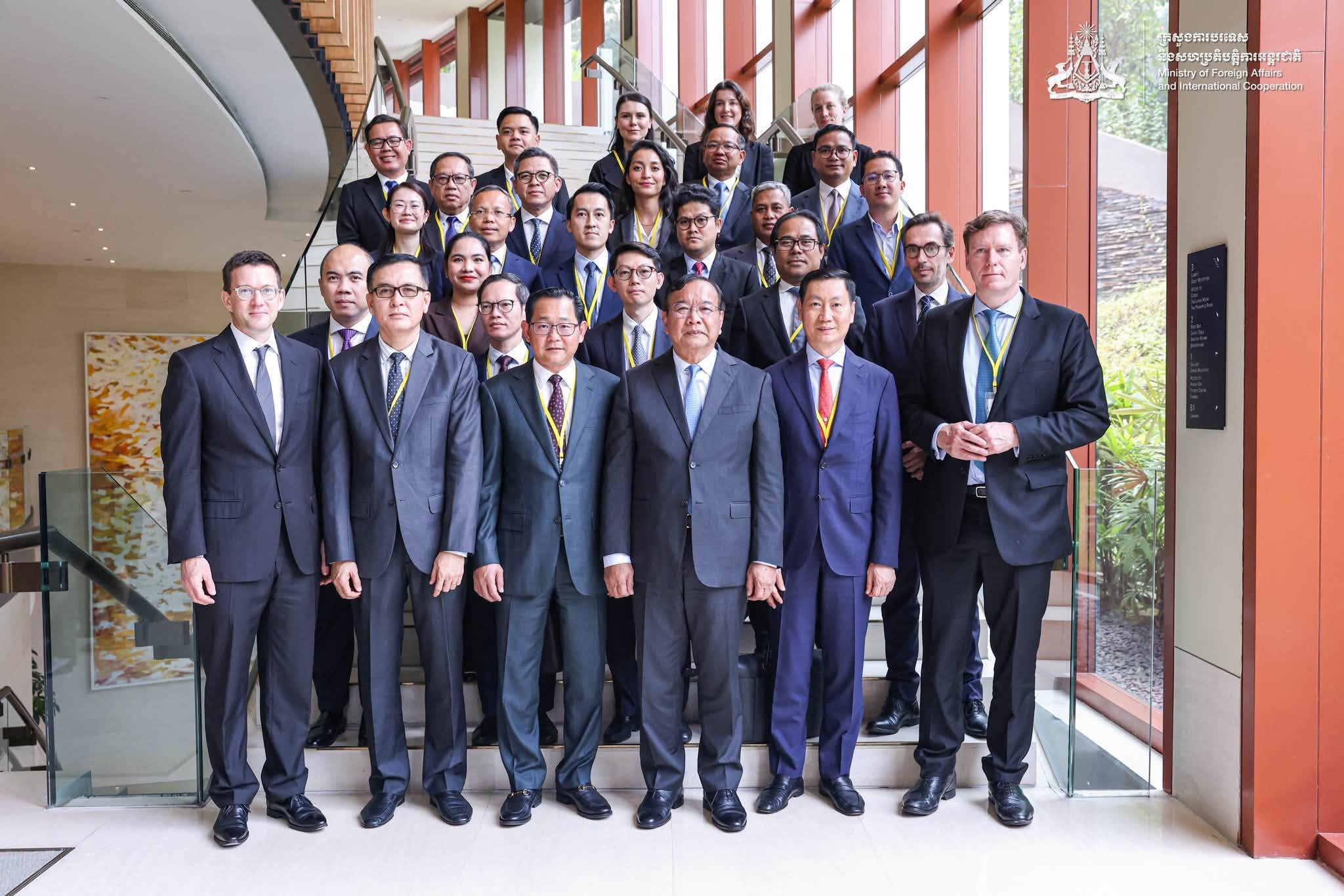
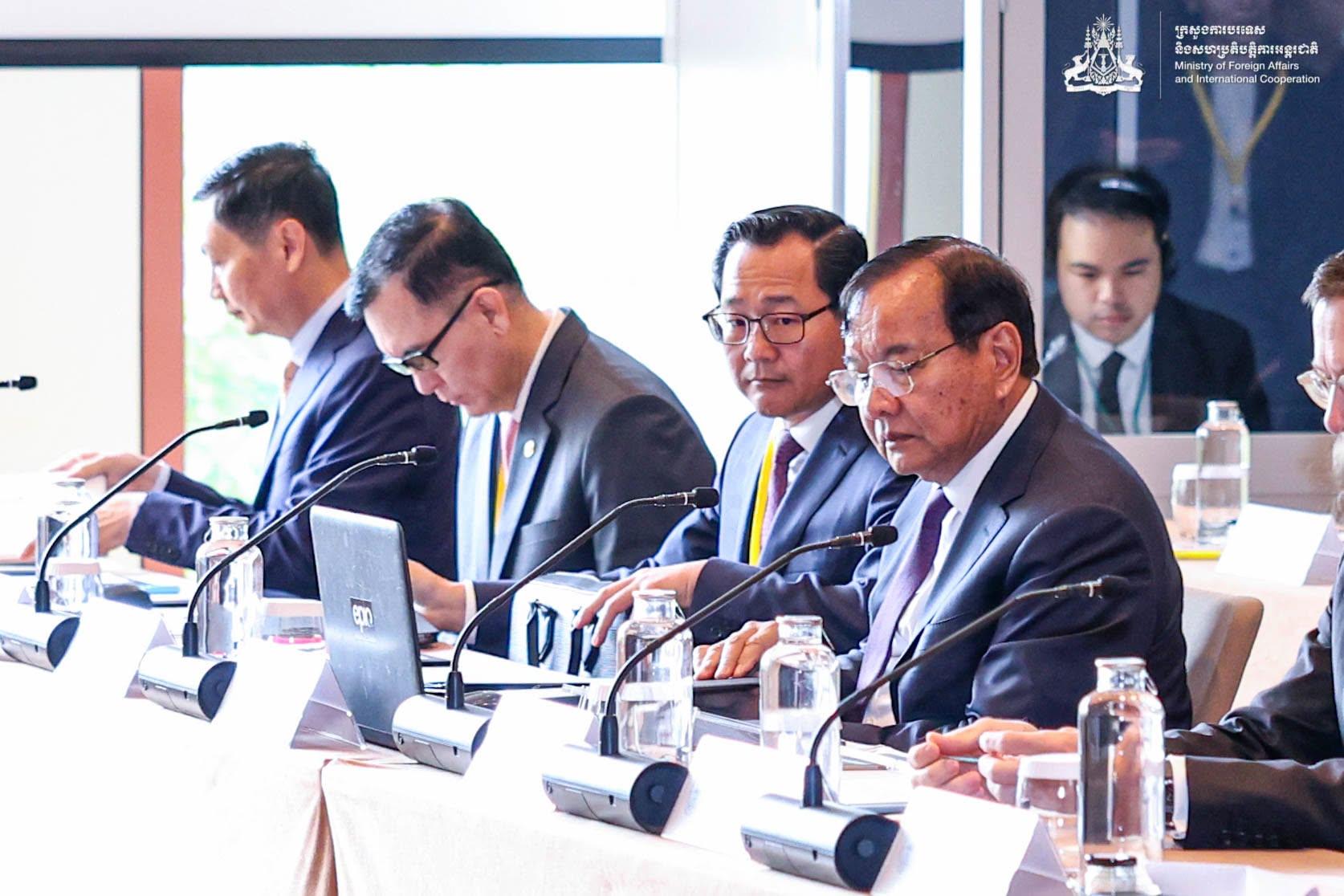
The first meeting of the Conciliation Commission, held in Singapore from September 14 to 16, 2026, completed key procedural arrangements and moved the process into substantive discussions.
But entering the same legal process does not mean the two countries share the same path toward a settlement. So where could the process encounter obstacles, and what options could help narrow the gaps?
Same Goal on Delimitation, but Not Necessarily the Same Boundary Line
Cambodia’s first option is to seek an agreement or treaty establishing a single, comprehensive maritime boundary between the two countries, with the assistance of the Conciliation Commission and on the basis of international law.
Thailand, meanwhile, stated in its June 19 response that its objective in the conciliation process is focused on maritime boundary delimitation under UNCLOS.
At this first level, therefore, the two sides have common ground: both seek a maritime boundary settlement.
But agreeing that a boundary must be established does not mean agreeing on where that boundary should lie or on what legal and geographical basis it should be drawn.
That is where the first potential obstacle emerges.
Maritime delimitation involves complex legal and geographical questions, including the relevant coasts, base points, equidistance, relevant geographical circumstances and the effect of islands on the boundary.
The two countries may therefore agree on the objective, while still differing over the basis and location of the boundary line.
Here, the Conciliation Commission could play an important role in helping the parties narrow their legal and technical differences and identify common ground for further negotiations.
The Commission cannot impose a maritime boundary on Cambodia and Thailand. But it can help break the broad question — “Where should the boundary lie?” — into more manageable questions: Which coasts and base points are relevant? What geographical circumstances should be taken into account? And what effect should islands have on the delimitation?
The first potential obstacle, therefore, is not whether Cambodia and Thailand want a maritime boundary. It is whether they can agree on the legal and geographical basis for drawing it — and ultimately on where the line should be.
If Delimitation Fails, Could Joint Development Provide an Interim Path?
This is perhaps one of the clearest differences between the approaches publicly presented by the two sides.
Cambodia has proposed that if an immediate maritime boundary agreement cannot be reached, the parties could move to a second option: joint development of offshore resources and equitable sharing of the benefits, pending a final boundary settlement.
Thailand, by contrast, has said that the scope of the conciliation process should focus on maritime delimitation.
This does not necessarily mean Thailand rejects joint development altogether. Rather, it highlights a difference over the scope and sequencing of possible solutions: Should delimitation come first, or could joint resource development be considered while the final boundary remains unresolved?
One possible way to narrow this gap would be to separate the final determination of maritime rights from interim arrangements for resource development.
Under such an approach, joint development would not require either side to recognize the other’s claimed boundary or abandon its own position. Any interim arrangement could be made without prejudice to the legal rights and positions of either party, while negotiations over the final maritime boundary continue.
The second key question, therefore, is this: If delimitation cannot be achieved immediately, can Cambodia and Thailand temporarily set aside the boundary question and cooperate on resources without compromising their respective legal positions?
MOU 2001 Is Gone — So What Framework Comes Next?
The 2001 Memorandum of Understanding provided a framework under which maritime delimitation and joint development of resources were to be negotiated simultaneously.
Following Thailand’s unilateral termination of MOU 2001, that previous framework is no longer in place.
Thailand has nevertheless continued to emphasize bilateral negotiations as the path toward an eventual settlement, while Cambodia has turned to compulsory conciliation under UNCLOS.
The central question, therefore, is not simply whether the two countries should negotiate. Both sides continue to recognize a role for negotiation.
The more difficult questions are: Under what framework should they negotiate now? Should delimitation come first, or should joint development also form part of the process?
One possible way forward is to use the conciliation process to help the parties identify common ground on the structure and sequencing of future negotiations: What should be addressed first? Which issues could be discussed together? And if one approach fails, what should come next?
The Commission and Bilateral Negotiations Need Not Be Competing Paths
Under Cambodia’s third option, the Conciliation Commission would play an important role if the earlier approaches fail, with its report and recommendations serving as a basis for further efforts toward a settlement.
Thailand, meanwhile, has stressed that the Commission’s report is not legally binding and may serve as a basis for subsequent negotiations between the two countries toward a mutually acceptable agreement.
The gap here, therefore, is not simply that Cambodia favors the Commission while Thailand favors bilateral negotiations.
The more important question is: Can the Commission’s recommendations generate enough common ground for the two sides to carry forward into negotiations?
The two mechanisms could complement rather than replace each other:
The Commission identifies the differences → helps narrow the gaps → makes recommendations → Cambodia and Thailand take the areas of convergence into negotiations → the two countries seek a final agreement.
Under this approach, the Commission would not determine the boundary on behalf of the two states, while bilateral negotiations would not make the Commission irrelevant.
The Commission can help identify and expand areas of common ground; Cambodia and Thailand must ultimately decide whether that common ground can be transformed into an agreement.
Conclusion
The potential obstacles in the Cambodia–Thailand maritime dispute do not arise from a complete absence of common ground.
Some common ground already exists: both sides seek a maritime boundary settlement and recognize a continuing role for negotiations.
The more difficult questions lie along the path toward that goal: On what basis should the boundary be drawn? If delimitation cannot be achieved immediately, could joint development provide an interim alternative? And after the termination of MOU 2001, what negotiating framework can both sides accept?
This is where the conciliation process faces its most important test: Can the Commission help narrow these differences and generate sufficient common ground for Cambodia and Thailand to carry into negotiations toward an eventual agreement?
In short, Cambodia and Thailand already share part of the destination. What remains to be found is a path that both sides can accept to get there.