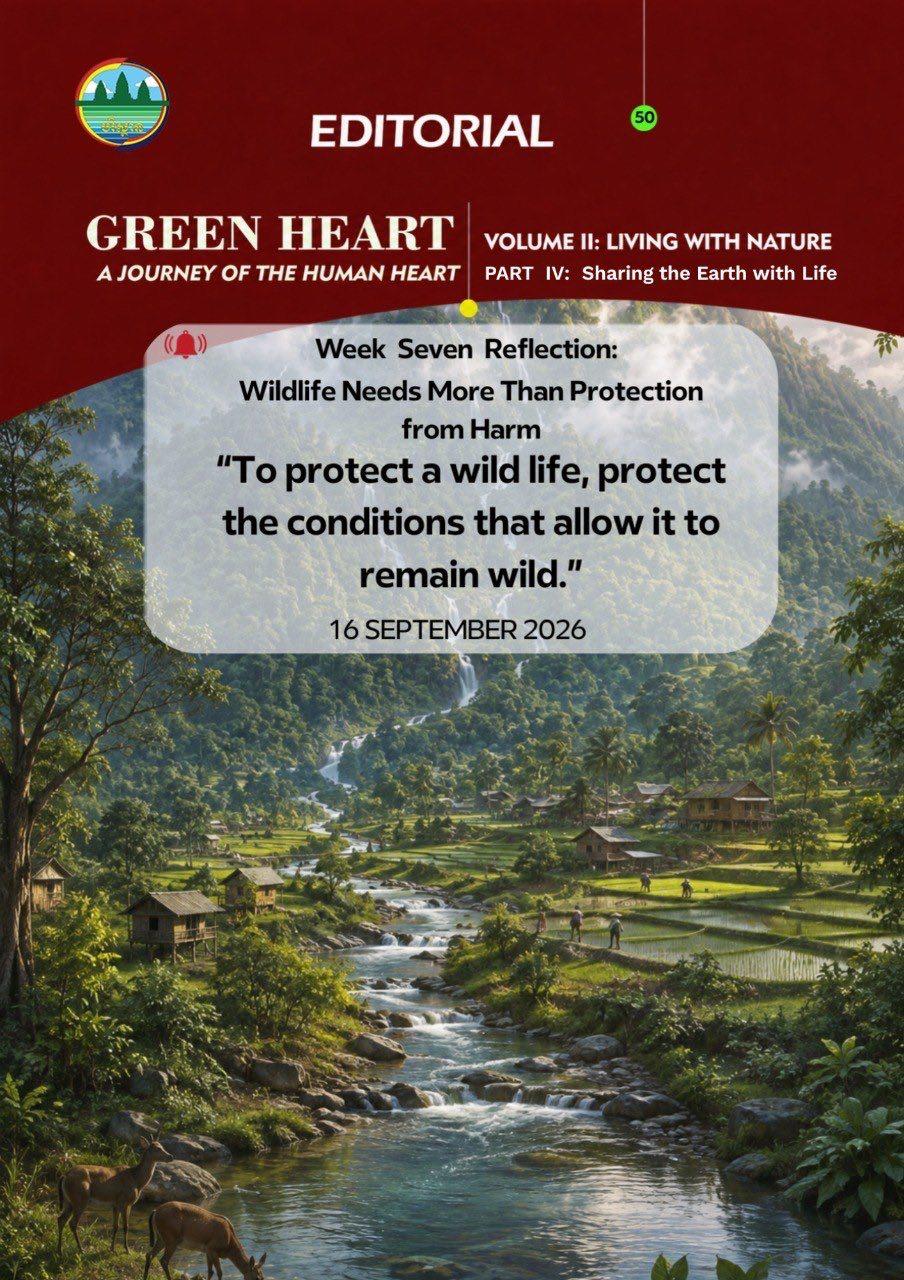
(Phnom Penh): When we think of protecting wildlife, we may imagine stopping hunting or rescuing an injured animal.
“To protect a wild life, protect the conditions that allow it to remain wild.”
These actions can matter, but wildlife protection begins long before an emergency.
Animals need suitable habitat, food, water, shelter, breeding places, and room to move.
A bird cannot survive through kindness alone if its nesting trees disappear. A fish needs more than freedom from capture if its water lacks oxygen or spawning habitat.
An elephant, deer, or other wide-ranging animal may need connected landscapes larger than any one protected site.
Wild animals are not pets. Feeding them can change behavior, spread disease, attract them to dangerous places, or provide unhealthy food.
Touching or approaching may frighten them and put both people and animals at risk. The kindest action is often respectful distance.
Injured or orphaned wildlife should be handled only by trained and authorized people.
A young animal found alone may have a parent nearby. Students should observe from safety, keep others away if possible, and contact a responsible adult or wildlife authority.
Protection also involves reducing indirect harm. Litter can entangle or be eaten. Roads can divide habitat.
Free-ranging domestic animals may chase or kill wildlife. Light and noise can disrupt behavior. Chemicals may enter food webs.
People living near wildlife may face crop loss, damaged property, fear, or danger. Effective conservation must take these concerns seriously.
Coexistence requires practical prevention, fair support, early warning, land-use planning, and local participation.
Not every interaction has a simple solution. Different species and places require different approaches. Science and local knowledge together can reveal when animals move, what attracts conflict, and which methods are safe and effective.
Wildlife protection is not about keeping a beautiful animal alive for our enjoyment. It is about allowing species to fulfill their own lives and ecological relationships.
The next time you see a wild animal, resist the urge to move closer. Notice where it found food, cover, water, and space. Then ask the deeper question: what must remain healthy for this life to continue after I leave?
The best photograph is never worth distressing an animal or putting a person at risk. Binoculars, quiet observation, and patience often reveal more natural behavior.
Respectful distance lets the encounter remain a meeting rather than an intrusion.
The animal’s safety is more important than our memory of the encounter.
Buddhist Reflection
Compassion respects another being’s true needs, not merely our desire to feel close or helpful. Loving-kindness toward wildlife includes restraint, safe distance, and protection of habitat.
Today’s Reflection
What does a wild animal need besides protection from direct harm?
Today’s Action
Observe wildlife from a safe distance. Record one habitat need and one human action that could protect it.
Today’s Pledge
Today I will respect wildlife as wild and protect the conditions it needs to live freely.
When we protect nature, we protect all beings, including ourselves.
=FRESH NEWS