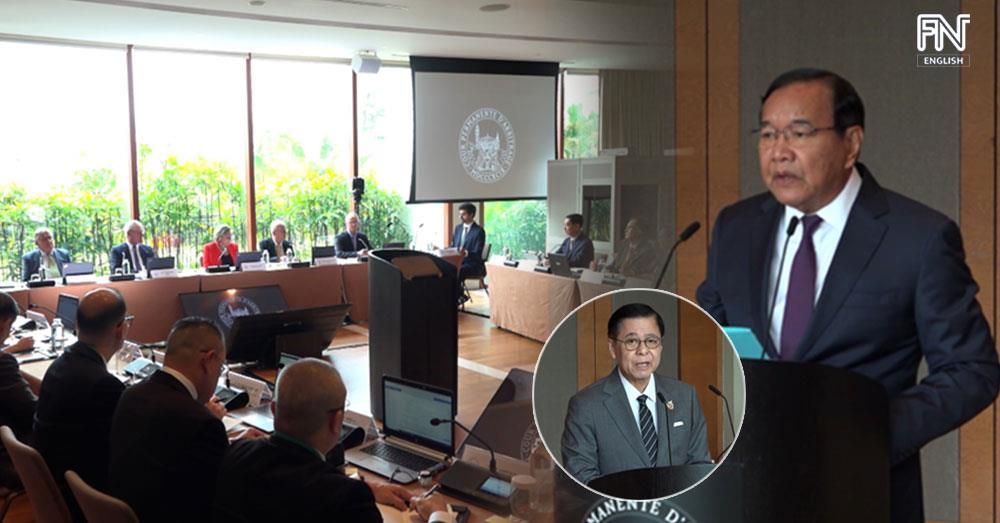
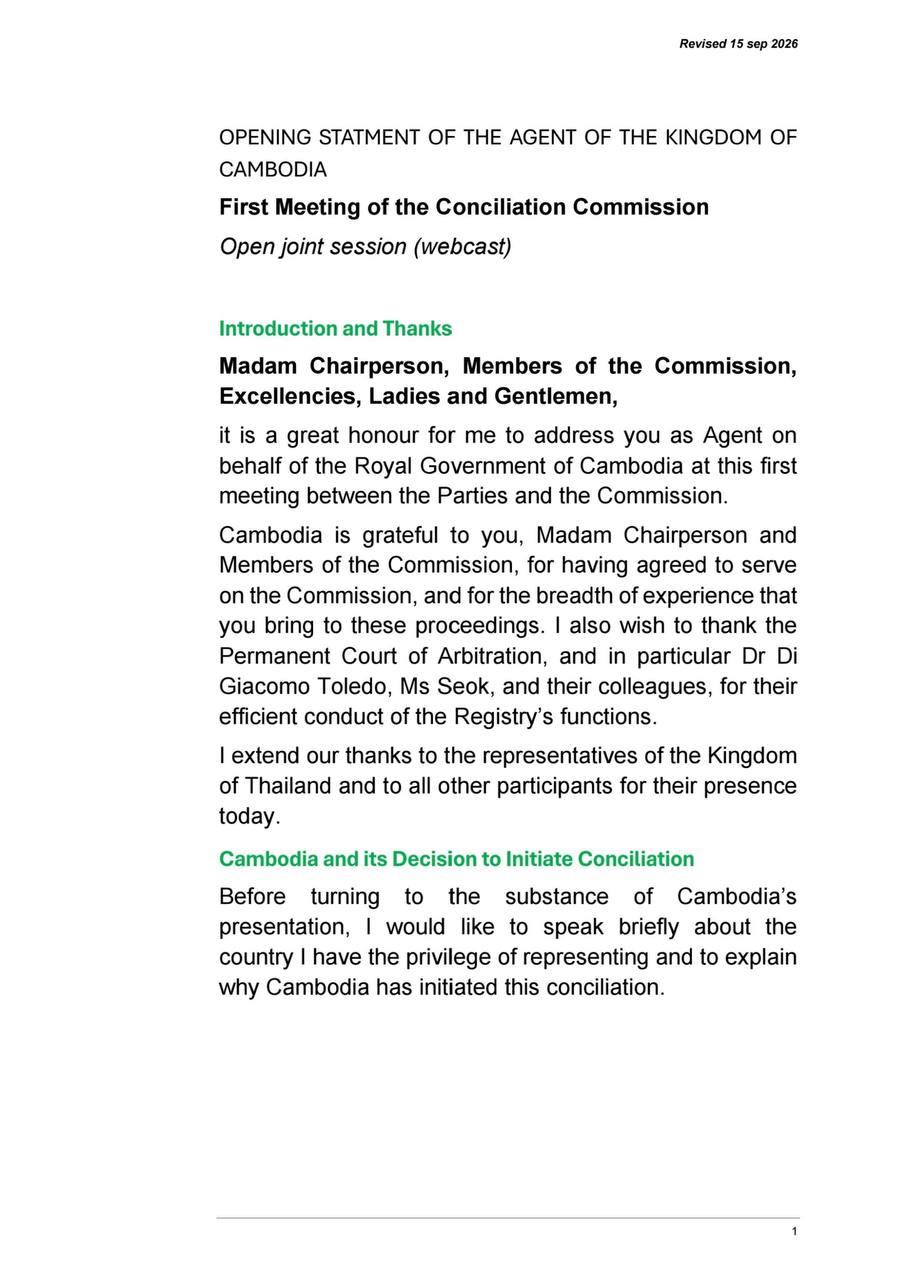
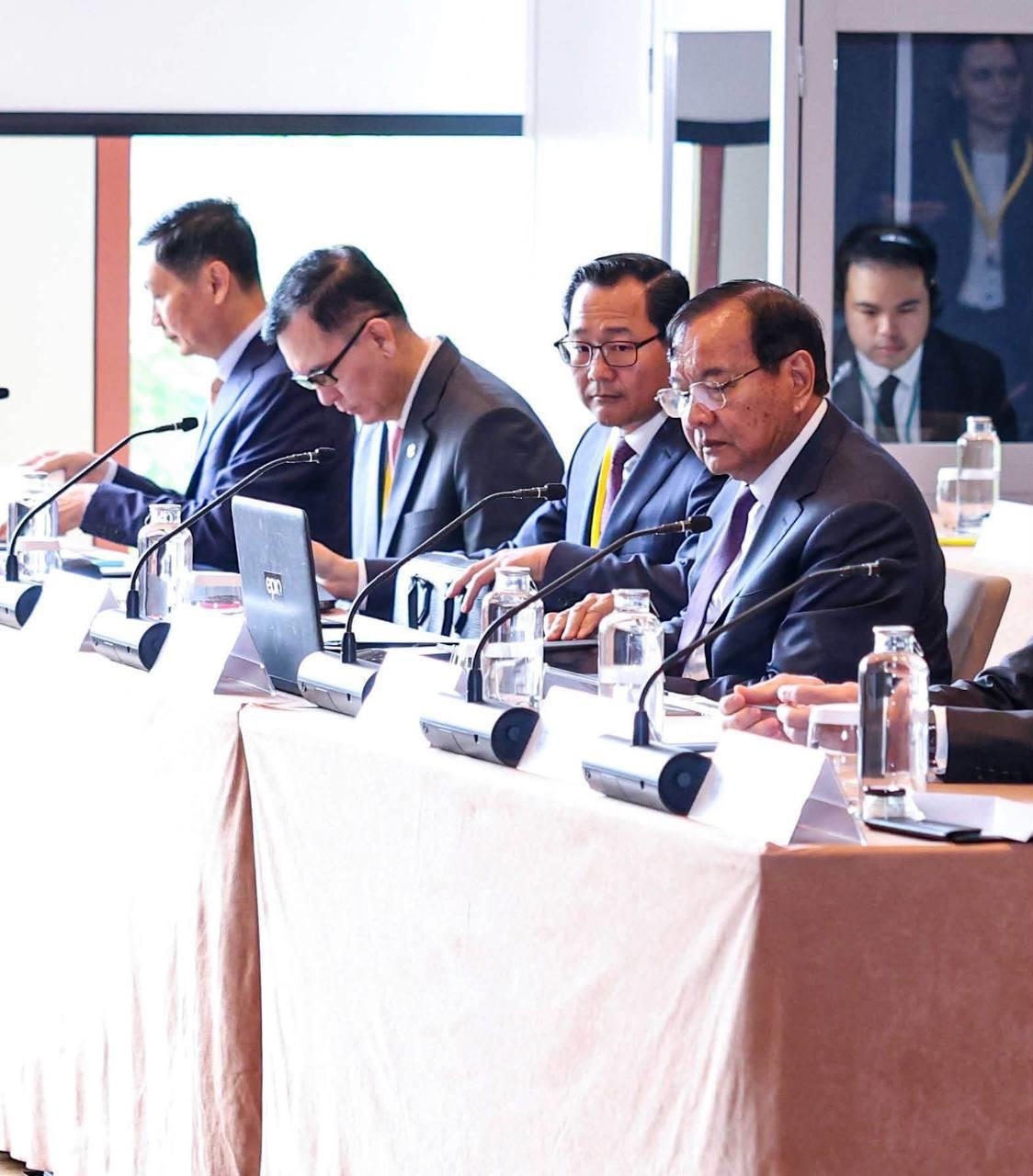
(Singapore): Cambodian Foreign Minister Prak Sokhonn explained that Cambodia initiated compulsory conciliation under the United Nations Convention on the Law of the Sea (UNCLOS) after decades of unsuccessful efforts to resolve its maritime boundary with Thailand and following Thailand’s unilateral cancellation of the 2001 Memorandum of Understanding.
Speaking at the opening of the first Cambodia-Thailand UNCLOS Conciliation Meeting in Singapore on Tuesday (Sep. 15), Prak Sokhonn said Cambodia’s decision was rooted in its commitment to international law and the peaceful settlement of disputes.
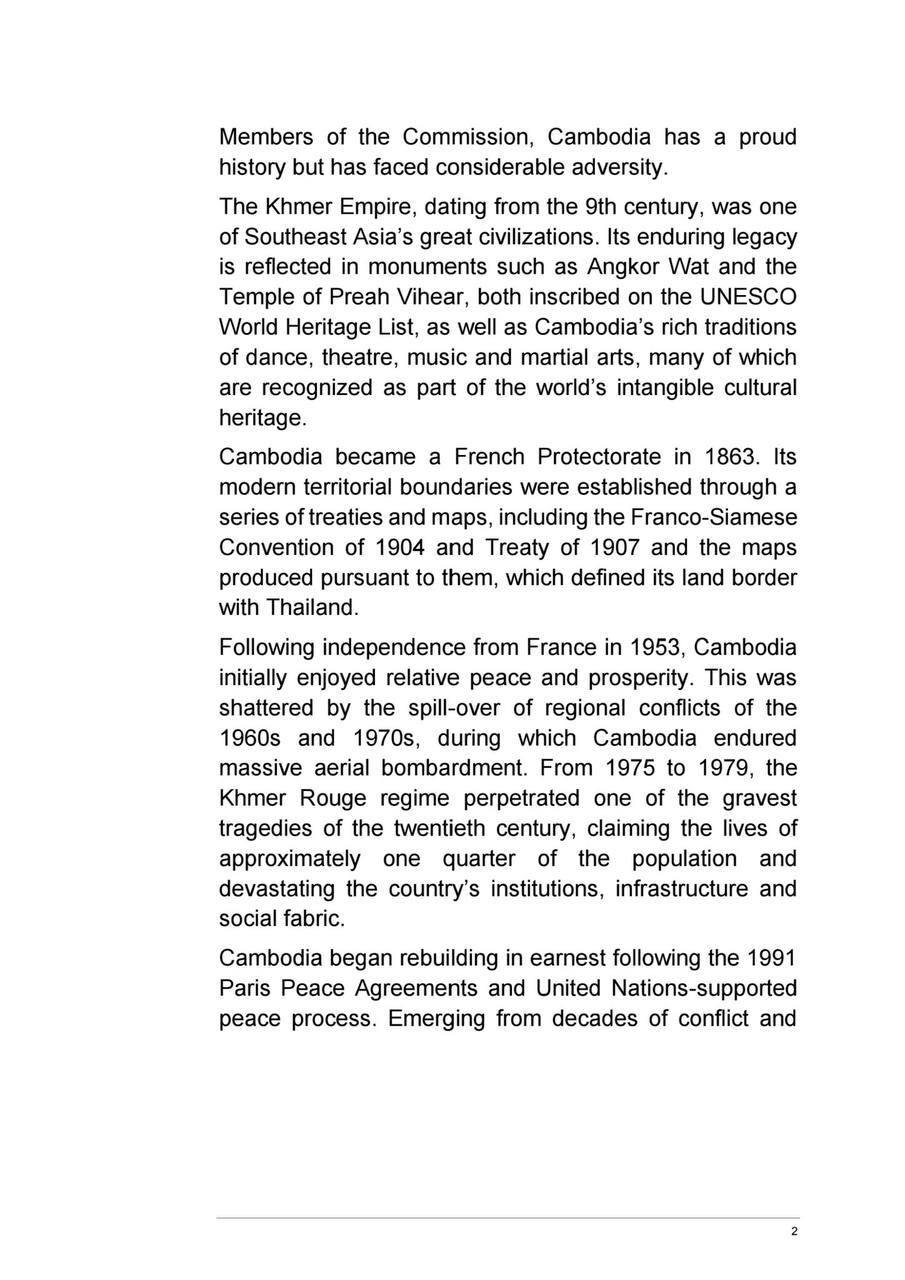
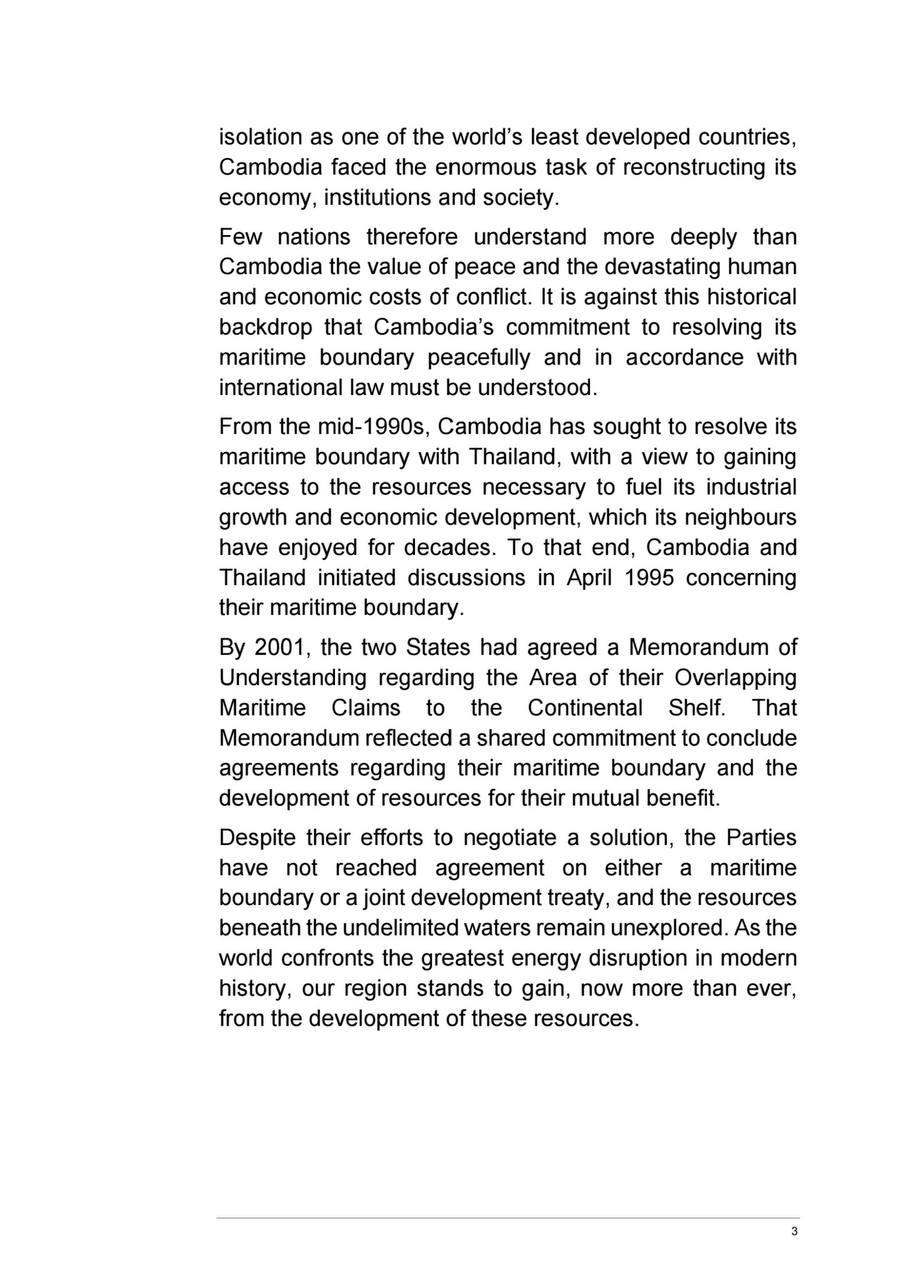
He recalled that Cambodia and Thailand began discussions on their maritime boundary in April 1995 and signed a Memorandum of Understanding in 2001 concerning their overlapping maritime claims to the continental shelf. The agreement reflected both countries’ commitment to negotiate a maritime boundary and pursue resource development for mutual benefit.
However, despite years of negotiations, the two sides failed to reach agreement on either a maritime boundary or a joint development arrangement, leaving resources beneath the undelimited waters unexplored.
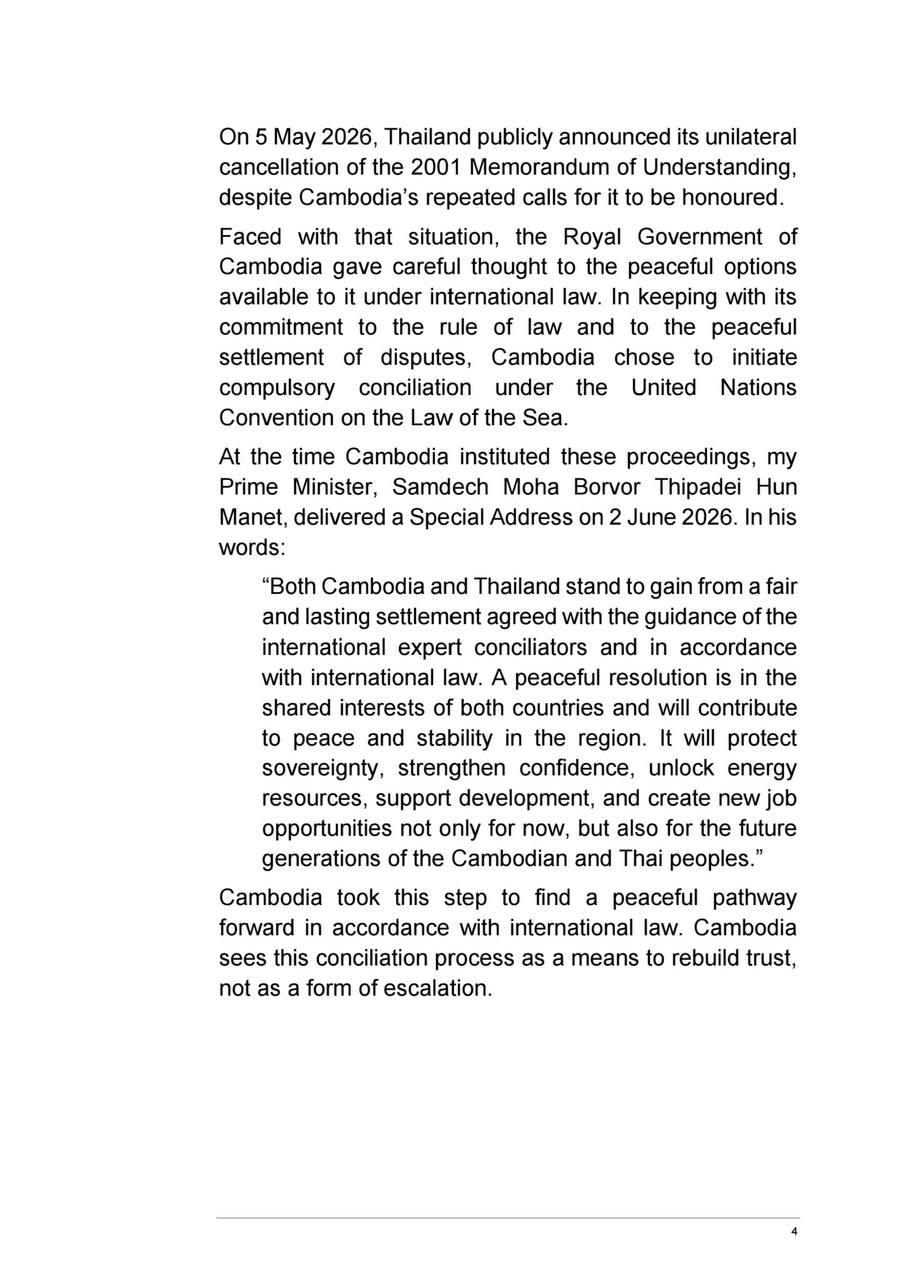
Prak Sokhonn said the situation changed further when Thailand publicly announced on 5 May 2026 its unilateral cancellation of the 2001 MOU, despite Cambodia’s repeated calls for the agreement to be honoured.
“Faced with that situation, the Royal Government of Cambodia gave careful thought to the peaceful options available to it under international law,” he said.
“In keeping with its commitment to the rule of law and to the peaceful settlement of disputes, Cambodia chose to initiate compulsory conciliation under the United Nations Convention on the Law of the Sea.”
Prak Sokhonn stressed that Cambodia views the conciliation as a way to find a peaceful solution and rebuild confidence between the two neighbours.
“Cambodia took this step to find a peaceful pathway forward in accordance with international law. Cambodia sees this conciliation process as a means to rebuild trust, not as a form of escalation,” he said.
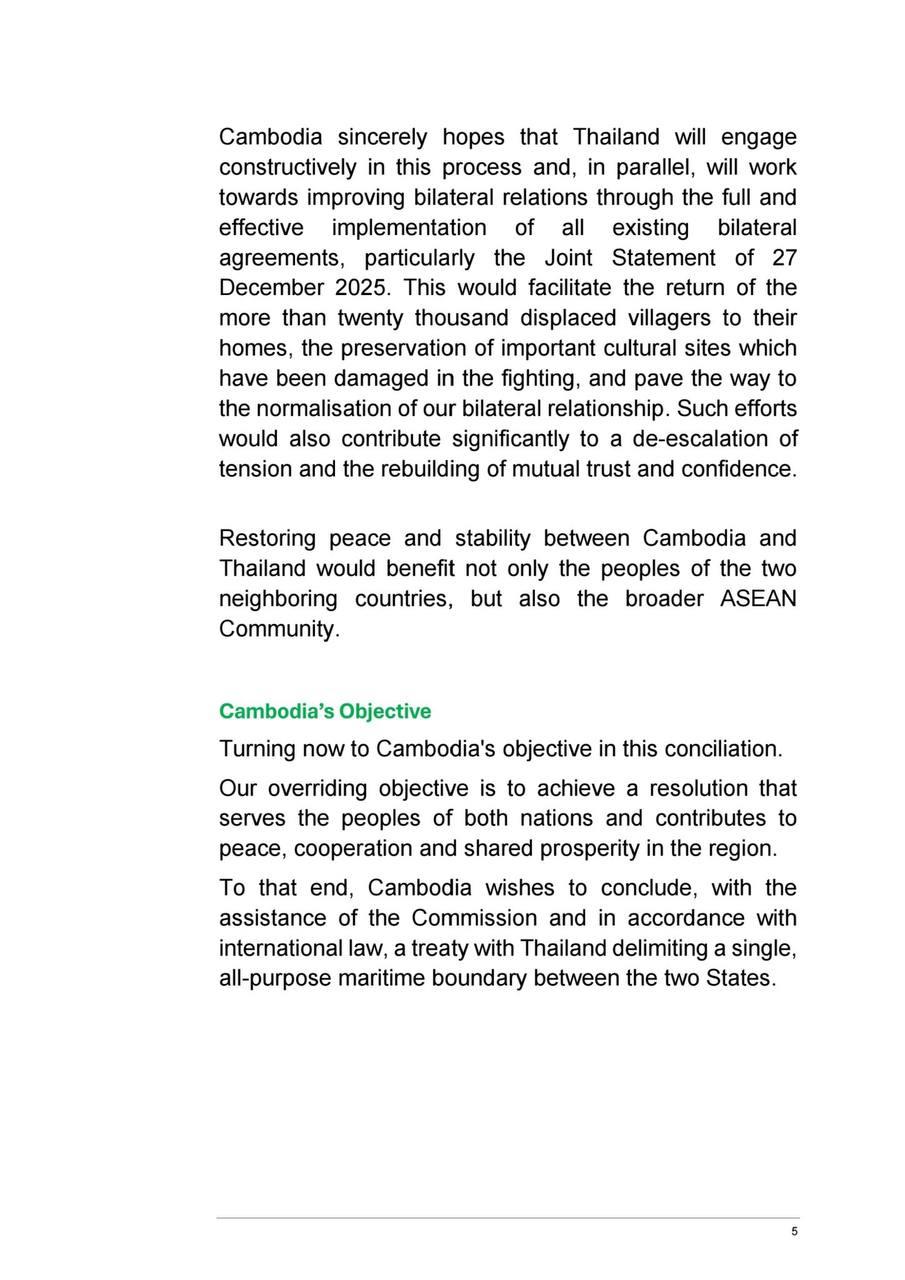
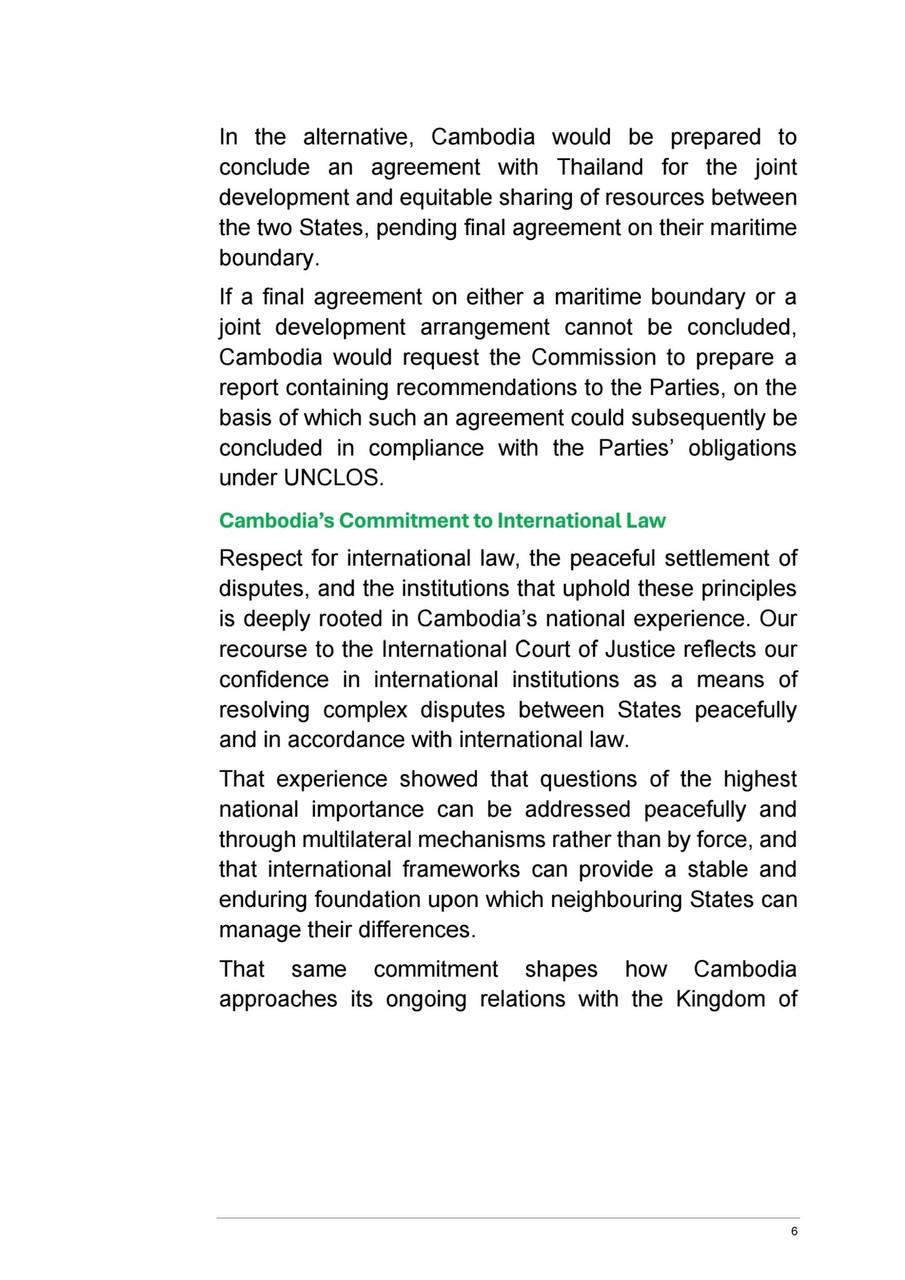
Cambodia hopes the process can ultimately lead to a treaty delimiting a single, all-purpose maritime boundary with Thailand or, alternatively, an agreement on the joint development and equitable sharing of resources pending a final boundary settlement.
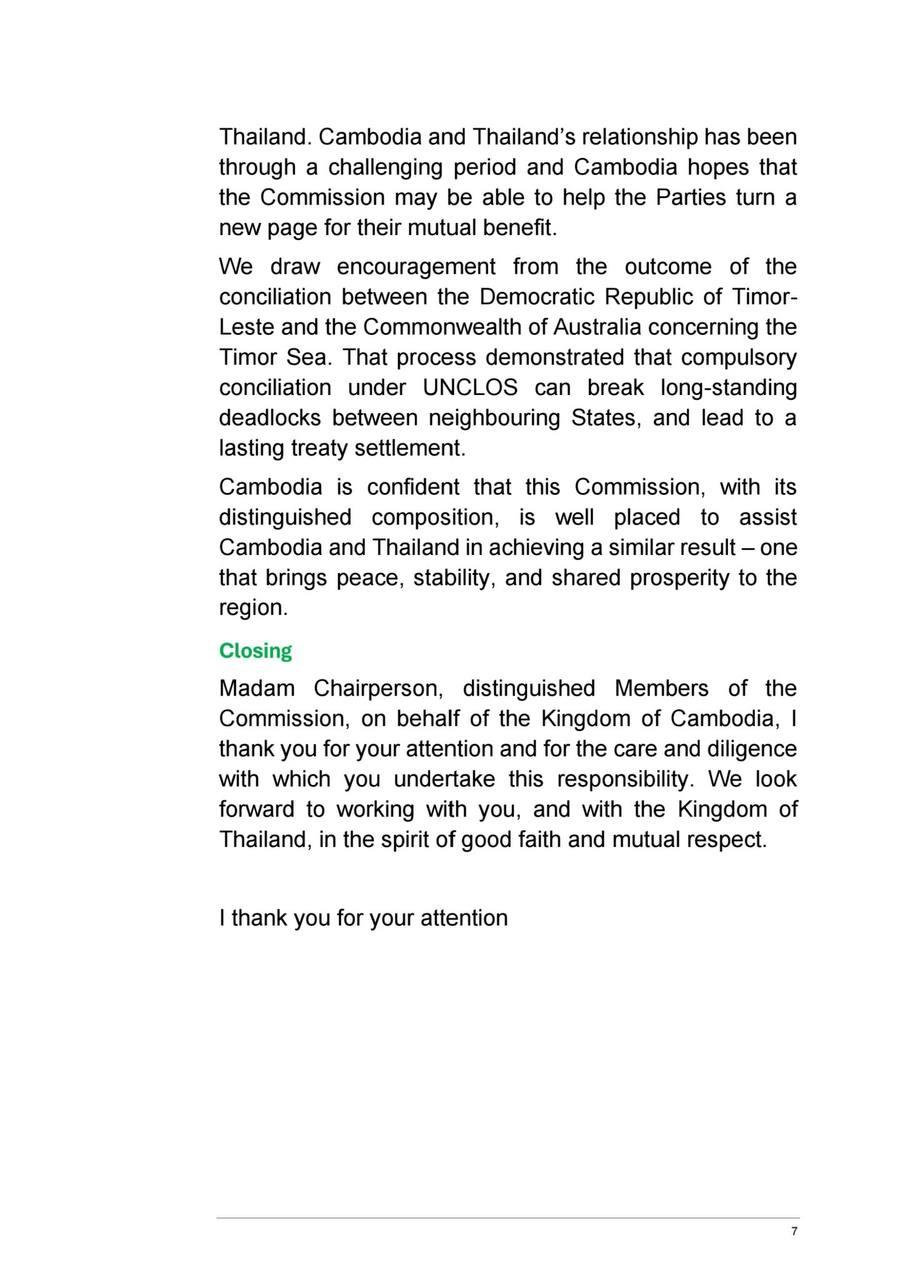
The foreign minister also expressed hope that Thailand would engage constructively in the process, saying a peaceful resolution would benefit both countries, help restore bilateral trust and contribute to peace, stability and shared prosperity across the wider ASEAN region.
=FRESH NEWS