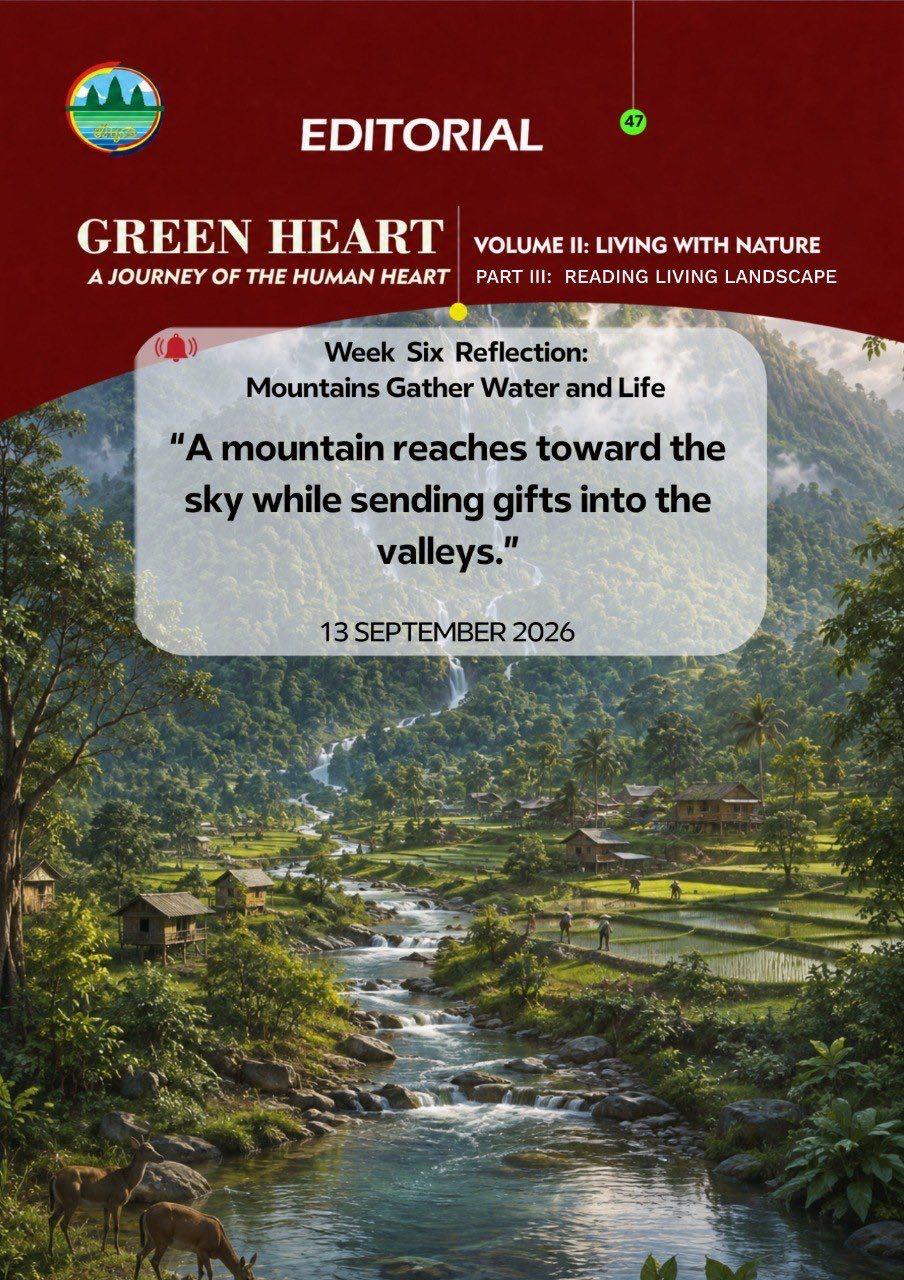
(Phnom Penh): Mountains appear solid and separate, rising above the surrounding land. In reality, they are connected to distant communities through water, weather, soil, rivers, wildlife, and culture.
“A mountain reaches toward the sky while sending gifts into the valleys.”
As moist air rises over mountains, it cools and may produce rain or snow. Mountain forests, soils, wetlands, springs, and snow or ice in colder regions can store and release water. Many rivers begin in uplands, making mountains important water towers for people downstream.
Elevation creates different temperatures and habitats over short distances. Species may be adapted to narrow ranges. A mountain can hold forests, grasslands, rocky areas, farms, and human settlements, each with distinct relationships.
Slopes are sensitive. Removing vegetation, cutting roads poorly, mining carelessly, or disturbing unstable ground can increase erosion and landslide risk in some settings.
Sustainable land management and engineering require local studies; a single method does not suit every mountain.
Mountain communities often hold deep knowledge about weather, water, crops, plants, trails, and hazards. Protection should respect their rights, livelihoods, and culture. Conservation without listening can harm the very people best placed to care for the landscape.
Mountains also carry spiritual and historical meaning. Their height inspires reflection, while difficult journeys teach humility.
Yet admiration should not become careless tourism. Litter, noise, trail damage, wildlife disturbance, and unsafe behavior can degrade mountain places.
Climate change affects mountains in varied ways, including shifting temperature zones, rainfall patterns, glaciers, snow, fire risk, and species ranges. Monitoring and connected habitats can help people and wildlife adapt.
You may live far from a mountain and still drink water that began there. A grain of soil or river sediment may have traveled down its slopes. Distance does not cancel dependence.
Look toward a mountain, or at an image of one, and trace an imagined line from its upper slopes to a spring, stream, farm, town, and river. The mountain does not keep its gifts at the summit.
Protecting heights can sustain life in lowlands. The landscape teaches generosity through gravity.
Lowland choices can return care to the heights. Responsible tourism, reduced pollution, support for sustainable livelihoods, and respect for protected areas can help mountain communities and ecosystems. Connection carries responsibility in both directions.
Gratitude should travel uphill as faithfully as water travels down.
Buddhist Reflection
Humility grows when we recognize how our lives depend on places we may never visit. Mountains appear powerful, yet they too depend on climate, vegetation, and respectful human choices. Strength and vulnerability can exist together.
Today’s Reflection
How might a mountain or upland area support people living far below it?
Today’s Action
Identify the upland source of one nearby river or water supply and learn one threat and one protection connected to it.
Today’s Pledge
Today I will respect the high places that gather water, life, memory, and hope.
When we protect nature, we protect all beings, including ourselves.
=FRESH NEWS