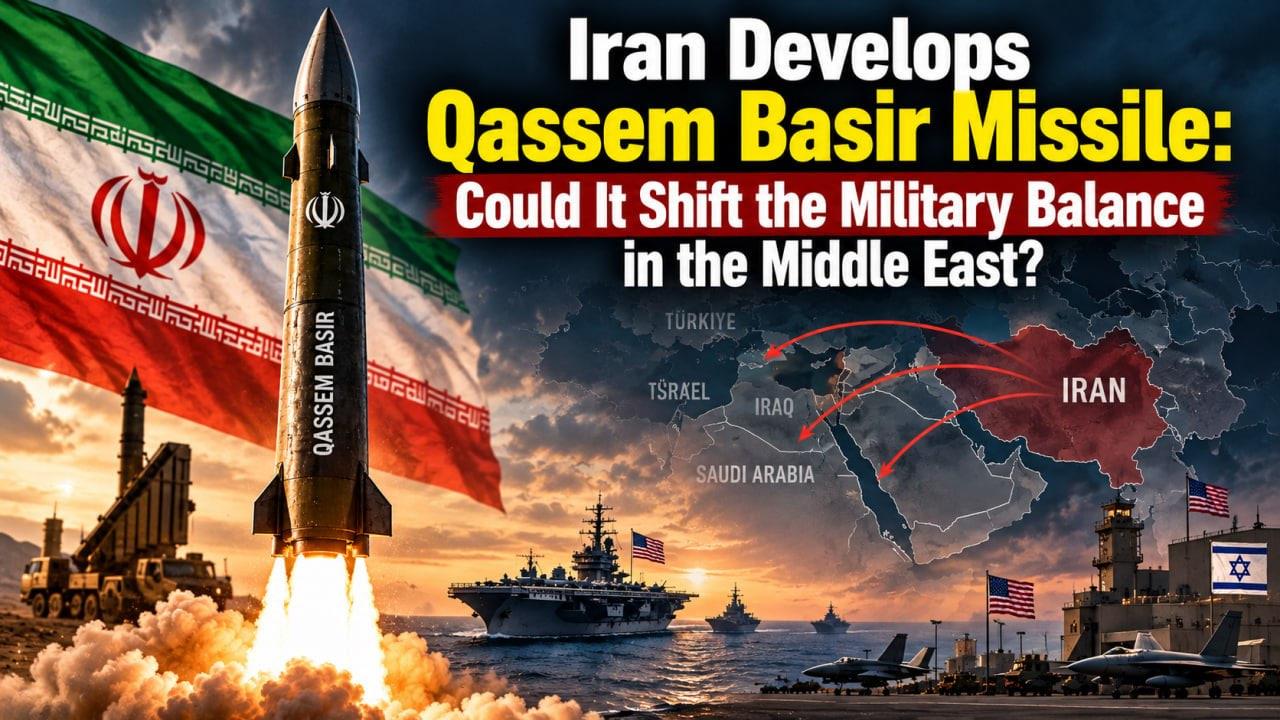
(Phnom Penh): In warfare, the most dangerous missile is not necessarily the one with the longest range. Sometimes, the greater concern is a missile that can strike with greater precision, maneuver more effectively during flight, and give missile-defense systems less time — and fewer opportunities — to intercept it.
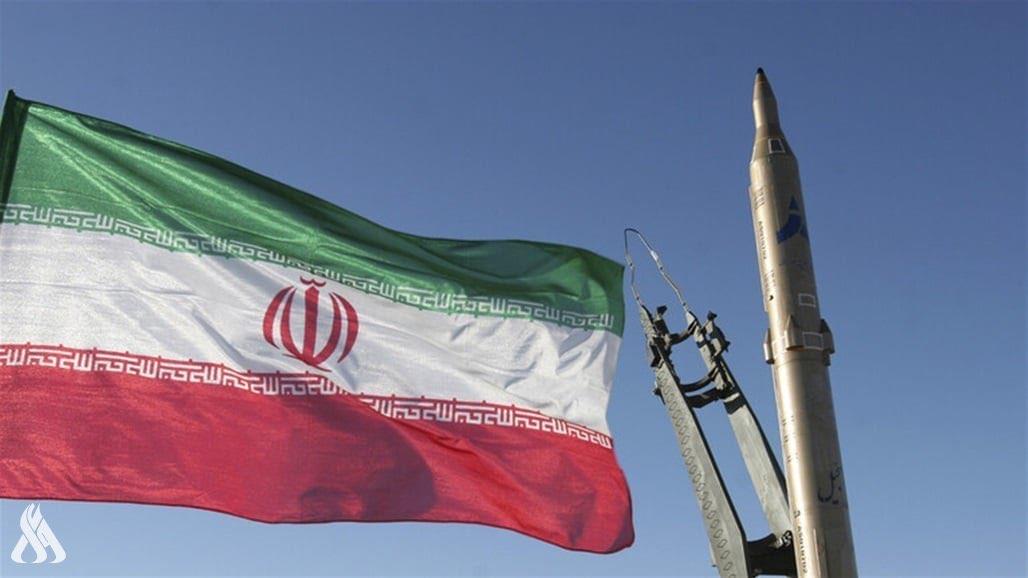
That is why Iran’s Qassem Basir ballistic missile is drawing growing attention.
Reuters reported on September 8, 2026, that Iranian officials claim the Qassem Basir has improved capabilities to evade missile defenses and resist electronic warfare. Iran has also claimed that the missile was used against U.S. warships near the Strait of Hormuz, while the United States said its vessels successfully evaded the attacks.
The Qassem Basir’s actual combat effectiveness, therefore, has yet to be fully and independently verified.
This raises a broader strategic question: If Iran can genuinely make its missiles more accurate, more resistant to electronic interference and harder to intercept, could that force the United States, Israel and their allies to rethink how they defend and deploy their forces across the Middle East?
What Is the Qassem Basir Ballistic Missile?
Iran publicly unveiled the Qassem Basir in 2025. It is a solid-fueled ballistic missile that Tehran says has a range of approximately 1,200 kilometers and can carry a warhead weighing around 500 kilograms.
Its range, however, is not what makes the missile particularly significant. Iran already possesses other missiles capable of traveling farther. The Center for Strategic and International Studies (CSIS) assesses Iran as having one of the largest and most diverse missile arsenals in the Middle East, with some systems reaching approximately 2,000 kilometers.
What makes the Qassem Basir more noteworthy is its reported terminal guidance capability.
Defense analysts have reported that the missile appears designed to employ electro-optical terminal guidance, allowing it to make course corrections as it approaches its target.
In simple terms, many traditional ballistic missiles largely follow trajectories calculated before or shortly after launch. If the Qassem Basir can maneuver and correct its flight path during the terminal phase as Iran claims, it could potentially improve accuracy while making its final trajectory more difficult for missile-defense systems to predict and intercept.
It Cannot Threaten the U.S. Homeland — But It Can Threaten U.S. Forces in the Middle East
With a range of around 1,200 kilometers, the Qassem Basir cannot reach the continental United States. But from Iran’s perspective, it does not need to.
The United States maintains military bases, aircraft, warships, radar installations and command centers throughout the Middle East. A missile capable of threatening those assets can increase the risks and costs associated with maintaining U.S. military forces in the region.
In military strategy, this concept is often associated with Anti-Access/Area Denial (A2/AD) — broadly, the ability to make it more difficult and dangerous for an adversary to enter a region, deploy forces there and conduct military operations effectively.
Iran does not need enough military power to physically drive the United States out of the Middle East. It only needs sufficient capability to make deploying U.S. forces and conducting military operations near Iran more dangerous, more difficult and more costly.
The Greater Concern Is Not the Qassem Basir Alone, but a Mixed Attack
Iran possesses far more than the Qassem Basir. Tehran maintains a diverse arsenal that includes ballistic missiles, cruise missiles and long-range attack drones.
This matters because each type of weapon presents missile-defense systems with a different challenge.
Drones can fly slowly and at low altitude. Cruise missiles can also travel at low altitude and follow flight paths that can complicate detection. Ballistic missiles, meanwhile, can approach their targets at very high speeds after descending from much higher altitudes.
If the Qassem Basir adds the ability to maneuver or correct its trajectory during the terminal phase, as Iran claims, the defensive problem becomes even more complex.
Radar networks and command centers must detect, track and assess multiple threats within a short period of time. Defenders must then decide which targets pose the greatest danger, which interceptors should be used against them, and how many interceptors should be allocated to each incoming threat.
If Iran can launch large numbers of different missiles and drones within roughly the same time window, it could attempt what is commonly known as a saturation attack — overwhelming or straining defensive systems by presenting them with more simultaneous threats than they can efficiently detect, track and intercept.
In such a scenario, an attacker does not necessarily have to destroy an entire air- and missile-defense network. It may only need to create more simultaneous threats than the defensive system can effectively process and engage at one time.
That is why the Qassem Basir’s strategic significance may lie less in the missile itself than in its potential use as one component of a broader mixed attack involving other ballistic missiles, cruise missiles and drones designed to place simultaneous pressure on an adversary’s defenses.
Is This Iranian Technology, or Does It Come From Russia or China?
In the specific case of the Qassem Basir, there is currently no credible public evidence demonstrating that Russia or China directly transferred the missile’s technology to Iran.
The stronger available evidence indicates that the Qassem Basir is an evolution of Iran’s indigenous ballistic-missile program, particularly the domestically produced Haj Qassem missile.
Iran’s missile industry, however, did not develop entirely in isolation.
Historically, Tehran has benefited from foreign technology, weapons designs and technical experience. The Shahab-3, for example, traces part of its technological lineage to North Korea’s No-Dong missile, before Iran further developed its own capabilities.
A separate and potentially important development was recently reported by the Financial Times, which revealed a secret program code-named C430L.
According to the report, Russian missile specialists have assisted Iran in addressing technical challenges involving ramjet propulsion, technology that could support the development of supersonic cruise missiles.
An important distinction must be made: C430L is not the Qassem Basir program.
The Qassem Basir is a ballistic missile. The Russian technical assistance reported under C430L concerns technology associated with supersonic cruise missiles.
Strategically, however, the two developments could become significant when viewed together.
If Iran continues improving its domestically developed ballistic missiles while also acquiring outside technical expertise relevant to advanced cruise missiles, U.S. and allied defenses could face a broader range of threats with different speeds, altitudes, flight profiles and interception requirements.
Conclusion: Could the Qassem Basir Shift the Military Balance?
So, could the development of the Qassem Basir change the military balance in the Middle East?
The answer is that the Qassem Basir alone is not enough to overturn a military balance that still overwhelmingly favors the United States and its allies in many key areas of conventional military power.
Its significance instead lies in what it may represent: a continuing Iranian effort to move beyond missiles that can simply “reach the target” toward weapons designed to strike more accurately, maneuver more effectively and complicate interception.
If such capabilities prove effective, can be produced in significant numbers and are integrated into mixed attacks involving ballistic missiles, cruise missiles and drones, their strategic impact would extend well beyond the Qassem Basir itself.
They could force the United States, Israel and their allies to spend more on missile defense, deploy additional defensive systems, disperse forces and assets, and weigh the risks more carefully before conducting military operations.
If the Qassem Basir ultimately affects the military balance in the Middle East, therefore, it will not be because the missile makes Iran militarily stronger than the United States.
Its real strategic effect could be to narrow the operational gap: the United States would remain militarily superior, but deploying and employing that power in the Middle East could become more costly, more dangerous and more constrained.
Put simply, the Qassem Basir does not need to make Iran stronger than the United States to alter the military equation. It only needs to make it harder for Washington to use the military advantages it already possesses.