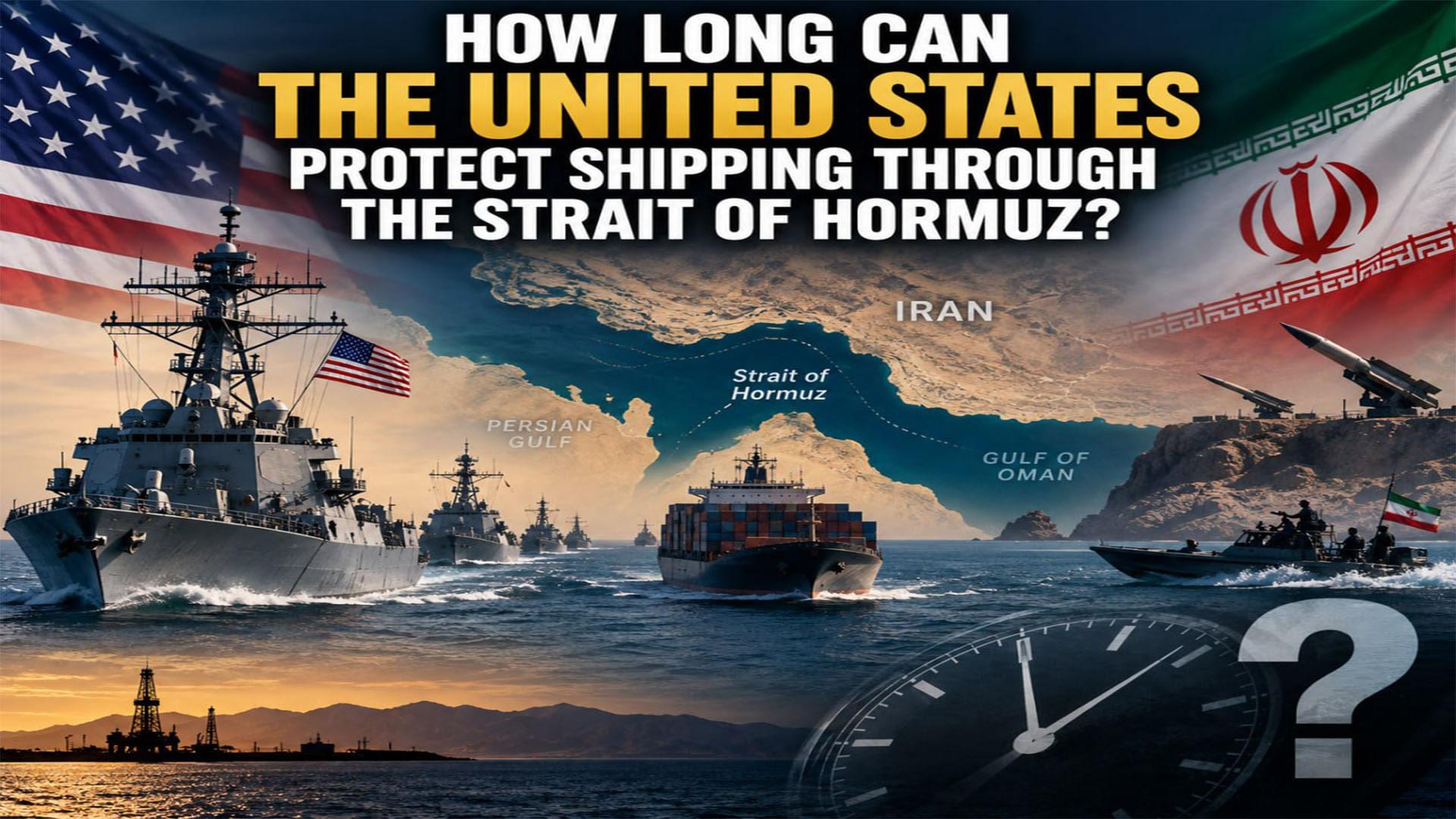
(Phnom Penh): The United States possesses one of the world’s most powerful navies. If Washington chooses to deploy its warships, aircraft and intelligence capabilities to protect commercial vessels transiting the Strait of Hormuz, there is little doubt that it has the military capacity to do so.
The more consequential question, however, is this: How long can the United States protect commercial shipping through the Strait of Hormuz before the military, economic and political costs rise beyond what Washington is prepared to bear?
That question has become more pressing after Iran announced plans to establish a new “exclusion zone” near the Strait of Hormuz, as the United States intensifies its blockade of Iranian oil exports. The Associated Press reported that more than 20 U.S. warships have been involved in the operation, with dozens of commercial vessels diverted.
The confrontation is therefore taking on a new form: blockade versus counter-pressure. Washington is seeking to make it increasingly difficult for Iranian oil to reach global markets. Tehran, meanwhile, is signaling that if its own oil cannot move freely, shipping by other countries through the Strait of Hormuz may also become increasingly difficult.
U.S. Military Power Is Formidable — but Time Is Not Unlimited
There is little doubt that the United States holds a significant military advantage over Iran at sea and in the air.
But maintaining control and security over a strategic waterway for an extended period requires enormous resources: warships, air-defense vessels, surveillance aircraft, missile-defense systems, mine-countermeasure capabilities, fuel, technical personnel and a continuous supply of munitions.
Washington’s challenge is that these military assets are not needed in the Strait of Hormuz alone. The United States must also preserve forces and combat readiness for Europe, the wider Middle East and the Indo-Pacific.
Reuters reported on September 2 that concerns exist within the Trump administration over declining munitions stockpiles and the costs of a prolonged confrontation. Some officials have sought to keep the conflict with Iran at a lower level of intensity until after the U.S. midterm elections in November.
That underscores a fundamental strategic reality: time itself is a military resource.
The United States may possess more weapons and greater military capacity, but no country can sustain a costly military operation indefinitely without eventually facing economic and political costs — as well as reduced strategic flexibility elsewhere.
Protecting Hormuz Means More Than Protecting Ships
The U.S. Navy can shoot down drones, intercept missiles and strike Iranian military positions. But restoring the Strait of Hormuz as a normal commercial shipping route requires more than military superiority.
Shipping companies, shipowners and insurers must be confident that their vessels can transit the waterway safely and that the risks have fallen to an acceptable level.
Shipping data suggest that such confidence has yet to return.
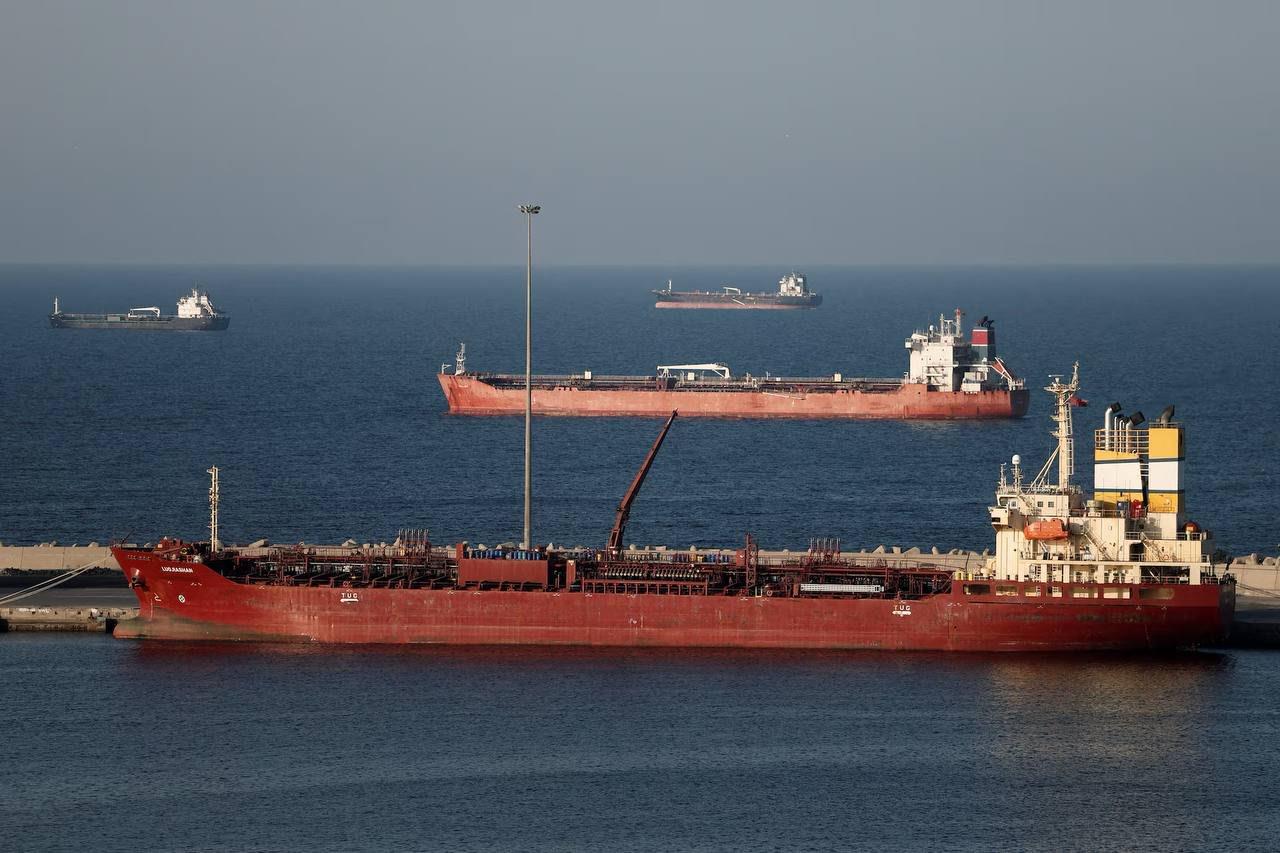
Reuters reported that on September 4, only four trackable cargo vessels transited the Strait of Hormuz, compared with a 10-day average of around 15 per day. Before the war, roughly 125 large commercial vessels a day passed through the waterway.
Reuters cautioned, however, that those figures do not include ships that may have switched off their Automatic Identification System, or AIS, to avoid detection.
The picture became even clearer by September 6, when Reuters reported that the 10-day average had fallen to about 10 cargo vessels per day, the lowest level since May.
Maritime risk consultancy Marisks assessed the threat to Iran-linked vessels at its highest level, while risks to U.S.-linked or U.S.-escorted shipping had also increased significantly.
This highlights an important distinction: The United States can use military power to counter threats, but military power alone cannot immediately restore market confidence.
Iran Does Not Need to Defeat the U.S. Navy
This is one of the most important points in understanding Iran’s strategy.
Tehran does not need to defeat the U.S. Navy or wrest complete control of the Strait of Hormuz from Washington. What Iran needs is to keep the level of risk sufficiently high to make protecting commercial shipping increasingly difficult and costly for the United States.
Sea mines, anti-ship missiles, drones and fast attack boats can all be used to create persistent threats.
Reuters has reported, citing intelligence sources and military analysts, that Iran could use drones to disrupt the Strait of Hormuz for months, while sea mines could potentially prolong the disruption further.
For the United States, countering such threats requires the sustained deployment of warships, air-defense systems, mine-clearing capabilities, intelligence assets and escorts for commercial shipping.
Iran’s announced plan for a new “exclusion zone” can also be viewed in this context. The Associated Press reported that Tehran announced plans for such a zone near the Strait of Hormuz as maritime tensions between Iran and the United States continued to intensify.
Iran’s objective, therefore, may not necessarily be to close the Strait of Hormuz 100 percent.
From Tehran’s perspective, making the waterway dangerous, unpredictable and expensive enough to transit could itself be sufficient to exert pressure on Washington and global markets.
Kpler data cited by Reuters on September 6 showed that the 10-day average for cargo vessels passing through Hormuz had fallen to roughly 10 ships per day, the lowest level since May.
The figures illustrate an important point: Iran does not necessarily need to shut the strait completely to cause serious disruption to commercial shipping.
The Oil Market Is Becoming a Clock
Pressure on Washington is not confined to the sea. It is moving from the Strait of Hormuz into the oil market — and from the oil market into the pockets of American consumers.
Reuters reported on September 7 that Brent crude had risen to around $97 a barrel, as U.S.-Iranian attacks on shipping heightened concerns about disruptions to Middle Eastern oil supplies.
Brent had risen roughly 7.8 percent over the previous week, while shipping traffic through Hormuz had fallen to its lowest level since May.
The consequences have already reached American consumers.
The Associated Press reported that average U.S. gasoline prices around the Labor Day holiday had climbed to approximately $4.14 a gallon, the highest level recorded for a Labor Day weekend. That was nearly one dollar a gallon higher than during the same period a year earlier.
It is at this point that time begins to shift from a military problem into a political problem for the White House.
Maintaining warships and defensive systems around Hormuz for a short period can be treated primarily as a military operational challenge. But if the confrontation continues for months while oil and gasoline prices remain elevated, the consequences of the conflict will no longer be confined to a distant theater in the Middle East. They will increasingly affect the daily lives of American voters.
A Reuters/Ipsos poll released on September 4 found that only about one-quarter of Americans believed the war with Iran was worth the cost.
Reuters has also reported that some senior Trump administration officials favor keeping the military confrontation at a lower level of intensity until after the November midterm elections, amid concerns about high gasoline prices, war fatigue and the potential electoral consequences.
The oil market is therefore increasingly functioning as a political clock for Washington.
The longer the Strait of Hormuz fails to return to normal, the greater the potential economic and political costs.
Conclusion: A Contest of Time, Cost and Political Will
So what is the answer to the central question — the United States can protect shipping through the Strait of Hormuz, but for how long?
The answer is that the United States has the military capacity to sustain such an operation for a considerable period, but neither its time nor its resources are unlimited.
The longer the operation continues, the more warships, munitions, defensive systems and commercial escorts it will require. At the same time, pressure on oil prices, insurance premiums and shipping costs could continue to rise, while the risk of miscalculation between U.S. and Iranian forces would also increase.
But time is not entirely on Iran’s side either.
The U.S. blockade of Iranian oil exports is placing severe pressure on Tehran’s revenues and economy. Both sides, therefore, face mounting costs if the confrontation drags on.
The struggle over Hormuz is consequently becoming a test not simply of which side possesses greater military power, but of which side can absorb the costs for longer — and which can turn military and economic pressure into political results first.
Put simply, the United States may be capable of winning many individual confrontations in the Strait of Hormuz. The harder challenge is restoring the waterway to normal commercial use without having to defend it indefinitely.
That is the real contest now unfolding in the Strait of Hormuz: not merely a contest of military power, but a contest of time, cost and political will.