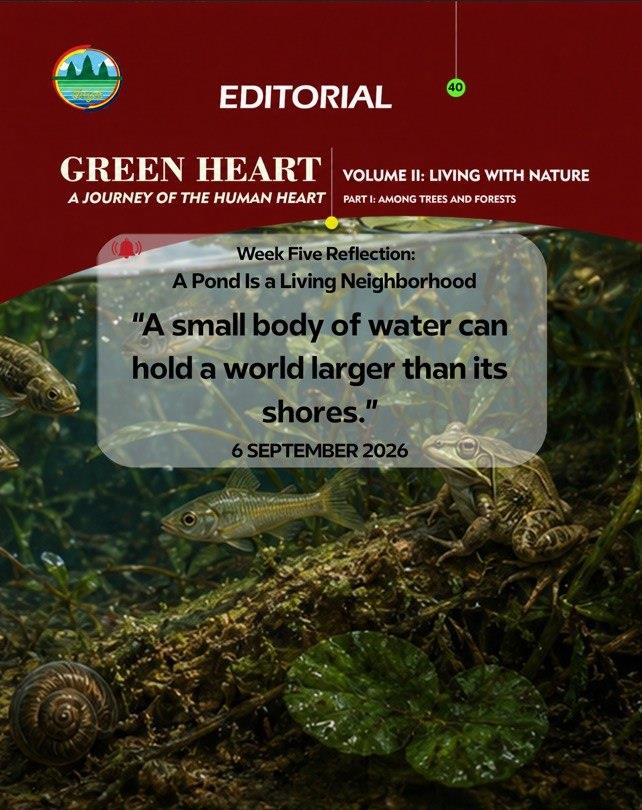
(Phnom Penh): A pond may fit inside a school ground, farm, garden, village, or forest opening. Its surface can look quiet, but above, within, and below the water, life is busy.
“A small body of water can hold a world larger than its shores.”
Algae and aquatic plants capture light. Insects skim the surface or develop underwater. Fish, frogs, snails, birds, and other animals may feed, shelter, or reproduce there. Microorganisms break down materials and cycle nutrients. The pond’s edges connect water with land.
Not every pond contains the same life. Depth, sunlight, water chemistry, plants, season, connection to other waters, and human use shape the community. Some ponds are natural; others are built for irrigation, livestock, stormwater, aquaculture, beauty, or biodiversity.
Balance can change. Too many nutrients from fertilizer, waste, or runoff may cause excessive algae growth. As algae die and decompose, oxygen can decline, harming fish and other organisms.
Chemicals, litter, and introduced species may create further problems.
Care begins with the surrounding land. A vegetated edge can provide habitat and intercept some runoff. Avoiding chemical misuse and keeping waste away helps protect water quality. Management should match the pond’s purpose and local guidance.
We must never release aquarium fish, plants, or pets into a pond. A species harmless in a tank can become invasive or carry disease in a new environment. Responsible ownership protects both the pet and the ecosystem.
Ponds also require safety. Children should not approach deep or unknown water without supervision. Water that looks clear may still contain hazards. Observation from a safe distance is enough to discover wonder.
Watch a pond patiently. At first you may see only water. Then a ripple appears, a dragonfly lands, a bird calls, or a bubble rises. Attention reveals residents one by one.
The pond teaches that size does not determine importance. A small habitat can support breeding, feeding, rest, and refuge. Protecting it can preserve a whole neighborhood whose inhabitants cannot speak at a community meeting but whose lives still matter.
People can speak on their behalf by bringing careful observations: when frogs call, when fish struggle, when water changes color, or when litter appears. Observations are not final conclusions, but they help responsible adults decide what questions to investigate.
A careful witness can become the beginning of timely protection.
Buddhist Reflection
Patience allows hidden life to reveal itself. When the mind becomes still, we notice more and disturb less. This attentive presence is a form of respect.
Today’s Reflection
Which forms of life might depend on a pond even if they do not live there all the time?
Today’s Action
Observe a pond or a photograph of one. Build a food-and-shelter web with at least six living members.
Today’s Pledge
Today I will respect small waters as living neighborhoods and observe them safely.
When we protect nature, we protect all beings, including ourselves.
=FRESH NEWS