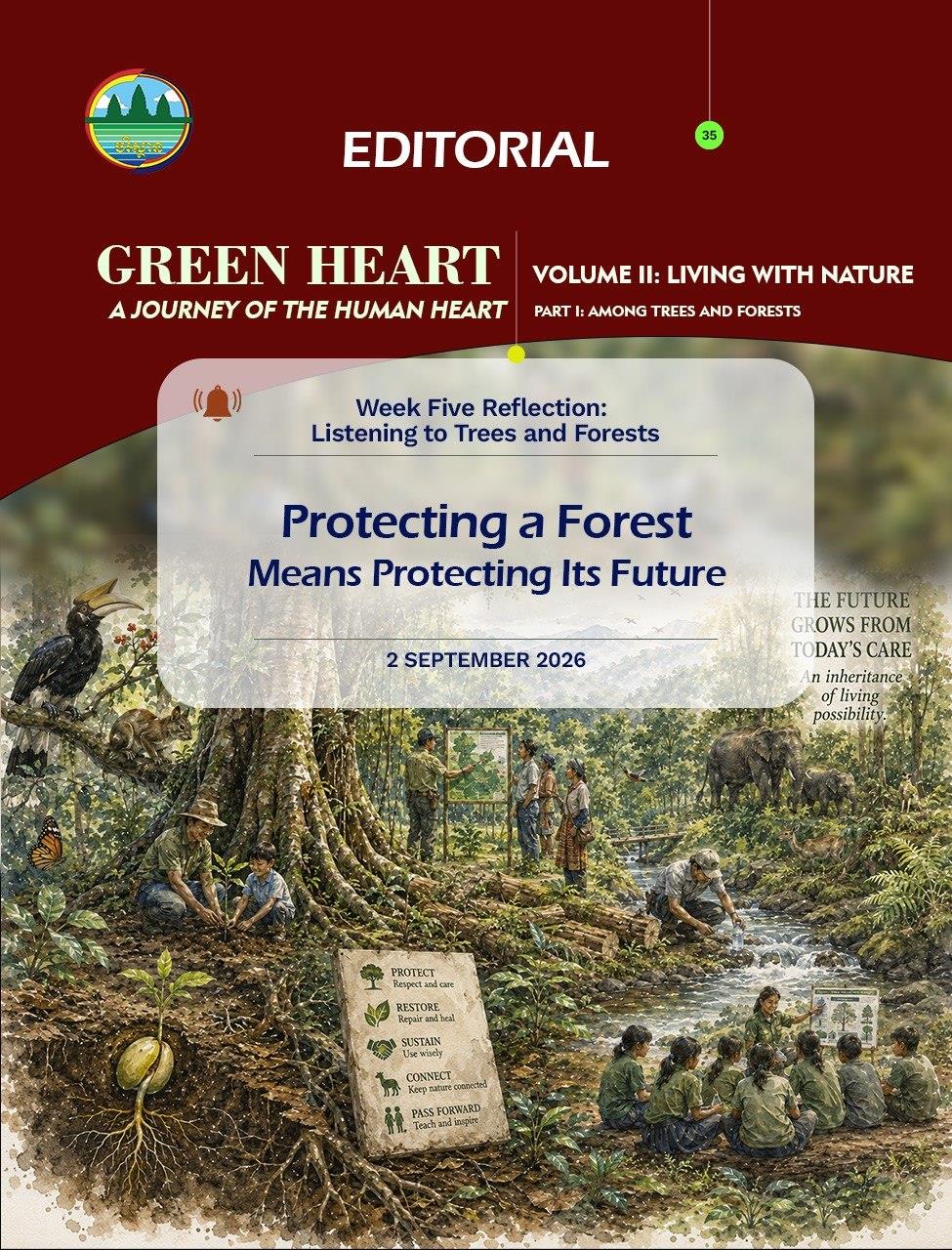
(Phnom Penh): A forest may look permanent. Trees stand firmly, paths disappear into shade, and new leaves return with the seasons. Yet a forest’s future depends on processes that can be easily overlooked.
“A forest survives when today’s care leaves room for tomorrow’s life.”
Seeds must be produced, dispersed, and given suitable places to grow. Pollinators and seed-carrying animals may be involved.
Young trees need light, water, soil, and protection from pressures they cannot withstand. Streams must continue flowing, and connections to other habitat may be important for wildlife movement.
Protection is therefore not merely drawing a boundary on a map. Boundaries can be valuable, but a forest also needs responsible management, community participation, scientific monitoring, lawful use, and attention to changing conditions.
Fire, invasive species, overuse, pollution, climate change, and development may affect forests differently.
People are part of many forest futures. Communities may depend on forest resources and hold generations of knowledge about the land.
Durable protection respects rights, livelihoods, culture, and human dignity while maintaining ecological health. When people benefit fairly from stewardship, care can become stronger.
Restoration may be needed where forests have been damaged. Sometimes natural regeneration can recover a place if pressures are removed. In other cases, active planting, erosion control, invasive-species management, or other work is helpful.
The best method depends on local evidence.
Young people have a special relationship with the future. A forest protected today may reach its fuller form during their adulthood. Decisions made during their adulthood will then shape what their children receive.
Protecting the future also means protecting hope. Fear may gain attention for a moment, but people need a vision worth working toward: healthy forests, reliable water, wildlife, livelihoods, learning, and places of beauty.
This week, we traveled from a tree’s shade to its roots and leaves, from thoughtful planting to old trees, young growth, and forest layers. We now see that protection is not one action. It is continuity.
Imagine a child walking through this forest fifty years from now. What will that child hear? Which trees will provide shade? Which animals will still find homes? The answer is being shaped by choices made today.
Let our choices become an inheritance of living possibility.
An inheritance requires guardians in every generation. Records, education, local leadership, and opportunities for young people help knowledge pass forward. A protected forest is strongest when care for it becomes part of community identity rather than a temporary project.
Buddhist Reflection
Compassion includes beings not yet present before us. Acting for future generations requires generosity because we may never receive their thanks. Wise stewardship becomes a gift offered across time.
Today’s Reflection
What must continue happening for a forest near me to remain healthy in the future?
Today’s Action
Write one question about the future of a local forest or group of trees. Ask a teacher, elder, or knowledgeable person and record the answer.
Today’s Pledge
Today I will protect not only the forest I see, but also the future growing within it.
When we protect nature, we protect all beings, including ourselves.
=FRESH NEWS