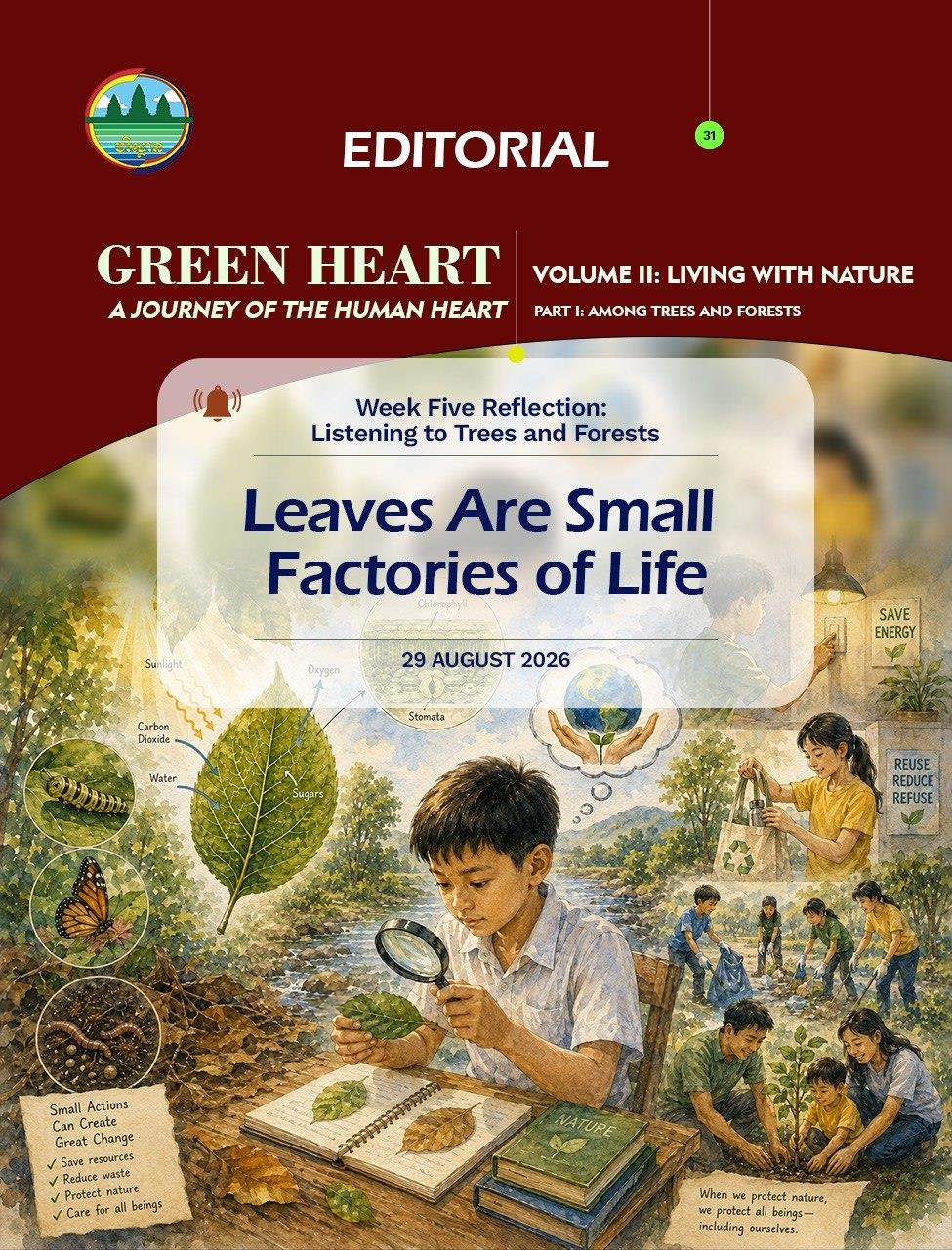
(Phnom Penh): A leaf may appear simple: a thin green shape moving in the wind. Inside it, however, are structures that capture light, exchange gases, move water, and help the plant make food.
The leaf is an elegant meeting place between Earth and sky.
“A leaf is small enough to hold, yet wise enough to work with sunlight.”
During photosynthesis, chlorophyll and other pigments help plants use light energy to turn carbon dioxide and water into sugars. Those sugars support growth and repair.
Oxygen is released. The process varies with plant type and conditions, but it forms a foundation for most food webs.
Leaves also exchange water with the air through tiny openings called stomata. Water drawn from roots can evaporate from leaf surfaces, a process called transpiration.
This movement helps transport materials through the plant and can influence local moisture and cooling.
Not every leaf is broad or green throughout the year. Needles, thick desert leaves, floating leaves, and seasonal leaves reflect different adaptations. Some plants shed leaves during dry or cold periods to conserve resources.
Others keep them longer. Diversity reveals many solutions to the challenge of living.
Leaves feed more than their own plants. Caterpillars and other animals may eat them. Fallen leaves shelter organisms and return materials to soil as they decompose.
A leaf damaged by an insect is not automatically a useless leaf; it may be participating in a food web.
We should therefore observe before reacting. Using chemicals without understanding can harm helpful insects, soil organisms, water, or human health.
Plant care should follow reliable guidance and use the least harmful effective method.
The leaf offers a lesson in using what is available. It does not complain that sunlight arrives one ray at a time. It receives what conditions provide and turns it toward life. We, too, can use small opportunities for learning and service.
Hold a fallen leaf, never tear a healthy one merely for the exercise. Notice its veins, edges, color, and texture. This small object once helped build a tree from air, water, light, and minerals.
Wonder is an appropriate response.
When millions of leaves work together, landscapes grow, air and water cycles are influenced, and countless lives are fed. Small does not mean unimportant. Sometimes the future of a forest is written in surfaces thinner than paper.
We can carry this insight into our own lives. A page read, a question asked, or a kind action repeated may feel as small as one leaf. Joined with the efforts of others, it can help build a culture of knowledge and care.
Buddhist Reflection
Mindfulness reveals depth in what we usually overlook. A leaf shows causes and conditions working together: light alone is not enough, nor are water, air, or soil alone. Wisdom sees the relationship rather than praising one cause.
Today’s Reflection
What ordinary part of nature becomes extraordinary when I understand how it works?
Today’s Action
Compare two fallen leaves. Sketch their shapes and veins, then learn one fact about why leaves differ.
Today’s Pledge
Today I will look closely, learn patiently, and honor the small processes that support life.
When we protect nature, we protect all beings, including ourselves.
=FRESH NEWS