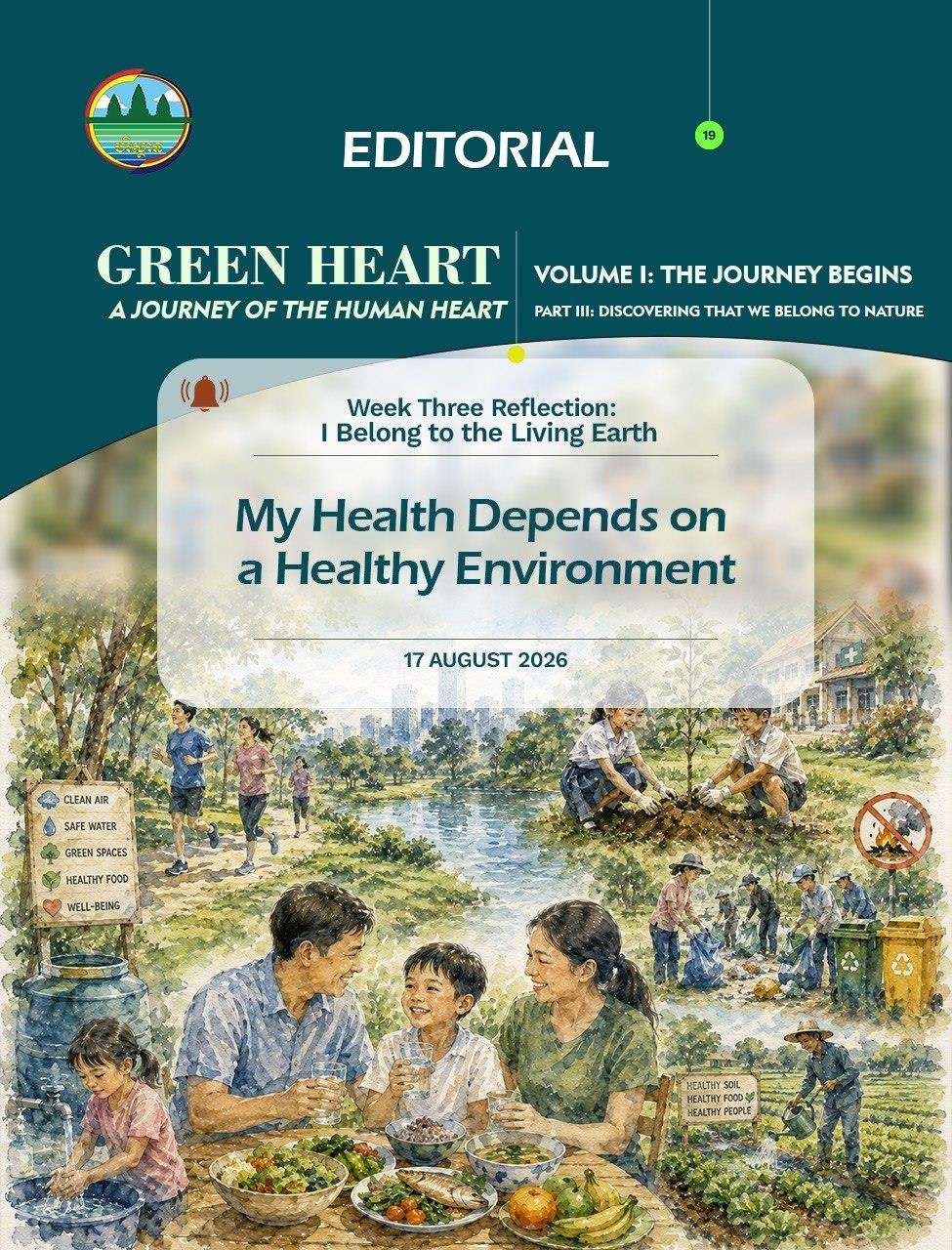
(Phnom Penh): We often think of health as something inside the body. We eat nourishing food, exercise, sleep, wash our hands, and seek medical care. These choices matter, but health also depends on conditions around us.
“A healthy body needs a healthy home, and Earth is our first home.”
Clean air supports lungs and hearts. Safe water helps prevent disease. Healthy soil and responsible agriculture support food. Shade and green spaces can provide places for movement, rest, and relief from heat.
Biodiversity and well-managed ecosystems can help sustain many services on which communities depend.
Environmental conditions can also create risks. Polluted air, contaminated water, unsafe waste, extreme heat, and harmful chemicals can affect people differently. Children, older adults, outdoor workers, and people with existing health conditions may be especially vulnerable.
Understanding these links should inspire care, not fear. We can protect ourselves through safe practices and trusted health guidance.
We can also improve shared conditions: keeping water containers safe, reducing standing water where disease-carrying mosquitoes breed, avoiding waste burning, planting suitable shade, and maintaining clean public spaces.
Health and environmental care should be compassionate. A person may use a harmful method because safer options are unavailable or unknown.
Lasting improvement comes through education, practical alternatives, good systems, and cooperation, not blame.
Mental well-being also connects with surroundings. Time in safe green spaces can support relaxation, attention, and physical activity.
A cared-for neighborhood communicates that people matter. Participating in improvement can replace helplessness with belonging.
No environment can remove every illness, and no individual action guarantees health. Bodies are complex, and professional care remains important.
Yet reducing environmental risks and strengthening healthy surroundings give more people a better chance to thrive.
When we clean a shared space, protect water, or help a tree grow, we are not doing something separate from human welfare. We are caring for the conditions of life.
Your body is constantly meeting the environment through breath, water, food, sound, light, and touch. Let that truth become encouragement.
A healthier Earth supports healthier communities, and every careful action contributes to that shared home.
Environmental care is therefore also an act of kindness toward people we may never meet. Cleaner surroundings can protect a stranger’s health, reduce a worker’s burden, and give children safer places to learn and play.
Buddhist Reflection
Compassion responds to suffering by understanding its conditions. Caring for health therefore includes both personal habits and the environments shared with others. Wise compassion seeks practical prevention while treating every person with dignity.
Today’s Reflection
Which part of my environment most supports my physical or mental well-being?
Today’s Action
Improve one safe health-supporting condition: refill clean drinking water, clear approved litter, spend time walking in shade, or ask an adult about a local concern.
Today’s Pledge
Today I will care for my health and help create healthier surroundings for others.
When we protect nature, we protect all beings, including ourselves.
=FRESH NEWS