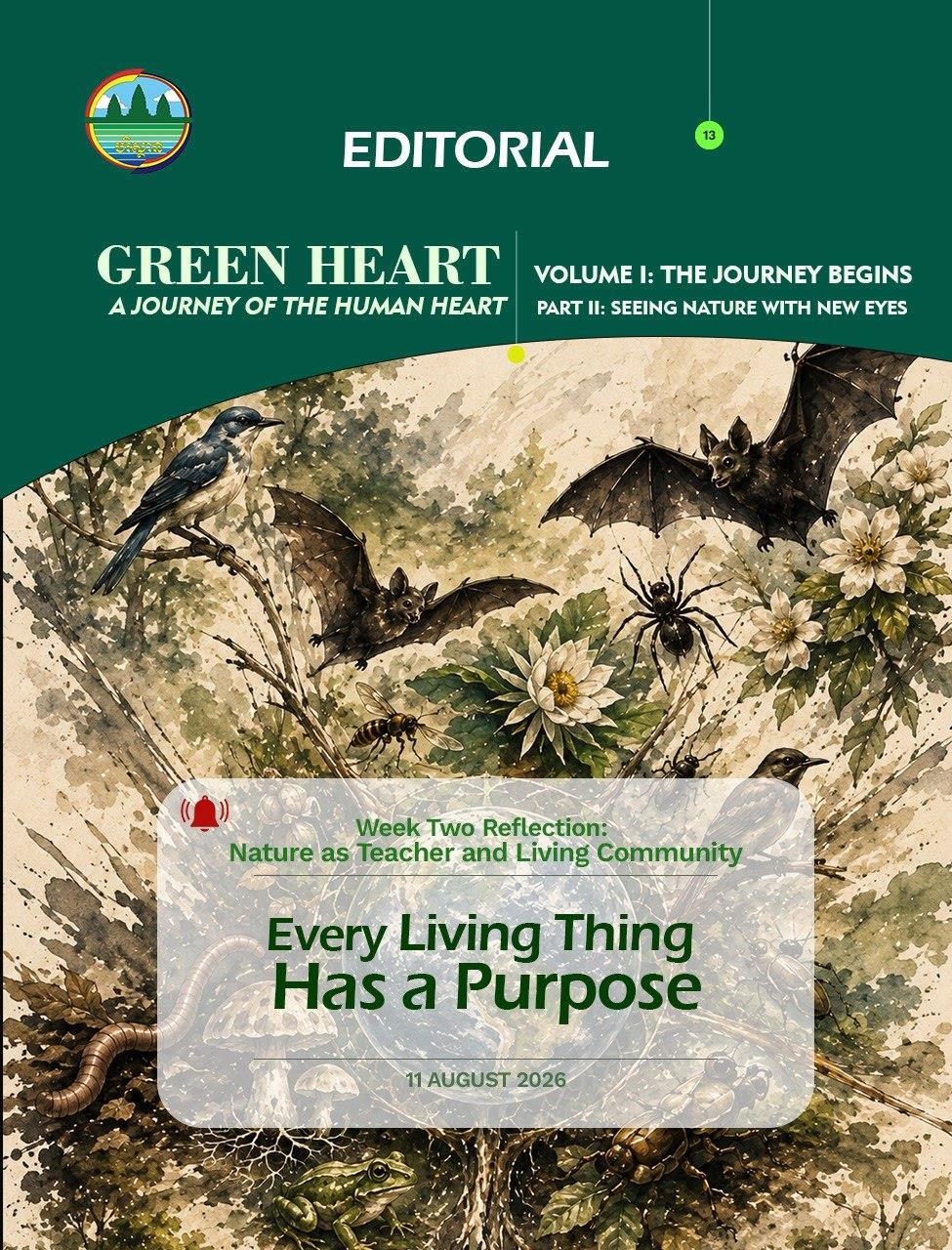
(Phnom Penh): People easily admire a flowering tree, a graceful bird, or an animal with gentle eyes. It can be harder to appreciate a bat, worm, spider, fungus, or insect. Some living things frighten us; others seem ugly, annoying, or useless.
“A life does not need to please us in order to belong.”
In nature, however, usefulness is not decided by human preference. Earthworms and other soil organisms help break down organic matter and influence soil structure.
Fungi decompose dead material and form important relationships with many plants. Bats may pollinate plants, disperse seeds, or eat insects, depending on the species. Spiders help regulate populations of other small creatures.
No species exists for only one simple purpose, and nature is not a machine in which every organism has a job assigned for human benefit.
Each form of life follows its own way of surviving and reproducing. Through those activities, it becomes part of ecological relationships that may support many others.
We should also be accurate: some organisms can carry disease, damage crops, or become invasive outside their native range.
Respect for life does not require us to ignore safety. It asks us to respond with knowledge, proportion, and the least unnecessary harm.
We can seek expert guidance instead of reacting from fear.
The phrase “every living thing has a purpose” can therefore be understood as a lesson in humility. We may not yet understand a species’ role. Even scientists continue discovering relationships in ecosystems. What appears unimportant to us may be essential to another life.
This lesson also touches human communities. People should not be valued only by how useful they seem. Every person has dignity, possibilities, and a place in the shared world. Nature’s diversity can remind us that difference is not a defect.
The next time you meet a small creature, pause before saying, “It is useless.” Observe from a safe distance. Ask what it eats, what eats it, where it lives, and what relationships surround it. Curiosity can replace disgust.
A green heart does not need to love every creature in the same way. It learns to make room for life. It protects habitats, avoids needless killing, and accepts that the Earth is home to beings whose value is not ours to grant.
Respect begins with allowing wonder to be larger than fear.
Buddhist Reflection
Loving-kindness can be extended toward all beings, including those we do not find attractive or familiar. This does not remove wise boundaries. It removes needless hatred. By joining goodwill with understanding, we can protect both safety and reverence for life.
Today’s Reflection
Which living thing do I dismiss because I do not understand it?
Today’s Action
Choose one unfamiliar local organism and learn two reliable facts about its ecological relationships. Do not touch or disturb it.
Today’s Pledge
Today I will meet unfamiliar life with curiosity, humility, and respect.
When we protect nature, we protect all beings, including ourselves.
=FRESH NEWS