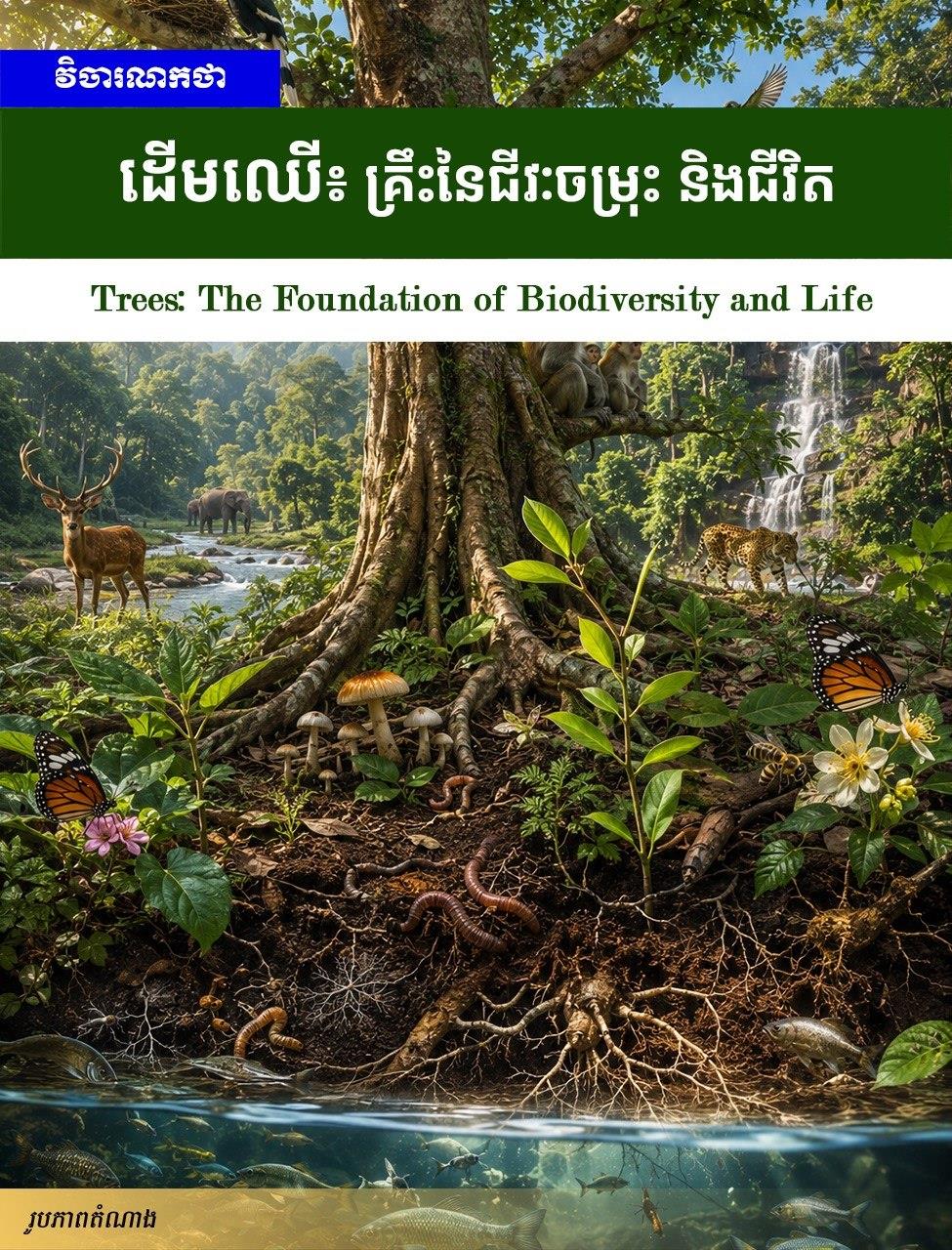
(Phnom Penh): A single tree may appear to stand alone. But in reality, it never does.
Within its branches, beneath its roots, on its bark, among its leaves, and in the soil surrounding it lives an extraordinary community of life. Birds build their nests. Bees gather nectar. Butterflies pollinate flowers. Monkeys find food and shelter.
Insects, fungi, earthworms, and countless microorganisms work quietly beneath the ground. Even plants depend upon one another, forming an invisible network that supports life.
This remarkable web of life is known as biodiversity.
Biodiversity is not simply a collection of different plants and animals. It is the living system that keeps nature healthy and keeps humanity alive.
Every species, whether large or small, has a role to play. When biodiversity is healthy, ecosystems remain productive, forests become resilient, rivers stay clean, crops are pollinated, pests are naturally controlled, and the balance of nature is maintained.
Trees are the foundation of this living network.
A mature tree is more than wood and leaves. It is a home, a nursery, a food source, and a sanctuary for hundreds, sometimes thousands, of living organisms. Birds nest among its branches. Fruit feeds mammals and insects.
Flowers nourish bees and butterflies. Fallen leaves become food for countless organisms that enrich the soil. Even when a tree grows old or dies naturally, it continues supporting life by providing shelter and nutrients for new generations.
Healthy forests are therefore among the richest reservoirs of biodiversity on Earth.
When forests are protected, wildlife thrives. Pollinators multiply. Seeds are dispersed naturally. Predators help maintain ecological balance.
Rivers remain healthier because forests stabilize the land. Farmers benefit because bees, butterflies, birds, and beneficial insects contribute to crop production. Nature’s economy continues to function without payment, quietly serving humanity every day.
But when trees disappear, biodiversity begins to disappear with them.
The loss of forests means the loss of habitat. Animals are forced to leave their homes or perish. Pollinators decline. Soil organisms diminish. Food chains are disrupted. Ecosystems become weaker and less able to recover from droughts, floods, fires, and climate change.
The consequences ultimately reach people. Reduced biodiversity can lead to lower agricultural productivity, declining fisheries, poorer water quality, increased pest outbreaks, and greater vulnerability to natural disasters.
Protecting biodiversity is therefore not only about saving wildlife, it is about protecting human well-being.
Cambodia is blessed with extraordinary natural wealth. Our evergreen forests, deciduous forests, flooded forests, mangrove forests, mountains, wetlands, rivers, and coastal ecosystems support an incredible diversity of plants and animals found nowhere else on Earth.
This natural heritage is both a national treasure and a global responsibility.
Every tree planted contributes to restoring biodiversity. Every forest protected gives wildlife another chance to survive. Every mangrove restored strengthens coastal ecosystems. Every riverbank replanted creates new habitats for birds, fish, and countless other species.
The responsibility belongs to all of us.
Protect forests from illegal logging.
Prevent forest fires.
Plant native tree species.
Protect wildlife and their habitats.
Teach our children to appreciate nature.
Support community conservation efforts.
When we plant a tree, we are not planting it for ourselves alone.
We are planting a home for birds.
We are planting flowers for bees.
We are planting food for wildlife.
We are planting life for the soil.
We are planting hope for future generations.
Biodiversity is nature’s greatest insurance policy. The richer the diversity of life, the stronger and more resilient our environment becomes.
The future of Cambodia depends not only on the roads we build or the cities we develop, but also on the forests we preserve and the living creatures that share this land with us.
A healthy tree supports countless forms of life.
A healthy forest sustains an entire nation.
Let us continue planting trees, protecting forests, and conserving biodiversity—not simply because nature needs us, but because our future depends on the health of every living thing that calls Cambodia home.
For when trees flourish, biodiversity flourishes.
And when biodiversity flourishes, humanity flourishes alongside it.
=FRESH NEWS