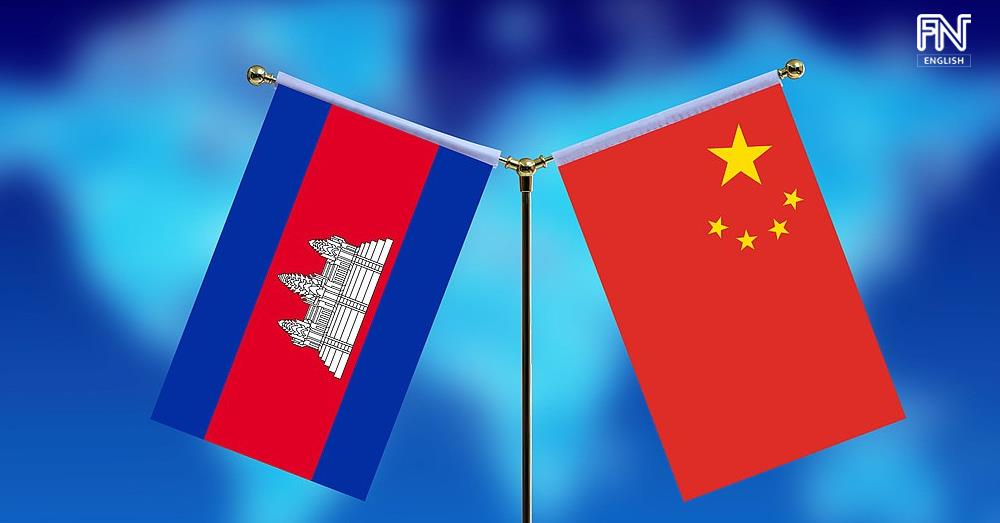
(Phnom Penh): Relations between Cambodia and China are rooted in a long-standing historical friendship that has continued to deepen and broaden over the decades. The two countries have steadily strengthened cooperation across a wide range of sectors, including politics, the economy, trade, investment, infrastructure, national defence, education, and culture. This relationship has evolved into a Comprehensive Strategic Partnership, making a significant contribution to Cambodia’s socio-economic development.
On 25 June 2026, Samdech Techo Hun Sen, President of the Senate of Cambodia, began an official goodwill visit to China. The visit reaffirms the unwavering commitment of both countries to further strengthening their ironclad friendship, deepening their comprehensive strategic partnership, and advancing the Cambodia–China All-Weather Community with a Shared Future in the New Era across multiple sectors.
Politically, Cambodia and China have maintained close relations and consistently supported each other in regional and international forums. Frequent high-level exchanges have further strengthened mutual trust and understanding between the two governments.
China has become Cambodia’s largest trading partner and one of its most important sources of foreign investment. Chinese investment has played a vital role in developing Cambodia’s special economic zones, manufacturing industries, agriculture, and service sector. Major infrastructure projects, including highways, bridges, airports, ports, and other transport networks, have significantly improved national connectivity, promoted economic growth, and enhanced Cambodia’s competitiveness.
In recent years, China has remained Cambodia’s leading source of foreign investment, with capital flowing into manufacturing, agriculture, real estate, energy, tourism, and services. The Cambodia–China Free Trade Agreement (CCFTA) has also created new opportunities for Cambodian exports, including rice, bananas, mangoes, pepper, and other agricultural products, to access China’s vast consumer market.
The two countries have continued to expand cooperation in education, scholarship programs, human resource development, and cultural exchanges.
In the social sector, Cambodia and China have strengthened collaboration in education, healthcare, poverty reduction, and human capital development. During the COVID19 pandemic, China provided Cambodia with medical assistance, vaccines, and healthcare supplies, making an important contribution to pandemic response efforts and post-pandemic recovery.
Cultural exchanges have also become an important pillar of bilateral relations. Activities such as art exhibitions, traditional performances, language education, and cultural exchange programs have enhanced mutual understanding between the peoples of both countries.
Interest in learning Chinese has grown significantly in Cambodia, while Chinese visitors and scholars have shown increasing interest in Cambodia’s culture, history, and heritage, particularly Angkor Wat, a UNESCO World Heritage Site. These exchanges have strengthened mutual respect and appreciation for each country's national identity and cultural values. People-to-people exchanges remain a fundamental pillar of the Cambodia–China relationship, fostering long-term friendship and cooperation through greater understanding between the two societies.
Looking ahead, Cambodia–China cooperation is expected to expand beyond traditional sectors into emerging fields such as: digital economy, artificial intelligence (AI), green energy, modern education, innovation, advanced agriculture, and human resource development. The implementation of the Cambodia–China Free Trade Agreement is also expected to boost Cambodian exports and create new opportunities for the private sector.
Overall, Cambodia–China cooperation in the economic, social, cultural, and people-to-people spheres has delivered tangible benefits to both countries. By continuing to strengthen cooperation based on mutual respect, shared interests, and sustainable development, Cambodia and China are expected to further deepen their partnership and expand collaboration in the years ahead. Despite existing challenges, the bilateral relationship continues to offer substantial potential for future growth and mutually beneficial cooperation.
By Dr. Ky Sereyvath
Director, Institute of China Studies, Royal Academy of Cambodia
=FRESH NEWS