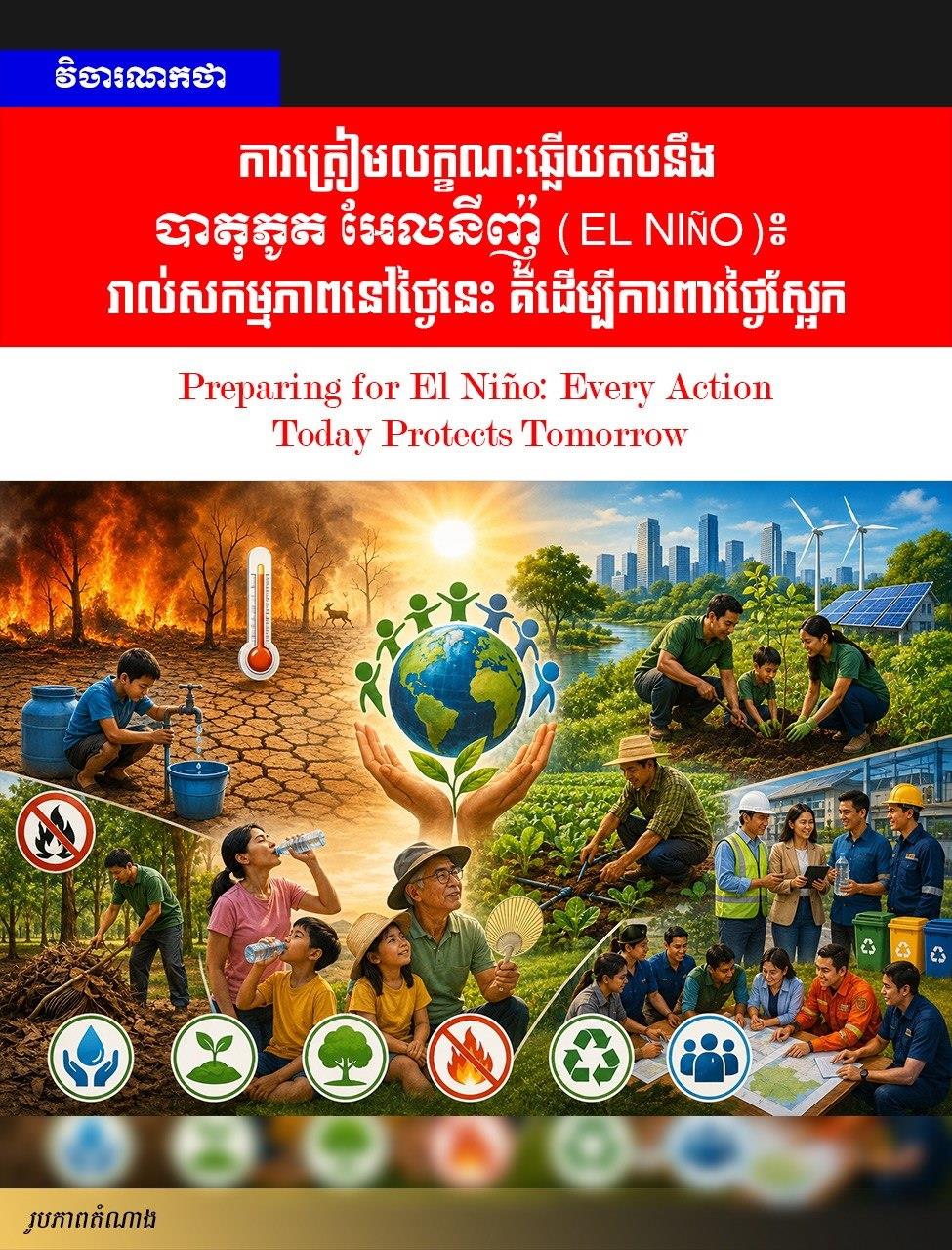
(Phnom Penh): Climate change is no longer a distant concern—it is part of our daily lives. Around the world, rising temperatures are making extreme weather events more frequent and more severe. One of the climate phenomena expected to affect many countries is El Niño, which typically brings hotter temperatures, prolonged dry conditions, reduced rainfall, and an increased risk of drought and forest fires.
While we cannot prevent El Niño from occurring, we can prepare for it. Preparedness is the difference between hardship and resilience.
The first responsibility belongs to each of us. During periods of extreme heat, every drop of water becomes precious. We should use water wisely, repair leaking taps, collect rainwater whenever possible, and avoid unnecessary water consumption. Communities can work together to protect local ponds, lakes, wetlands, and forests, which naturally store water and help regulate local climates.
Fire prevention is equally important. Dry vegetation can ignite with a single spark. We must never burn household waste, agricultural residues, or clear land using fire during the dry season. Campfires should be completely extinguished, cigarettes should never be discarded carelessly, and anyone who notices smoke or a wildfire should immediately alert local authorities. Preventing one fire can save thousands of hectares of forest, countless wildlife, homes, and livelihoods.
Farmers also play a critical role. Choosing drought-resistant crop varieties, improving irrigation efficiency, using mulch to retain soil moisture, and adjusting planting schedules can help reduce losses. Protecting healthy soil through good agricultural practices allows land to better withstand prolonged dry conditions.
Cities and communities also have responsibilities. Trees should be protected rather than cut down. Green spaces cool urban areas, improve air quality, conserve moisture, and reduce the impact of heat waves. Planting trees today is an investment in tomorrow’s resilience.
Families should prepare for periods of extreme heat by drinking enough water, avoiding prolonged outdoor activities during the hottest hours of the day, and paying special attention to children, older persons, and those with existing health conditions. Heat-related illnesses can often be prevented through awareness and simple precautions.
Businesses and industries should use water efficiently, strengthen fire safety measures, reduce emissions, and ensure that waste is managed responsibly. Sustainable business practices not only protect the environment but also strengthen economic resilience during climate-related challenges.
Government agencies, local authorities, schools, civil society organizations, religious institutions, and the private sector all have important roles to play in raising awareness, improving preparedness, and responding quickly to emergencies. Climate resilience is strongest when everyone works together.
Nature itself is one of our greatest allies. Healthy forests protect watersheds, mangroves shield coastlines, wetlands store water, and biodiversity strengthens ecosystems against climate shocks. Protecting nature is not separate from protecting people—it is the same mission.
El Niño reminds us that climate resilience begins long before the first heat wave arrives. Every tree we plant, every fire we prevent, every litre of water we conserve, and every piece of nature we protect strengthens our communities.
The future is not determined by the weather alone. It is shaped by the choices we make today.
Let us prepare together, act responsibly, and stand united in protecting our environment—for ourselves, for our children, and for future generations.
=FRESH NEWS