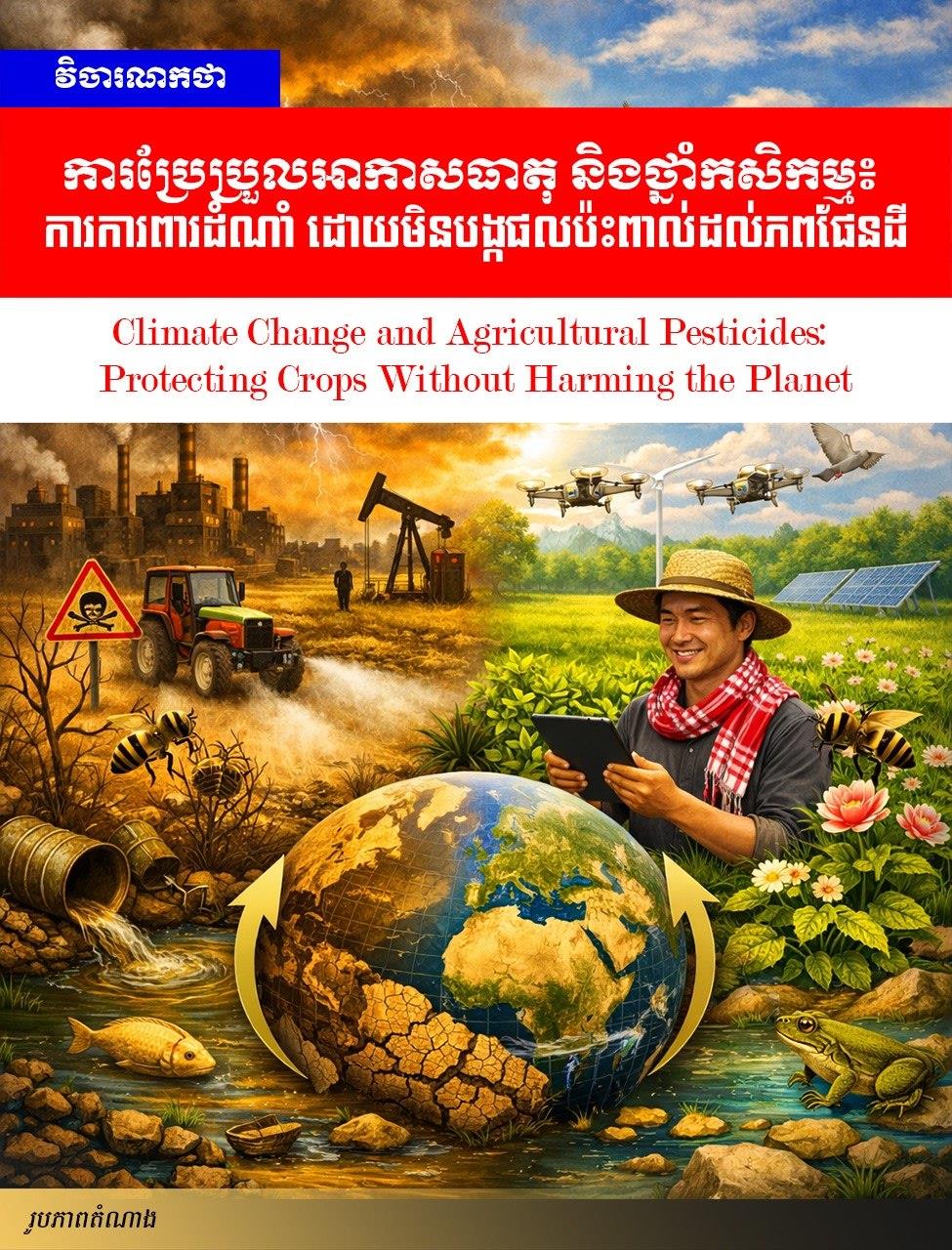
(Phnom Penh): Agriculture is essential to human survival. It provides the food that nourishes billions of people and supports the livelihoods of millions of farmers worldwide.
To protect crops from insects, weeds, fungi, and diseases, farmers often rely on pesticides. These products help increase yields, reduce crop losses, and contribute to food security.
However, as the world confronts the growing challenge of climate change, it is becoming increasingly important to understand the relationship between pesticides, the environment, and a changing climate.
At first glance, pesticides may seem unrelated to climate change. Unlike fossil fuels, pesticides do not directly emit large amounts of carbon dioxide during use. Yet their connection to climate change is more significant than many people realise.
The production, transportation, and application of pesticides require energy, much of which still comes from fossil fuels. Manufacturing pesticides involves chemical processes that consume energy and generate greenhouse gas emissions.
Every stage, from producing raw materials to transporting products to farms, adds to the carbon footprint of modern agriculture.
The relationship works in the opposite direction as well. Climate change is altering weather patterns, temperatures, and ecosystems, creating new challenges for farmers. Rising temperatures and changing rainfall patterns can increase the spread of pests, weeds, and crop diseases. Insects that were once limited by cold temperatures may expand into new areas.
Longer growing seasons may allow certain pests to reproduce more frequently.
As a result, farmers may feel pressured to use more pesticides to protect their crops, creating a cycle in which climate change increases pesticide use, and increased pesticide production contributes to further greenhouse gas emissions.
Beyond climate impacts, excessive or improper pesticide use can harm the environment in other ways.
Heavy rainfall, which is becoming more frequent and intense in many regions due to climate change, can wash pesticides into rivers, lakes, wetlands, and groundwater.
These chemicals can affect fish, aquatic organisms, wildlife, and biodiversity. Polluted water sources may also pose risks to human health.
Pesticides can also affect beneficial insects such as bees, butterflies, and other pollinators. These species play a crucial role in agricultural production and ecosystem health.
A decline in pollinator populations can reduce crop productivity and weaken natural ecosystems that help absorb carbon and regulate the climate.
Healthy ecosystems are among humanity’s greatest allies in the fight against climate change. Forests, wetlands, mangroves, grasslands, and healthy agricultural soils absorb and store carbon from the atmosphere.
When ecosystems are damaged by pollution or biodiversity loss, their ability to help regulate the climate can be diminished.
Fortunately, there are solutions.
The answer is not to abandon crop protection. Farmers need effective tools to protect their harvests and maintain food production. Instead, the goal should be to use pesticides more responsibly and efficiently.
Integrated Pest Management (IPM) offers a balanced approach. It combines biological control, crop rotation, resistant crop varieties, improved farming practices, and targeted pesticide use only when necessary.
This reduces reliance on chemicals while maintaining agricultural productivity.
Precision agriculture, modern monitoring systems, and scientific pest forecasting can also help farmers apply pesticides more effectively, reducing waste and environmental impacts.
Proper training, adherence to safety guidelines, and strict regulation of hazardous chemicals are equally important.
For countries such as Cambodia, sustainable agriculture is vital for economic development, food security, and environmental protection.
As climate change continues to affect rainfall patterns, temperatures, and agricultural productivity, promoting climate-smart farming practices becomes increasingly important.
Farmers should be supported with knowledge, technology, and access to environmentally friendly alternatives. At the same time, consumers can contribute by supporting sustainable agricultural products and understanding the environmental value of responsible farming practices.
Climate change is a global challenge that requires action across all sectors, including agriculture. While pesticides help protect crops, their use must be carefully managed to minimise environmental impacts and support long-term sustainability.
The future of agriculture depends not only on producing more food, but on producing food in a way that protects the land, water, biodiversity, and climate upon which future generations will depend.
By embracing smarter pest management, protecting ecosystems, and promoting sustainable agricultural practices, we can ensure that our efforts to feed the world do not come at the expense of the planet that sustains us all.
=FRESH NEWS