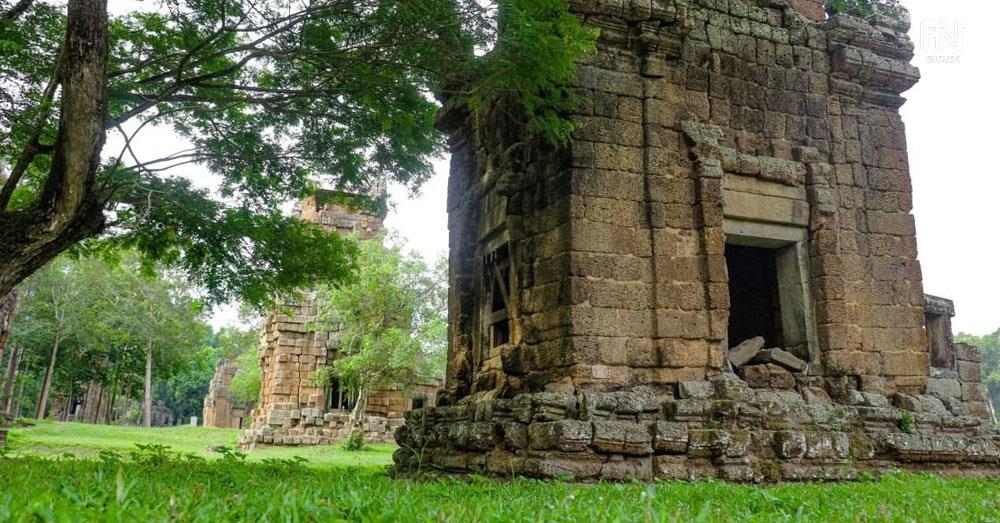
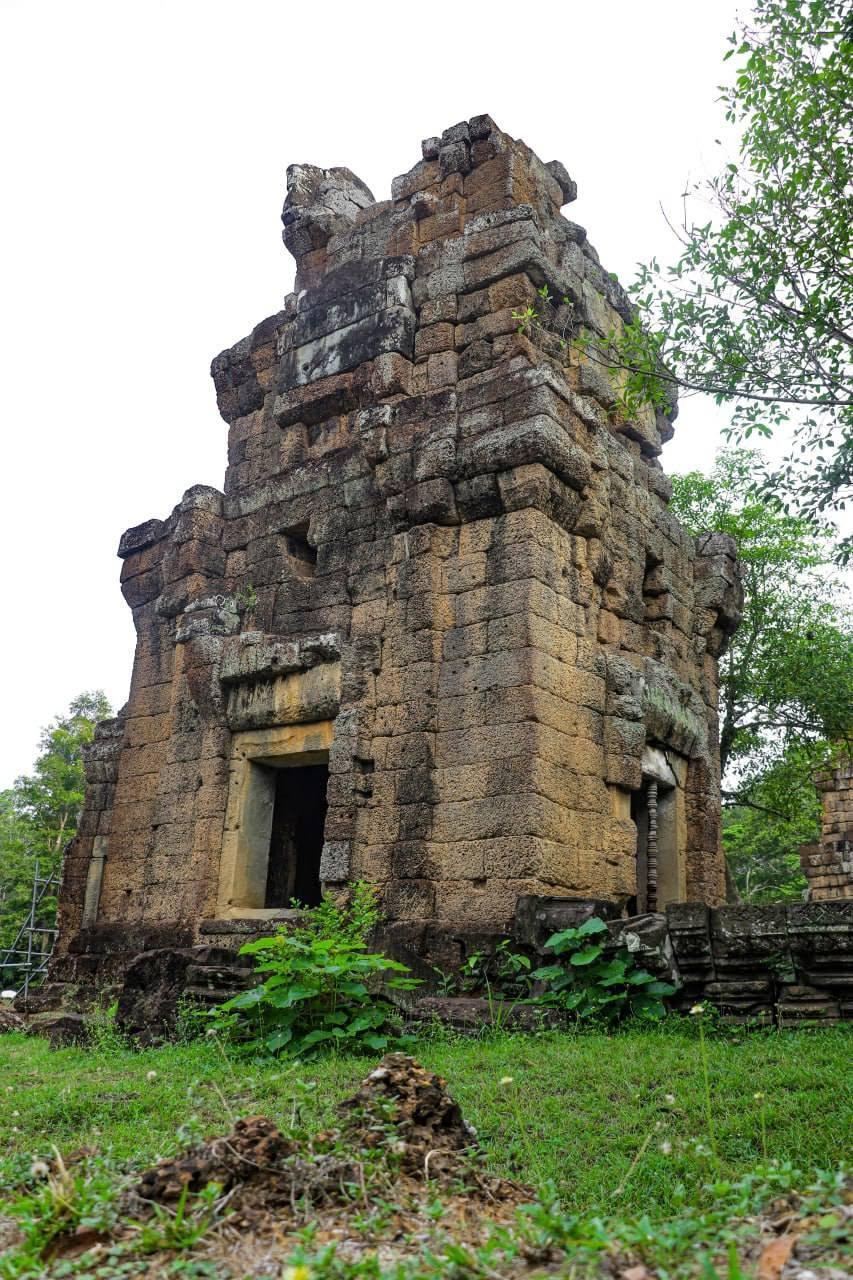
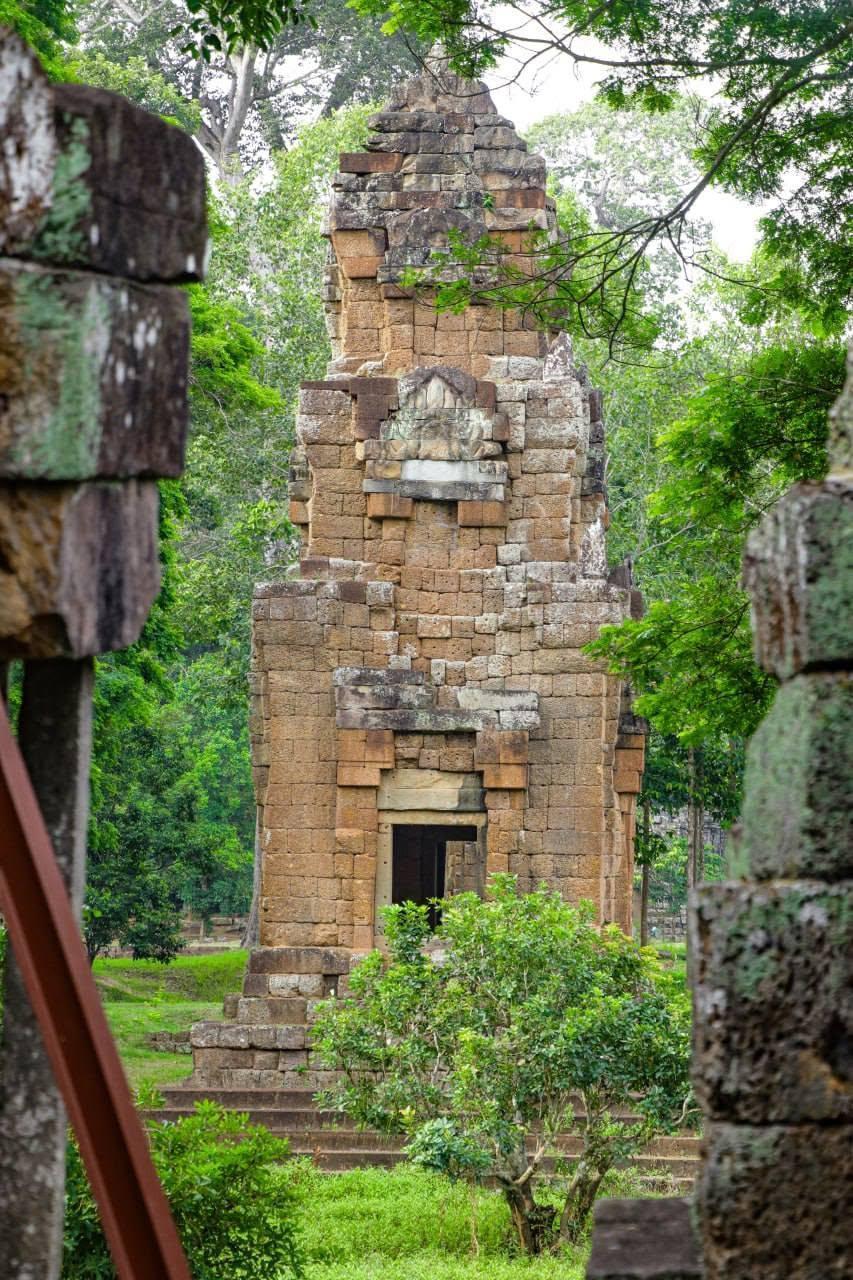
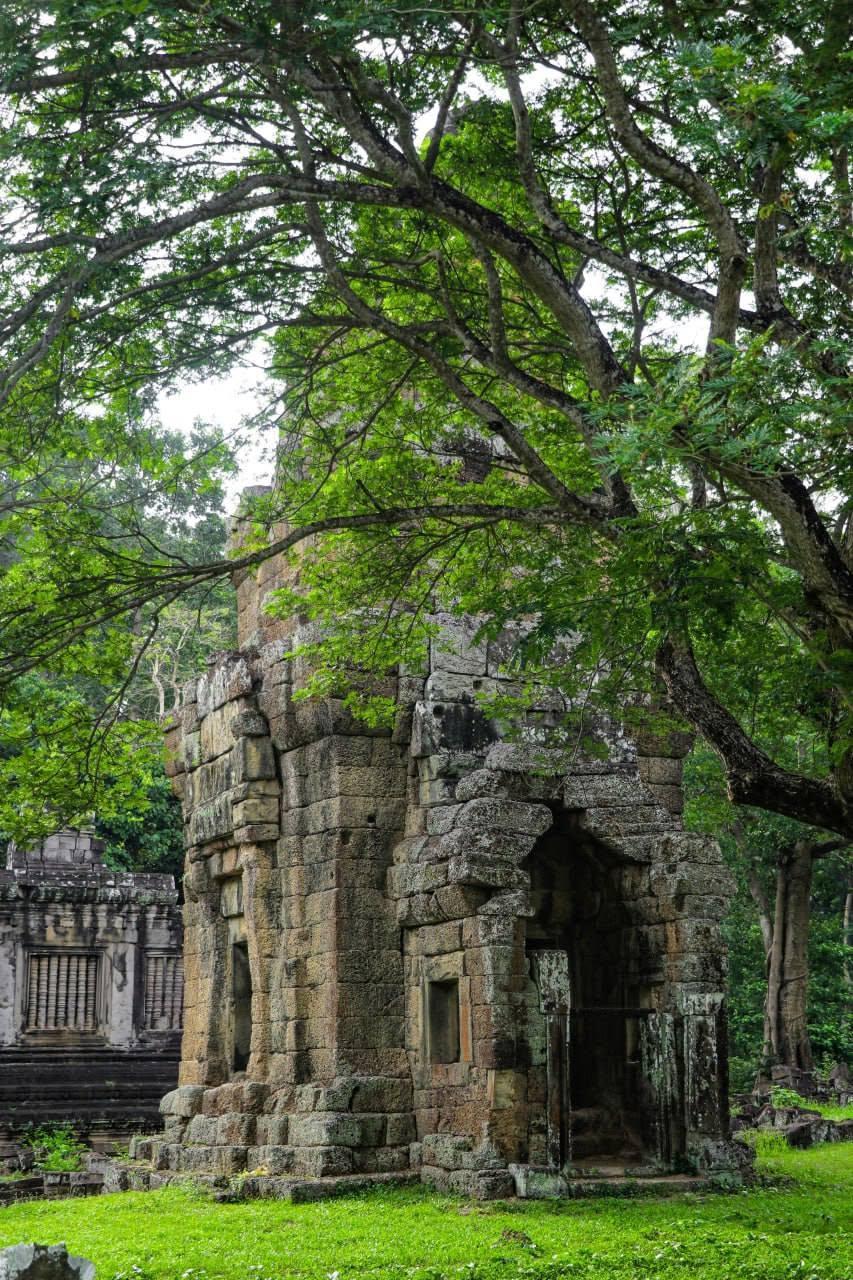
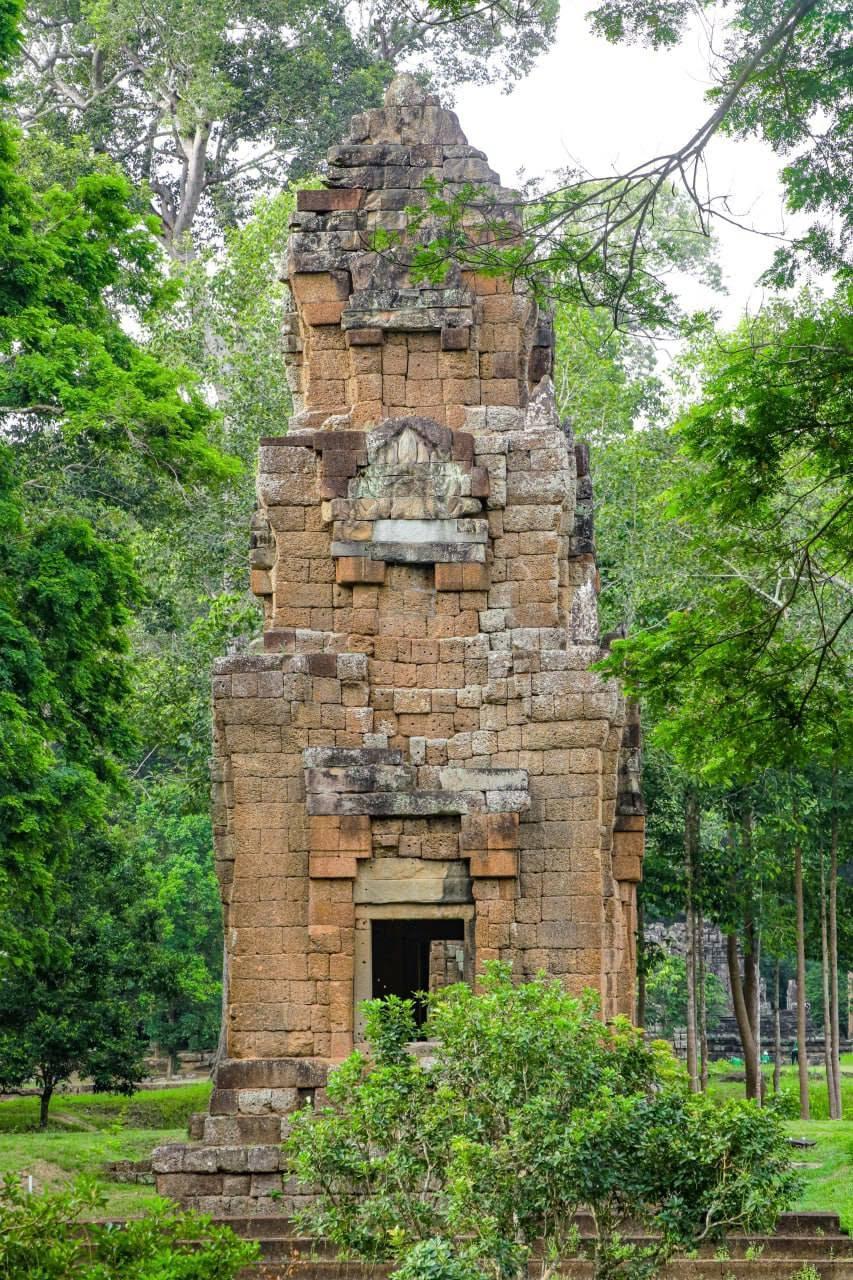
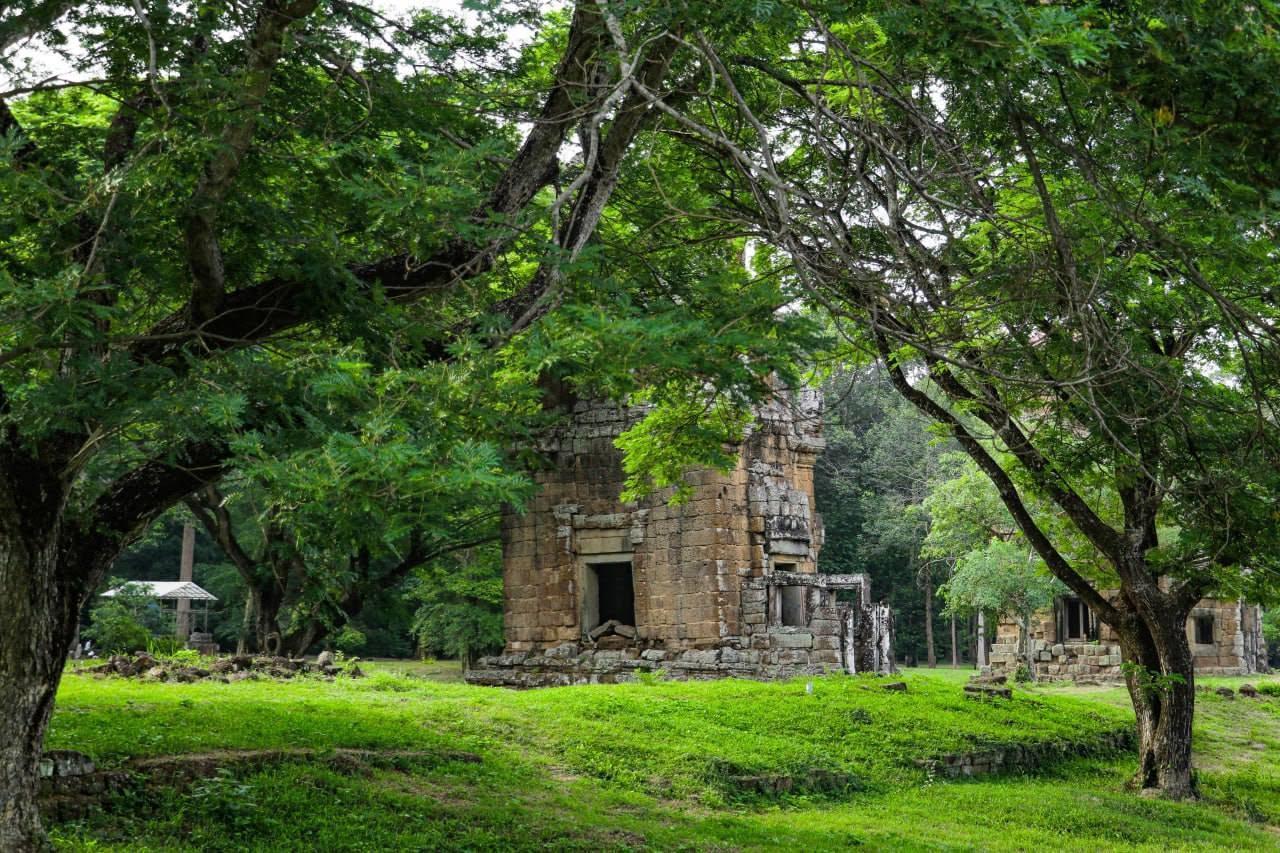
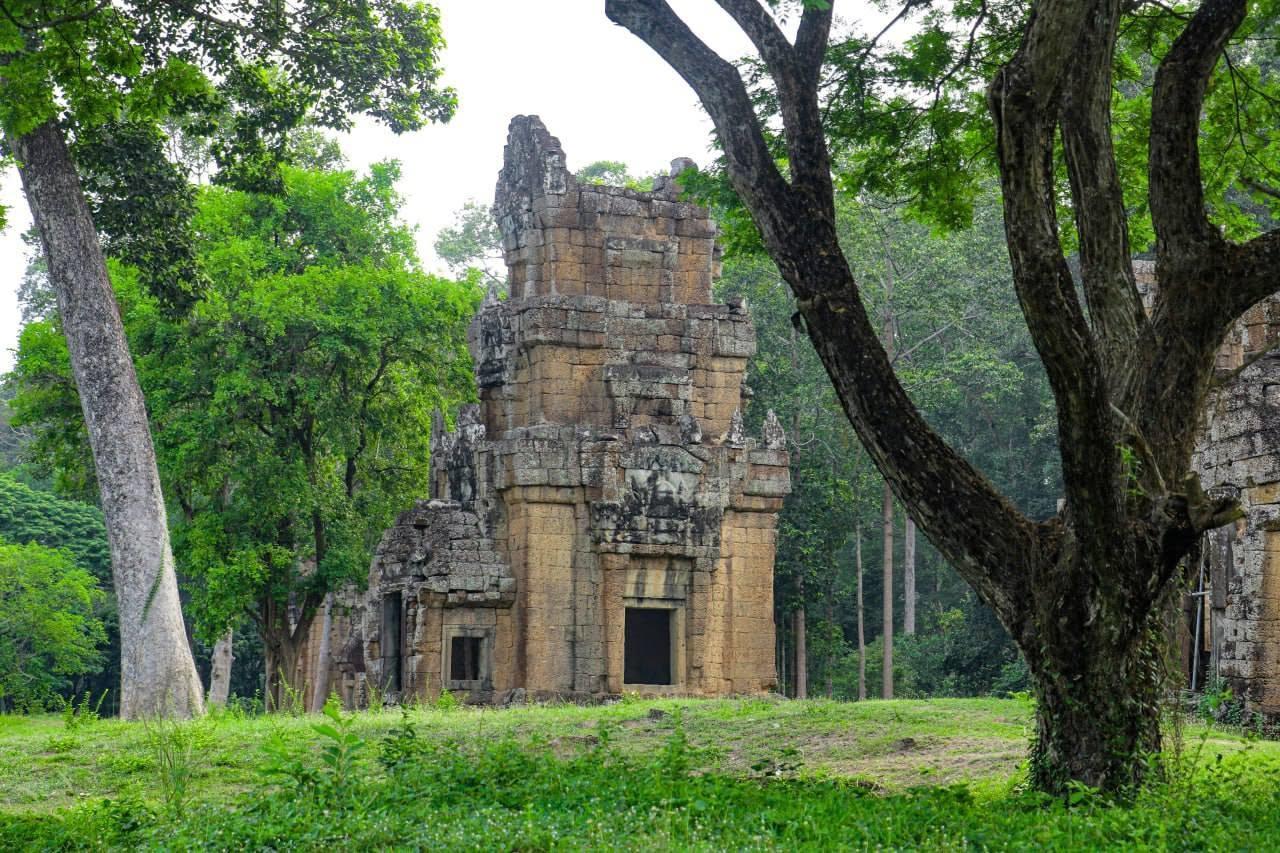
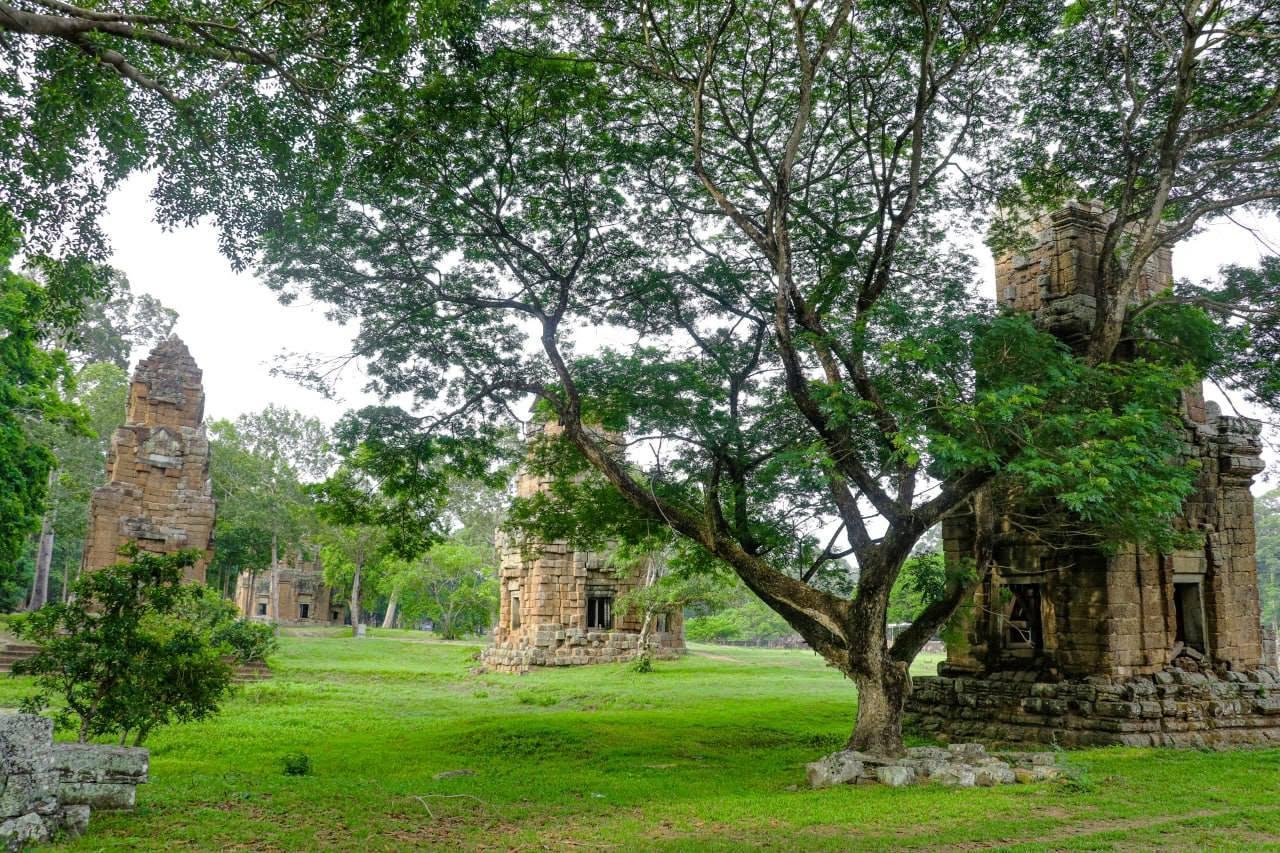
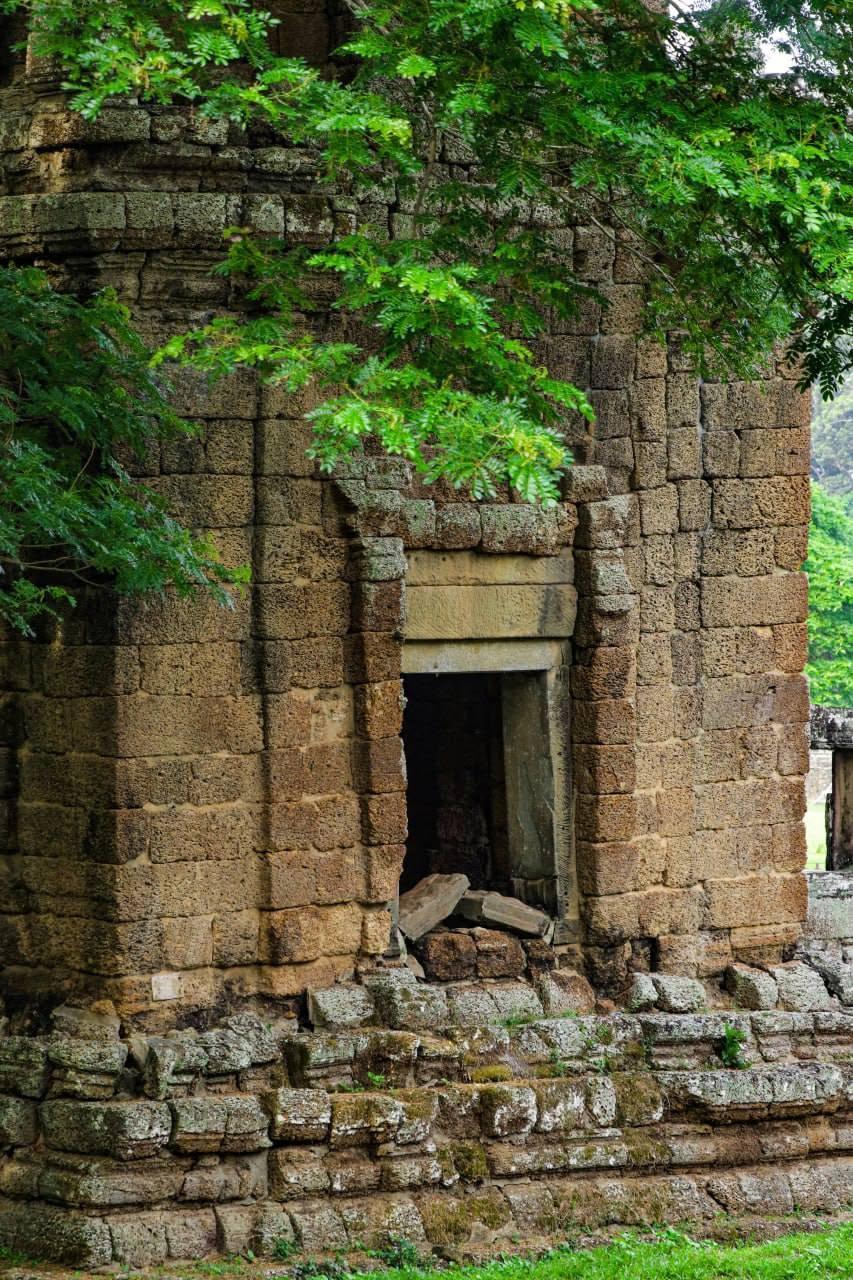
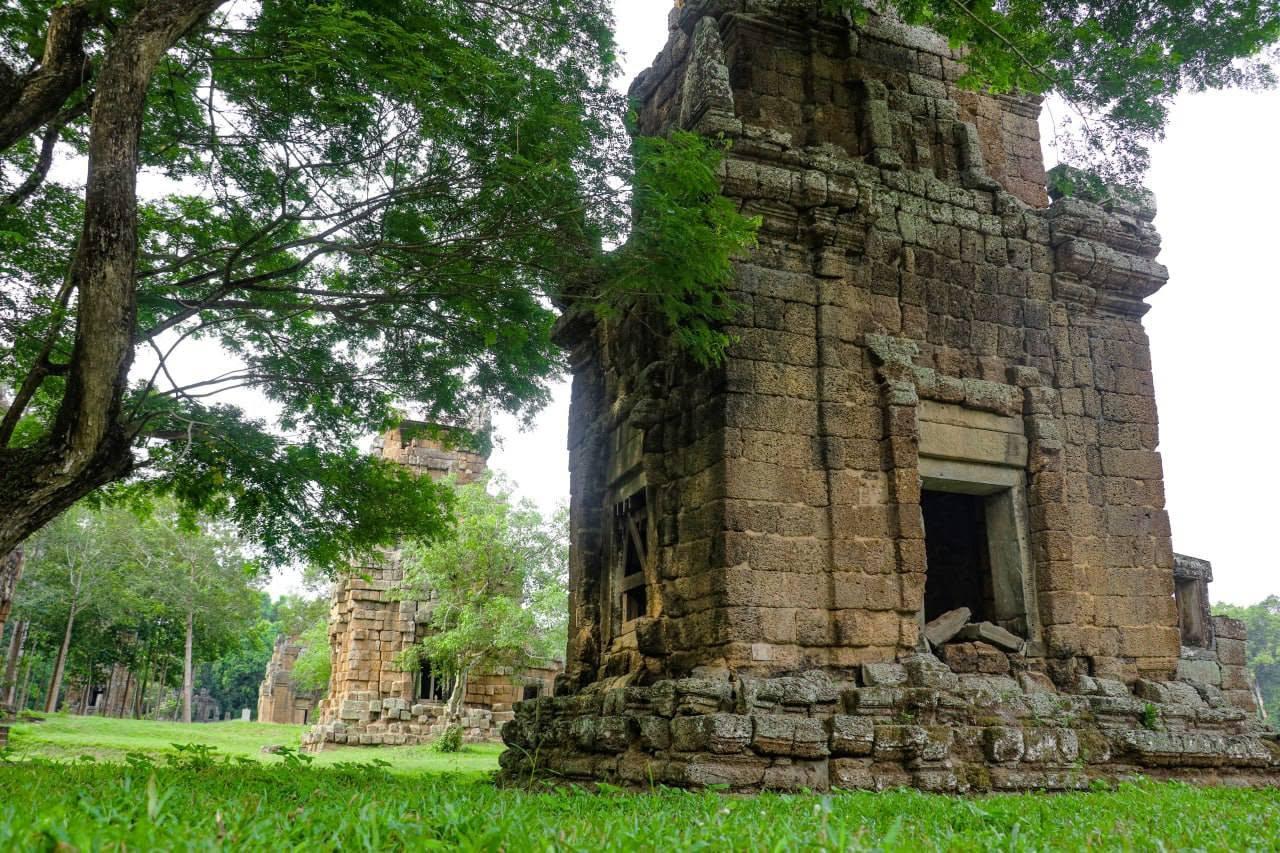
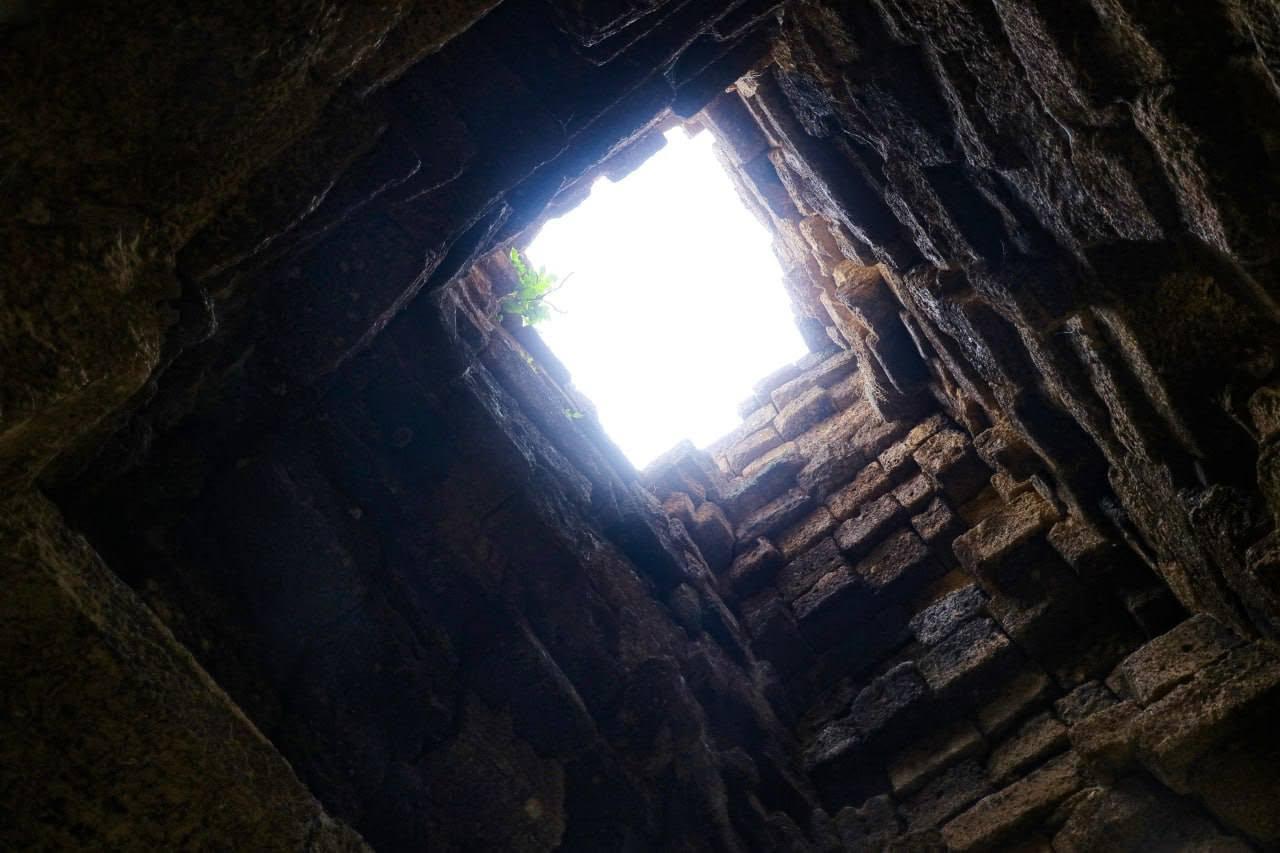
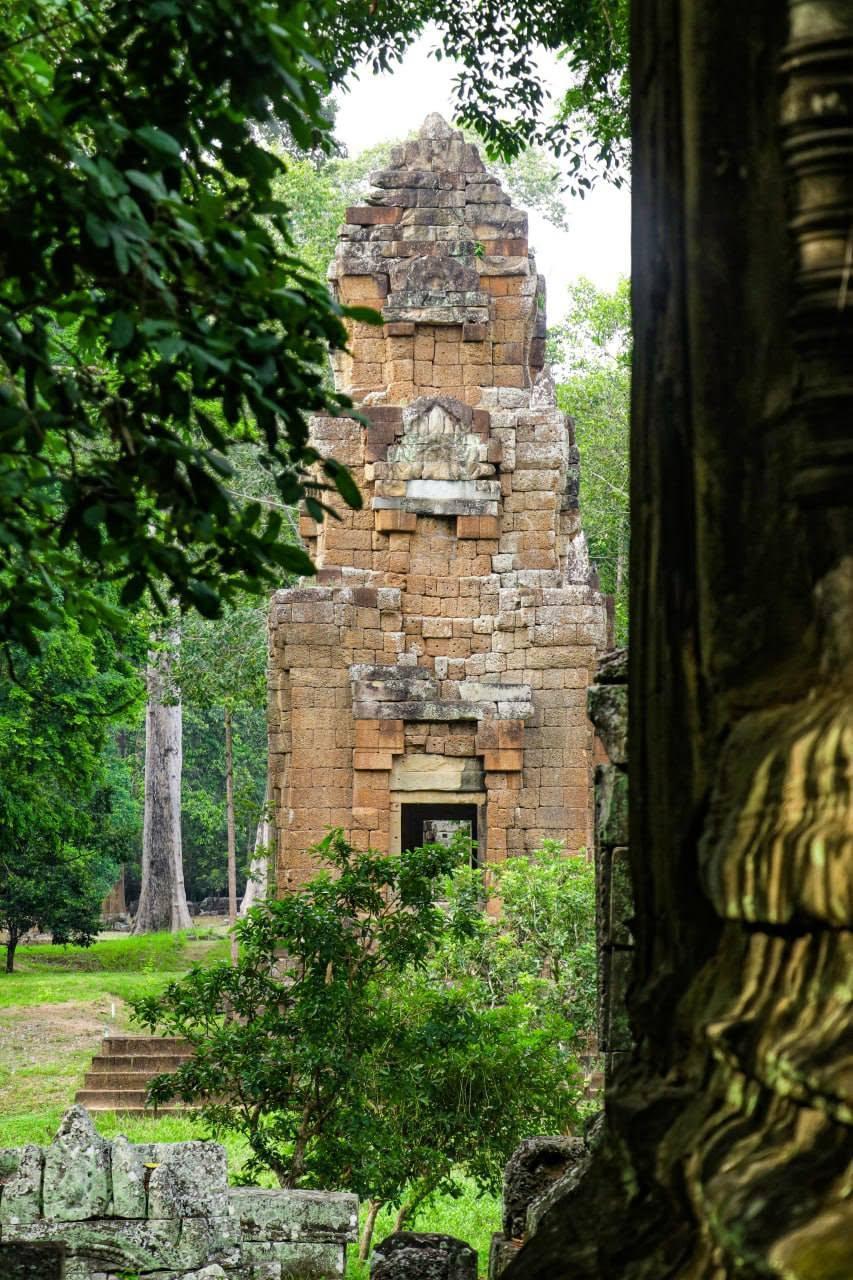
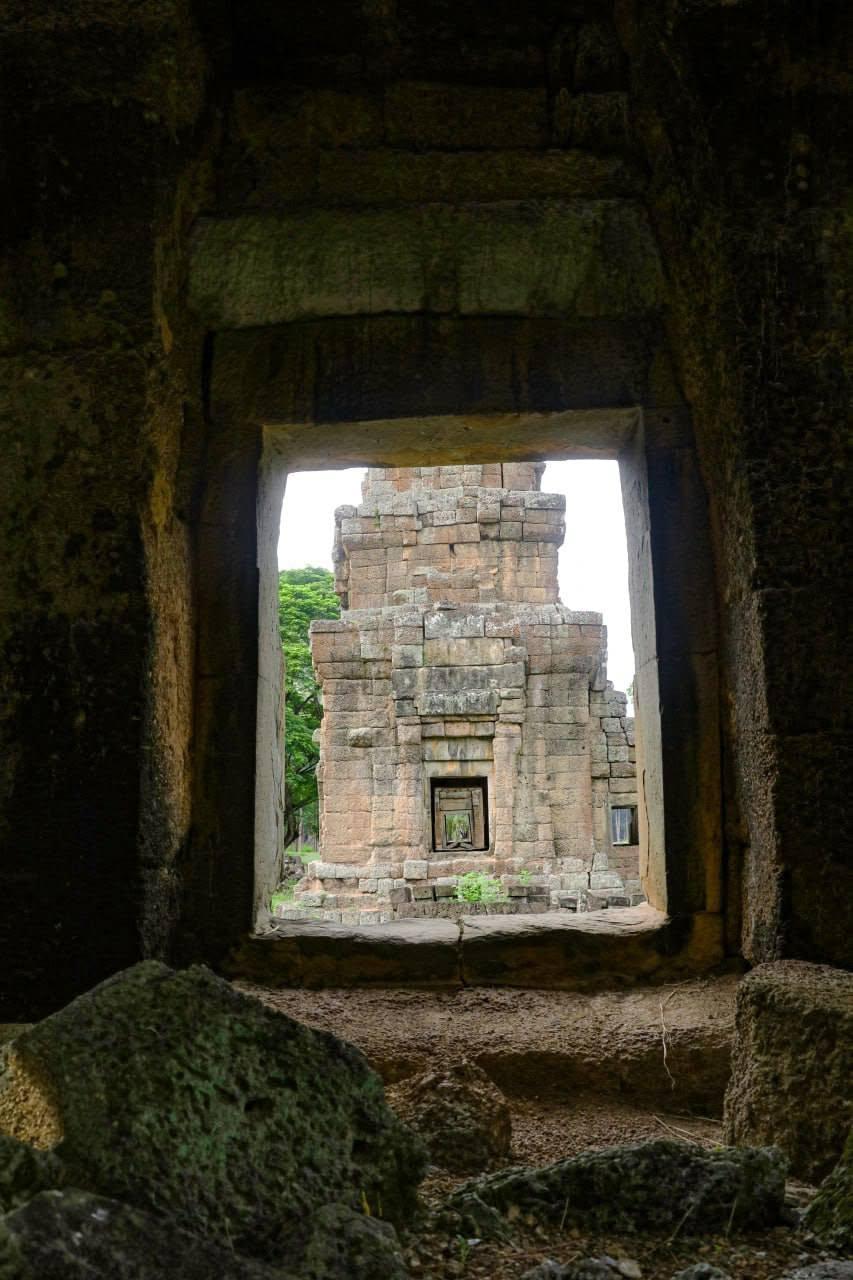
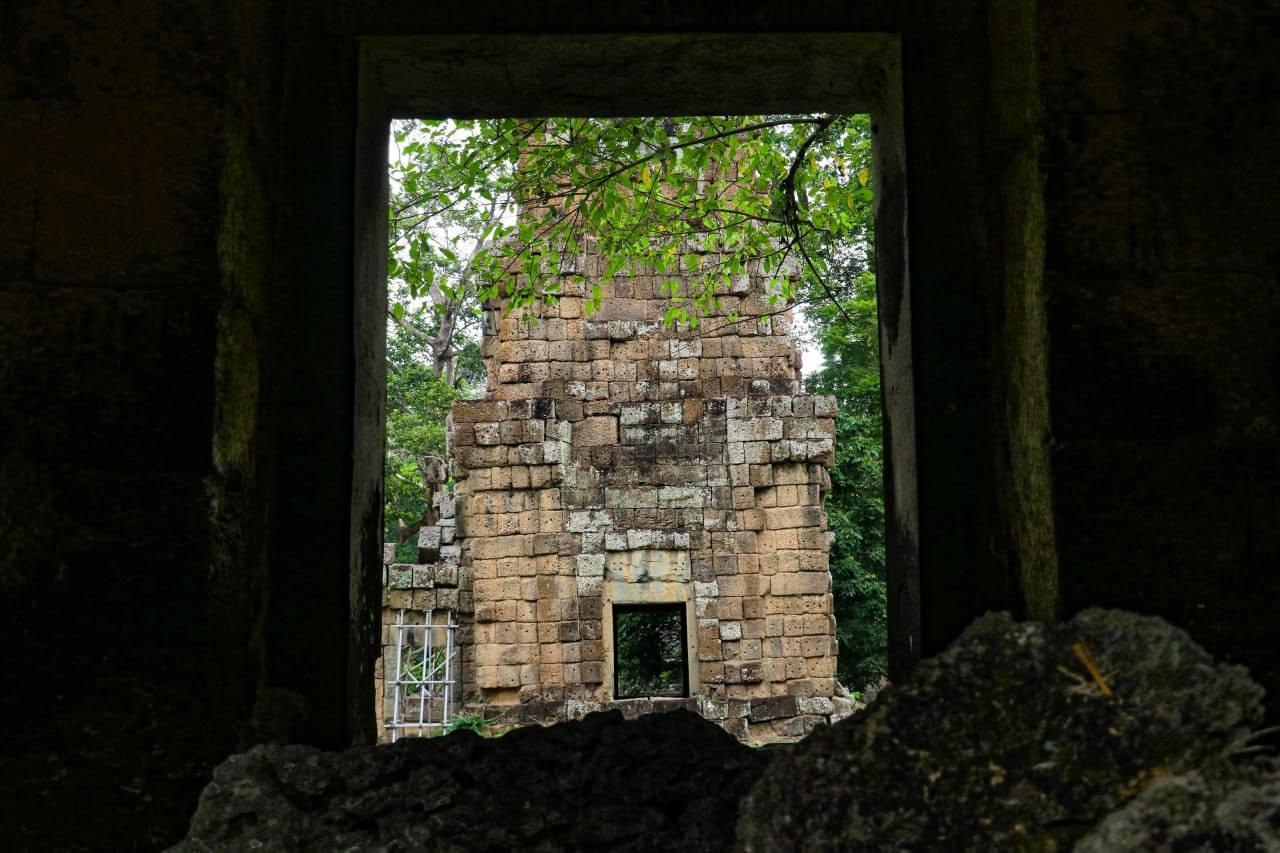
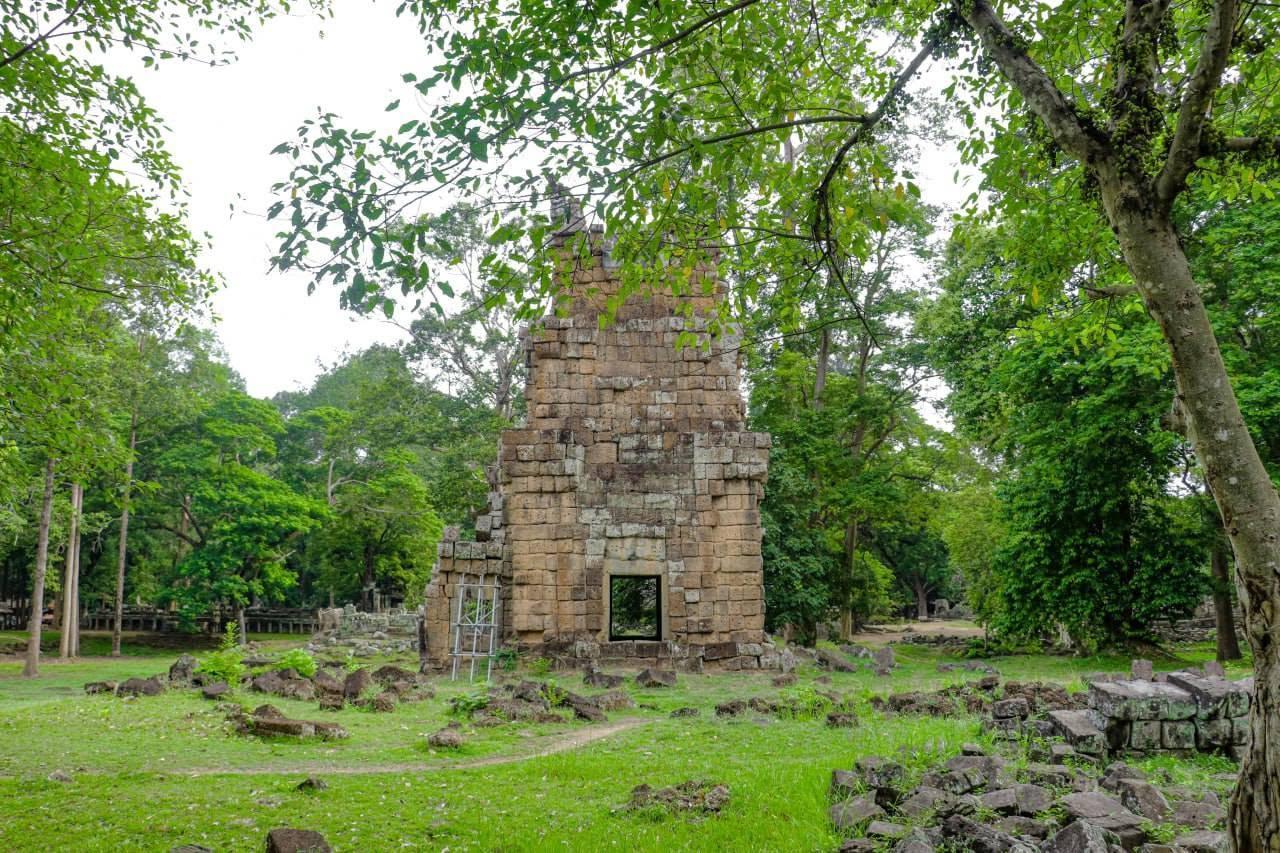
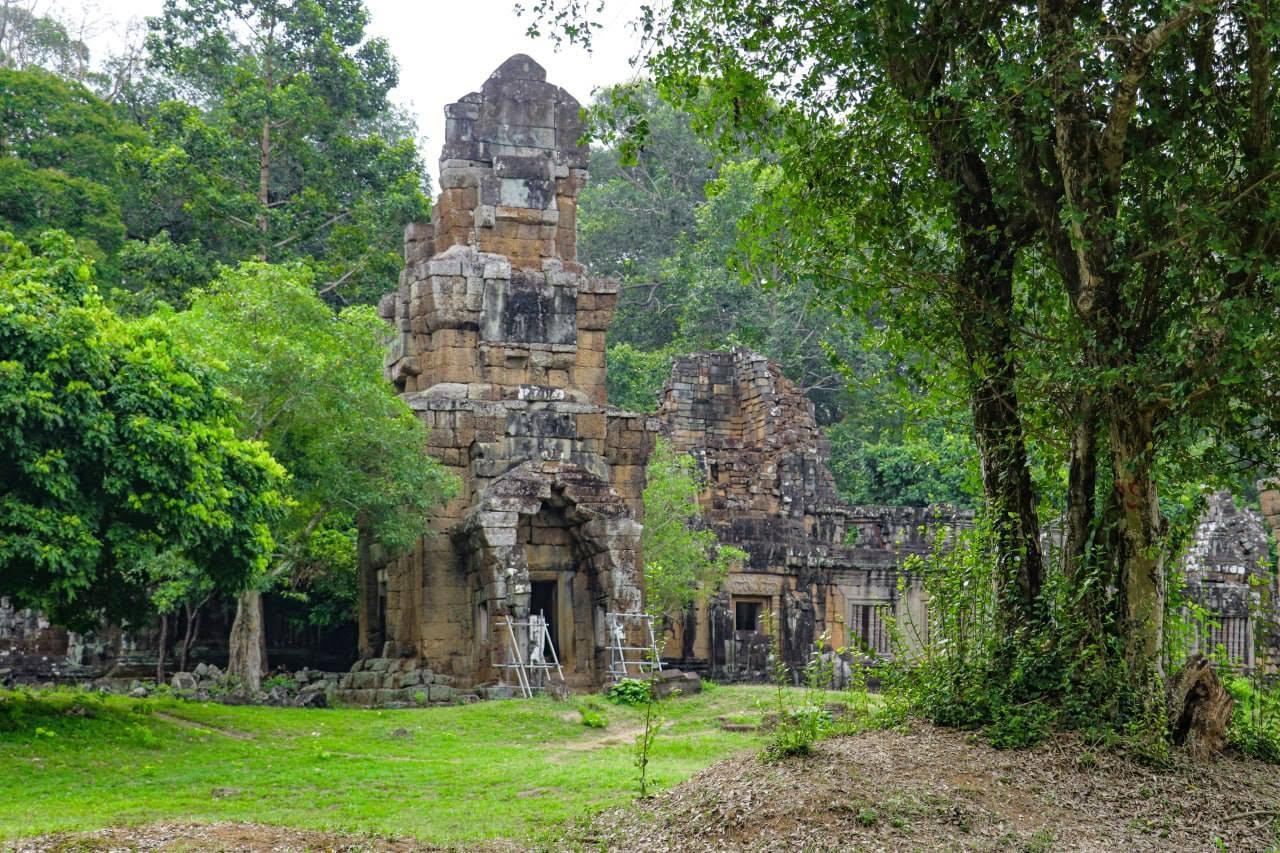
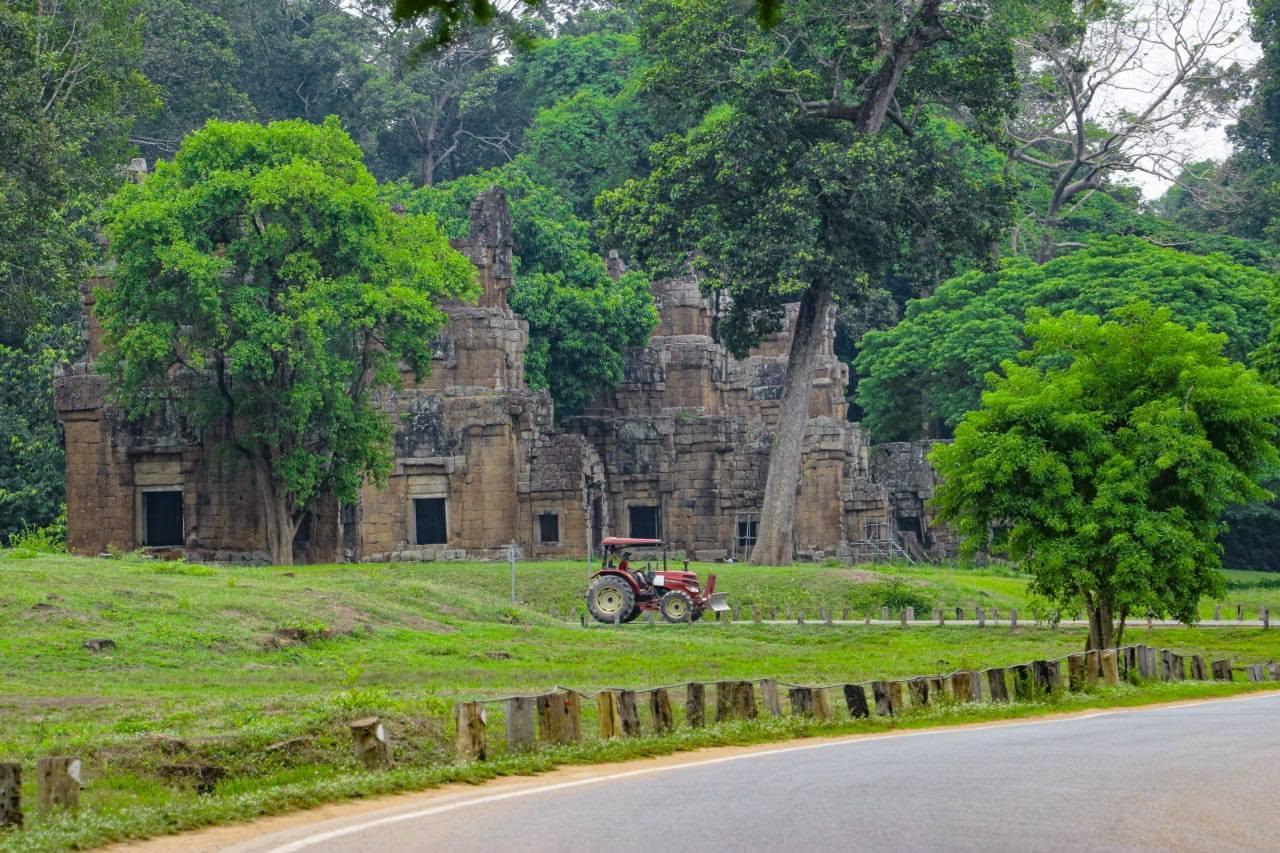
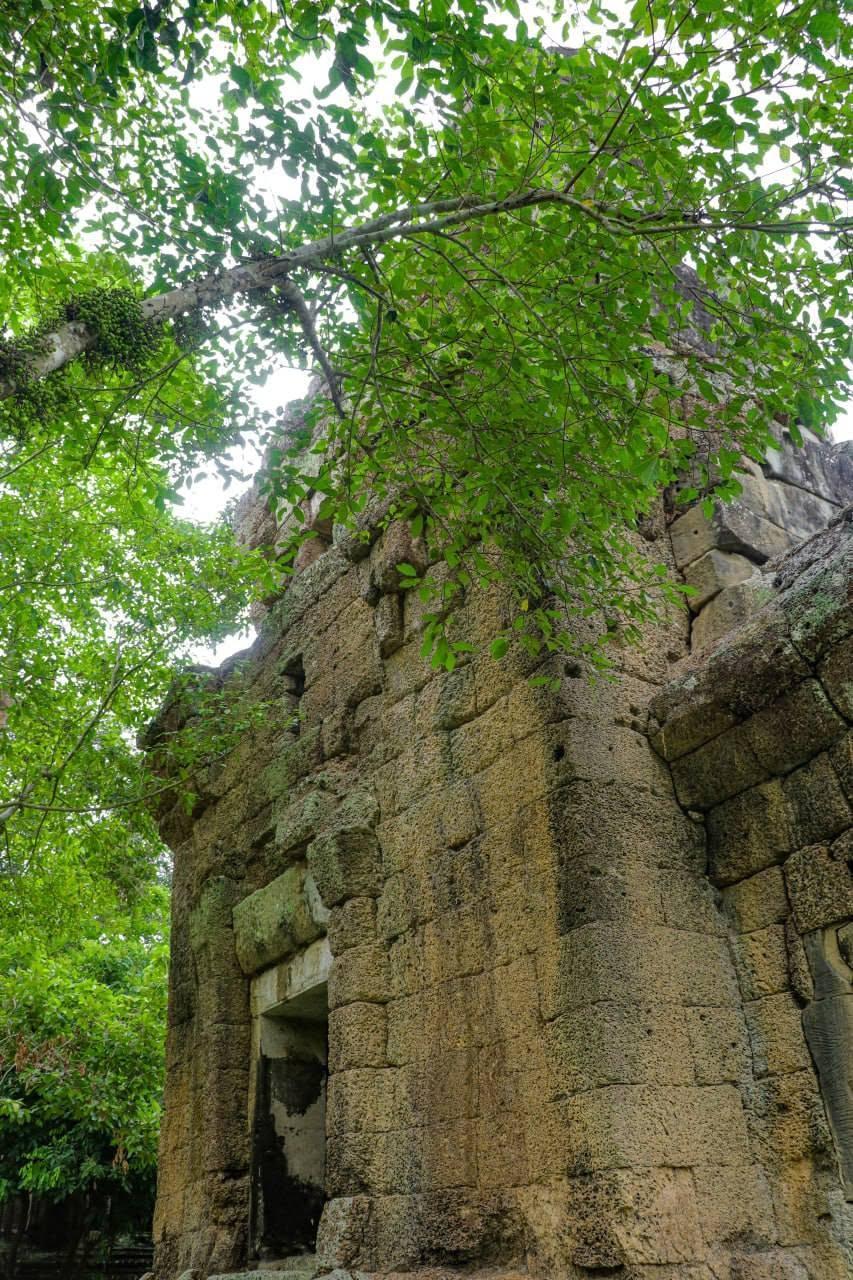
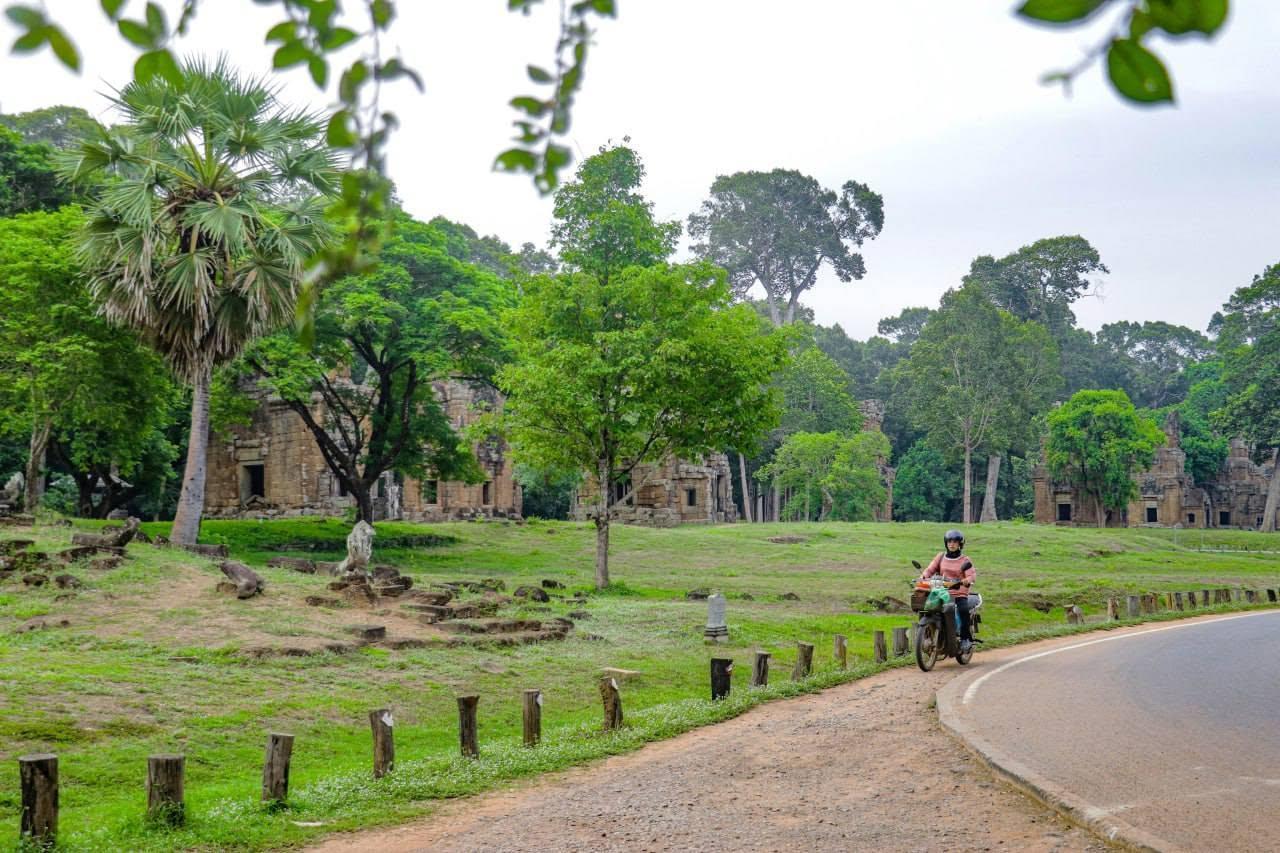
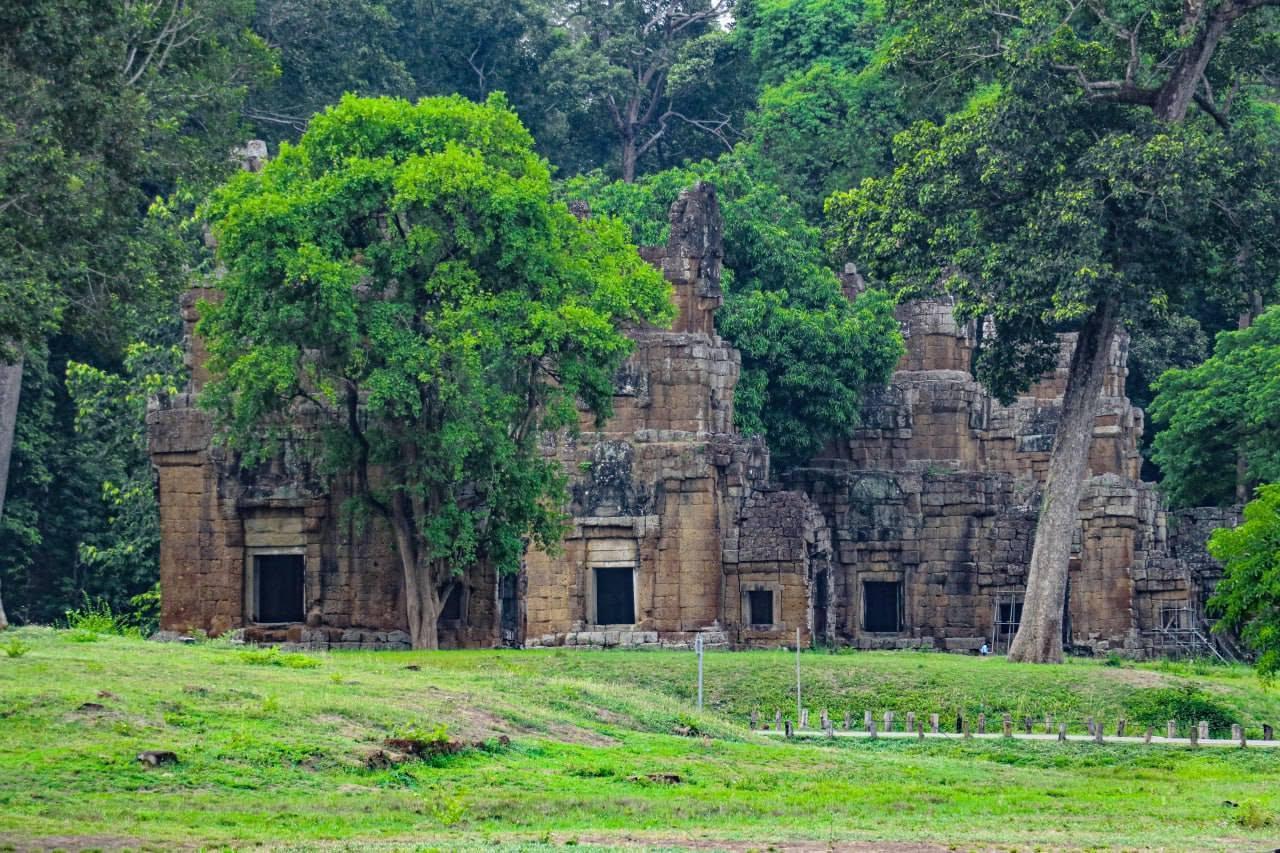
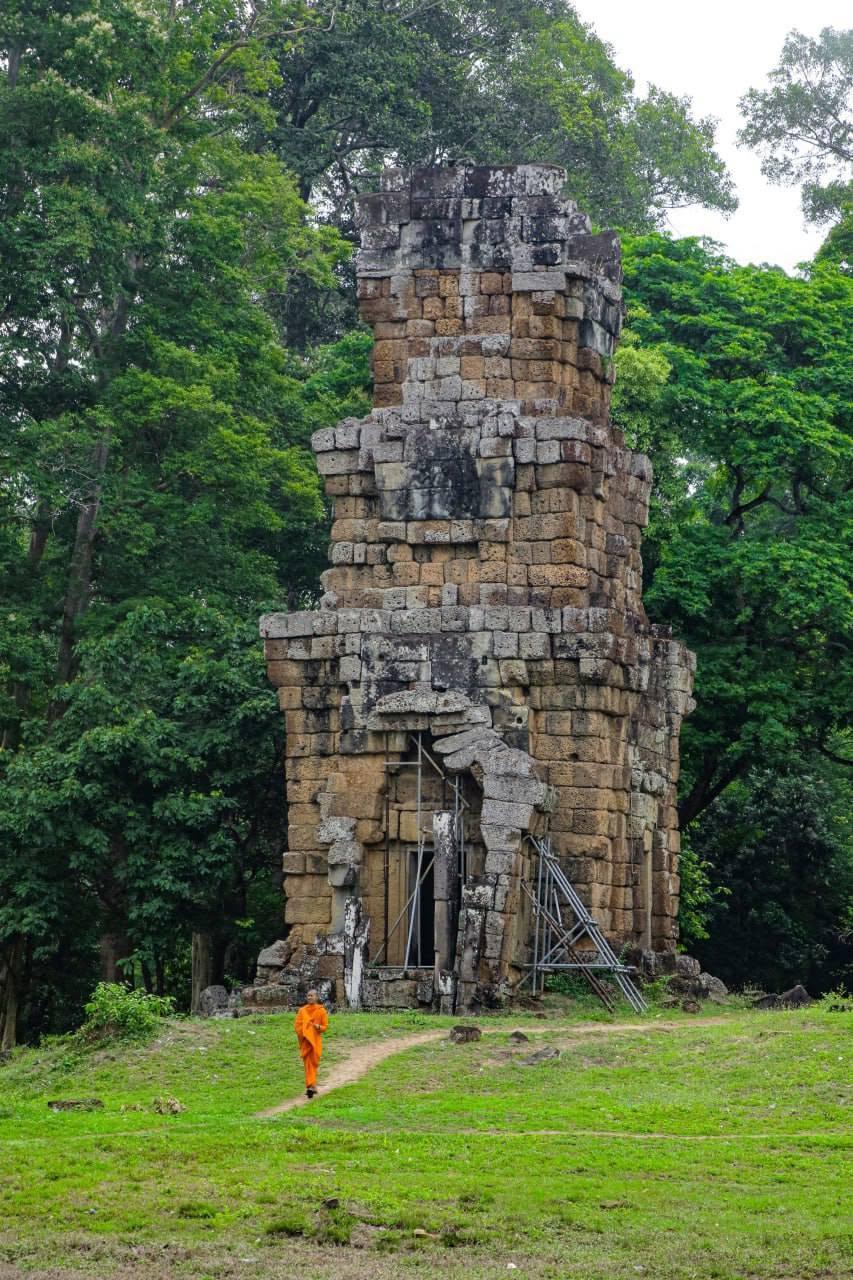
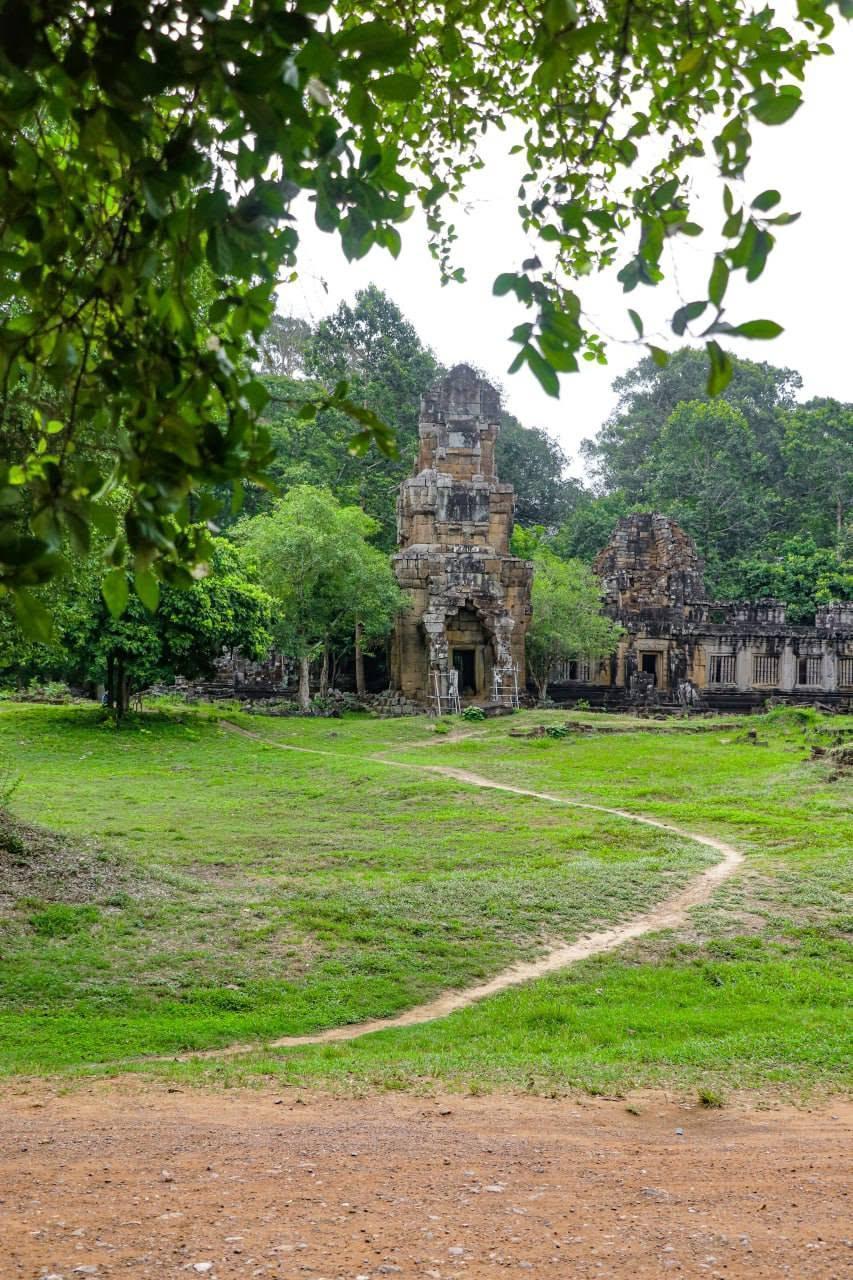
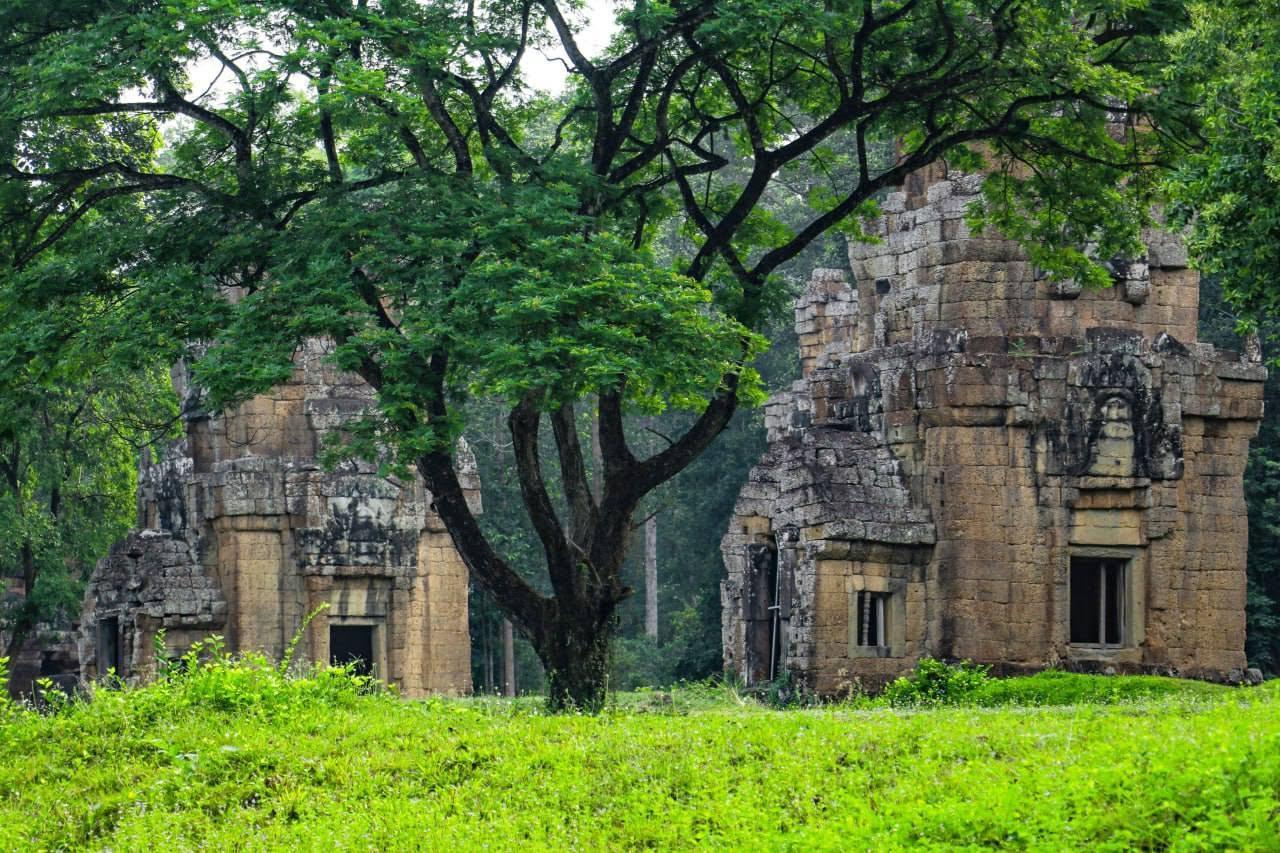
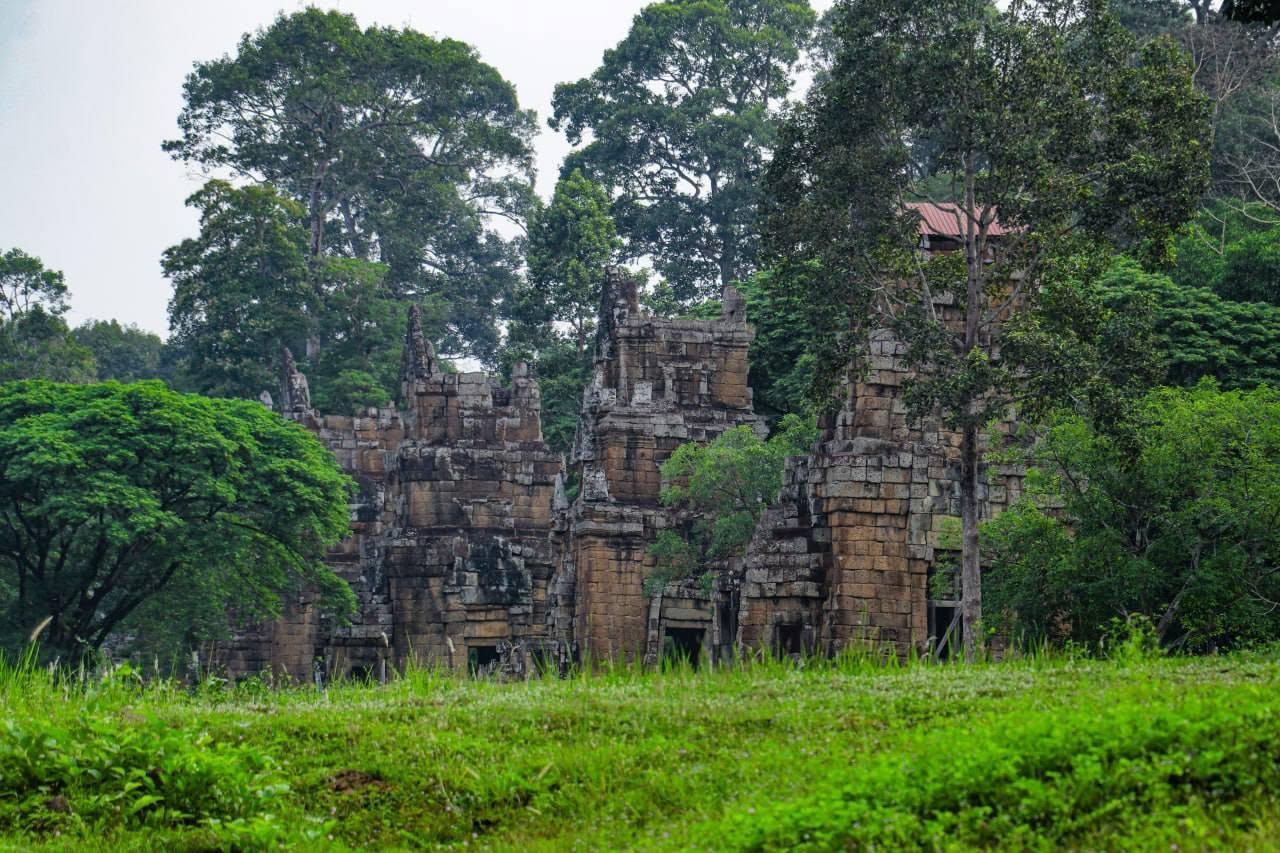
(Siem Reap): If you walk along the eastern side of the Terrace of the Elephants in Angkor Thom, you will encounter the striking sight of twelve towers built primarily of laterite, with sandstone elements and decorative architectural features. Commonly known as Prasat Suor Prat, these unique structures have long intrigued historians as well as both national and international visitors.
Although no inscriptions have yet revealed their original name or precise date of construction, their mysteries have gradually been illuminated through the study of historical records, local traditions, and modern archaeological research.
Comparisons of historical accounts, ethnographic evidence, and archaeological findings suggest that Prasat Suor Prat may have served two important functions distinct from those of other temples in the Angkor region.
The first possible function was as a sanctuary for sacred objects or deities symbolizing the authority of the twelve vassal states or provinces of the Khmer Empire.
This role appears closely linked to the Khmer tradition later known as Bon Taing Tok.
During this ceremony, rulers of subordinate states were required to travel to the Angkorian capital to present tribute and various offerings to the king, reaffirming their loyalty and devotion to the empire.
Prasat Suor Prat may also have functioned as a “Place of Judgment According to Faith,” serving as part of an ancient Khmer judicial process.
In The Customs of Cambodia (also known as Records of the Customs of Cambodia), Zhou Daguan, a Chinese diplomat who visited Angkor in 1296, described an unusual method of determining guilt or innocence.
When a dispute arose and judges could not identify the culprit, the opposing parties were each placed in one of the towers and closely watched by their relatives from outside.
After remaining there for three to four days, anyone who developed an illness, such as fever, coughing, or a skin disease, was believed to have been punished by the gods and would immediately lose the case.
Conversely, a person who remained healthy was considered truthful and protected by divine powers, thereby winning the dispute.
Beyond its historical significance, local traditions associate the site with the famous Khmer legend of Phnom Neang Kangri, also known as the story of the Twelve Princesses.
Some local residents refer to the complex as Prasat Neang 12, believing it to be the place where the giantess Sandhamara imprisoned the twelve princesses and removed their eyes.
Over the centuries, Prasat Suor Prat suffered extensive deterioration caused by natural forces, aging, and periods of conflict.
Conservation and restoration efforts were therefore undertaken in several phases. In 1955, the French School of Asian Studies (EFEO) initiated the first restoration campaign, focusing on reinforcing the structures to prevent collapse and stabilize the foundations, which had been weakened by shifting ground and invasive tree roots.
During the civil war and the Khmer Rouge period of the 1970s and early 1980s, the Angkor region received virtually no maintenance for nearly two decades.
As a result, humidity, vegetation growth, and other natural factors caused additional deterioration, further compromising the stability of the towers.
=FRESH NEWS