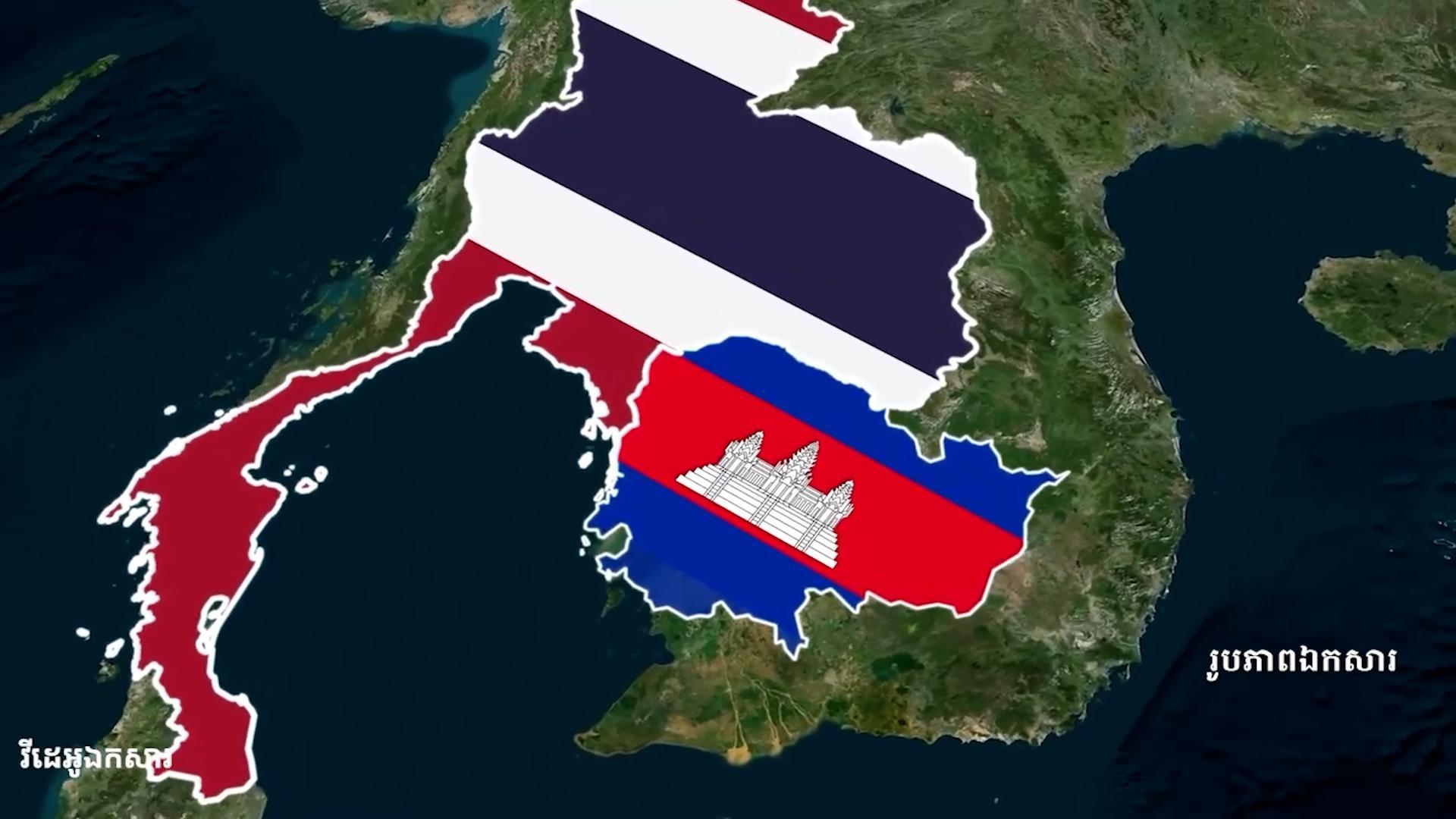
(Phnom Penh): In a world where maritime and border disputes are increasingly becoming flashpoints of nationalism, geopolitical confrontation, and power competition among states, many countries often resort to military displays or political pressure to defend their interests and sovereignty.
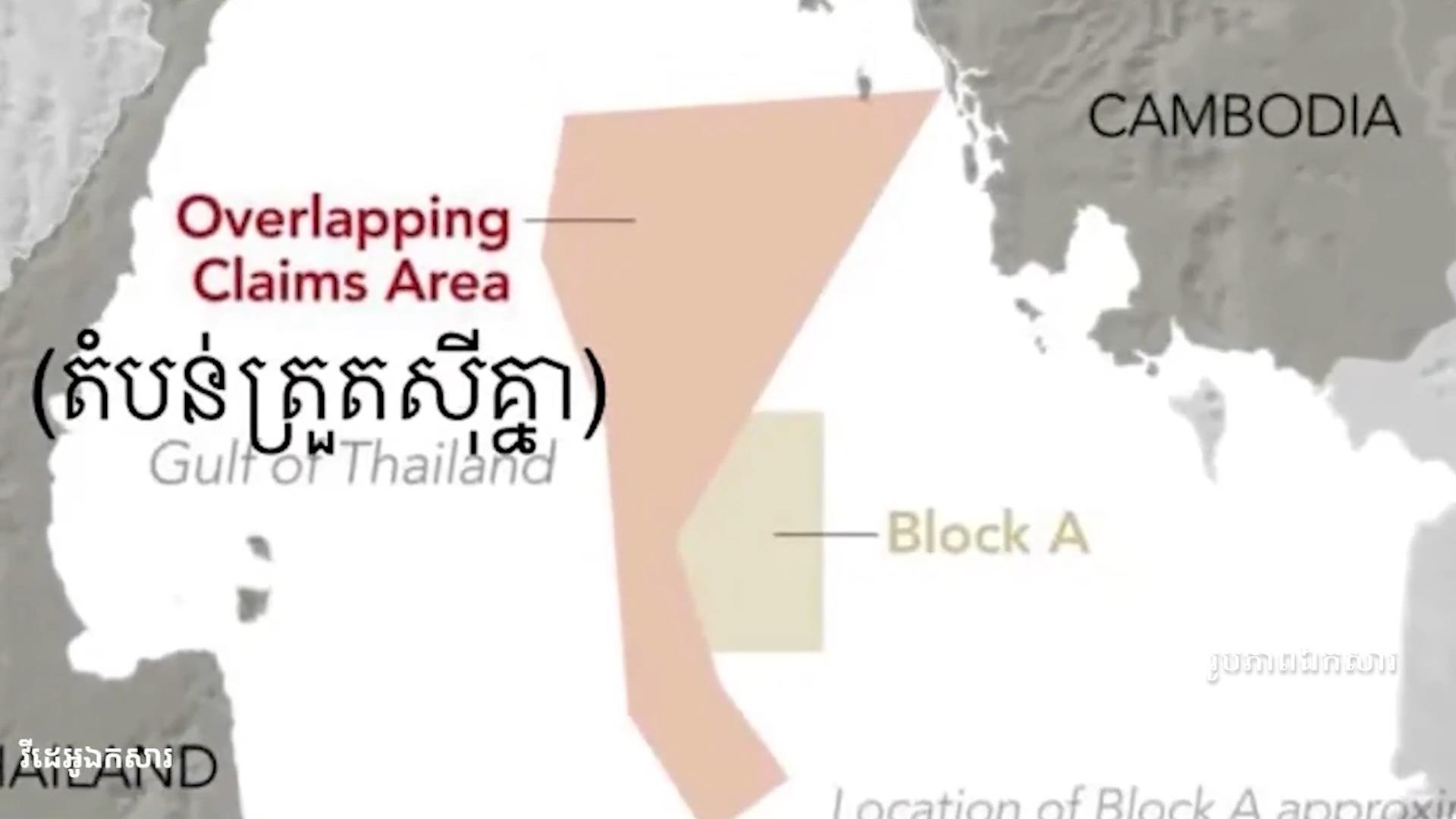
Cambodia, however, has chosen a different path. Following the unilateral withdrawal by the Thai government from the 2001 Memorandum of Understanding (MoU 2001) concerning overlapping maritime claims between Cambodia and Thailand, the Royal Government of Cambodia has opted not for confrontation, but for international law and peaceful legal mechanisms under the United Nations Convention on the Law of the Sea (UNCLOS).
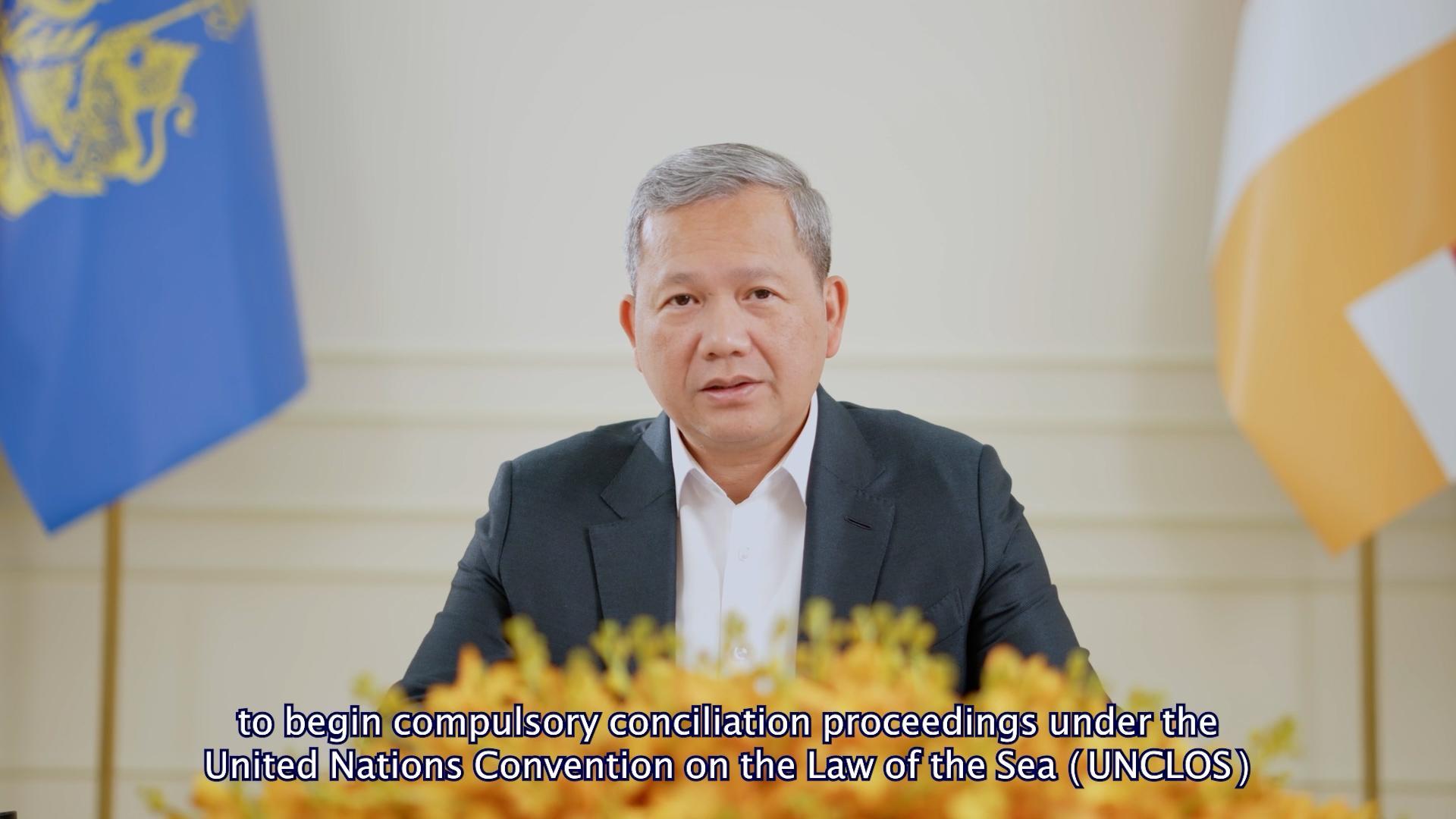
Cambodian Prime Minister Hun Manet clearly stated on June 2, 2026:
“Cambodia has formally notified the Thai side and the Secretary-General of the United Nations in order to initiate the process of compulsory conciliation under the United Nations Convention on the Law of the Sea (UNCLOS).”
This statement was not merely a procedural legal announcement. It marked a clear declaration that Cambodia has transformed the dispute from a matter of political confrontation into an international legal process grounded in peace, international treaties, and legal legitimacy.
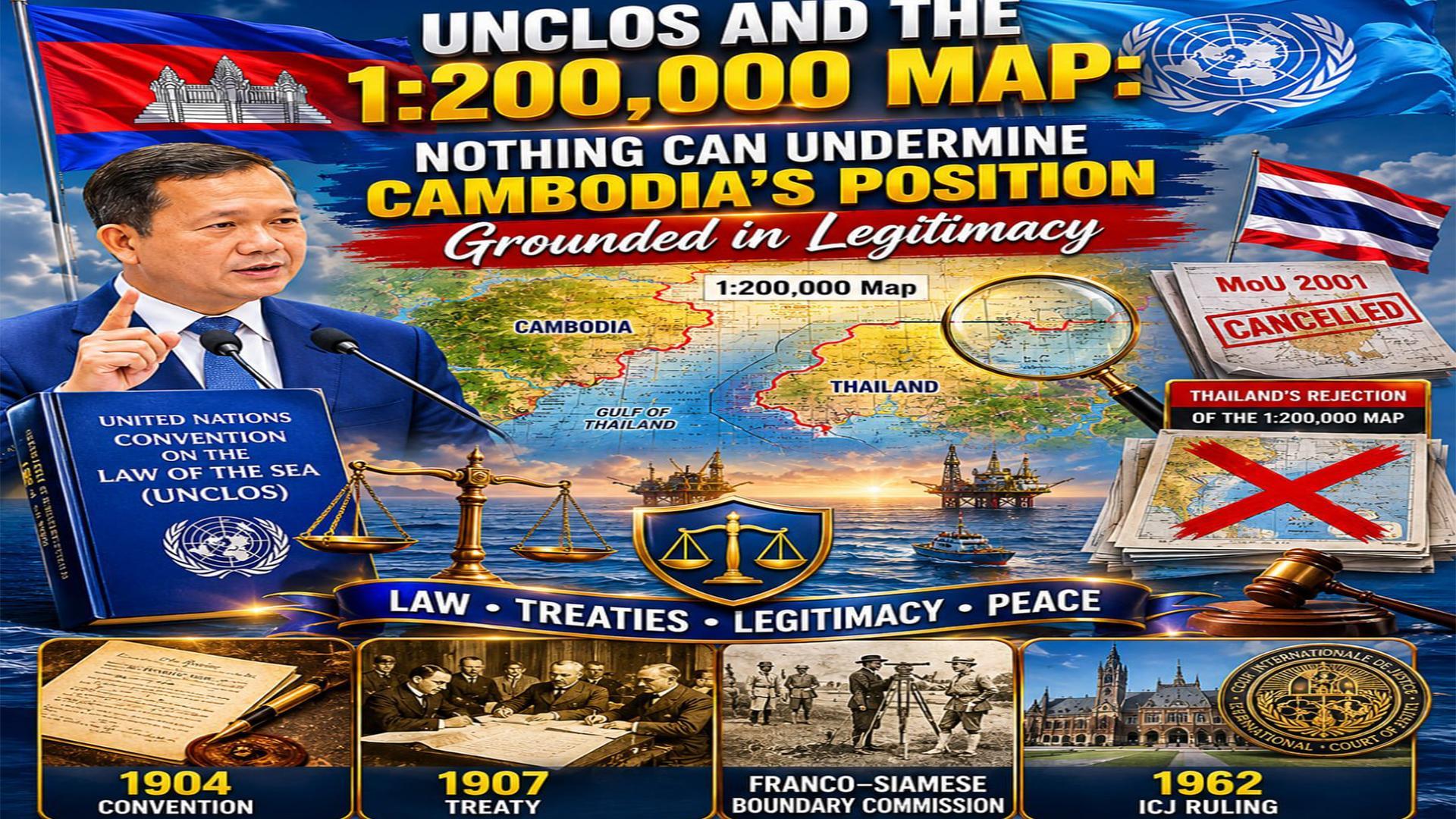
What makes Cambodia’s position even more noteworthy is that, while Phnom Penh is emphasizing international law and legal mechanisms as the core framework for resolving the dispute, Thai security and geopolitical scholar Surachart Bamrungsuk has himself warned the Thai government that rejecting the 1:200,000 map — a map linked to historical treaties and recognized in international legal history — in favor of the unilateral 1:50,000 map could once again push Thailand into a “legal trap.”
In other words, while Cambodia is relying on UNCLOS, historical treaties, and internationally recognized mechanisms to pursue a peaceful settlement, even some Thai experts are warning their own government that disregarding legally recognized maps and relying instead on unilateral interpretations could place Thailand at a disadvantage before international legal institutions, much as it did in the International Court of Justice rulings of 1962 and 2013 — decisions that remain painful legal precedents for Thailand.
When MoU 2001 Was Abandoned
For more than 25 years, the 2001 Memorandum of Understanding (MoU 2001) served as a crucial bilateral framework for negotiations, management, and peaceful settlement efforts regarding overlapping maritime claims between Cambodia and Thailand. However, when Thailand decided to unilaterally withdraw from this framework, it effectively closed the door on the bilateral negotiation mechanism that both countries had relied upon for decades.
What is particularly significant is that, in a situation that could easily have escalated tensions, Cambodia did not choose military posturing or political escalation. Instead, Phnom Penh turned to international legal mechanisms recognized by both countries — namely UNCLOS.
This was perhaps the most important political and legal message delivered by Prime Minister Hun Manet, who stated clearly:
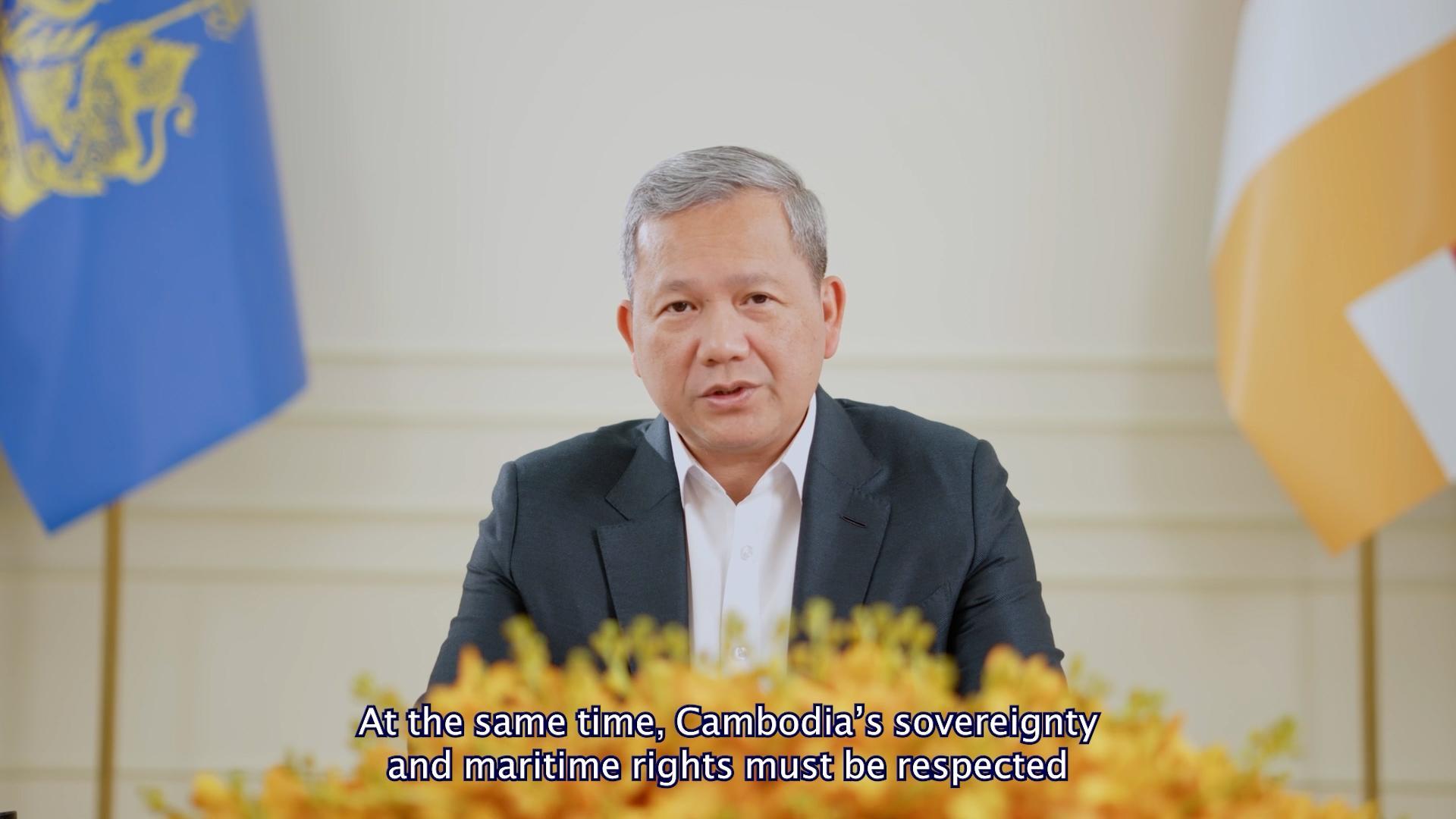
“I would like to reaffirm that Cambodia has never violated the sovereignty of other countries. At the same time, Cambodia remains firmly committed to defending its own national sovereignty. Cambodia continues to uphold this responsible position not through the use of force, but through the rule of law; not through unilateral actions, but through peaceful and cooperative resolution.”
The statement clearly demonstrates Cambodia’s effort to shift the dispute away from political confrontation and toward an international legal process based on peaceful principles, treaty obligations, and internationally recognized mechanisms.
The Real Issue Is Not the Scale of the Map, but Its Legal Validity
While Cambodia is attempting to resolve the dispute through international law and peaceful mechanisms under UNCLOS, Thailand appears to be making the border and maritime disputes increasingly complicated. After abandoning MoU 2001, Bangkok has also shown signs of rejecting the 1:200,000 map associated with historical treaties and internationally recognized legal principles.
Yet the most striking aspect of this debate is the argument made by Surachart Bamrungsuk, who asserted that, in international disputes, states cannot simply rely on any map unilaterally to claim sovereignty. Instead, they must rely on maps linked to treaties and duly ratified legal instruments.
This means that the central issue is not whether a map is scaled at 1:50,000 or 1:200,000, but rather which map possesses legal validity and international recognition.
According to the Thai scholar, the 1:200,000 map — also known as the Annex I Map — is directly linked to:
- The 1904 Convention
- The 1907 Treaty
- The Franco-Siamese Boundary Commission
- And the 1962 ruling of the International Court of Justice
For this reason, he warned that the map cannot simply be ignored or rejected through unilateral interpretations. It is not merely a technical or military map, but part of the legal and historical foundation that international courts have already examined and recognized.
By contrast, the 1:50,000 map may hold technical or military value, but that does not necessarily grant it equal legal legitimacy to maps tied to treaties and international recognition.
This is precisely why the Thai scholar warned that, if Thailand continues to entirely dismiss the 1:200,000 map, it could once again fall into a “legal trap,” similar to what happened in the ICJ rulings of 1962 and 2013.
Conclusion
Prime Minister Hun Manet’s statement on June 2, 2026 was not merely an announcement about initiating compulsory conciliation. It was a firm declaration that Cambodia has chosen the path of international law over confrontation, and peace over escalation.
This declaration came at a time when Thailand appears to be distancing itself from internationally recognized legal frameworks and documents — from withdrawing from MoU 2001 to expressing opposition toward the 1:200,000 map tied to historical treaties and international legal recognition.
While some politicians continue to argue over the “scale” of maps, Thai experts themselves are warning that the real issue lies not in the size of the map, but in its legal validity and international legitimacy. This is precisely why the 1:200,000 map remains an issue that cannot simply be dismissed through unilateral interpretations.
Ultimately, Cambodia appears to be sending a clear message to the international community: defending national sovereignty does not necessarily require military force, unilateral interpretations, or displays of power. It can also be pursued through international law, historical treaties, peaceful mechanisms, and internationally recognized legal principles.
And perhaps this is precisely what makes Cambodia’s position today not only politically firm, but also deeply rooted in legitimacy — arguably the most powerful weapon on the international stage.