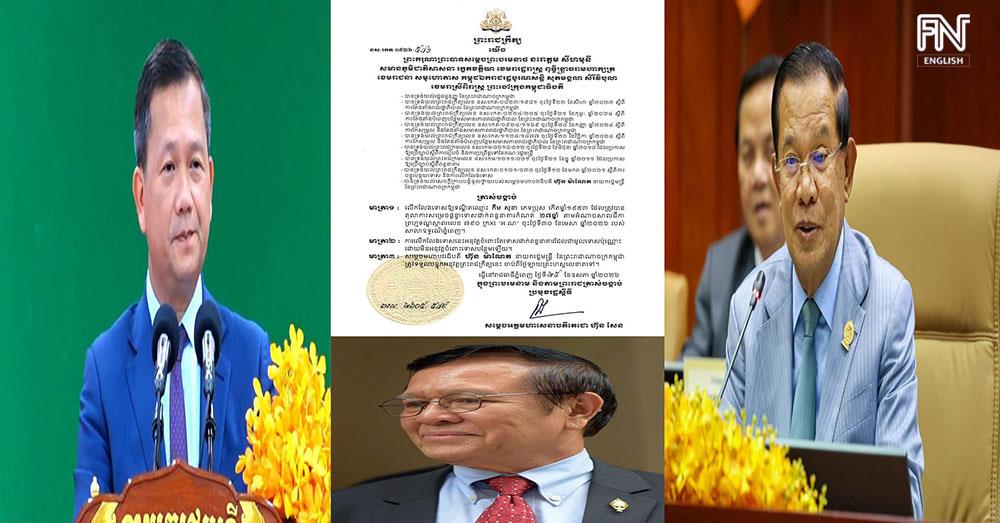
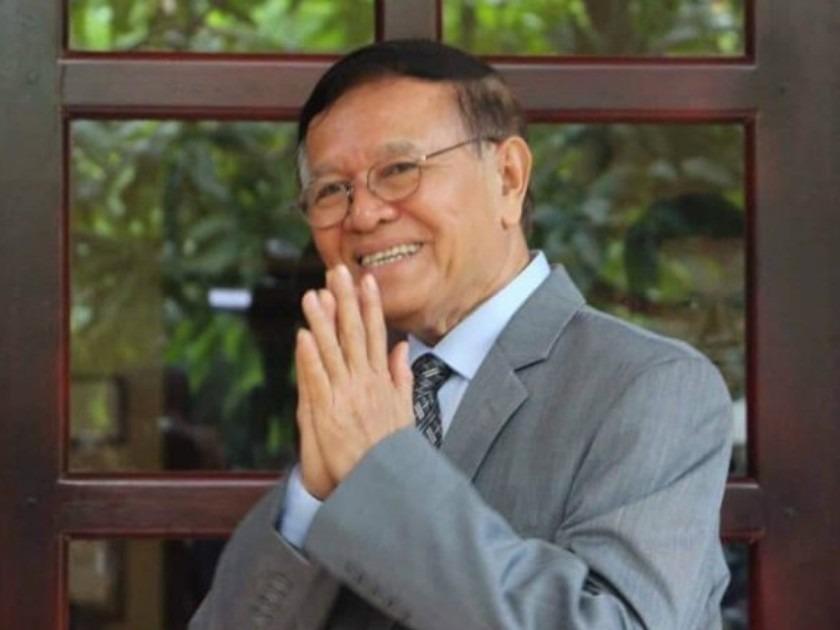
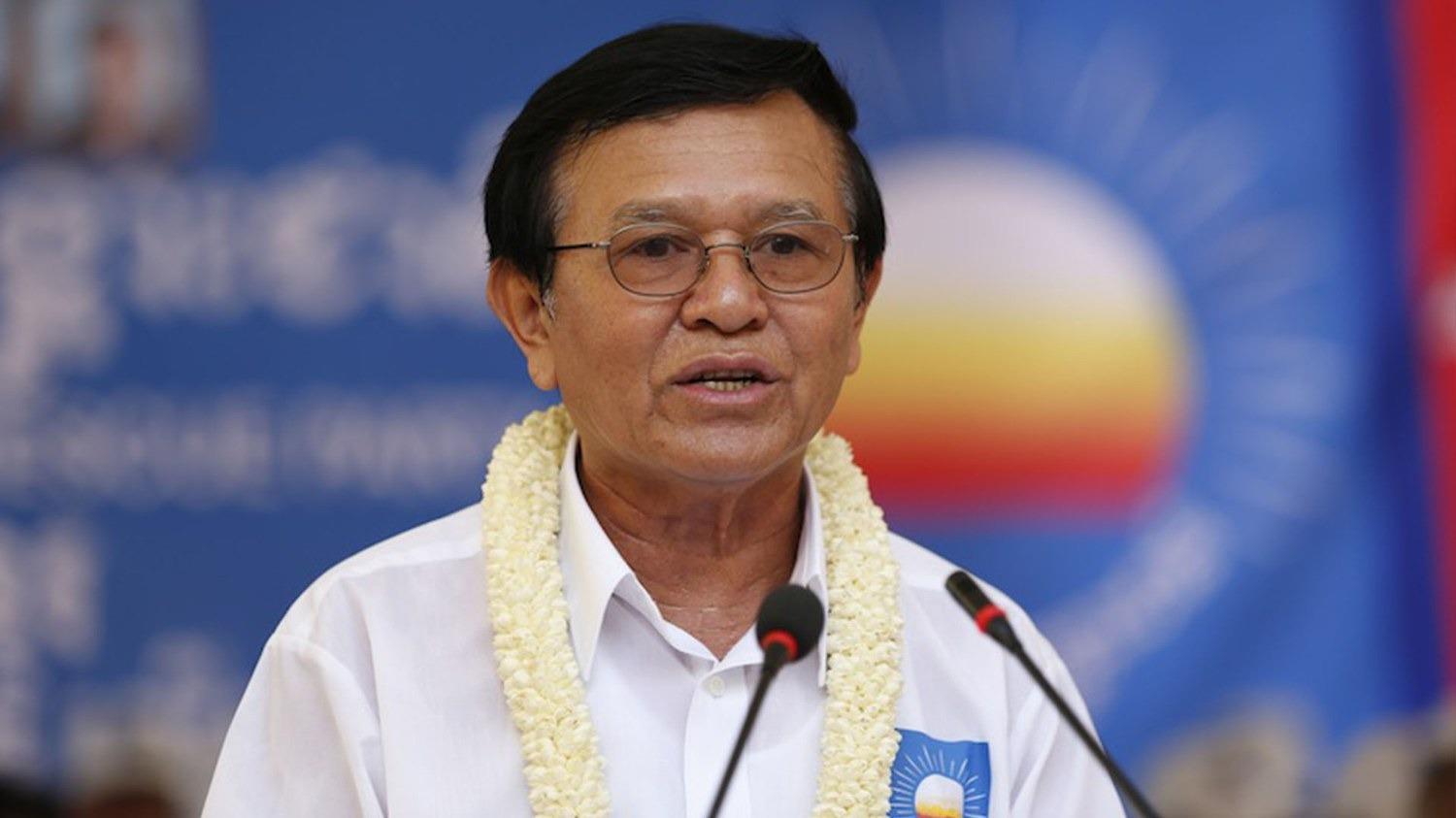
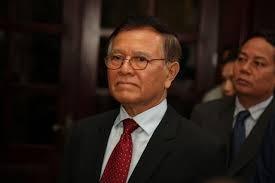
(Phnom Penh): At a time when many parts of the world are facing deep internal divisions, political confrontation, and declining public trust in political leaders, Cambodia on May 25, 2026, sent a powerful political signal through the royal pardon granted to former opposition leader Kem Sokha — a move widely seen as reflecting “political magnanimity” and a renewed spirit of “national reconciliation.”
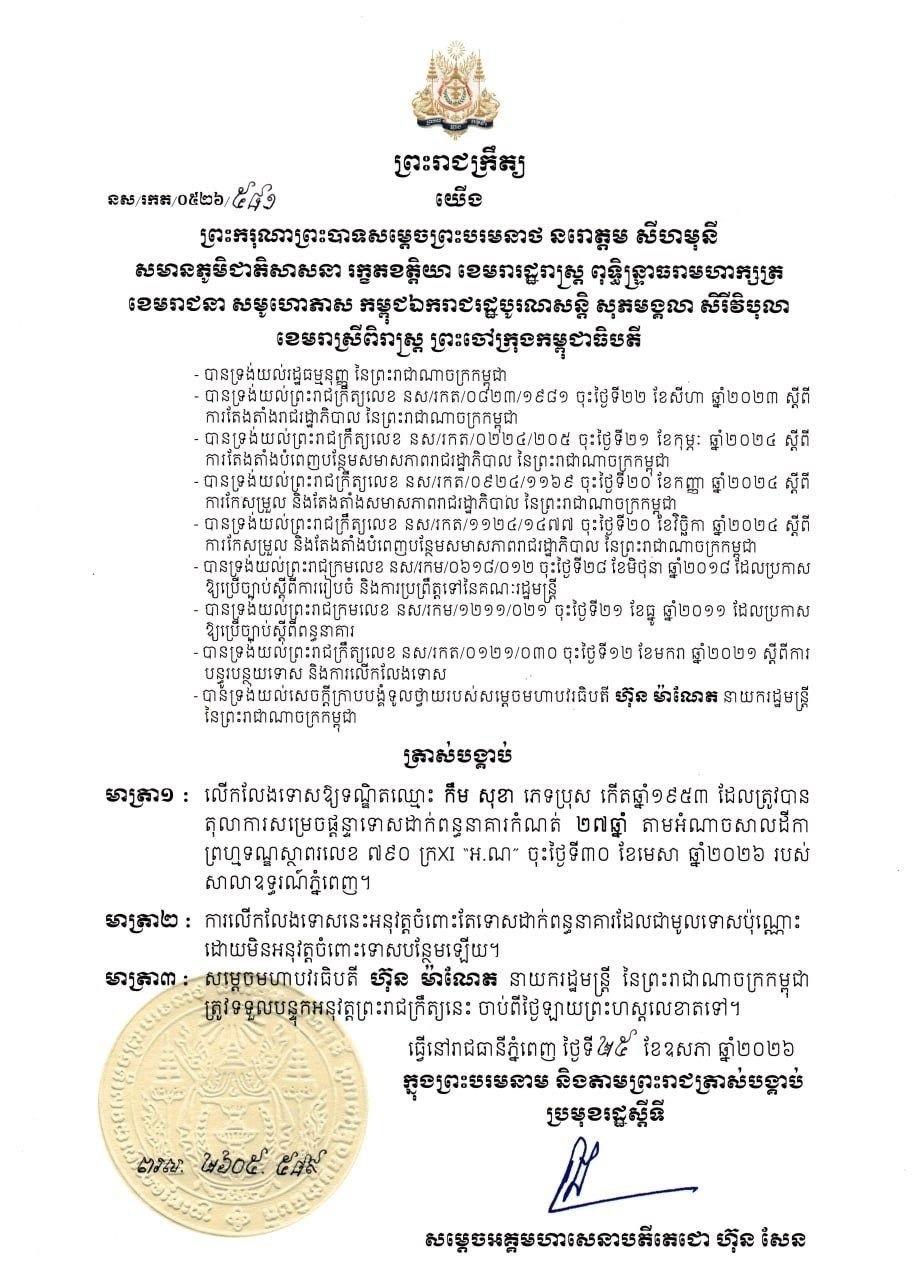
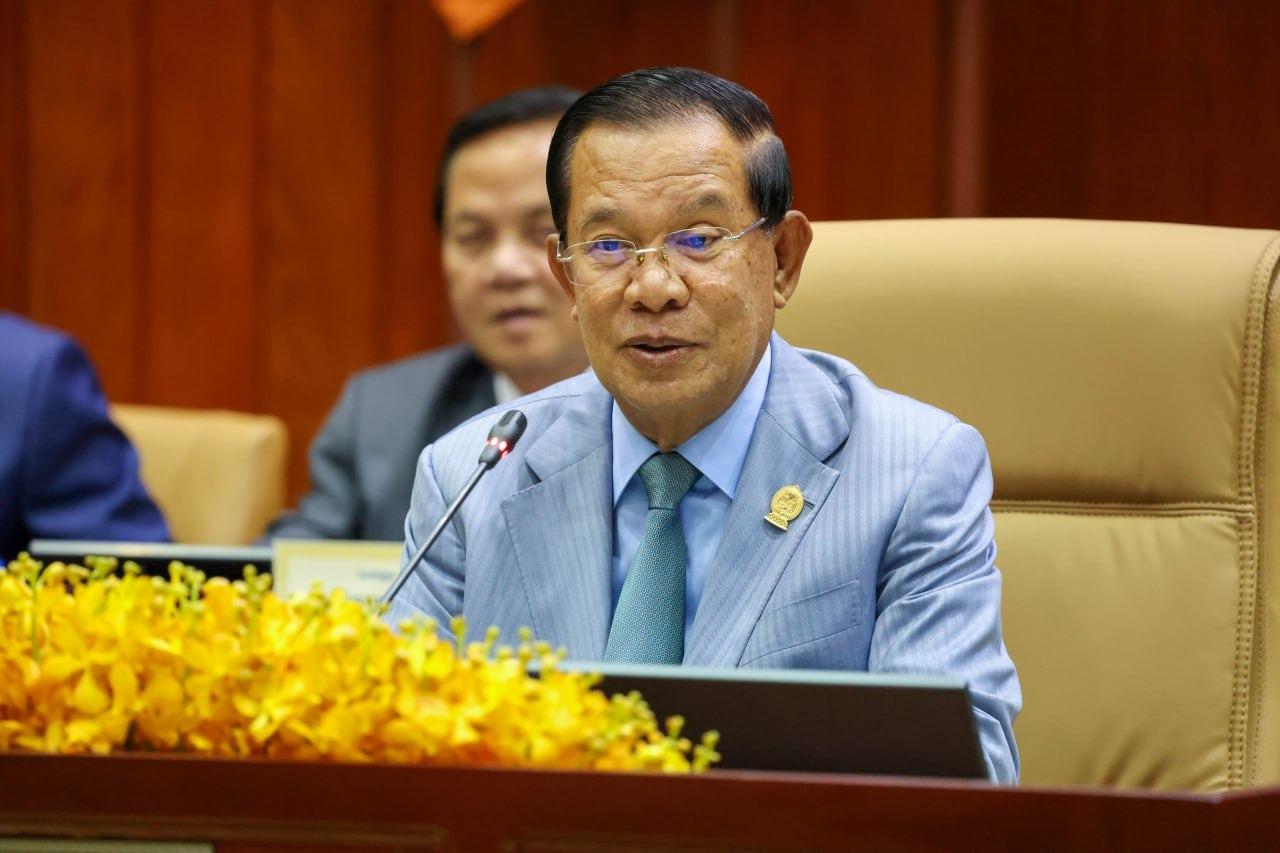
The royal decree pardoning Kem Sokha, former president of the dissolved Cambodia National Rescue Party (CNRP), was signed by Acting Head of State Samdech Akka Moha Sena Padei Techo Hun Sen following a request submitted by Prime Minister Samdech Moha Borvor Thipadei Hun Manet.
More than simply a legal measure, the decision carried an important political message: Cambodia is attempting to foster a political atmosphere grounded in “humanity, peace, and national unity.”
From Legal Judgment to Political Magnanimity
Kem Sokha had been sentenced to 27 years in prison for “conspiracy with a foreign power” under Article 443 of Cambodia’s Criminal Code. On April 30, 2026, the Phnom Penh Court of Appeal upheld the lower court’s verdict and additionally imposed a five-year ban on leaving the country.
According to the royal decree, the pardon applies specifically to the prison sentence itself. In practical terms, this means the entire 27-year prison sentence imposed on Kem Sokha has been fully pardoned.
The pardon came as a major surprise to many observers and generated significant public attention, as many had believed Kem Sokha’s case would remain a long-term source of political tension in Cambodia. Instead, the Cambodian government chose a different path — one centered on “political magnanimity,” easing national tensions, and promoting reconciliation among Cambodians.
Politically, the decision may also be interpreted as a sign that the Royal Government seeks to create a calmer and more stable political environment while continuing to strengthen peace, stability, and national unity as the foundation for Cambodia’s long-term development.
On his official social media platform, Prime Minister Hun Manet described the pardon as: “Another step forward in strengthening national solidarity and unity.”
Though brief, the statement carries deep political significance. It suggests that the pardon should not be viewed through the lens of political victory or defeat, but rather as an exercise of state authority guided by humanity and aimed at reducing divisions while reinforcing national cohesion among Cambodians.
In another sense, the Prime Minister’s message also reaffirmed that peace and national unity remain among the Cambodian government’s highest priorities.
Cambodia’s Prime Minister and the Politics of Humanity
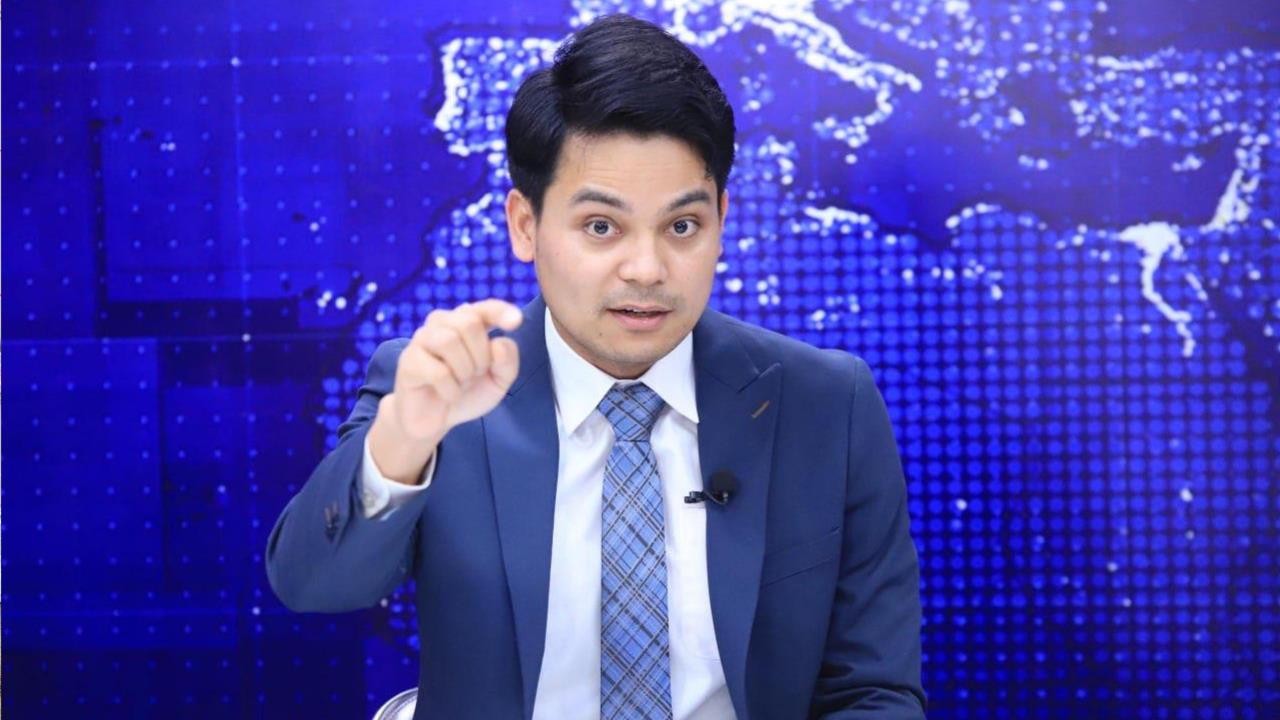
Chea Thy Rith, spokesperson for Techo Hun Sen, stated that the pardon came after Prime Minister Hun Manet submitted a formal request to His Majesty the King seeking clemency for Kem Sokha.
Politically, this represents an important moment because it demonstrates that Hun Manet’s leadership is attempting to shape a new political atmosphere based on “reducing tensions,” “national reconciliation,” and “humanity,” rather than perpetuating cycles of political confrontation.
Chea Thy Rith emphasized: “The pardon granted to Kem Sokha is something we welcome. It reflects the profound political magnanimity of the Royal Government, especially the political humanity of Samdech Prime Minister Hun Manet.”
The statement carries strong political meaning because it signals that the Cambodian government does not want Cambodian society to continue living in an atmosphere of division, confrontation, and political retaliation. Instead, it seeks to promote a political culture in which Cambodians can coexist peacefully and respectfully despite political differences.
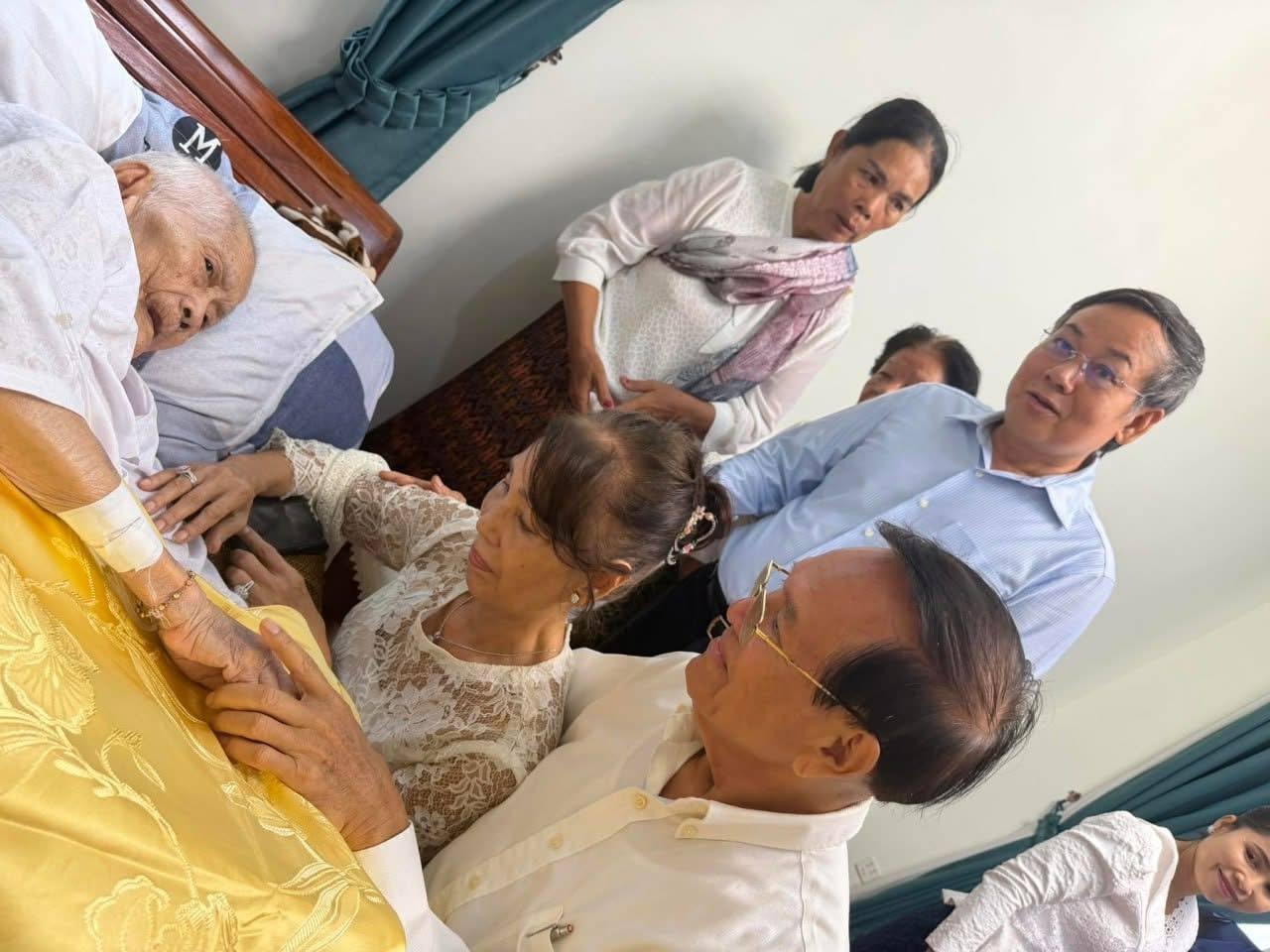
What made the pardon even more emotionally resonant for the public was the reference to the condition of Kem Sokha’s elderly mother, who is reportedly in the final stage of her life.
Chea Thy Rith further explained: “The legal matter is one thing, but political humanity — especially in a situation where a mother is in the final stage of her life while her son is serving a sentence — is something Samdech Prime Minister Hun Manet did not wish to see.”
This statement was not merely a political explanation; it also highlighted the human side of leadership. In Cambodian society, where compassion, morality, and filial responsibility are deeply valued, the decision may be viewed as an exercise of state authority guided not only by law, but also by humanity and empathy.
More broadly, the pardon of Kem Sokha may also be interpreted as a signal that Cambodia is attempting to open a new political chapter — one that sends a message both domestically and internationally that the country continues to believe in peace, reconciliation, and national unity as the pillars of long-term stability and development.
A Positive Signal for National Unity
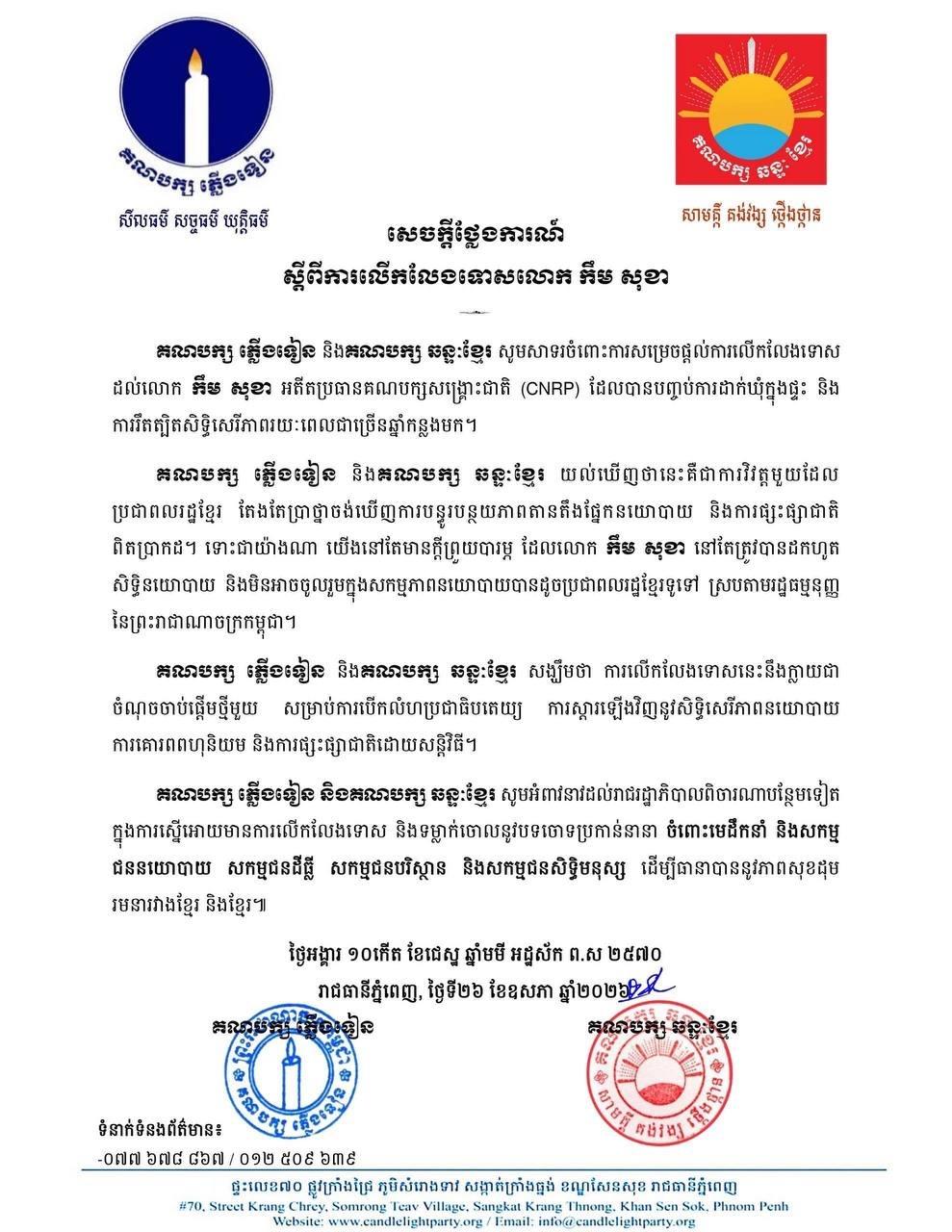
Another noteworthy aspect of the development was that even opposition parties such as the Candlelight Party and the Khmer Will Party issued statements welcoming the pardon.
The two parties described the move as:
“A development that Cambodian citizens have long wished to see — a reduction in political tensions and genuine national reconciliation.”
Although they still expressed concerns regarding Kem Sokha’s political rights, their welcoming response demonstrated that the pardon could become a new starting point for building a calmer political environment.
Cambodia Needs Unity, Not Division
For decades, Cambodia endured war, tragedy, and deep national division. Therefore, peace and national unity are not abstract concepts for Cambodians — they are essential national priorities.
The pardon of Kem Sokha may be viewed as a continuation of Cambodia’s reconciliation-oriented political approach, one that previously helped the country emerge from civil war and move toward full peace.
For many Cambodians, especially younger generations, what they wish to see is not continued conflict among Cambodians, but rather a political environment in which leaders can coexist respectfully and resolve differences through peaceful means.
Conclusion
The pardon of Kem Sokha represents a significant political event for Cambodia in 2026. It demonstrates that despite political differences, the Cambodian government remains capable of choosing the path of magnanimity, humanity, and national unity.
Prime Minister Hun Manet’s statement that this is: “Another step forward in strengthening national solidarity and unity” may ultimately signal Cambodia’s desire to open a new political chapter based on reconciliation, mutual respect, and collective nation-building.
At a time when many parts of the world are becoming increasingly polarized, Cambodia appears to be sending a message that “national unity” remains the country’s greatest strength in preserving peace and sustaining development.