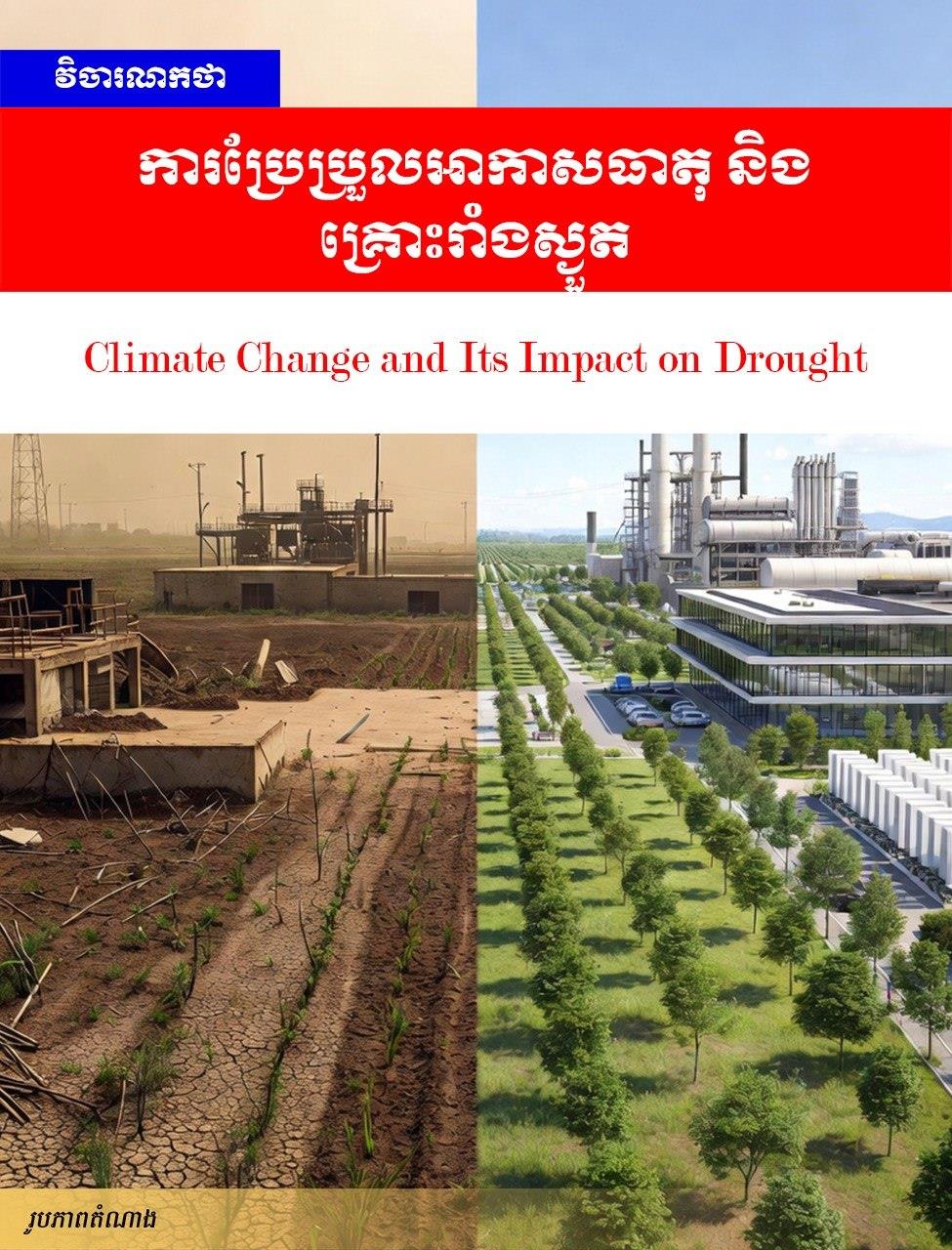
(Phnom Penh): Climate change is increasingly reshaping weather patterns across the globe, and one of its most serious consequences is the growing frequency and severity of droughts. From Africa and Asia to Europe, North America, and Australia, prolonged dry conditions are becoming more common, threatening water security, agriculture, ecosystems, and human livelihoods.
Drought occurs when an area experiences an extended period of below-average rainfall, leading to water shortages in rivers, reservoirs, soil, and groundwater systems.
While droughts are natural phenomena, climate change is intensifying their impact by raising global temperatures and altering rainfall patterns.
Higher temperatures increase evaporation from land and water surfaces, causing soils to dry more quickly and reducing available water supplies. In many regions, rainy seasons are becoming shorter, more unpredictable, or less intense.
As a result, communities that rely heavily on agriculture and natural water systems are facing increasing vulnerability.
The consequences of drought are severe and far-reaching. Agriculture is often the first sector affected. Crop failures, reduced harvests, livestock losses, and declining soil fertility threaten food security and rural livelihoods.
In many developing countries, where millions depend directly on farming, prolonged drought can push vulnerable populations deeper into poverty and hunger.
Water scarcity also affects industries, energy production, and public health. Rivers and reservoirs shrink, reducing access to clean water for households and irrigation. Hydropower production may decline, while poor sanitation and lack of clean water increase the risk of disease outbreaks.
Environmental impacts are equally alarming. Drought weakens forests, damages wetlands, reduces biodiversity, and increases the likelihood of wildfires.
Dry ecosystems become more fragile and less capable of absorbing carbon dioxide, further accelerating climate change in a dangerous cycle.
The social and economic consequences can extend beyond environmental damage. Severe droughts may contribute to migration, economic instability, and conflict over limited natural resources such as water and fertile land.
Vulnerable regions with weak infrastructure and limited adaptive capacity often suffer the greatest impacts despite contributing relatively little to global greenhouse gas emissions.
Addressing drought requires both climate mitigation and adaptation. Reducing greenhouse gas emissions through renewable energy, forest protection, sustainable agriculture, and cleaner industries remains essential to slowing global warming.
At the same time, countries must strengthen water management systems, improve irrigation efficiency, protect watersheds, restore forests, and invest in drought-resistant agriculture.
Public awareness and responsible resource management are also critical. Conserving water, reducing environmental degradation, and promoting sustainable land use can help communities become more resilient to future drought conditions.
Climate change and drought together serve as a warning that environmental stability cannot be taken for granted. Water is one of humanity’s most essential resources, and its growing scarcity reflects the broader imbalance between human activity and nature.
In the end, the increasing threat of drought is not only an environmental issue. It is a challenge to food security, economic stability, public health, and human survival itself.
The global response to climate change today will determine whether future generations inherit a world of worsening water scarcity or a more resilient and sustainable planet.
=FRESH NEWS