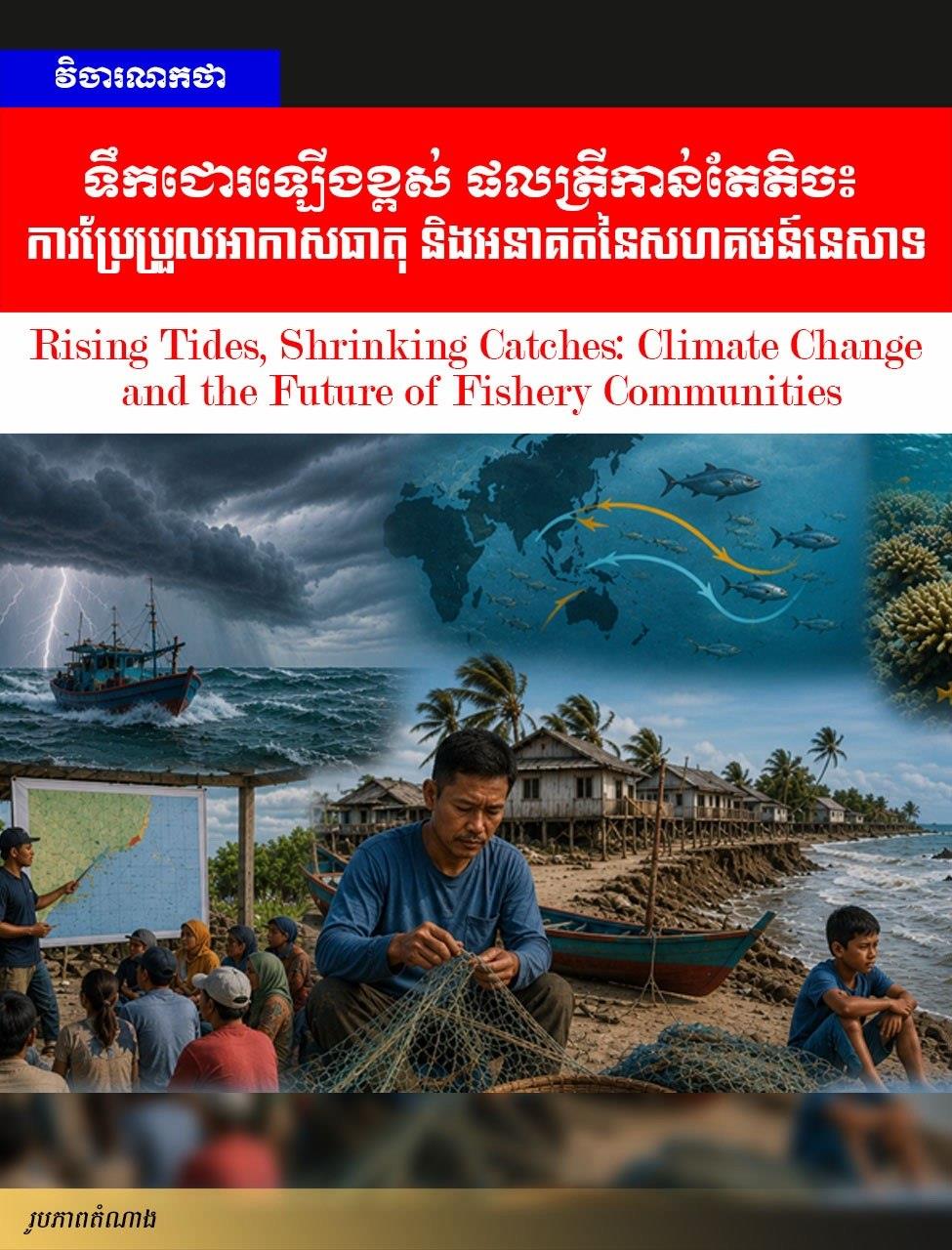
(Phnom Penh): From the deltas of Southeast Asia to the coasts of West Africa and the small island states of the Pacific, fishery communities have long lived in rhythm with the sea. Today, that rhythm is breaking.
Accelerating climate change is reshaping oceans in ways that threaten not only marine ecosystems but also the livelihoods, cultures, and food security of millions who depend on them.
The impacts are visible and growing. Warmer ocean temperatures are altering fish migration patterns, pushing stocks away from traditional fishing grounds. Small-scale fishers, who lack the technology and fuel capacity to travel farther offshore, are often the first to feel the loss.
At the same time, ocean acidification, caused by increased carbon dioxide absorption, weakens shellfish and coral reefs, undermining the very ecosystems that sustain fisheries.
Extreme weather events are compounding the challenge. Stronger storms, rising sea levels, and coastal erosion are damaging boats, nets, and homes. Fishing days are lost, incomes become unstable, and safety risks increase.
In many coastal villages, what was once a predictable livelihood has become uncertain and, at times, dangerous.
The consequences extend beyond economics. Fish is a primary source of protein for billions of people worldwide, particularly in developing countries.
As catches decline or become less reliable, food security is threatened. Prices rise, nutrition suffers, and vulnerable populations bear the heaviest burden.
Yet the crisis is not only about decline, it is also about inequality. Industrial fleets, often equipped with advanced technology, can adapt more easily by tracking shifting fish stocks.
Small-scale fishers, by contrast, face limited access to finance, insurance, and market information. Without targeted support, the gap between large-scale operators and traditional communities will widen.
Global efforts such as the Paris Agreement recognize the need to limit warming and protect vulnerable sectors. But for fishery communities, adaptation is already an urgent necessity, not a future goal.
Solutions must be practical and immediate: improving early warning systems, investing in climate-resilient infrastructure, supporting sustainable aquaculture, and strengthening community-based fisheries management.
Equally important is protecting and restoring marine ecosystems. Mangroves, seagrasses, and coral reefs act as natural buffers against storms and serve as nurseries for fish. Their conservation is not only an environmental priority but also an economic lifeline for coastal populations.
There is also an opportunity in transformation. Climate-smart fisheries, diversified livelihoods, and better market access can help communities build resilience.
With the right policies and partnerships, fishers can transition from being victims of climate change to stewards of sustainable ocean resources.
The global climate debate often focuses on emissions targets and industrial transitions. But in coastal villages around the world, the stakes are more immediate and personal. They are measured in empty nets, damaged homes, and uncertain futures.
If the world is serious about climate justice, it must listen to and invest in fishery communities. Their survival is not only a matter of environmental concern, it is a test of our collective commitment to an inclusive and sustainable future.
=FRESH NEWS