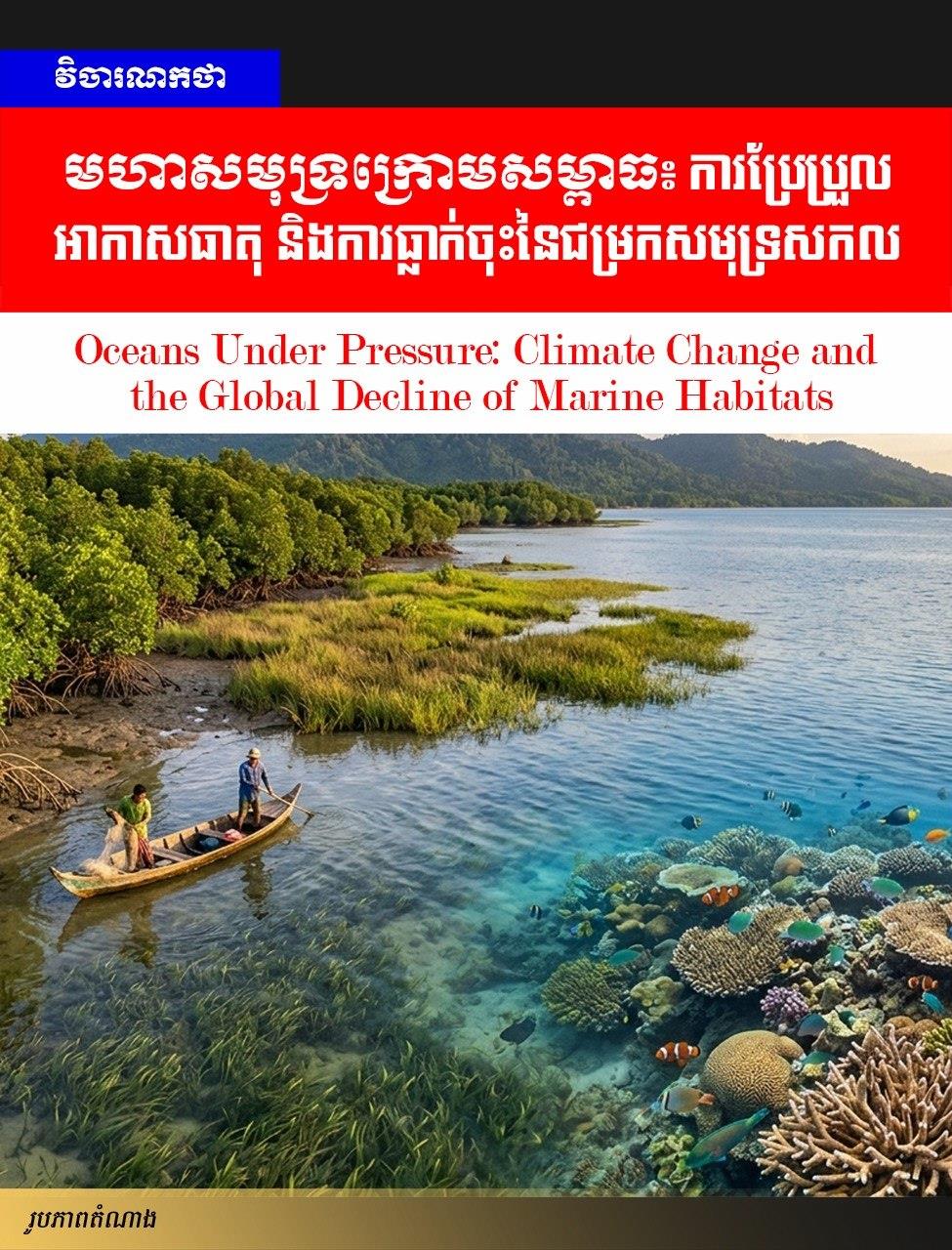
(Phnom Penh): The world’s oceans, vast, interconnected, and life-sustaining, are undergoing profound transformation. Climate change is not only warming the seas; it is destabilizing the natural habitats that underpin marine biodiversity and global ecological balance.
From tropical coral reefs to polar ecosystems, the impacts are global, accelerating, and increasingly difficult to reverse.
At the forefront of this crisis are coral reefs. These ecosystems, found in regions such as the Great Barrier Reef and across the Indo-Pacific, support approximately a quarter of all marine species despite covering a small fraction of the ocean floor.
Rising sea temperatures are causing widespread coral bleaching, with repeated events leaving reefs little time to recover. The loss of coral reefs is not only a biodiversity crisis, it disrupts fisheries, weakens coastal protection, and affects tourism industries worldwide.
Ocean warming extends beyond reefs. Marine species are shifting their geographic ranges toward cooler waters, altering food webs and creating imbalances in ecosystems.
In some regions, fish populations are declining or moving away entirely, undermining food security for millions of people. These shifts are global in scale, affecting fisheries from the North Atlantic to Southeast Asia.
Equally concerning is ocean acidification. As oceans absorb more carbon dioxide, their chemical composition changes, reducing the availability of carbonate ions essential for organisms like shellfish, plankton, and corals. This weakens the foundation of the marine food chain.
Tiny organisms such as phytoplankton, often overlooked, play a critical role in producing oxygen and supporting marine life. Their decline has ripple effects throughout the entire ecosystem.
Polar regions are also experiencing dramatic change. In the Arctic Ocean, melting sea ice is destroying habitats for species such as seals and polar bears, while opening new areas to human activity. These changes disrupt long-established ecological systems and contribute further to global climate feedback loops.
Coastal ecosystems, including mangroves, salt marshes, and seagrass meadows, are under pressure from rising sea levels and human development. These habitats act as natural buffers against storms and store significant amounts of carbon, often referred to as “blue carbon.” Their degradation not only releases stored carbon but also leaves coastlines more vulnerable to extreme weather events.
The global implications are far-reaching. Marine habitats are essential to climate regulation, food systems, and economic stability. Oceans absorb over 90 per cent of the excess heat generated by greenhouse gas emissions, acting as a stabilizing force for the planet. As marine ecosystems weaken, so too does their capacity to perform this critical function.
Despite the scale of the challenge, solutions exist. Strengthening marine protected areas, enforcing sustainable fishing, and reducing pollution are necessary steps to safeguard marine biodiversity. At the same time, global efforts to cut greenhouse gas emissions remain central to slowing ocean warming and acidification.
There is also growing recognition of the importance of ecosystem restoration. Rehabilitating coral reefs, replanting mangroves, and protecting seagrass meadows can enhance resilience and support recovery. These nature-based solutions offer both environmental and economic benefits, reinforcing the link between conservation and sustainable development.
Ultimately, the decline of marine habitats is a global issue that demands a global response. No single nation can address it alone. International cooperation, scientific innovation, and political commitment will determine whether the world can preserve the oceans for future generations.