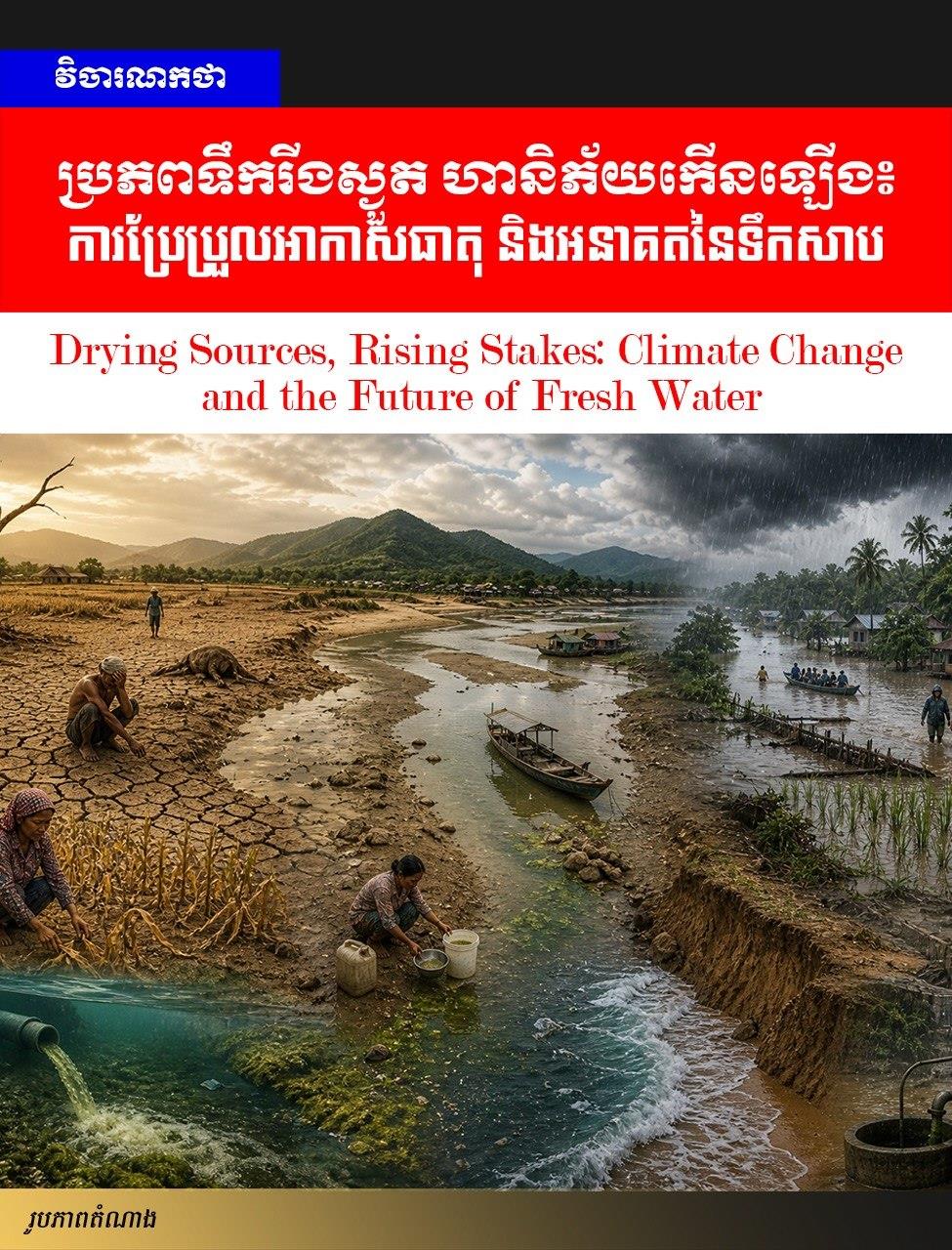
(Phnom Penh): Fresh water, once considered abundant and reliable, is fast becoming one of the most vulnerable resources in a warming world.
Climate change is not only altering temperatures; it is reshaping the entire water cycle, disrupting how, when, and where water is available.
The result is a growing imbalance between supply and demand, with far-reaching consequences for human health, food security, and economic stability.
At its core, climate change intensifies the natural variability of water systems. Rising temperatures increase evaporation from rivers, lakes, and soil, reducing surface water availability.
At the same time, rainfall patterns are becoming more erratic, longer dry seasons punctuated by short, intense bursts of rain. This means less water is absorbed into the ground to replenish aquifers, and more is lost as runoff, often causing floods rather than sustained supply.
Glaciers and snowpacks, which act as natural reservoirs in many parts of the world, are shrinking rapidly. Their gradual melt has historically provided steady freshwater flows to millions of people.
As these reserves diminish, so too does the reliability of downstream water sources. What begins as an environmental shift quickly evolves into a humanitarian concern.
Water quality is also under threat. Higher temperatures accelerate the growth of harmful algae and bacteria in lakes and reservoirs, degrading drinking water.
In coastal areas, rising sea levels push saltwater into freshwater systems, contaminating wells and irrigation supplies. Pollution, already a challenge in many regions, becomes more concentrated as water volumes decline.
For countries like Cambodia, the implications are immediate and complex. The Mekong River, a lifeline for millionsfaces increasing pressure from changing rainfall patterns and upstream variability.
Seasonal flows that once followed predictable rhythms are becoming less certain, affecting fisheries, agriculture, and daily life. Rural communities, which depend heavily on natural water sources, are particularly exposed to these fluctuations.
The impacts extend beyond scarcity. Agriculture, the backbone of many economies, relies on stable water availability.
Irregular rainfall and prolonged droughts disrupt planting cycles, reduce crop yields, and threaten food security. At the same time, extreme rainfall events can damage infrastructure, erode soil, and wash away nutrients essential for farming.
Yet, this is not a crisis without solutions. Climate-resilient water management must become a national priority. This includes investing in water storage systems, improving irrigation efficiency, and protecting watersheds.
Nature-based solutions, such as forest conservation and wetland restoration, play a critical role in regulating water flow and maintaining quality.
Equally important is governance. Strong monitoring systems, enforcement against pollution, and public awareness campaigns are essential to safeguard water resources.
Managing wastewater, preventing industrial discharge, and promoting responsible consumption are no longer optional, they are urgent necessities.
The challenge of freshwater in a changing climate is a test of foresight. It requires coordinated action across sectors and borders, particularly for shared water systems like the Mekong. It also demands a shift in mindset, from viewing water as an unlimited resource to recognizing it as a finite and fragile asset.
Water sustains life, economies, and ecosystems. As climate change tightens its grip, the question is not whether fresh water will be affected, it already is. The real question is whether we will act in time to protect it.
=FRESH NEWS