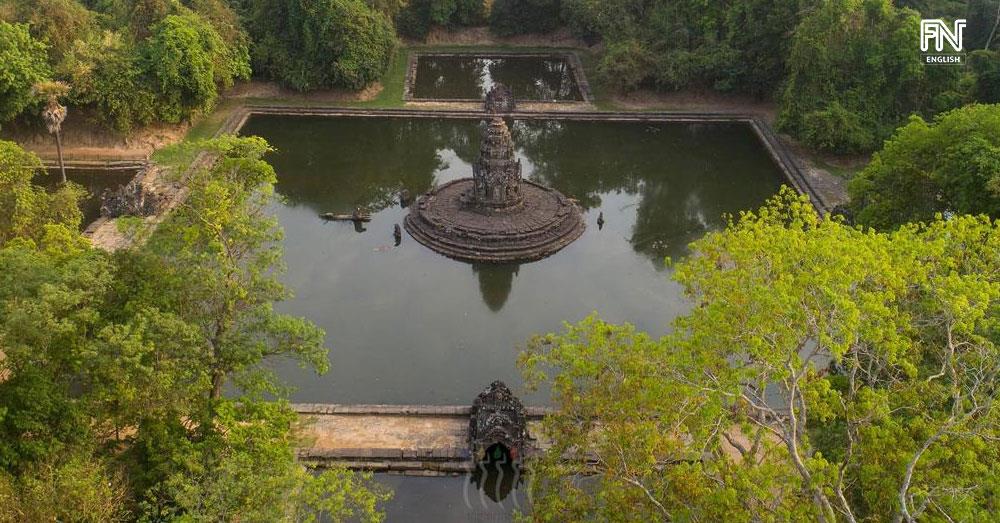
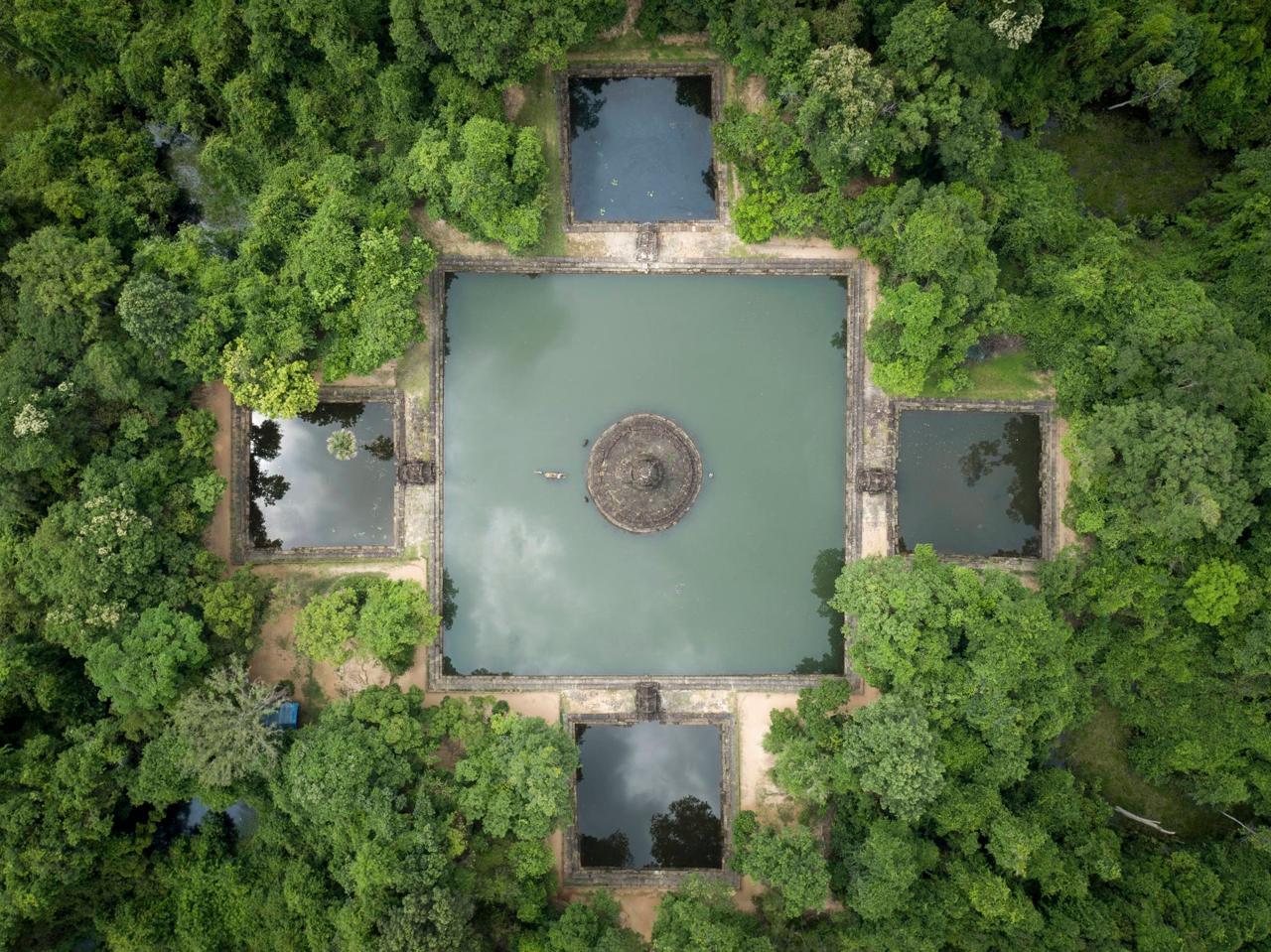
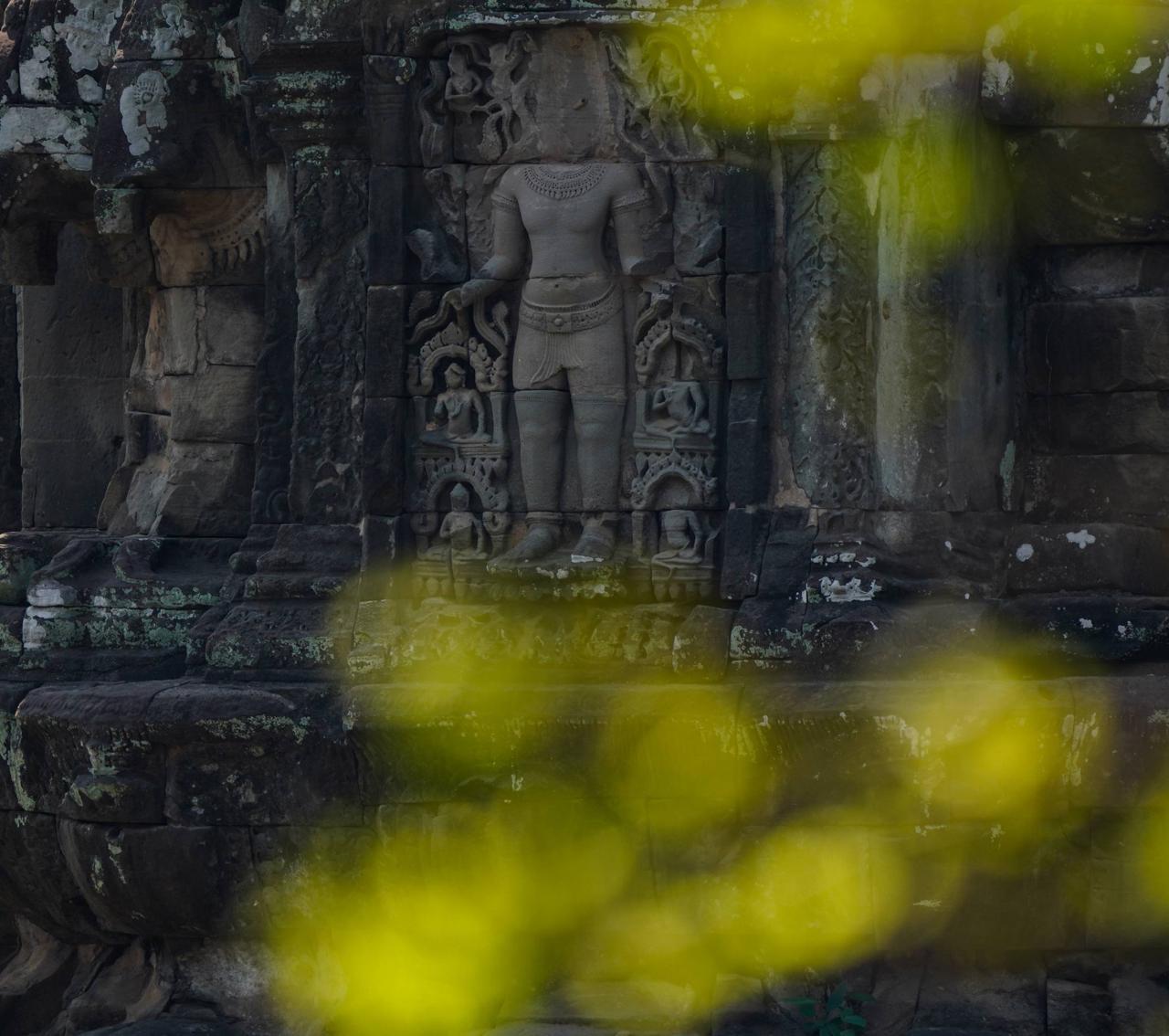
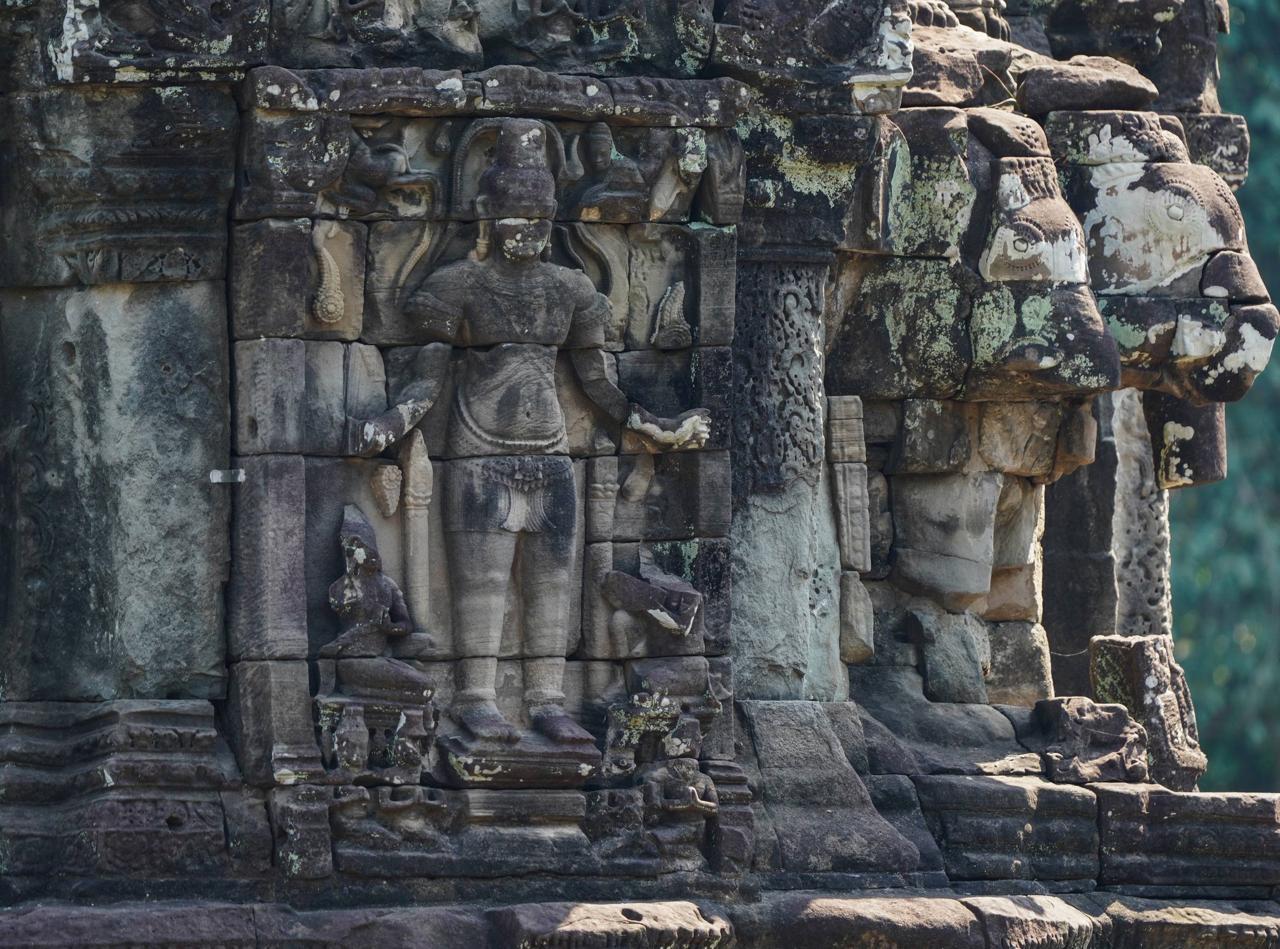
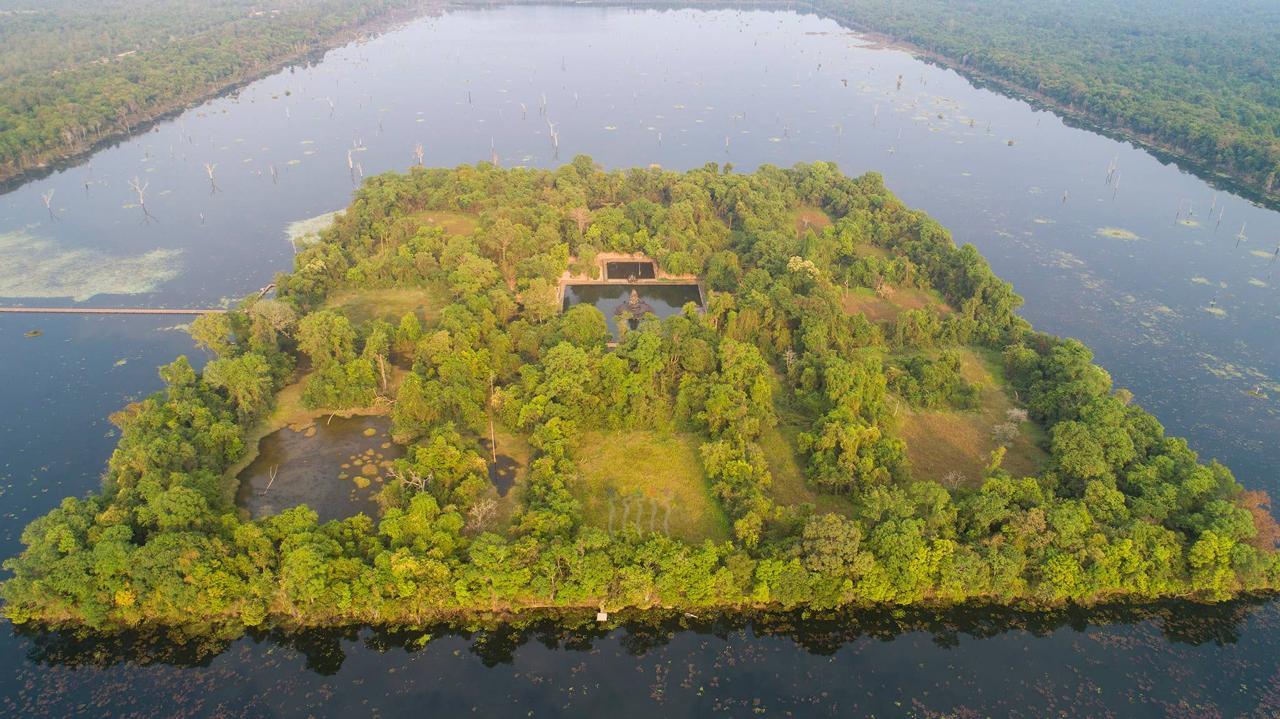
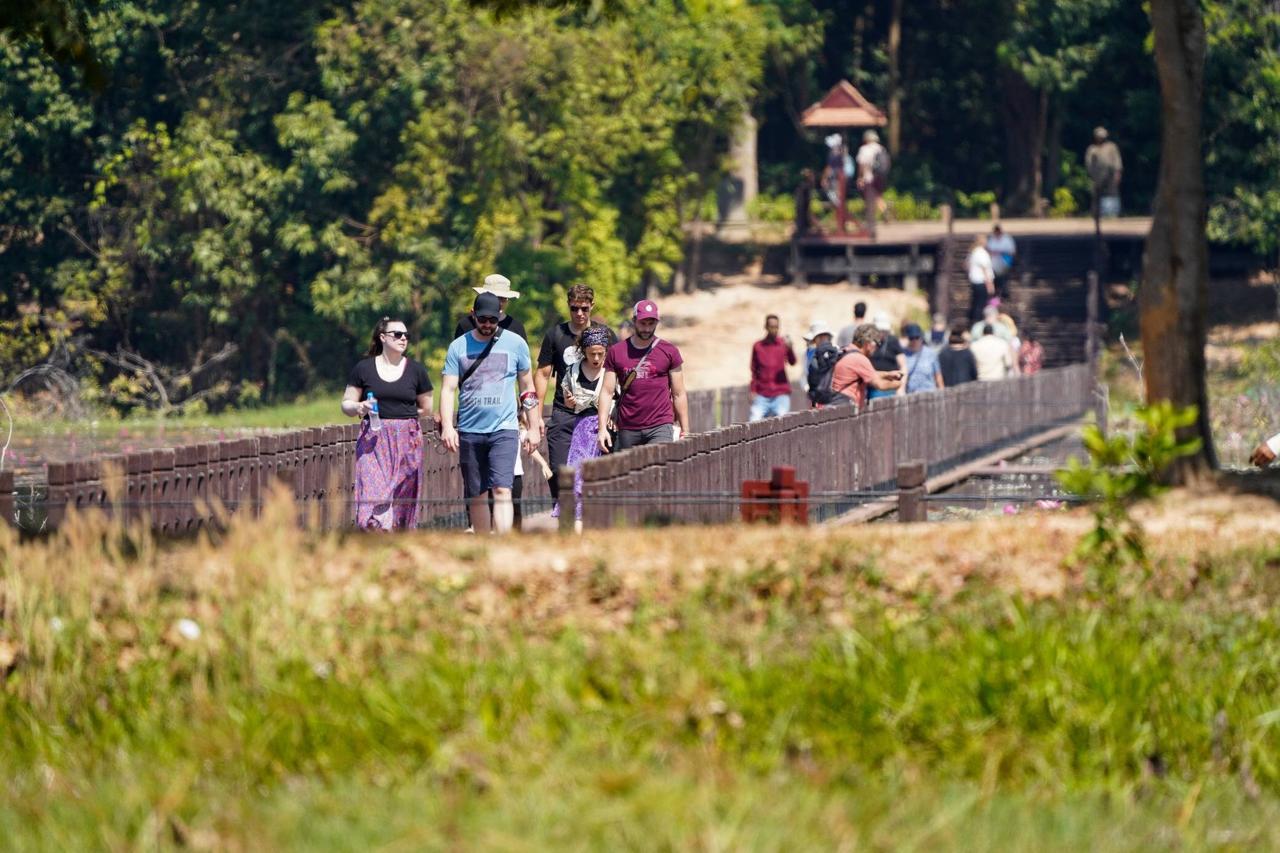
(Siem Reap): Neak Poan Temple, located along the grand circuit of the Angkor site, is a destination that visitors should not miss. Situated in Rohal Village, Sangkat Nokor Thom, Siem Reap City, the temple is surrounded by a vast expanse of water, creating a striking natural landscape deeply connected to ancient Khmer religious beliefs.
According to research by Ang Choulean, Neak Poan Temple symbolizes the sacred Anavatapta Pond, a mythical lake in Hindu-Buddhist cosmology believed to possess healing and purifying properties. The temple is uniquely designed as a central island, representing this celestial pond.
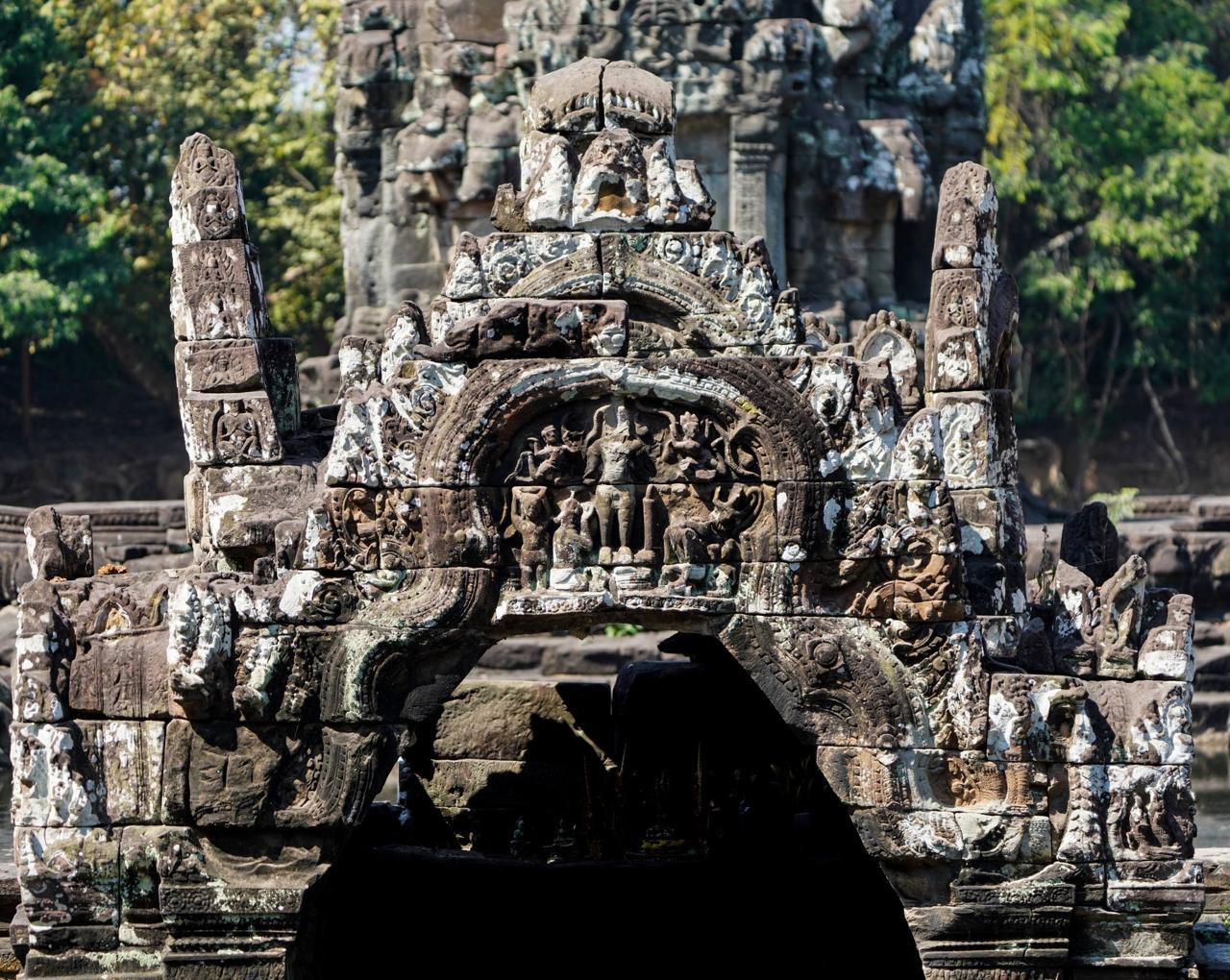
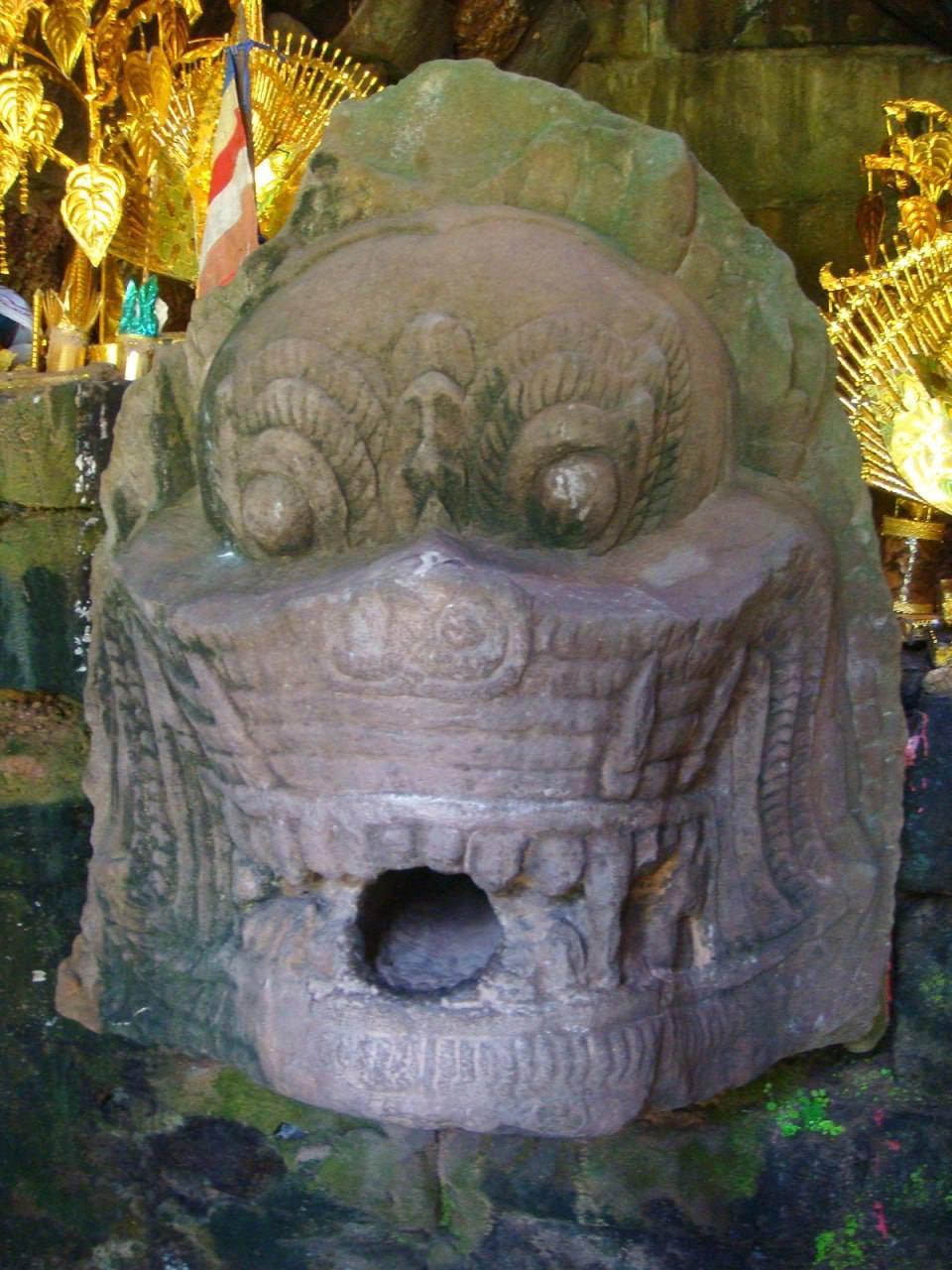
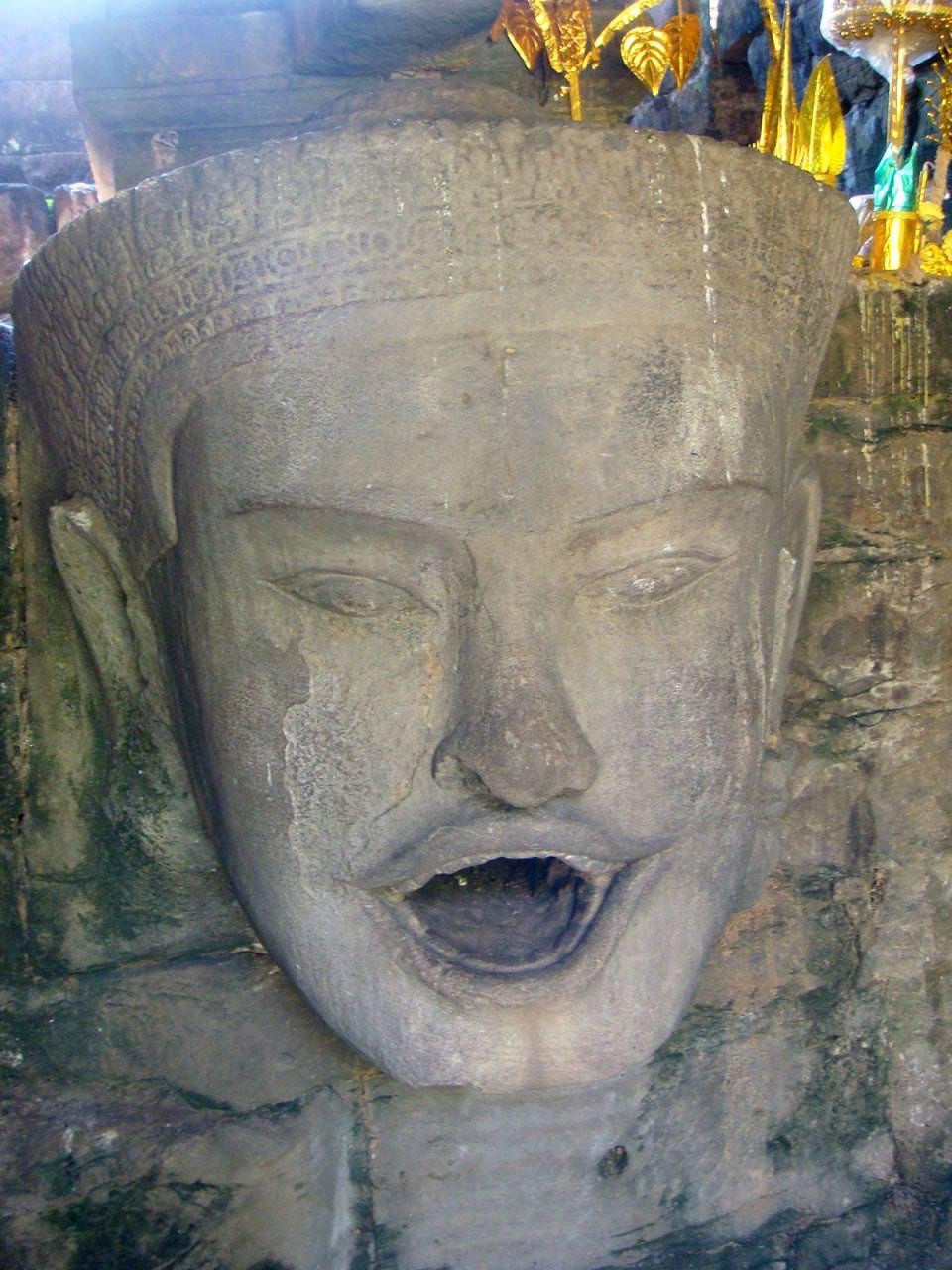
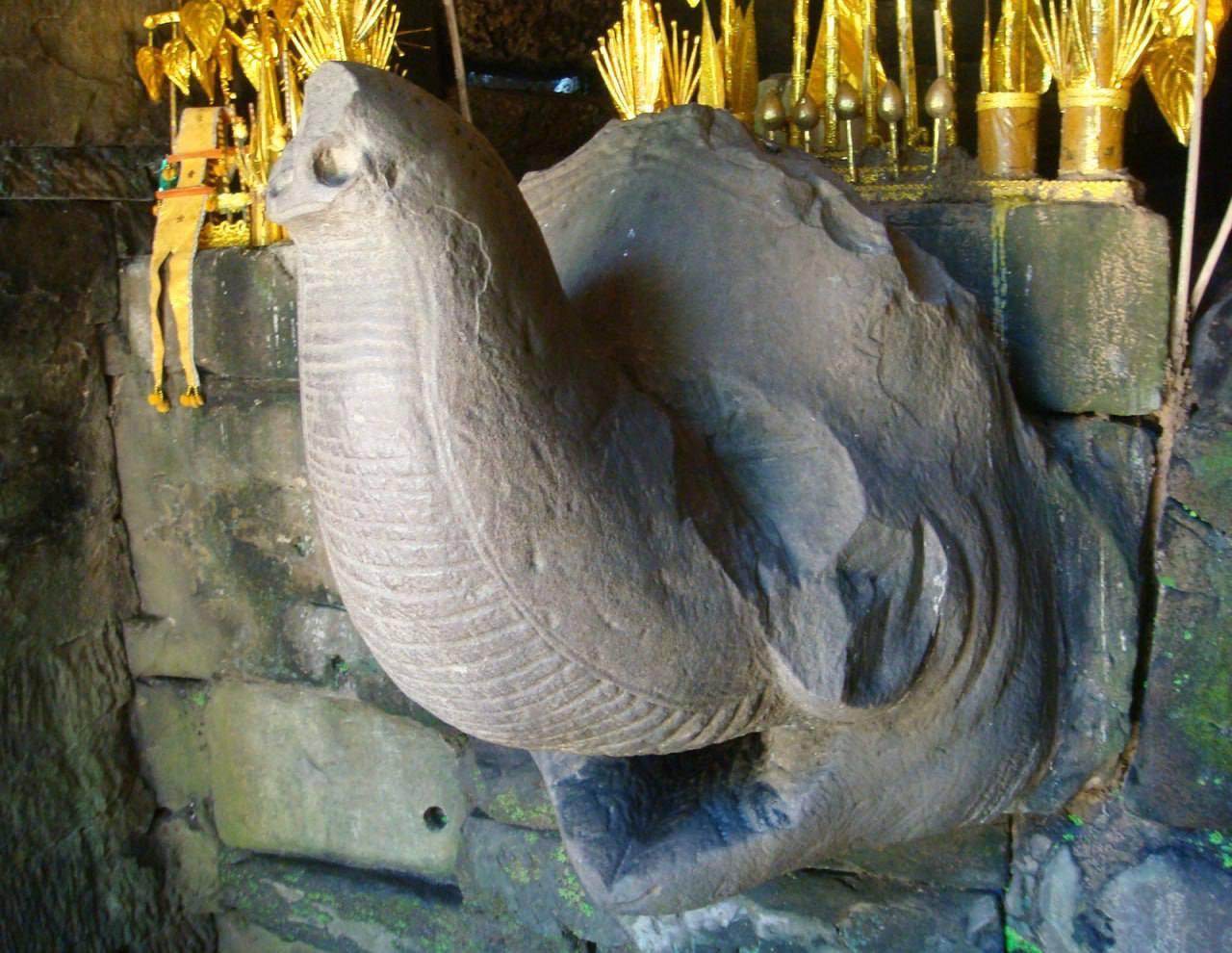
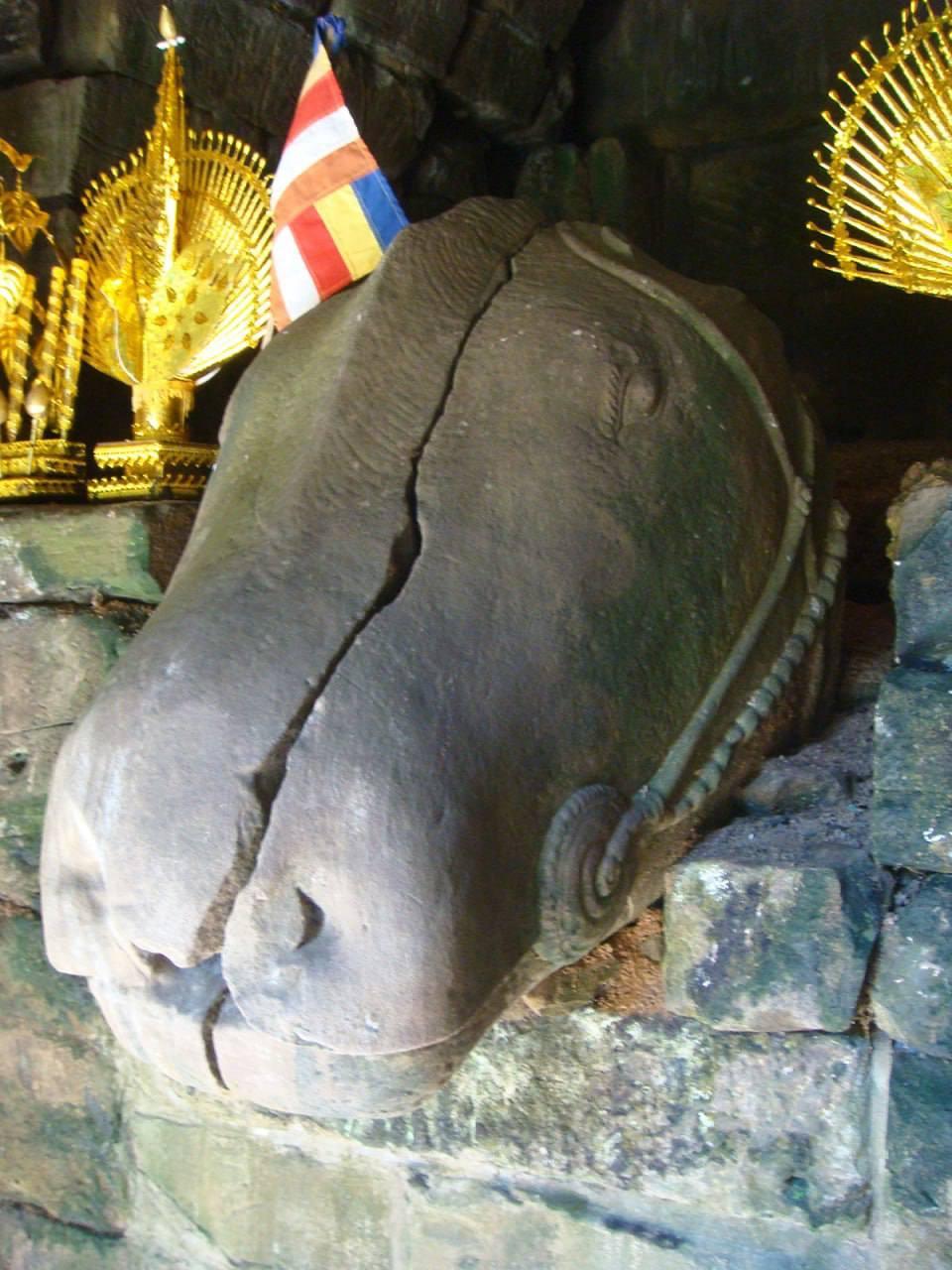
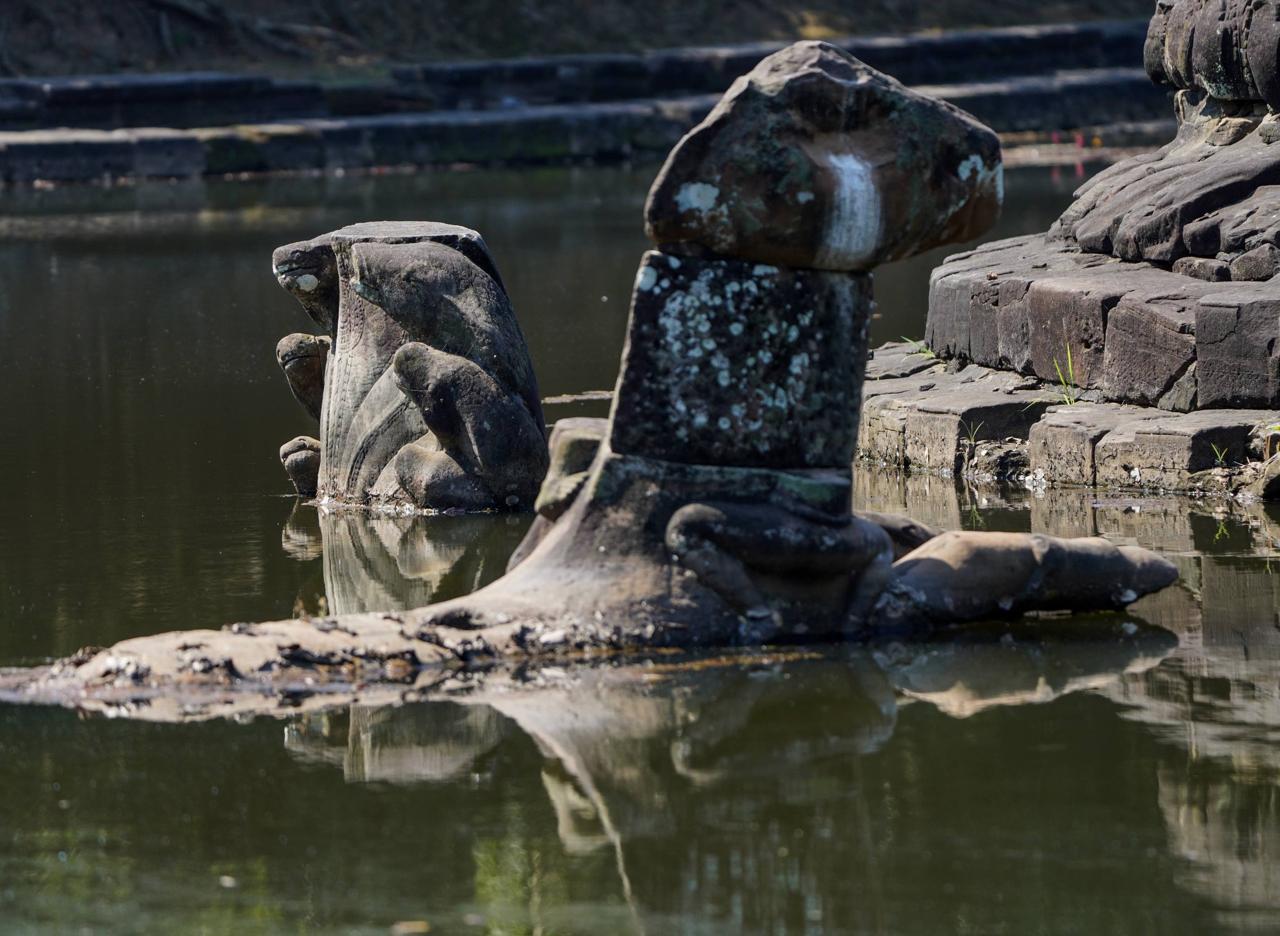
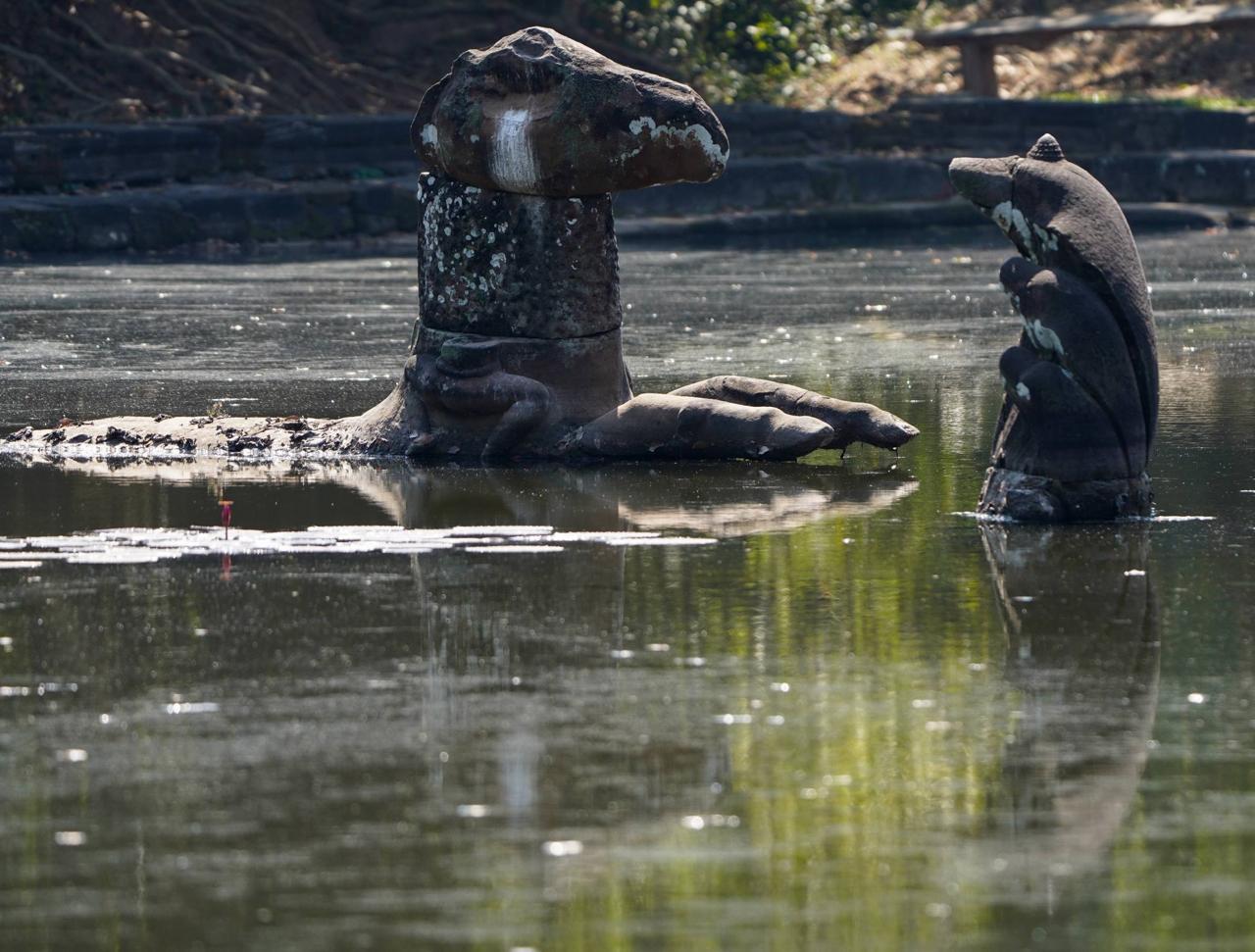
Its architectural layout is both symbolic and sophisticated. At the center lies a large pond, surrounded by four smaller ponds aligned with the cardinal directions. Each pond features a distinctive sculpture: East: Human head, representing the Ganges River, South: Lion head, West: Horse head, North: Elephant head.
These sculpted outlets allowed water to flow between the ponds, serving not only a hydraulic function but also a spiritual one. Devotees once performed rituals, such as prayers for rain, by channeling water from the central pond through the smaller basins, where it flowed out through the mouths of these symbolic figures.
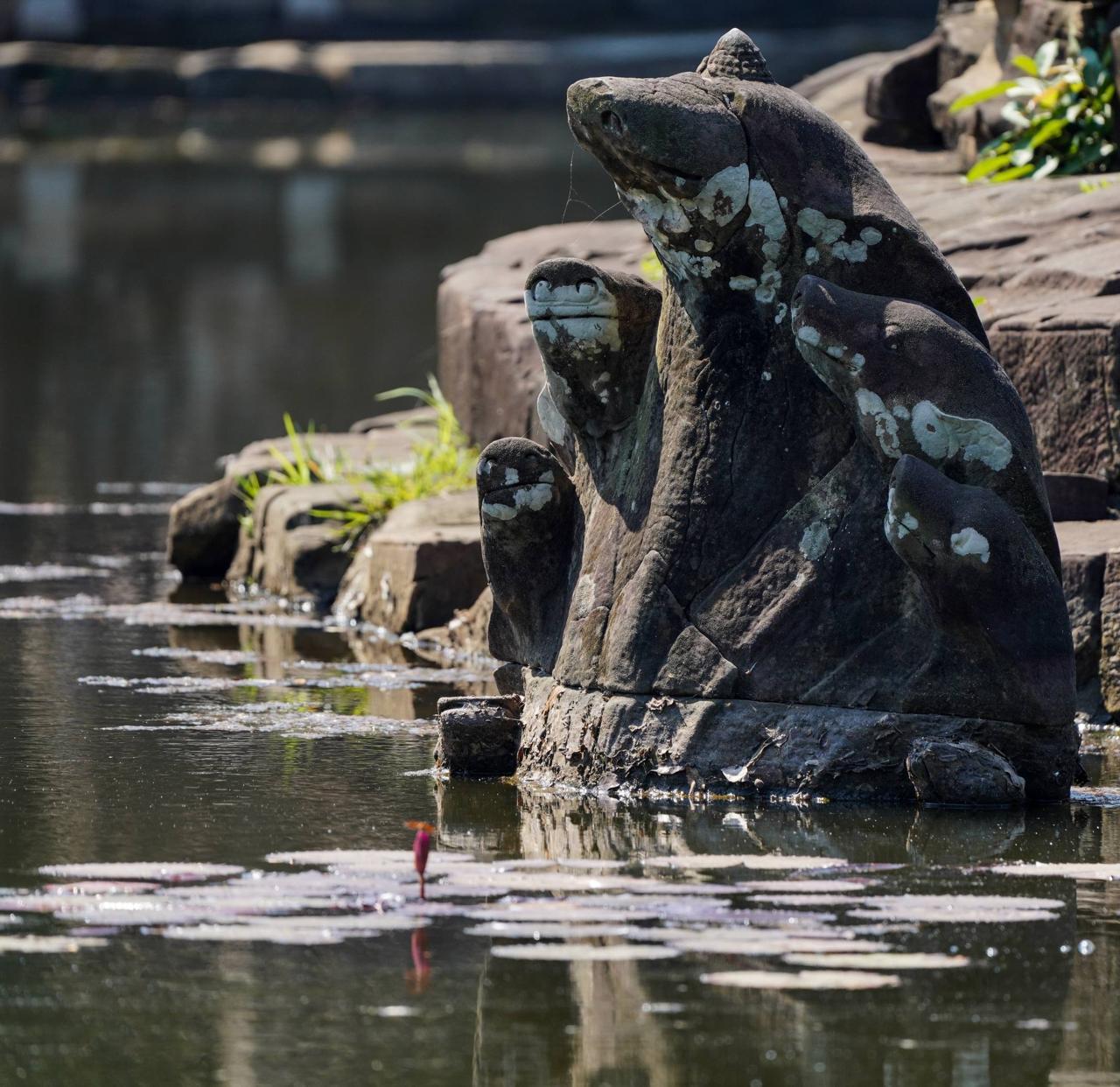
Encircling the central sanctuary are two intertwined naga (serpent) statues, representing the mythical guardians of Anavatapta. These naga reinforce the temple’s sacred identity as a divine and protective water sanctuary.
In modern times, the Apsara National Authority has undertaken significant efforts to restore and manage the ancient water system, which had been inactive for over 500 years. Beginning in 2008, restoration work on the northern baray enabled water to once again circulate through the five ponds of Neak Poan Temple and extend to the moat of Preah Khan Temple.
Maintaining this water system is essential not only for preserving the temple’s visual beauty but also for its structural stability. The presence of water helps keep the sandy soil beneath the temple moist, preventing erosion and reducing the risk of foundation instability. Without adequate moisture, the ground could dry out, potentially causing the structure to tilt or collapse.
Neak Poan Temple stands today as more than just a remarkable architectural monument. It is a testament to the advanced hydrological knowledge of the ancient Khmer civilization and a powerful symbol of the harmonious relationship between faith and nature.
=FRESH NEWS