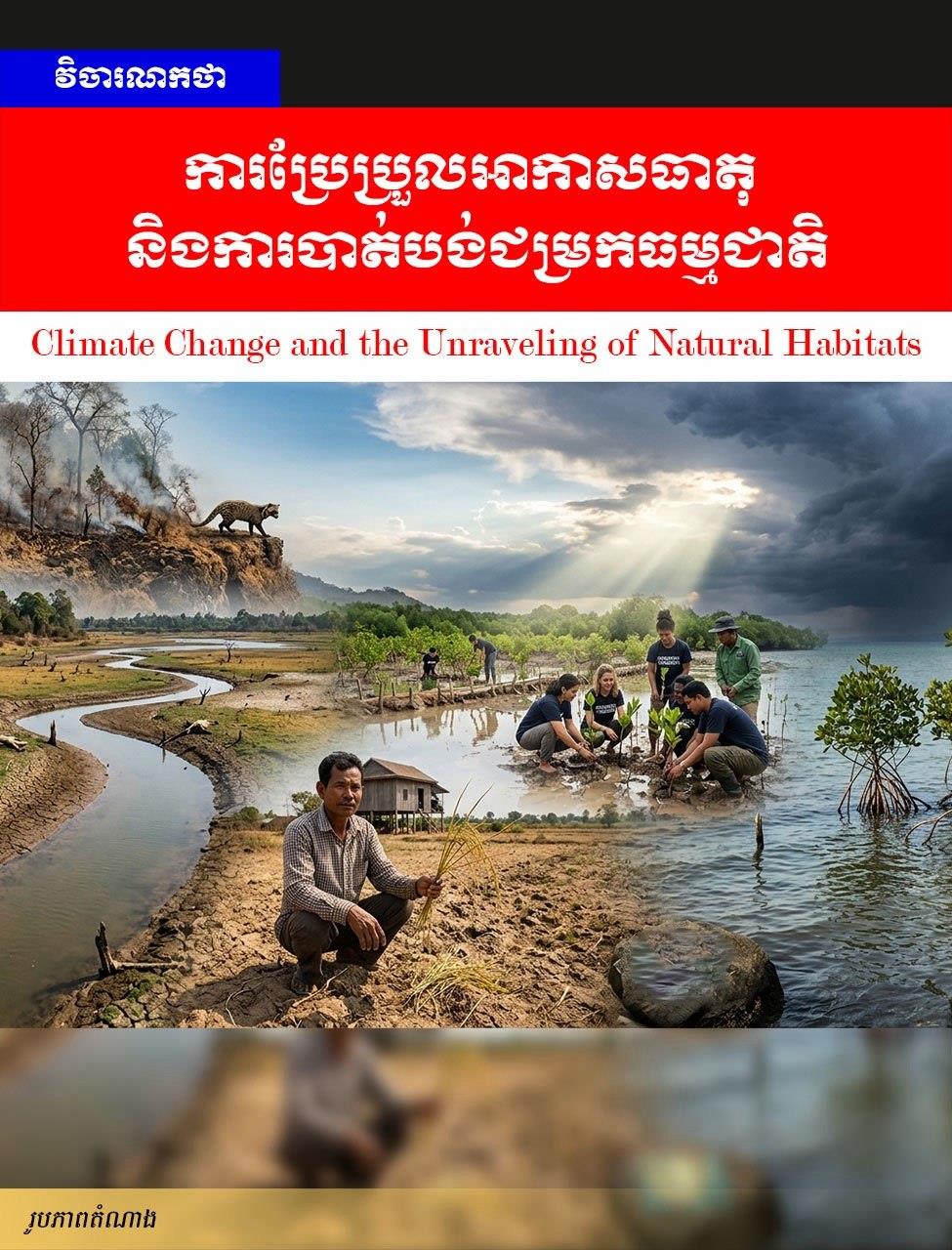
(Phnom Penh): Climate change is no longer a distant environmental concern; it is a present and accelerating force reshaping the natural world.
While rising temperatures and extreme weather dominate headlines, a quieter but equally alarming transformation is underway: the steady degradation and loss of natural habitats.
Habitats are the foundation of life on Earth. Forests, wetlands, coral reefs, grasslands and mangroves provide shelter, food and breeding grounds for countless species.
They also sustain human livelihoods, regulate climate, and protect communities from natural disasters. Yet climate change is placing these ecosystems under unprecedented stress.
One of the most visible impacts is the shifting of climate zones. As temperatures rise, many species are forced to migrate in search of suitable conditions.
Mountain species move uphill, while others shift toward cooler regions. But not all species can adapt or relocate fast enough. Those confined to specific habitats, such as island ecosystems or high-altitude forests, face an increased risk of extinction.
Changes in rainfall patterns further disrupt habitats. Prolonged droughts dry out wetlands and rivers, while intense rainfall can lead to flooding that damages ecosystems.
In tropical regions, forests that once thrived under stable conditions are now exposed to heat stress and water scarcity, weakening their resilience and making them more vulnerable to fires.
Coastal habitats are among the hardest hit. Rising sea levels threaten mangroves, salt marshes and coastal forests, submerging land and increasing salinity.
These ecosystems serve as natural buffers against storms and are critical nurseries for fish and marine life. Their loss not only diminishes biodiversity but also exposes coastal communities to greater risks.
Marine habitats are also under severe pressure. Warmer ocean temperatures lead to coral bleaching, a phenomenon that weakens and can ultimately kill coral reefs.
These reefs support a vast array of marine species and provide food security for millions of people.
Ocean acidification, driven by increased carbon dioxide absorption, further threatens shell-forming organisms and disrupts marine ecosystems.
The degradation of habitats creates a dangerous cycle. As ecosystems weaken, their ability to absorb carbon and regulate climate diminishes, which in turn accelerates climate change.
For example, deforested areas release stored carbon into the atmosphere, while damaged wetlands lose their capacity to store water and buffer floods.
The human dimension of habitat loss cannot be ignored. Communities that depend on natural ecosystems, farmers, fishers, and indigenous populations are often the first to feel the impact. Reduced fish stocks, declining soil fertility, and increased exposure to natural disasters threaten livelihoods and food security.
Addressing this crisis requires more than conservation alone. It demands a comprehensive response that integrates climate action with habitat protection.
Reforestation, mangrove restoration, sustainable land use, and the protection of biodiversity corridors are essential steps. Equally important is reducing greenhouse gas emissions to slow the pace of climate change itself.
Public awareness and behavioural change are also critical. The success of environmental campaigns has shown that when people understand the value of nature, they are more willing to protect it.
Safeguarding habitats is not only about preserving wildlife, it is about securing the ecological systems that sustain human life.
Climate change is redrawing the map of life on Earth. Whether habitats survive or collapse will depend on the choices made today. Protecting them is not just an environmental obligation, it is a necessity for a stable and sustainable future.
=FRESH NEWS