(Phnom Penh): In a special update to its economic forecasts, the Asian Development Bank (ADB) has significantly downgraded its economic growth outlook and raised inflation projections for developing Asia and the Pacific as more severe and prolonged disruptions from the conflict in the Middle East continue to raise energy prices, tighten financial conditions, and weigh on economic activity across the region.
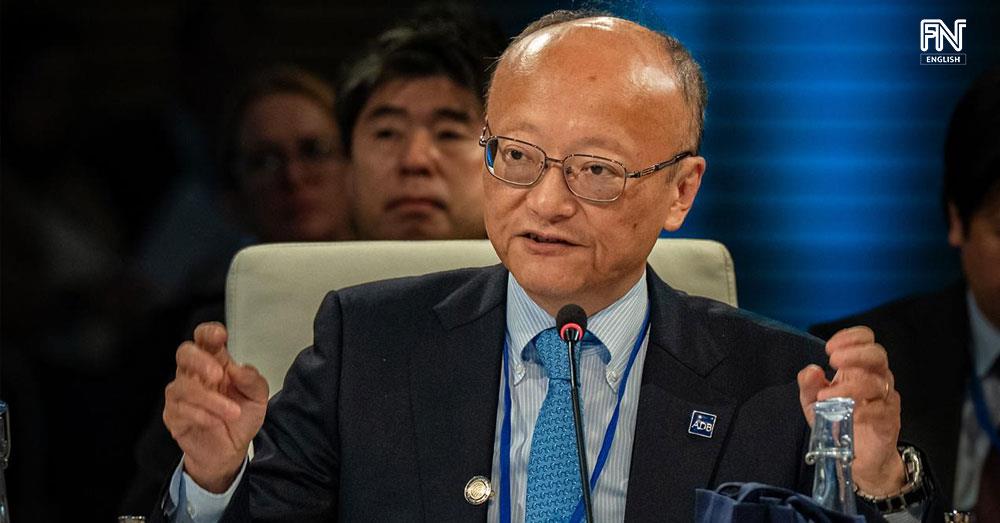
“Our revised outlook is a significant downward revision for growth and a sharp increase in inflation following a special update to reflect the deepening crisis,” said ADB President Masato Kanda. “We are confronting systemic, long-lasting disruptions to global energy and trade networks, not just temporary volatility. ADB will remain an agile partner in protecting the region’s economy; tracking fast-moving risks, and moving with urgency to scale up our support.”
ADB now forecasts regional growth at 4.7 per cent this year and 4.8 per cent next year, down from 5.1 per cent for both years projected in its Asian Development Outlook (ADO) April 2026. Inflation in the region is now projected to accelerate to 5.2 per cent this year from 3.0 per cent last year, before easing to 4.1 per cent in 2027.
The revised outlook reflects growing evidence that the economic effects of the conflict have lasted longer than initially anticipated. Continued risks to energy production and transport routes, alongside sustained pressure on oil and gas prices, are weakening growth prospects and raising inflation prospects, particularly for economies heavily dependent on imported fuel, remittances, tourism, or external financing.
The new outlook assumes that oil prices average around $96 per barrel in 2026, substantially above the pre-conflict average of USD 69 per barrel in January and February, before easing to around USD 80 per barrel in 2027.
Under an even more severe downside scenario of renewed conflict escalation, in which oil prices spike in May 2026 and remain even higher, growth in developing Asia and the Pacific could slow to 4.2 per cent this year and 4.0 per cent next year, while inflation could reach 7.4 per cent in 2026.
The brief presents four key policy responses:
- Policies should focus on stabilization rather than suppression of price signals. Allowing higher energy prices to pass through, at least in part, can encourage energy conservation, fuel switching, and investment in alternative energy sources. Broad price controls or generalized subsidies risk distorting incentives, delaying adjustment, and misallocating resources.
- Fiscal support, where needed, should be targeted and time-bound. Priority should be given to supporting vulnerable households and the most affected industries. Well-targeted measures can cushion the social impact of higher prices while containing fiscal costs and preserving incentives to adjust to the shock.
- Central banks should focus on limiting excessive market volatility while keeping a close watch on inflation expectations. The priority should be to provide targeted liquidity support to preserve orderly market functioning. Tightening policy too aggressively risks amplifying growth headwinds and exacerbating financial volatility. While some tightening may be warranted, anchoring inflation expectations with effective central bank communication will remain key.
- Governments should curb energy demand where feasible. Practical measures include temperature mandates to limit air-conditioning, cuts to non-essential lighting, peak-hour electricity-saving campaigns, and work-from-home or staggered schedules. Incentivizing public transport use and car-free days in urban areas on public holidays can also help reduce transport fuel use.
ADB is a leading multilateral development bank supporting sustainable, inclusive, and resilient growth across Asia and the Pacific. Working with its members and partners to solve complex challenges together, ADB harnesses innovative financial tools and strategic partnerships to transform lives, build quality infrastructure, and safeguard our planet. Founded in 1966, ADB is owned by 69 members, 50 from the region.
=FRESH NEWS