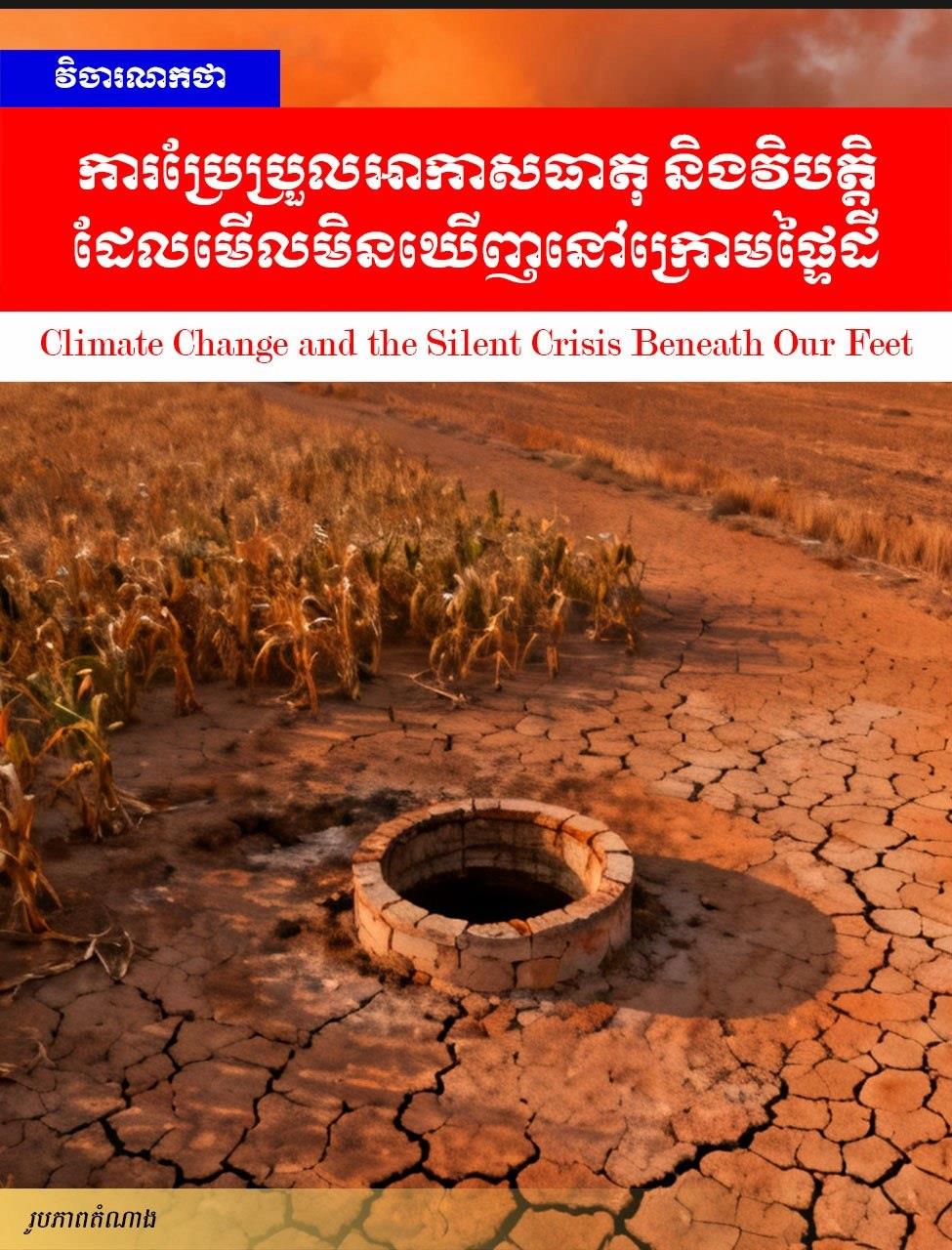
(Phnom Penh): Climate change is often described through visible extremes, rising temperatures, prolonged droughts, intense floods and destructive storms.
Yet one of its most profound and least understood impacts lies hidden beneath the surface: the growing crisis of underground water, or groundwater.
Groundwater is one of the most critical natural resources on Earth. It sustains drinking water supplies, supports agriculture, and maintains ecosystems during dry periods.
In many countries, including Cambodia, rural communities and farmers depend heavily on groundwater as a reliable source of water when rivers and rainfall become unpredictable. However, climate change is steadily undermining this vital reserve.
The first and most direct impact is the disruption of natural recharge. Groundwater is replenished primarily through rainfall that infiltrates the soil. But climate change is altering rainfall patterns, making wet seasons shorter and more intense, and dry seasons longer and harsher.
When rain falls too quickly, it runs off the surface instead of soaking into the ground. As a result, less water reaches underground aquifers, even in years when total rainfall appears sufficient.
At the same time, rising temperatures accelerate evaporation and increase water demand.
Farmers facing drought conditions often turn to groundwater for irrigation, pumping more water than nature can replace. This imbalance between extraction and recharge is causing groundwater levels to drop in many regions, sometimes at alarming rates.
The consequences are far-reaching. Falling groundwater levels mean wells must be dug deeper, increasing costs for households and farmers.
In severe cases, wells run dry entirely, threatening livelihoods and food security. Lower groundwater tables can also lead to land subsidence, the gradual sinking of land, which damages infrastructure and increases flood risks.
Climate change also affects the quality of groundwater. As water levels decline, the concentration of contaminants can increase.
In coastal areas, rising sea levels push saltwater into freshwater aquifers, a process known as saltwater intrusion. This renders groundwater unsuitable for drinking and irrigation, further compounding water scarcity.
Another overlooked impact is the loss of natural ecosystems that depend on groundwater. Wetlands, forests, and rivers often rely on steady underground flows.
When groundwater is depleted, these ecosystems can degrade or disappear, reducing biodiversity and weakening natural climate resilience.
This silent crisis demands urgent attention. Addressing groundwater depletion requires more than traditional water management. It calls for an integrated response to climate change, protecting forests and watersheds, promoting sustainable agriculture, and improving water-use efficiency.
Rainwater harvesting, managed aquifer recharge, and stricter regulation of groundwater extraction must become part of national strategies.
Equally important is public awareness. Groundwater is invisible, and therefore often undervalued. But its depletion is neither distant nor abstract, it is already affecting communities, economies, and ecosystems.
Climate change is not only reshaping the world above ground; it is transforming the very foundations beneath our feet.
Protecting groundwater is no longer optional. It is essential for ensuring water security, environmental sustainability, and resilience in a warming world.
=FRESH NEWS