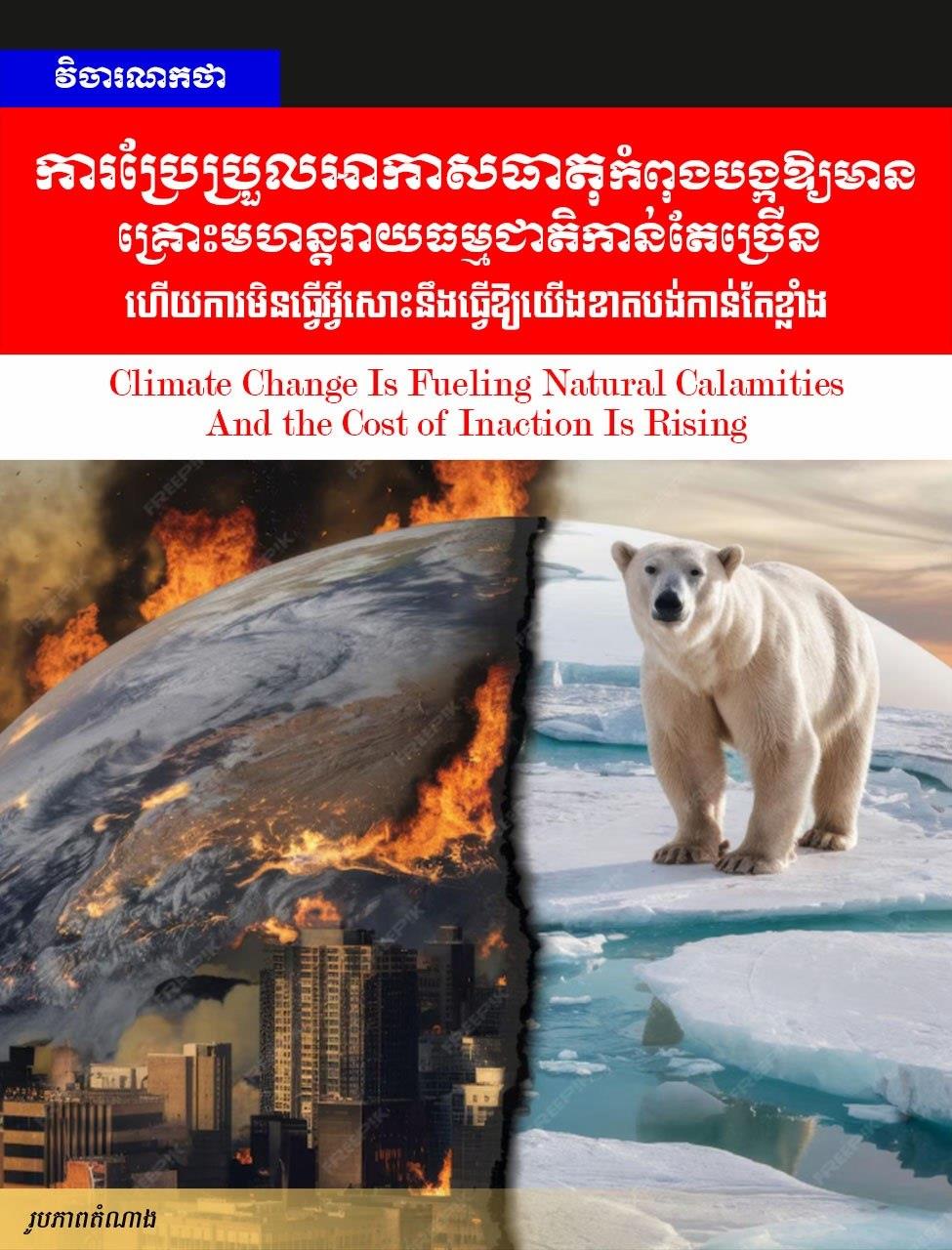
(Phnom Penh): In the past, we used to think of natural disasters as random events caused by nature, beyond human control. But today, this view is no longer accurate. Climate change is making these disasters more frequent, more intense, and larger in scale.
Floods, droughts, storms, and wildfires are becoming the new normal and are more destructive than ever. Nowadays, it is difficult to distinguish between what is purely a "natural disaster" and what is indirectly caused by human activity.
The cause is clear: as the Earth warms, the atmosphere holds more moisture and energy, leading to stronger storms, abnormal rainfall, and severe flooding.
At the same time, heat dries out the land and vegetation, which is the root cause of droughts and wildfires. Climate change may not be the creator of every disaster, but it is an amplifier that makes them much worse.
Flooding is one example. Hot air leads to intense rainfall that overwhelms city drainage systems. What once might have been seasonal flooding now occurs more frequently and with greater severity, destroying homes and livelihoods.
Conversely, droughts are becoming more prolonged. Less rainfall combined with high evaporation rates dries up water sources and causes agricultural problems. Many regions are facing water shortages that affect food production and the economy.
Storms are also intensifying. Because ocean temperatures are rising, tropical cyclones have more energy, leading to high winds and storm surges that inundate coastal areas. This damage takes years to recover from.
Wildfires are another major threat. High temperatures and extreme dryness make forests prone to burning, and this burning releases toxic gases into the atmosphere, causing the Earth to warm even further.
These impacts affect more than just the environment; they take lives, force people from their homes, and destroy economies and infrastructure.
The poorest are hit the hardest, even though they contribute the least to greenhouse gas emissions. This is not just an environmental issue; it is a matter of social justice.
What is frightening is that this is not just a theory. We see the clear evidence, yet the world has not fully come together to address it. We often wait for a disaster to happen before acting, rather than focusing on prevention.
But there is a path forward. We must reduce greenhouse gas emissions to stop the Earth from getting any hotter. We must be prepared, such as by building resilient infrastructure, improving early warning systems, and protecting forests and wetlands, which serve as our natural shields.
Natural disasters may not be entirely eliminated, but their severity can be reduced if we choose to do the right thing now. Delaying will only make the problems much worse for the future.
The world can no longer afford to treat these events as isolated incidents. In reality, they are part of a larger pattern driven by climate change.
The question is not, "Is climate change causing more natural disasters?" because the answer is: it absolutely is! The real question is: Will we act before these calamities define our future?
=FRESH NEWS