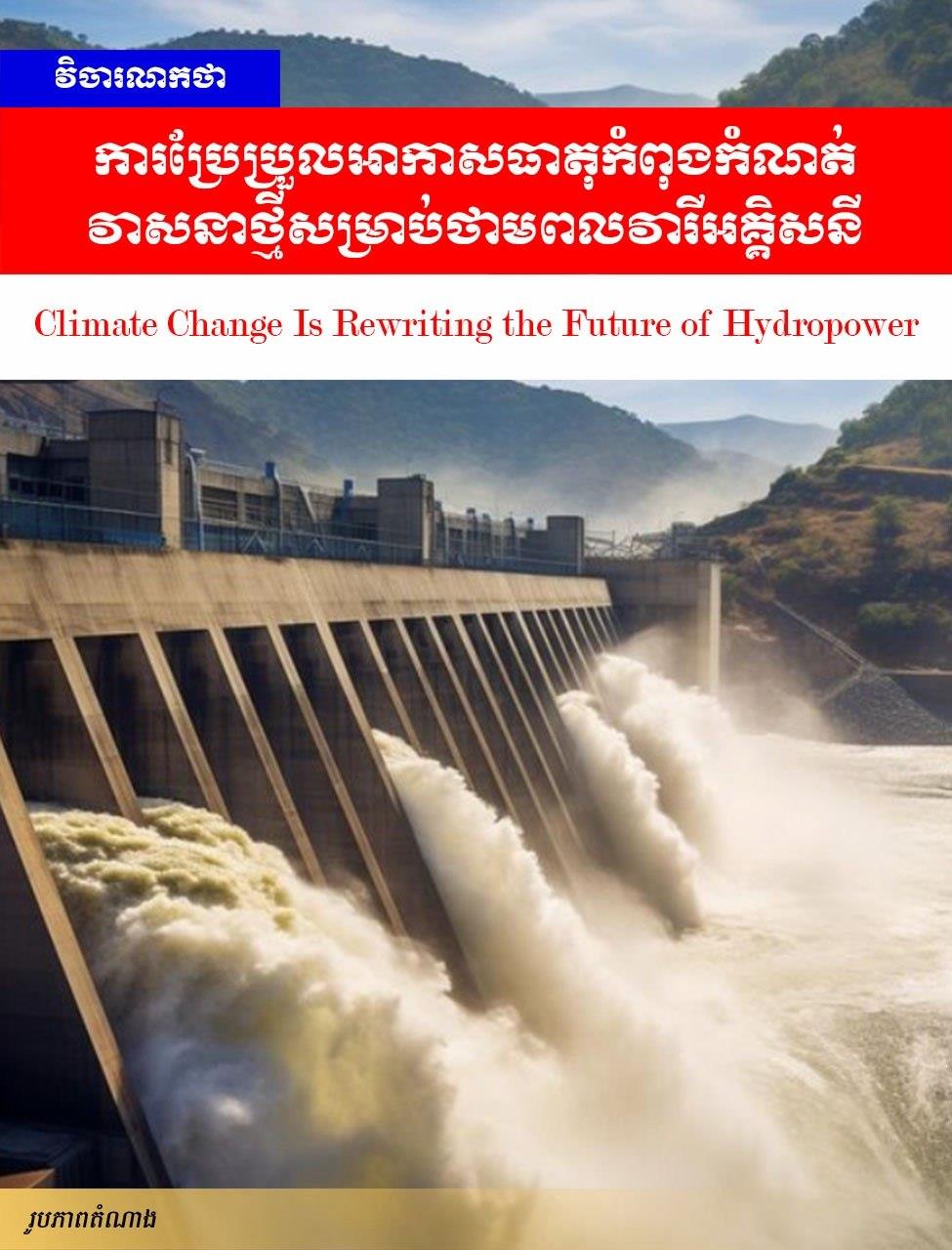
(Phnom Penh): For decades, hydropower has been promoted as a cornerstone of clean energy, a reliable, renewable source capable of supporting economic growth while reducing carbon emissions. But climate change is now challenging that assumption.
The very systems that hydropower depends on, stable water flows, predictable rainfall, and healthy river basins, are being disrupted. What was once considered dependable is becoming increasingly uncertain.
At the centre of the problem is water variability. Climate change is altering rainfall patterns across the globe. In some regions, prolonged droughts are reducing river flows and lowering reservoir levels, directly limiting electricity generation.
In others, extreme rainfall events are becoming more frequent, forcing dam operators to release excess water to maintain safety, often without generating power. The result is a growing mismatch between water availability and energy production.
Hydropower depends not just on water, but on consistency. Seasonal patterns that once guided planning, wet seasons to fill reservoirs, dry seasons to release water for power, are becoming less predictable. This unpredictability complicates energy planning, increases operational risks, and reduces overall efficiency. Power systems that rely heavily on hydropower are now facing volatility that was not anticipated when the infrastructure was designed.
Glacier-fed rivers present another emerging risk. In the short term, accelerated glacier melting may increase water flow, creating a temporary boost in hydropower generation.
But this is a short-lived advantage. As glaciers continue to shrink, long-term water availability declines, threatening the sustainability of hydropower systems that depend on these natural reserves. What appears as a gain today may become a severe deficit tomorrow.
Climate change also introduces new physical risks to hydropower infrastructure. Extreme weather events, floods, landslides, and sediment surges can damage dams, reduce reservoir capacity, and increase maintenance costs.
Sedimentation, intensified by heavier rainfall and upstream land degradation, reduces storage capacity and shortens the lifespan of dams. These impacts carry significant economic consequences, especially for developing countries that depend on hydropower as a primary energy source.
Beyond energy production, the implications extend to water security and ecosystem health. Hydropower projects often serve multiple purposes, including irrigation, flood control, and drinking water supply.
When water availability becomes uncertain, these competing demands intensify. Decisions about whether to prioritize electricity generation or water supply become more difficult, particularly during periods of scarcity.
What makes this challenge particularly complex is the dual role of hydropower in the climate equation. On one hand, it is part of the solution, a low-carbon energy source essential for reducing reliance on fossil fuels. On the other hand, it is highly vulnerable to the very changes it seeks to mitigate. Ignoring this contradiction risks undermining both energy security and climate goals.
The response must be strategic. Hydropower systems need to be redesigned and managed with climate variability in mind. This includes improving forecasting, integrating flexible operation strategies, investing in sediment management, and diversifying energy sources to reduce overreliance on a single system.
At the same time, protecting watersheds through reforestation and sustainable land management can help stabilize water flows and reduce erosion.
Equally important is the need to integrate climate considerations into future hydropower planning. Building infrastructure based on outdated climate assumptions is no longer viable. Every new project must account for uncertainty, variability, and long-term sustainability.
Hydropower is not obsolete, but it is no longer invulnerable. Climate change is forcing a fundamental rethink of how water and energy intersect.
=FRESH NEWS