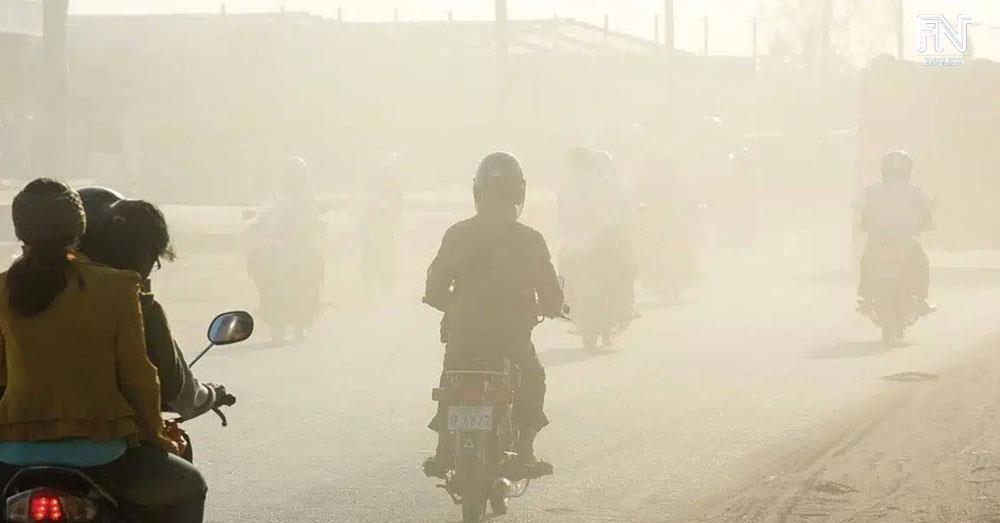
(Phnom Penh): Air pollution is often framed as an invisible crisis, but its causes are neither invisible nor accidental. They are rooted in human activity, shaped by policy choices, and too often misunderstood.
Among the most sensitive and frequently misrepresented issues is transboundary haze, where countries are quick to point fingers at one another. Yet, a closer look at science, particularly air movement, tells a more measured story.
At its core, air pollution is driven by familiar sources. The burning of fossil fuels for energy and transport remains a leading contributor, releasing fine particulate matter (PM2.5) and harmful gases into the atmosphere. Rapid urbanisation has compounded this problem, with growing vehicle fleets and traffic congestion turning cities into continuous emission zones.
Industrial activity adds another layer. While essential for economic development, factories without adequate pollution control release smoke and toxic emissions that degrade air quality. Weak enforcement or outdated technologies can allow these emissions to persist unchecked.
However, some of the most intense pollution episodes come from open burning, whether from agricultural residue, forest clearing, or waste disposal. These fires can release large volumes of smoke in a short time, significantly impacting air quality.
Satellite images often show clusters of “hotspots,” but it is critical to understand that these represent the number of detected fires, not their size, intensity, or actual pollution output. Misinterpretation of such data can easily lead to exaggerated conclusions.
This is where the issue of transboundary haze becomes particularly sensitive. Pollution does not recognise national borders, but it does follow the laws of physics—especially wind direction. Air masses move according to prevailing meteorological conditions, and these conditions must be carefully analysed before attributing the source of pollution to another country.
For example, during the northeast monsoon season, winds typically move from north to south. Under such conditions, it is scientifically unlikely for pollution originating in southern regions to travel northward against the prevailing wind.
Conversely, during other seasons, wind patterns may shift, altering the direction of pollutant movement. Without this context, claims about cross-border pollution risk being inaccurate and unfair.
Moreover, atmospheric conditions such as temperature inversions and fog can trap pollutants close to the ground, making local emissions appear more severe. In such cases, the problem is not necessarily incoming pollution, but the inability of the atmosphere to disperse what is already present locally.
Urban dust and construction activities also contribute significantly to air pollution, particularly in rapidly developing areas. Unpaved roads, land clearing, and construction sites release fine particles that remain suspended in the air. Similarly, household use of solid fuels for cooking and heating continues to affect both indoor and outdoor air quality, especially in rural communities.
The reality is clear: air pollution is a shared challenge, but not every pollution episode is shared equally. Assigning blame without scientific evidence, especially without analysing wind direction and atmospheric conditions, risks undermining regional cooperation. It can also distract from the urgent need to address domestic sources of pollution.
Constructive solutions require cooperation, not confrontation. Countries must strengthen monitoring systems, share transparent data, and invest in cleaner technologies. Public understanding must also improve, particularly in interpreting satellite data and air quality indices.
Air pollution should unite, not divide. The air we breathe may cross borders, but responsibility begins at home. Only by grounding our responses in science, and not assumption, can we clear the air, both literally and diplomatically.
=FRESH NEWS