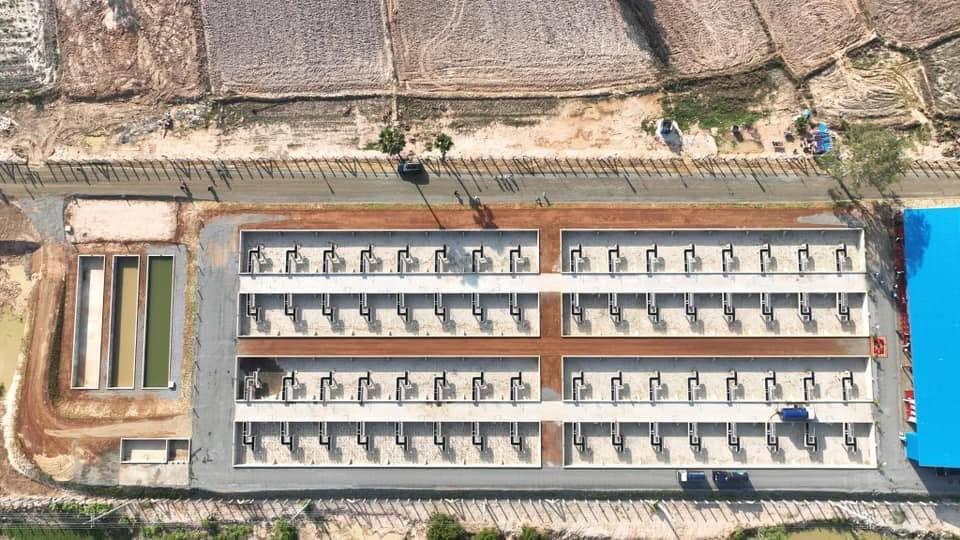
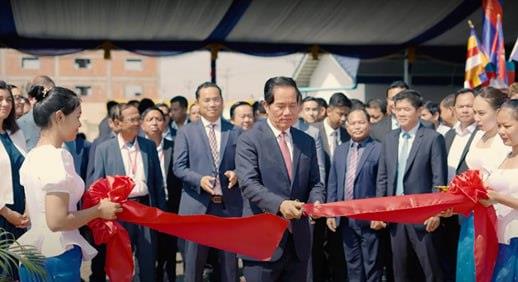
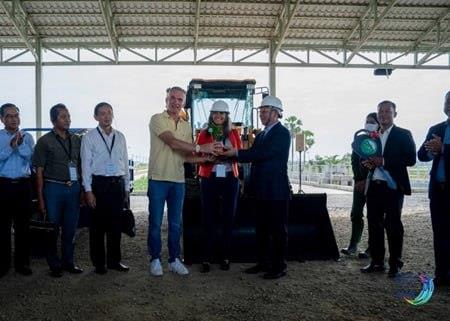
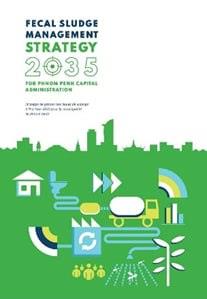
(Phnom Penh): After successfully implementing the study phase of the Fecal Sludge Management Project (GBV) in 2019, which led to the endorsement of a clear roadmap to guide the city in strengthening and improving fecal sludge management service chain, the Fecal Sludge Management Strategy 2035, the Fecal Sludge Management Project (GBV) - Project Implementation Phase was launched in 2021 to help the improve Phnom Penh’s fecal sludge management value chain. Thanks to the project’s support, Phnom Penh’s 1st fecal sludge treatment plant was inaugurated on 19 May 2023 in Kambol District with a capacity of 80m3 per day - a milestone for the city’s urban sanitation.
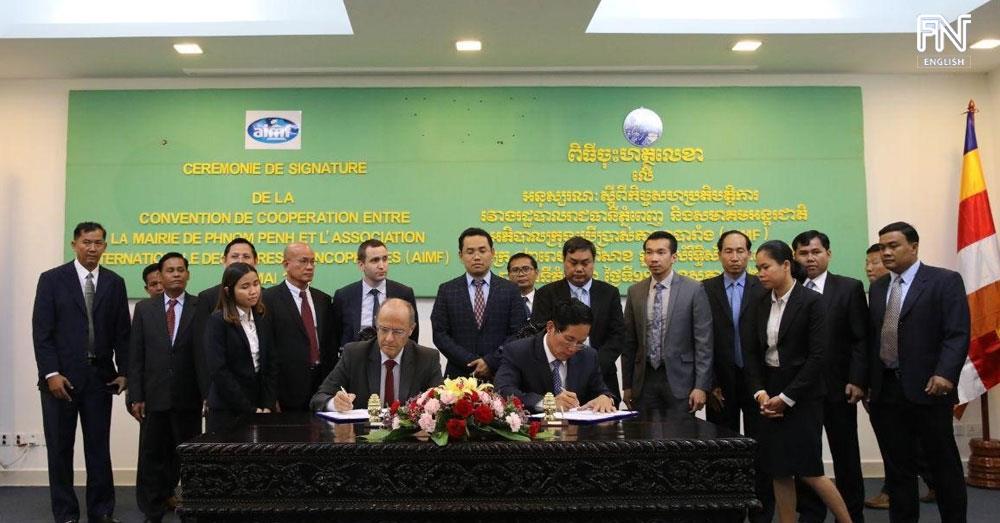
The project was financially and technically supported by the Association Internationale des Maires Francophone (AIMF), Agence de l’eau Seine-Normandie (AESN), and Syndicat interdépartemental pour l'assainissement de l'agglomération parisienne (SIAPP) with a total project budget of USD 3.6 million.
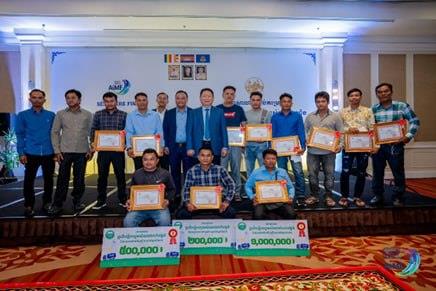
The launch of a Fecal Sludge Treatment Plant was only one part of the solution. The project has gone beyond by working closely with local authorities on the ground to strengthen the fecal sludge management value chain: licensing for emptying operators, strengthening relationship with emptying operators and stakeholders, introducing communication campaigns, launching of a GPS monitoring tools on sludge emptying operators’ trucks, establishing a dedicated Fecal Sludge Management Unit and Phnom Penh Fecal Sludge Management Steering Committee, and raising public awareness on urban sanitation.
The regulatory framework of fecal sludge management has also been strengthened through the adoption of new Public Instructions that made it mandatory to discharge fecal sludge at fecal sludge treatment plants or assigned discharge areas by Phnom Penh Capital Hall. To ensure the optimal operation of the treatment plant, minimum annual discharge thresholds per truck have also been established as a condition for license renewal.
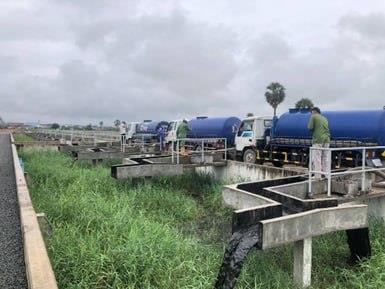
With the project’s support, Phnom Penh has succeeded in converting collected fecal sludge into resources (valorization), where fecal sludge used to be illegally dumped into riverbanks and water pumping stations prior to the project launching.
By converting treated sludge into organic compost, the sludge collected will play a key role in improving the city’s urban greenery and sustainability.
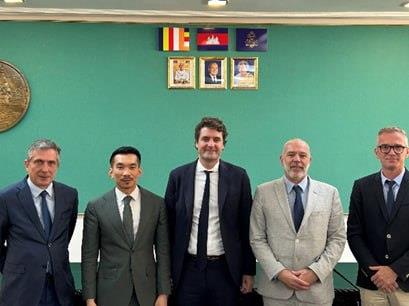
The final steering committee of the project in July 2025, in the presence of international partners of Phnom Penh Capital Hall, saluted the commitment of Phnom Penh and the achievements of the project, which is a source of inspiration for other cities in the AIMF network.
Looking ahead, Phnom Penh Capital Hall and its partners are studying the possibilities to construct a second and third treatment plant for Phnom Penh and expand their partnership, ensuring sanitation services meet the needs of a growing city.
The upcoming 20th Francophonie Summit to be chaired by Cambodia in mid-November 2026 in Phnom Penh, which will be participated by more than 90 world leaders, will provide the opportunity for cities governments to strengthen cooperation and partnerships by exchanging dialogues on urban sanitation, smart cities, disaster management and other related matters. Through vision, planning, and partnerships, Phnom Penh is building a cleaner, healthier, and more sustainable future for all.
=FRESH NEWS