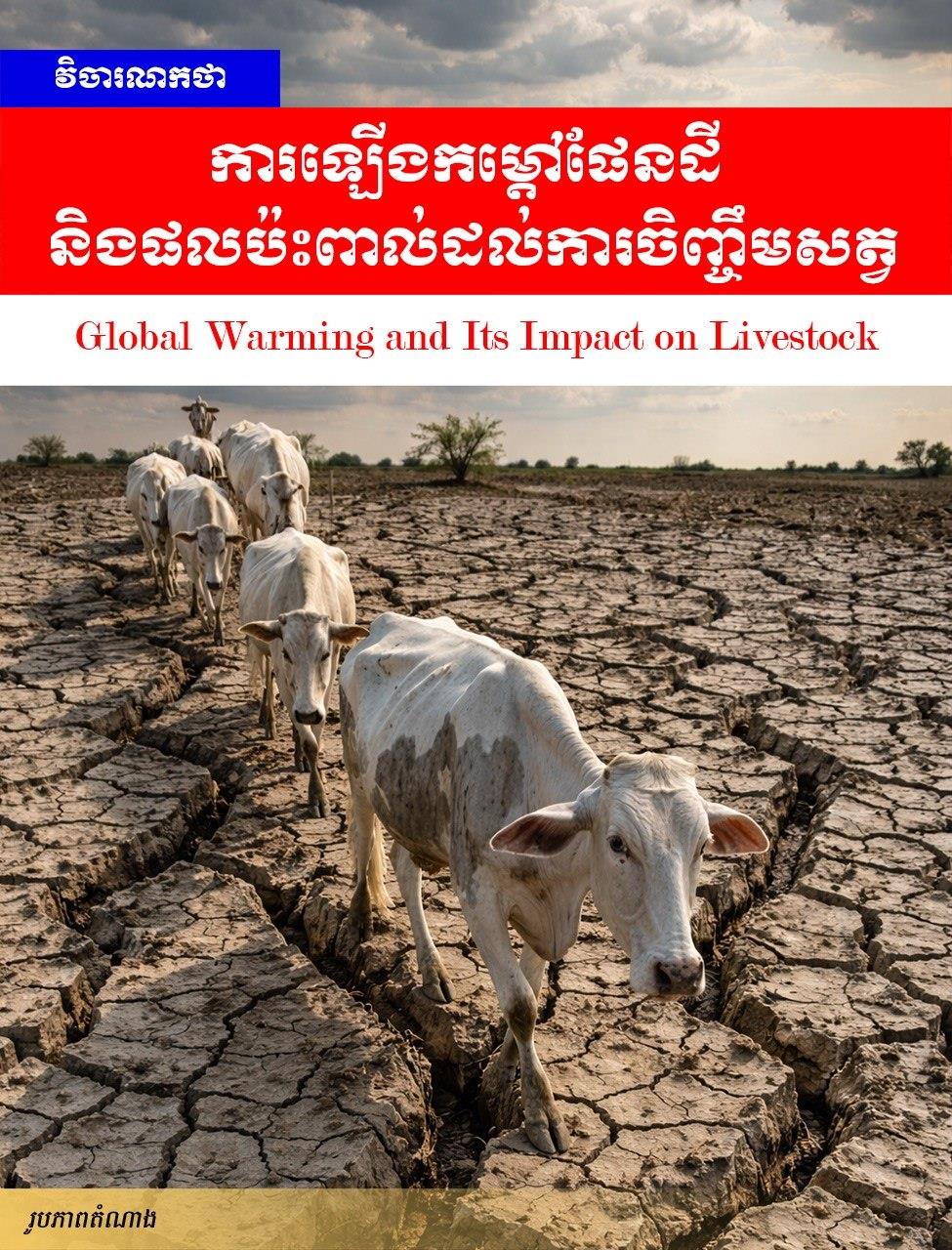
(Phnom Penh): Global warming is increasingly affecting many aspects of life on Earth, including livestock production. Livestock, such as cattle, sheep, goats, and poultry, play a vital role in providing food, income, and livelihoods for millions of people worldwide.
However, rising temperatures and changing climate conditions are creating serious challenges for livestock farmers and the animals they depend on.
One of the most direct impacts of global warming on livestock is heat stress. Animals are highly sensitive to temperature changes, and excessive heat can reduce their ability to eat, grow, and reproduce.
For example, dairy cows produce less milk when exposed to high temperatures, while meat-producing animals may gain less weight. In severe cases, prolonged heatwaves can even lead to the death of animals, especially if they lack proper shelter and water.
Water availability is another critical issue. Global warming affects rainfall patterns, leading to droughts in many regions. As water sources dry up, livestock may not have enough clean water to drink. This not only affects their health but also reduces their productivity. Farmers may struggle to provide adequate water, increasing the cost and difficulty of raising animals.
Feed quality and availability are also impacted. Climate change can reduce the growth of grasses and crops used as animal feed. Droughts, floods, and extreme weather can damage pastureland, making it harder for animals to graze.
As a result, farmers may need to purchase additional feed, increasing their expenses and reducing profits.
Global warming also contributes to the spread of diseases and parasites. Warmer temperatures create favorable conditions for insects and pathogens that carry diseases affecting livestock.
For instance, ticks, flies, and mosquitoes can spread infections more easily in warmer climates. This increases the risk of disease outbreaks, which can lead to significant losses for farmers.
Reproductive performance in livestock is another area of concern. Heat stress can lower fertility rates in animals, making breeding less successful. This can reduce herd sizes over time and affect the long-term sustainability of livestock farming.
In addition, extreme weather events such as floods, storms, and droughts can destroy livestock shelters and infrastructure. These events may lead to sudden losses of animals and disrupt farming operations, leaving farmers vulnerable and economically strained.
Despite these challenges, there are ways to reduce the impact of global warming on livestock. Farmers can adopt improved practices such as providing shade and ventilation, ensuring access to clean water, and using heat-resistant breeds. Governments and organizations can support farmers through training, technology, and climate-resilient strategies.
In conclusion, global warming has a significant impact on livestock by causing heat stress, reducing water and feed availability, increasing disease risks, and disrupting farming systems.
These effects threaten food security and the livelihoods of millions of people. Addressing climate change and supporting livestock farmers in adapting to these changes are essential steps toward a sustainable future.
=FRESH NEWS