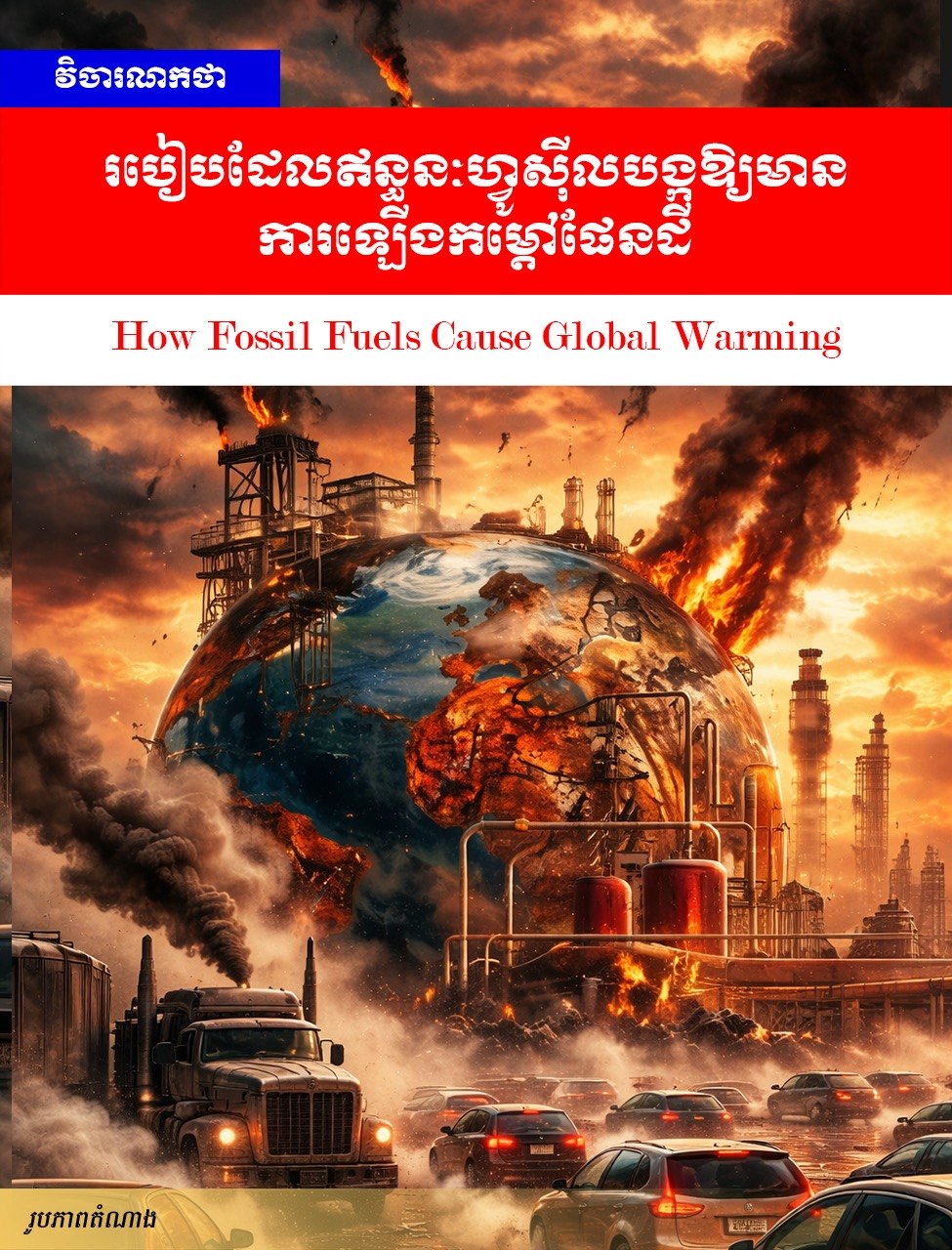
(Phnom Penh): Fossil fuels, such as coal, oil, and natural gas, are a major source of energy used around the world. They power vehicles, generate electricity, and support industries that produce many of the goods we use every day.
While they have made modern life more convenient, they are also the main cause of global warming, a serious environmental problem affecting the entire planet.
Global warming refers to the gradual increase in the Earth’s average temperature.
The primary reason for this rise is the buildup of greenhouse gases in the atmosphere. When fossil fuels are burned to produce energy, they release large amounts of carbon dioxide (CO₂), along with other gases like methane (CH₄) and nitrous oxide (N₂O).
These gases are known as greenhouse gases because they trap heat from the sun in the Earth’s atmosphere.
This process is called the greenhouse effect. Normally, some of the sun’s heat escapes back into space, helping to keep the planet at a balanced temperature.
However, when there are too many greenhouse gases in the atmosphere, more heat is trapped, causing the Earth to become warmer than usual.
Human activities, especially the burning of fossil fuels, have significantly increased the concentration of these gases, intensifying the greenhouse effect.
As a result, global temperatures are rising. This warming leads to a wide range of environmental changes. Ice caps and glaciers are melting, causing sea levels to rise.
Weather patterns are becoming more unpredictable, leading to stronger storms, longer droughts, and more frequent heatwaves. These changes not only affect nature but also have serious impacts on human life, including food production, water supply, and public health.
Another way fossil fuels contribute to global warming is through deforestation linked to energy production and industrial expansion.
Trees absorb carbon dioxide, so when forests are cut down, less CO₂ is removed from the atmosphere. This further increases the concentration of greenhouse gases and accelerates global warming.
Transportation is also a major contributor. Cars, trucks, airplanes, and ships burn large amounts of fossil fuels every day, releasing CO₂ into the air.
As the global population grows and demand for transportation increases, emissions continue to rise, making the problem worse.
Despite these challenges, there are solutions. Reducing the use of fossil fuels and switching to renewable energy sources like solar, wind, and hydropower can significantly lower greenhouse gas emissions.
Improving energy efficiency and promoting sustainable lifestyles are also important steps.
Governments and individuals alike have a role to play in reducing emissions and protecting the environment.
In conclusion, fossil fuels cause global warming by releasing greenhouse gases that trap heat in the Earth’s atmosphere.
Understanding this connection is essential for everyone, as it helps us make informed decisions about energy use and environmental protection.
By taking action now, we can help slow down global warming and create a healthier future for the planet.
=FRESH NEWS