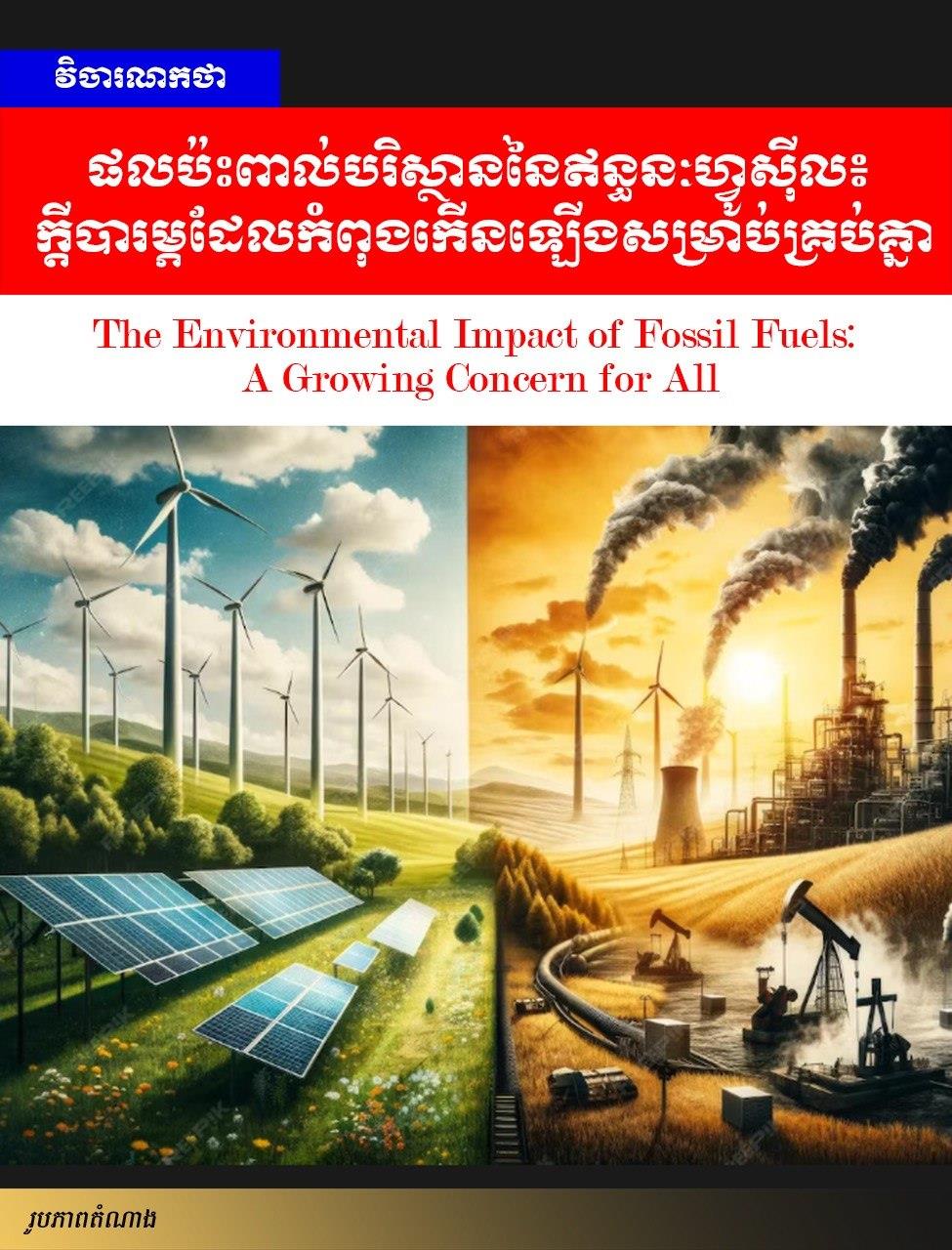
(Phnom Penh): Fossil fuels, coal, oil, and natural gas, have long been the backbone of modern development. They power industries, generate electricity, and fuel transportation systems across the globe. While these energy sources have brought convenience and economic progress, their impact on the environment has become a serious and growing concern that affects everyone.
One of the most significant environmental effects of fossil fuels is air pollution. When fossil fuels are burned, they release harmful gases such as carbon dioxide (CO₂), sulfur dioxide (SO₂), and nitrogen oxides (NOₓ). These pollutants not only contribute to climate change but also degrade air quality, leading to health problems like respiratory diseases, heart conditions, and premature deaths. In many urban areas, smog formed from these emissions has become a daily reality.
Another major issue is global warming. Carbon dioxide, a greenhouse gas released in large quantities from burning fossil fuels, traps heat in the Earth’s atmosphere. This leads to a rise in global temperatures, disrupting natural climate systems.
As a result, we see more extreme weather events, including stronger storms, prolonged droughts, and rising sea levels that threaten coastal communities.
Fossil fuel extraction also causes significant damage to land and ecosystems. Mining for coal can destroy forests and landscapes, while oil drilling can lead to spills that contaminate soil and water.
These activities often result in the loss of biodiversity, as plants and animals lose their natural habitats. In oceans, oil spills can be devastating, killing marine life and damaging fragile ecosystems for years.
Water pollution is another serious consequence. Waste products from fossil fuel industries can seep into rivers, lakes, and groundwater, making water unsafe for drinking and agriculture.
Additionally, power plants that burn fossil fuels often require large amounts of water for cooling, which can disrupt local water supplies and harm aquatic life.
The environmental impact of fossil fuels also extends to waste generation. Coal combustion, for example, produces large quantities of ash that can contain toxic substances.
Improper disposal of this waste can lead to soil and water contamination, posing long-term environmental and health risks.
Despite these challenges, there are ways to reduce the environmental damage caused by fossil fuels. Transitioning to renewable energy sources such as solar, wind, and hydropower can significantly cut emissions and pollution. Improving energy efficiency, enforcing environmental regulations, and raising public awareness are also key steps toward a cleaner and more sustainable future.
In conclusion, while fossil fuels have played a crucial role in shaping the modern world, their environmental costs are too significant to ignore. Protecting our environment requires collective action, from governments, industries, and individuals alike.
By making informed choices and supporting sustainable practices, we can reduce the harm caused by fossil fuels and preserve the planet for future generations.
=FRESH NEWS