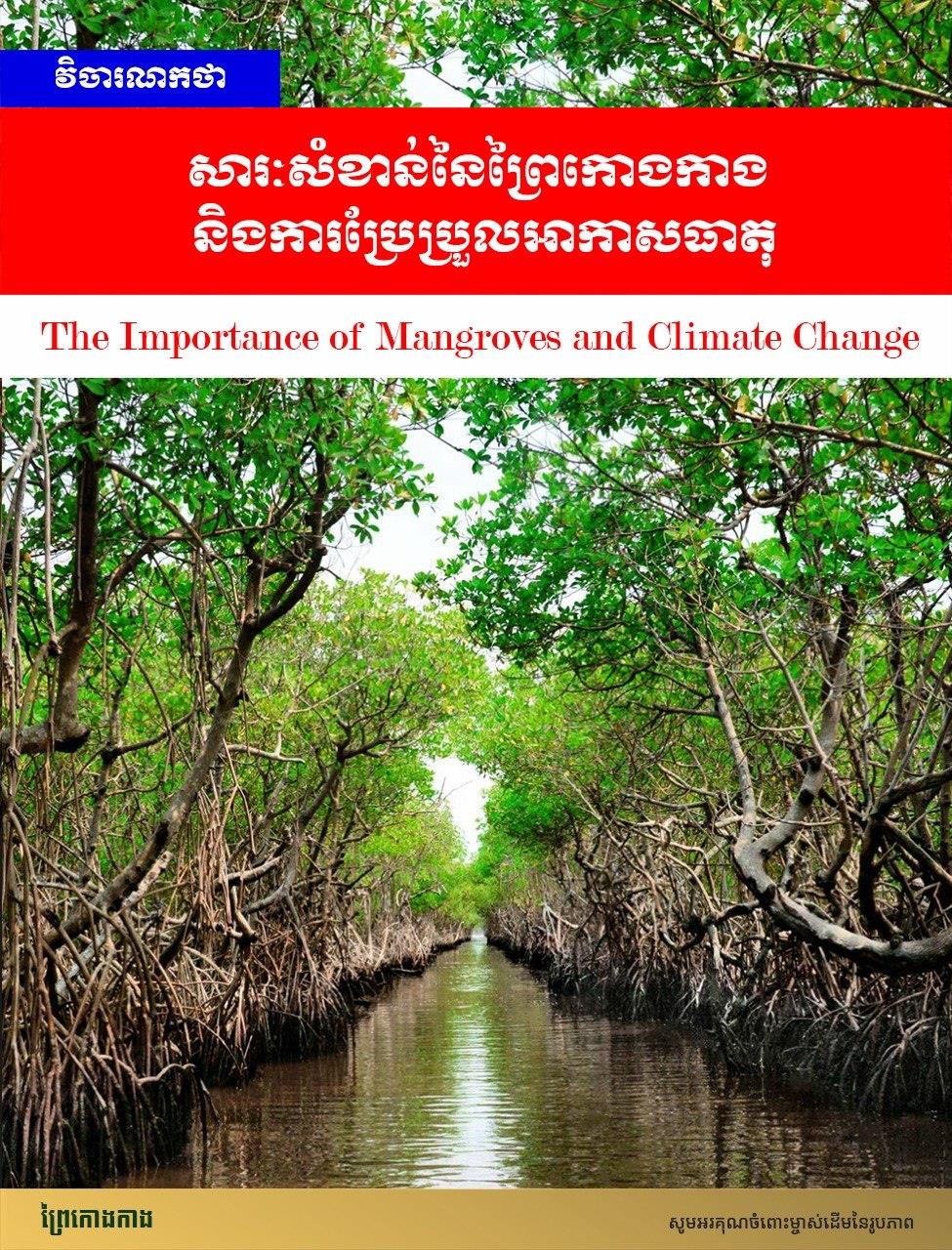
(Phnom Penh): Mangroves are coastal forests found in tropical and subtropical regions, where land meets the sea. These unique ecosystems, made up of salt-tolerant trees and shrubs, play a vital role in protecting shorelines, supporting biodiversity and sustaining local livelihoods.
Beyond their visible benefits, mangroves are also one of nature’s most powerful tools in the fight against climate change.
A key reason mangroves are so important is their ability to act as a carbon sink. A carbon sink is anything that absorbs more carbon dioxide from the atmosphere than it releases.
Through the process of photosynthesis, mangrove trees capture carbon dioxide and store it in their trunks, roots and surrounding soil.
What makes mangroves especially effective is that much of this carbon is stored underground in waterlogged soils, where it can remain trapped for hundreds or even thousands of
years.
Compared with many other forests, mangroves can store significantly more carbon per unit area. This makes them an essential natural solution for reducing greenhouse gases and slowing global warming. Protecting and restoring mangrove forests can therefore contribute directly to climate action efforts at both local and global levels.
In addition to storing carbon, mangroves provide many everyday benefits to communities. They act as natural barriers against storms, reduce coastal erosion and improve water quality.
Mangroves also serve as nurseries for fish and other marine life, supporting fisheries that many people depend on for food and income.
However, mangroves are under threat from coastal development, pollution and deforestation. When these forests are destroyed, not only are their ecological benefits lost, but the stored carbon is also released back into the atmosphere, contributing to climate change.
For the general public, protecting mangroves can start with simple actions: supporting conservation efforts, reducing waste and pollution, and raising awareness about their importance.
By valuing and preserving mangrove ecosystems, we help safeguard both the environment and our shared future.
=FRESH NEWS