(Phnom Penh): In 2025, Phnom Penh made a crucial decision: We chose people over traffic. We chose health over harmful habits. We decided that public space belongs to families, children, elders, visitors, and vendors, not to engines and smoke.
The creation of the Smoke-Free, Car-Free Chaktomuk Walk Street, stretching roughly two kilometres along Preah Sisowath Quay, which is one of the city’s main riverfront corridors, was not simply an experiment. It was a statement about the future of our capital.
Before the walk street initiative, the road functioned primarily as a traffic artery, crowded with tourist buses, motorcycles, tuk-tuks, and other vehicles along the city’s busiest waterfront. Congestion was common, especially on evenings and weekends, driven by tourism, nightlife, and street vending.
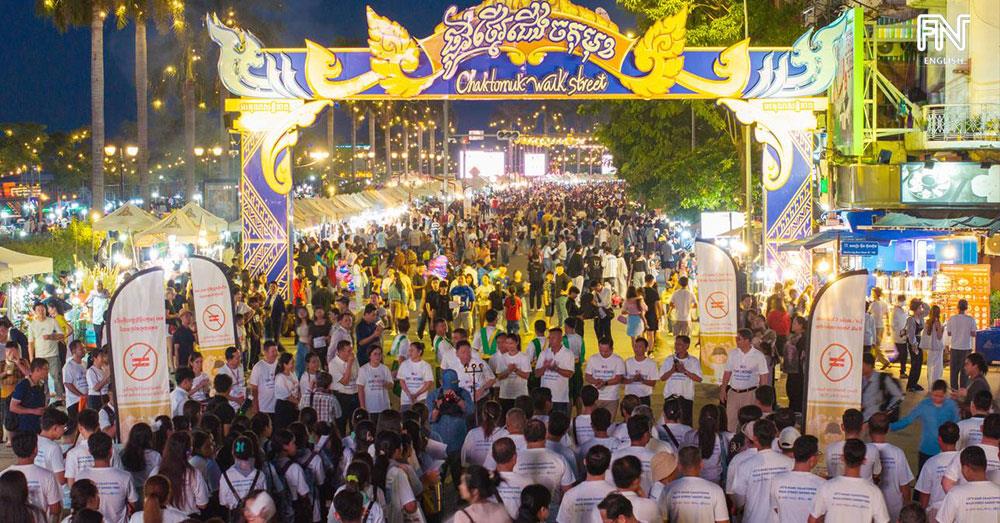
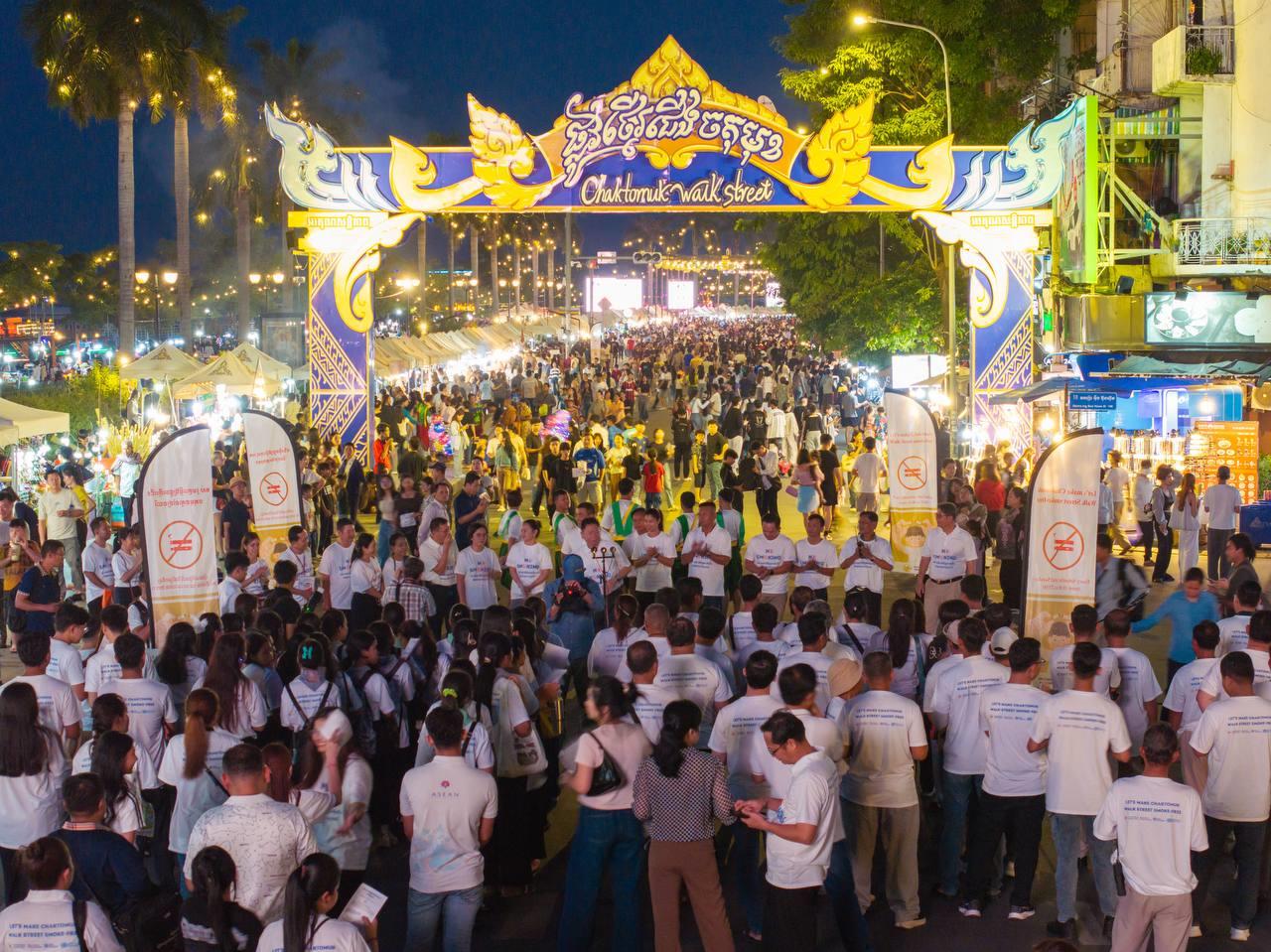
When the Phnom Penh Capital Administration (PPCA) first envisioned a weekend pedestrian street, the idea was simple but bold: to create a dedicated healthy space for leisure in the heart of the capital, a place where people could walk freely, gather safely, and enjoy their city without traffic congestion or the constant presence of smoke. Every Saturday and Sunday from 18:00 to 23:00, beginning in February 2025, we transformed this stretch of riverfront into a car-free public space.
At first, not everyone believed it would work. Business owners feared they would lose customers. Some residents questioned whether people in Phnom Penh would embrace walking culture. Others doubted that closing a major road, even temporarily, could be sustainable.
From the beginning, our goal was not only to create a pedestrian street but to elevate public well-being. In Phnom Penh, public spaces have long been shaped by traffic dominance and the normalisation of smoking. We realised that if Walk Street was truly represented the future of Phnom Penh, it needed to be not only car-free but also smoke-free.
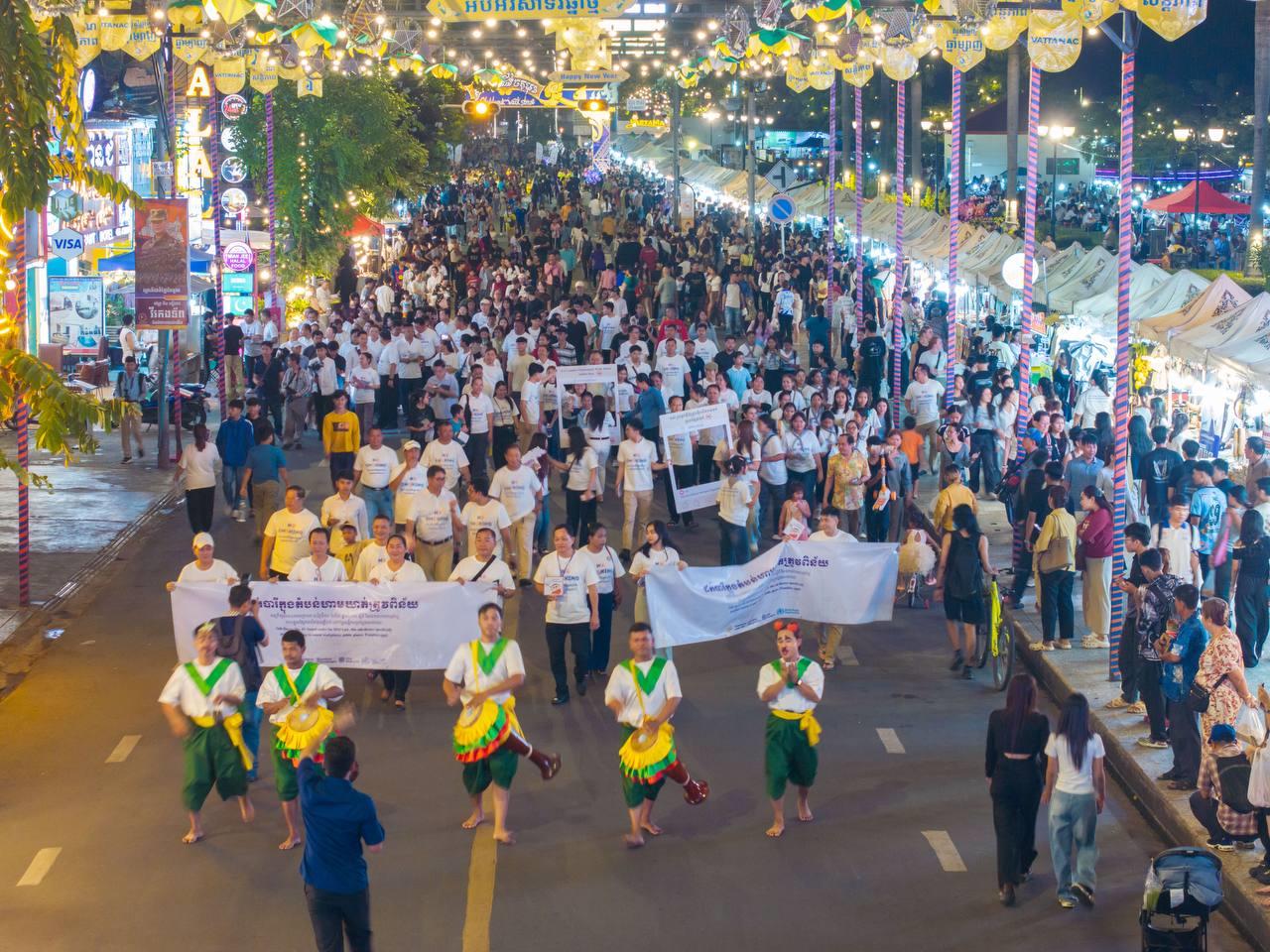
Walk Street grew increasingly popular, now attracting approximately 80,000 to 100,000 visitors (based on a local system developed by the Ministry of Tourism) every weekend and supporting nearly 1,400 jobs, including street vendors, small businesses, and food stalls.
But as crowds gather in this pedestrian space, cigarette and e-cigarette smoke has become increasingly noticeable. This growing exposure revealed a clear gap between Cambodia’s strong tobacco control laws and the limited enforcement in public spaces, highlighting the urgent need for intervention.
According to 2024 estimates from the World Health Organisation (WHO), adult smoking prevalence in Cambodia has declined to 14.1%, down from 16.6 per cent in 2014. Yet even with this progress, tobacco use remains a major public health crisis, responsible for more than 17,000 deaths each year and over USD 227 million in economic losses. This is not just a statistic; it’s a preventable tragedy, and it demands stronger action now to protect families and save lives.
In June 2025, with support from the Partnership for Healthy Cities, a global network of more than 70 cities working to prevent noncommunicable diseases (NCDs) and injuries, we launched a comprehensive smoke-free initiative.
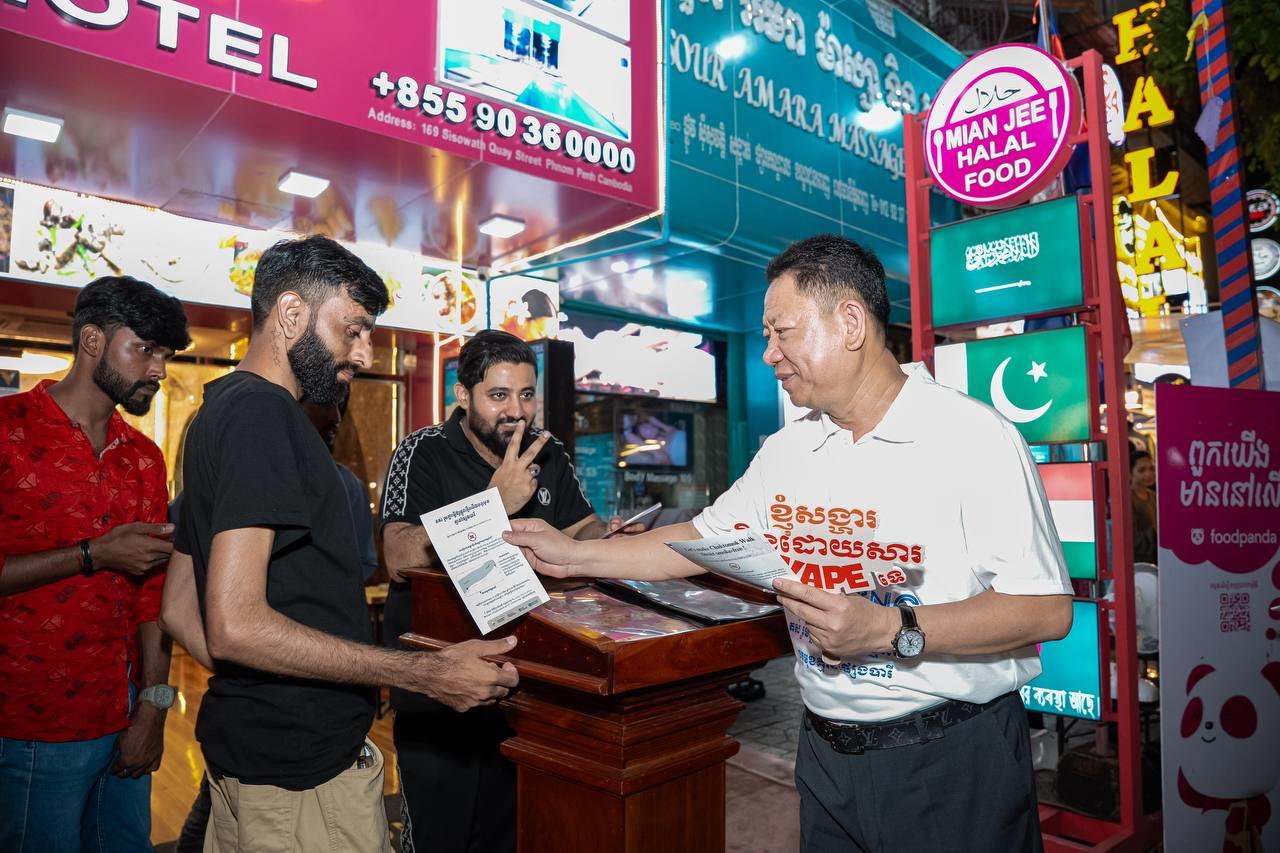
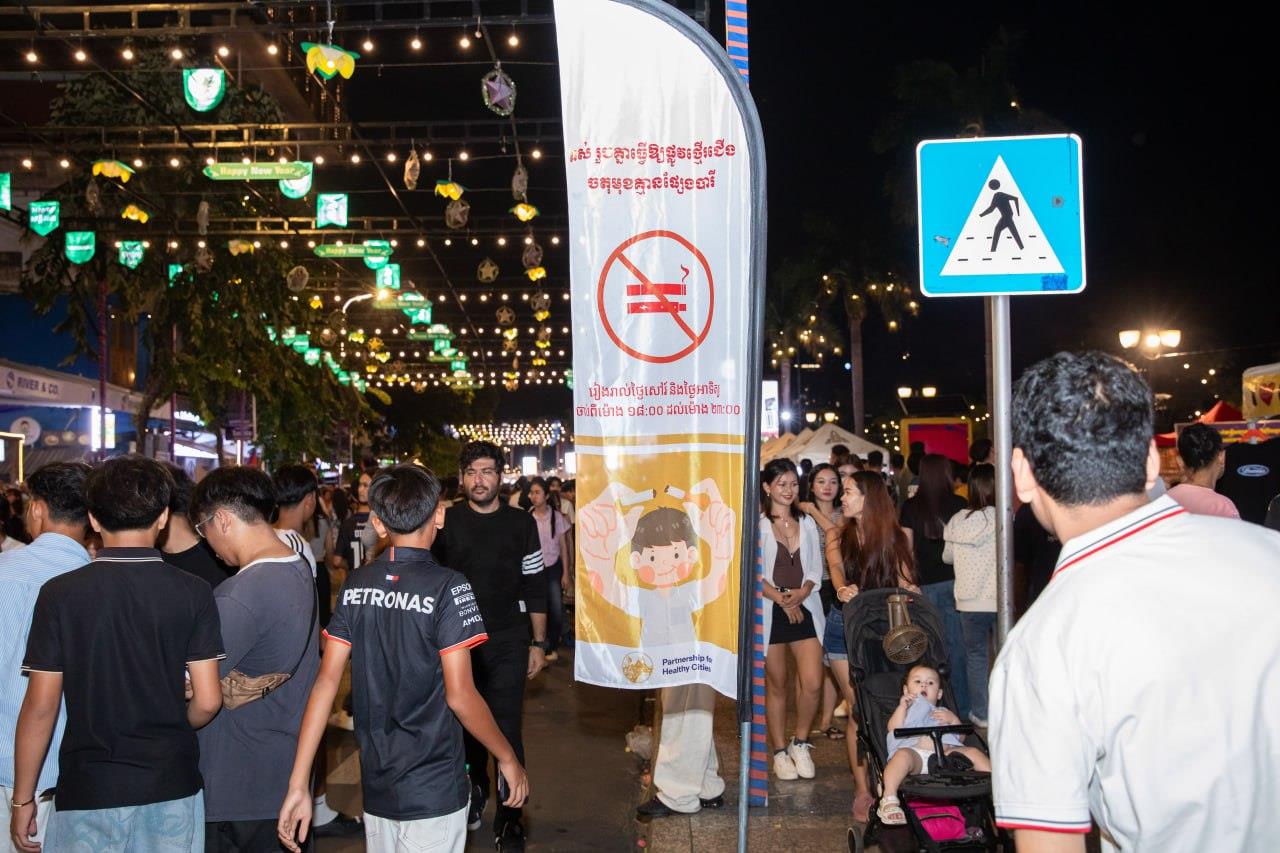
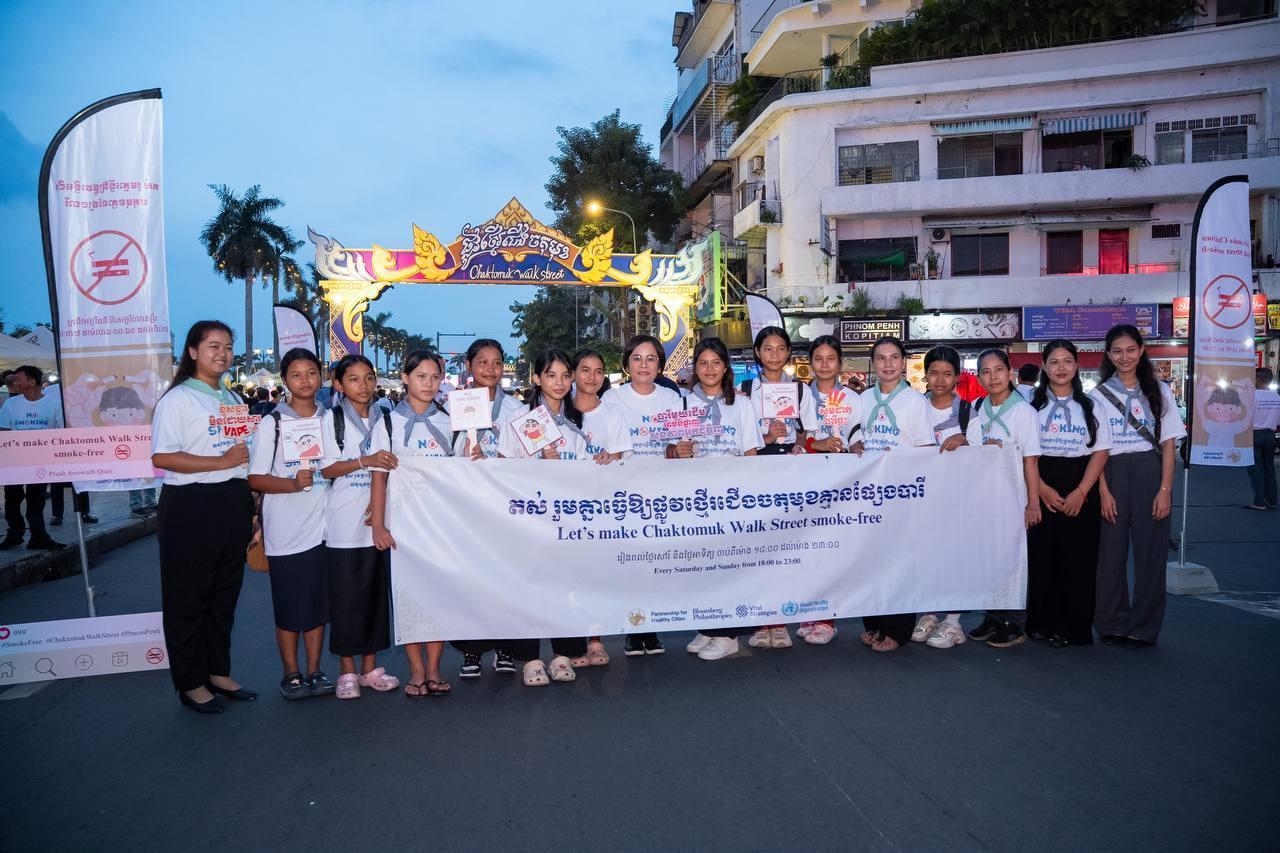
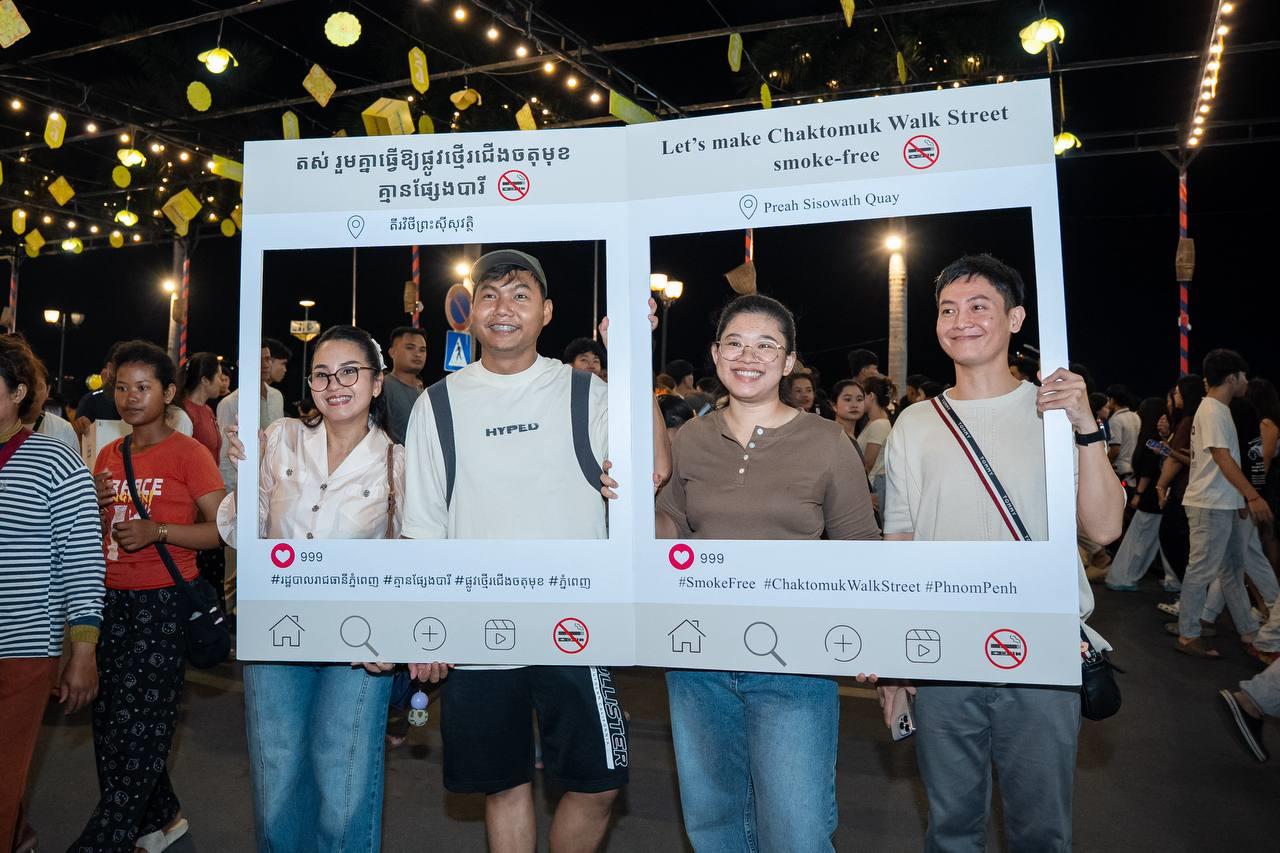
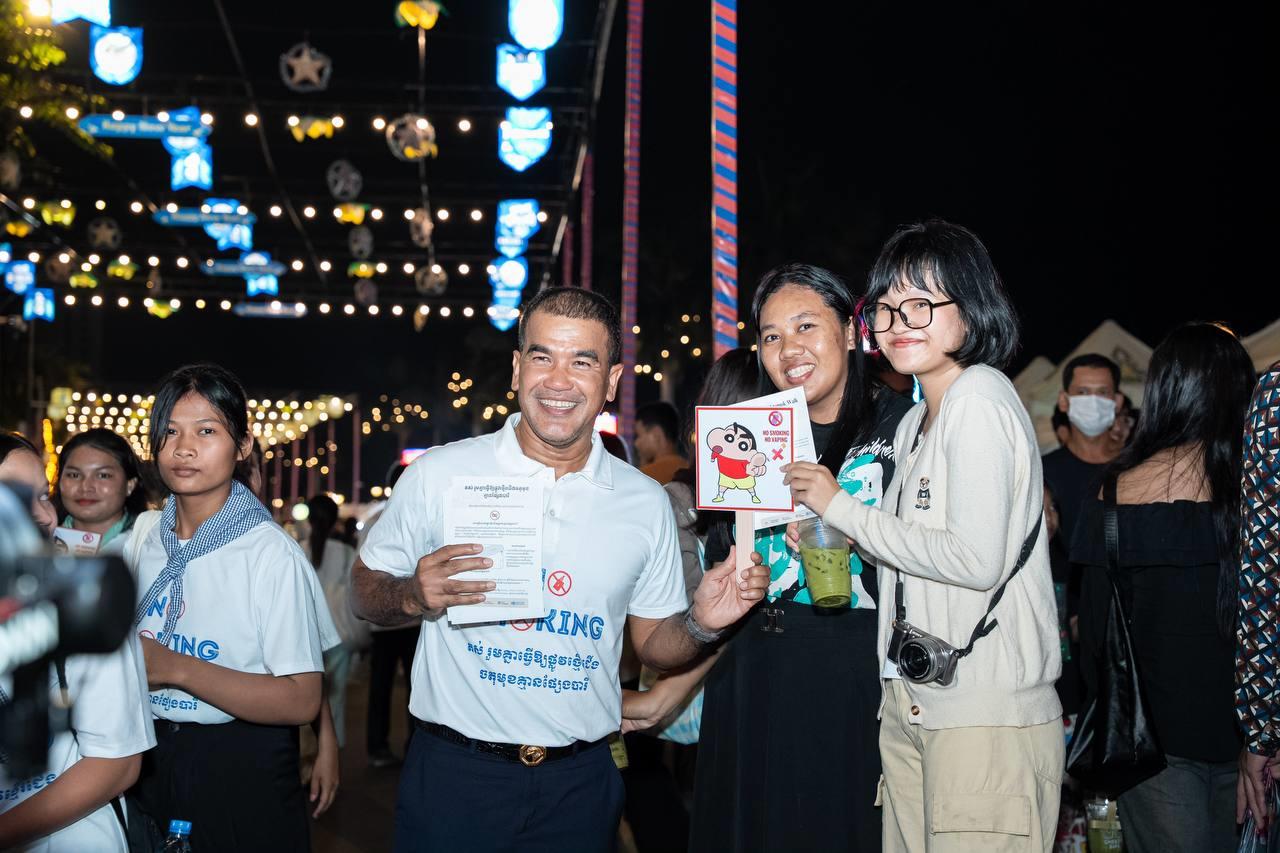
Through clear signage, banners, printed materials, education campaigns, vendor engagement, loudspeaker reminders, and direct on-site communication, we launched the “Chaktomuk Smoke-Free Walk Street” campaign in alignment with national tobacco control policies and World Health Organisation (WHO) recommendations.
Addressing traffic and tobacco together made the Chaktomuk Walk Street transformation visible and practical. Once a street becomes pedestrian-only, it becomes easier to guide behaviour, communicate rules clearly, and build a healthier shared environment.
Today, visitors immediately see and hear that they are entering a Smoke-Free Zone, where exposure to cigarette and e-cigarette smoke has been reduced. The space feels cleaner, safer, healthier, and more welcoming, especially for families, children, and older adults.
How did we do it? The Phnom Penh Capital Administration formed a dedicated working group led by Deputy Governors, with relevant agencies on permanent standby every weekend to address operational issues.
Experience-sharing meetings allowed departments to learn from challenges and improve good practices. Security, sanitation, lighting, public bathrooms, entertainment programming, and vendor organisation were all improved step by step.
We listened carefully to stakeholders. Drivers, shop owners, smokers, and residents were invited into the discussion. We used media channels to explain the purpose of the initiative and collect feedback. When suggestions were constructive, we adapted.
Public response has been overwhelmingly supportive. Many residents have told us they genuinely value spending leisure time in a healthier environment. After enforcement training sessions, participants expressed appreciation and a strong commitment to protecting the smoke-free status of the area.
Yes, confusion still happens, particularly regarding smoking, because it has long been normalised. But with consistent messaging, clear rules, and steady leadership, behaviour is changing.
Chaktomuk Walk Street is now more than a weekend destination. It is a scalable model for a healthy public space for Phnom Penh. It also lays a foundation for expanding smoke-free and car-free initiatives to other parks and public areas in the future. One area we are nominating is located near the National Museum and the Royal Palace, which represents the "soul and art of Khmer culture."
The plan involves creating the "Chakra Art Scape," a public platform for art displays, cultural performances, and a gathering space for local artists, encouraging a shift in public habits toward walking and cultural engagement in a smoke-free environment.
Cities sometimes underestimate one crucial question: “Is it possible?” Fear of failure can prevent bold ideas from ever being tested. Our experience shows that the greater risk is not trying at all.
Op-ed by Samphors Dor, Deputy Director of Administration of the Phnom Penh Capital Administration.
=FRESH NEWS