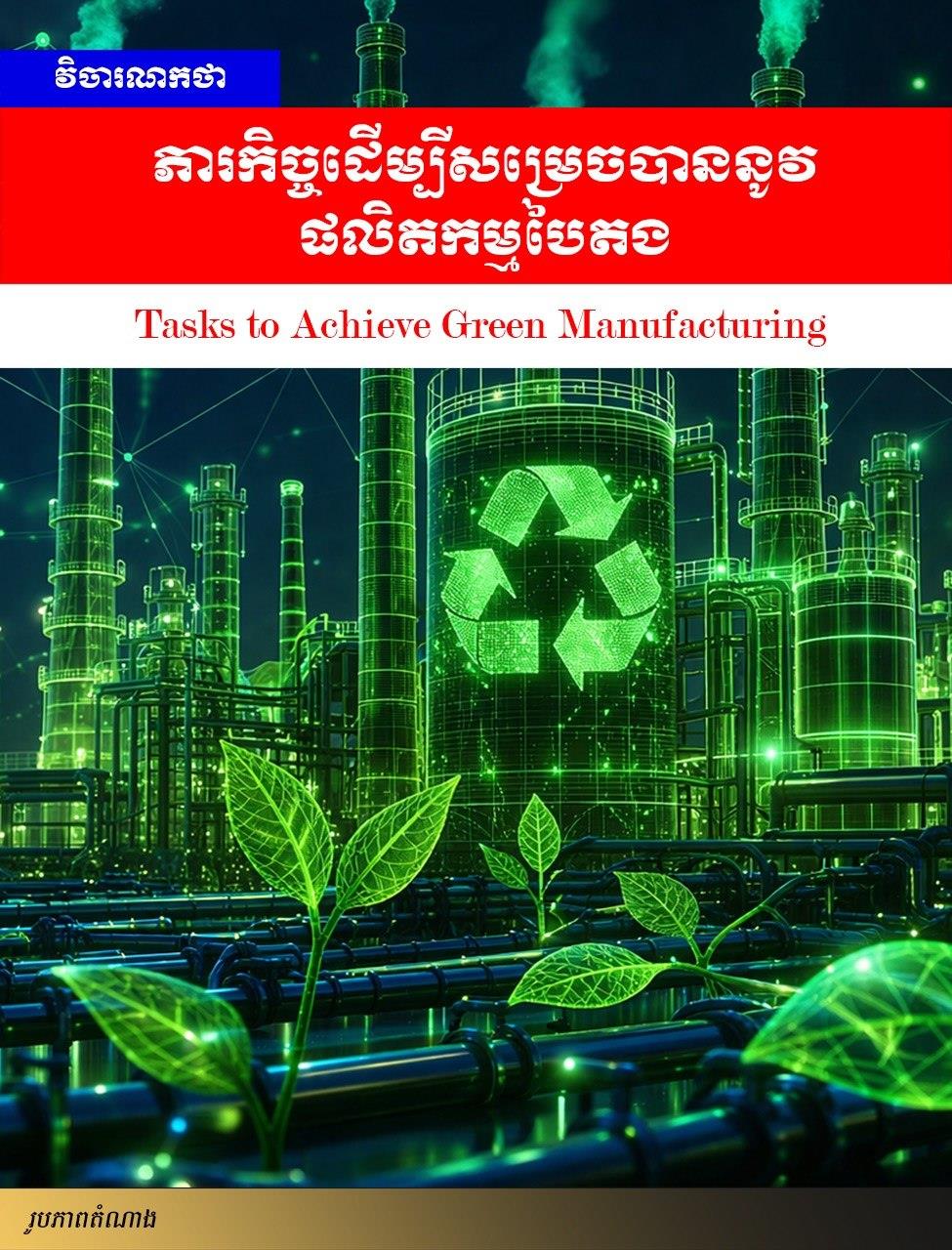
(Phnom Penh): Achieving green manufacturing requires a combination of strategic planning, technological innovation, and responsible management. As industries seek to reduce their environmental impact, several key tasks must be carried out to ensure sustainable production practices.
First, companies need to improve energy efficiency. This involves upgrading machinery, optimising production processes, and switching to renewable energy sources such as solar or wind power.
By reducing energy consumption, manufacturers can lower both operational costs and greenhouse gas emissions.
Second, waste reduction is essential. Industries should adopt practices such as recycling, reusing materials, and minimising excess production. Implementing efficient waste management systems helps prevent pollution and conserve valuable resources. In addition, reducing the use of harmful chemicals can further protect both the environment and human health.
Another important task is sustainable product design. Manufacturers should focus on creating products that are durable, energy-efficient, and recyclable. Designing with the product life cycle in mind, from raw materials to disposal, ensures that environmental impact is minimised at every stage.
Furthermore, companies must train employees and build awareness about environmental responsibility. Workers play a crucial role in implementing green practices, so providing education and clear guidelines can improve overall efficiency and compliance.
Finally, governments and organisations should support green manufacturing through policies, regulations, and incentives. Collaboration between the public and private sectors can accelerate the adoption of sustainable technologies and practices.
In conclusion, achieving green manufacturing requires coordinated efforts in energy use, waste management, product design, education, and policy support. By focusing on these tasks, industries can move toward a more sustainable and environmentally friendly future.
=FRESH NEWS