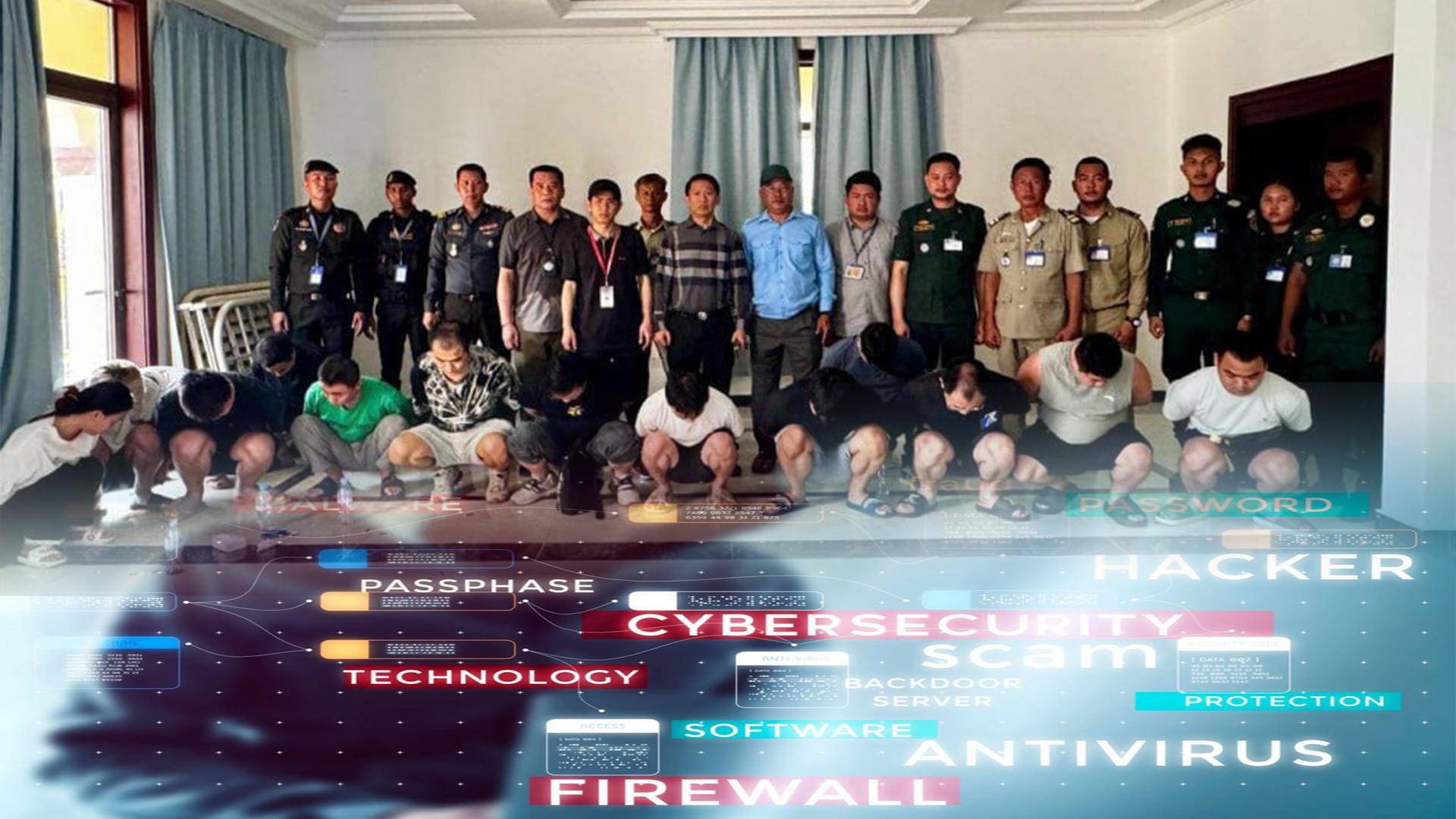
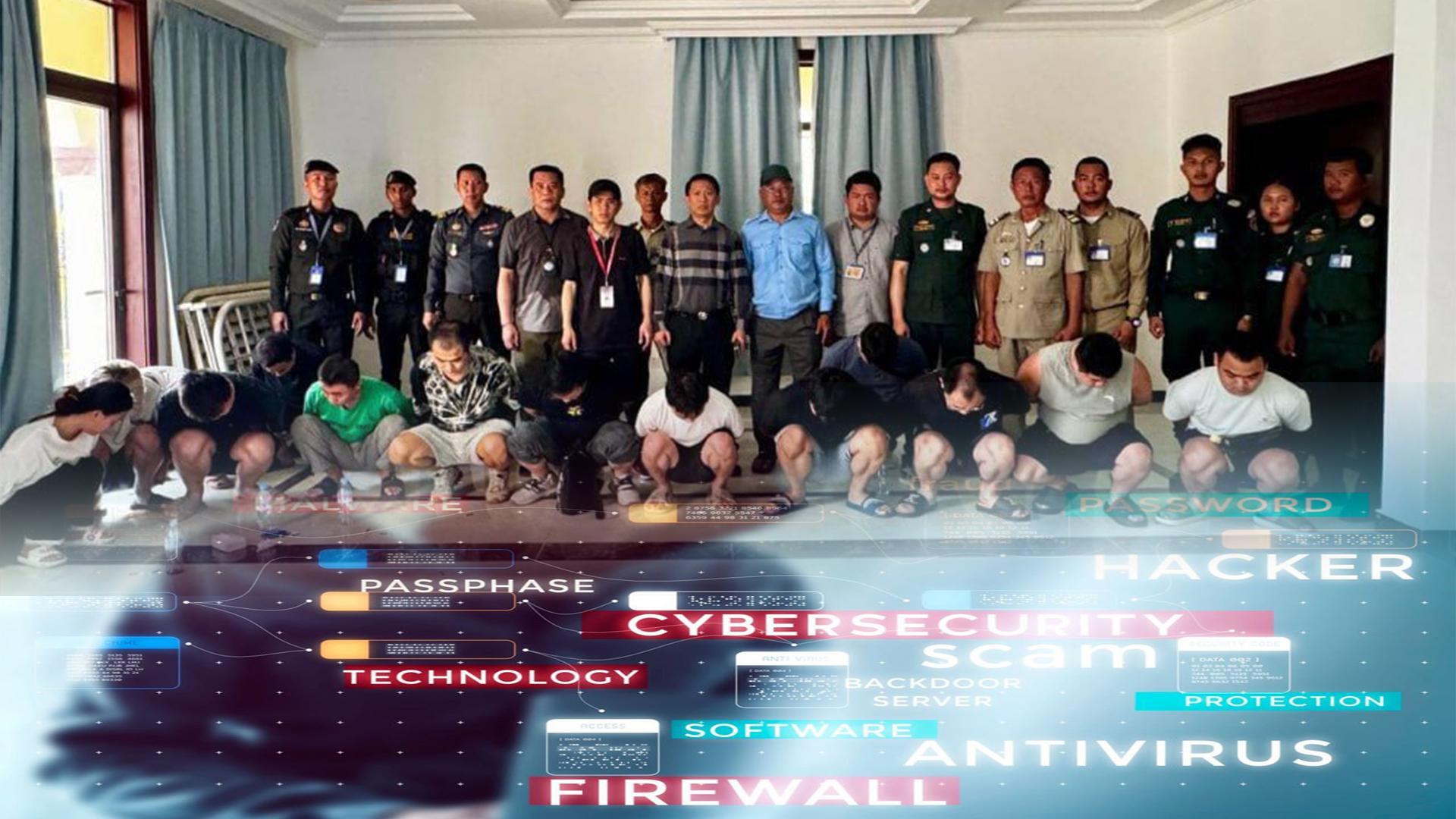
(Phnom Penh) — In recent years, the term “Online Scam” has come to symbolize a major shift in global crime, moving from the physical world into the digital space. In the past, major global crimes were often associated with drug trafficking, human trafficking, and illegal arms trade. Today, cybercrime and online scams are rapidly becoming among the largest and most dangerous criminal industries in the world.
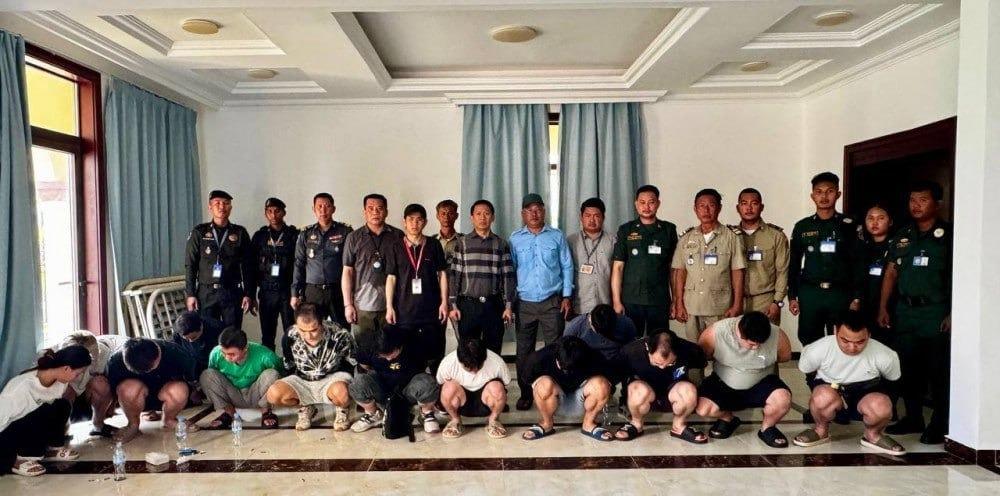
In this context, Cambodia has launched a nationwide crackdown on online scams, which has evolved into a major operation aimed at combating cybercrime and transnational criminal networks.
Online Scam: One of the World’s Largest Economic Crimes
According to international reports, global financial losses from online scams and cyber fraud in 2025 were estimated at around $442 billion worldwide. This figure is comparable to — or even larger than — revenues from human trafficking and close to those generated by the global drug trade.
This shows that the world is entering the era of cybercrime, where criminals no longer need guns or drugs to make money. Instead, crimes can be committed using computers, smartphones, and the internet.
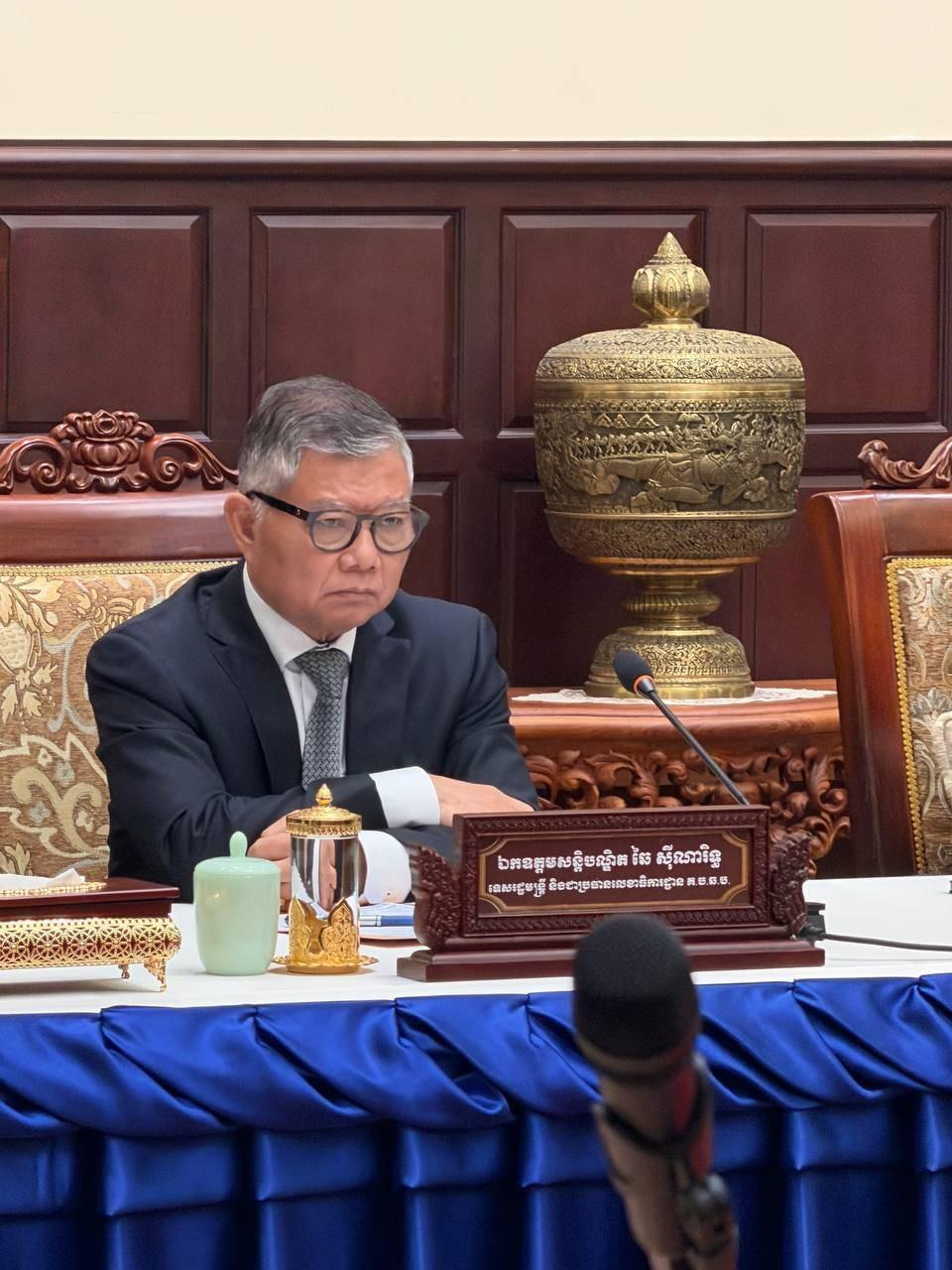
Cambodia’s Deputy Prime Minister and Minister of Justice, Keut Rith, recently stated that when comparing revenues from major global crimes, drug trafficking generates approximately $300 to $500 billion per year, human trafficking around $340 billion, and online scam operations approximately $442 billion per year.
Online scam is a borderless crime. Criminals can operate in one country, scam victims in another country, and transfer money to a third country. For this reason, online scam is one of the most difficult transnational crimes to combat.
Why Online Scam Has Become a Major Issue for Cambodia
The spread of online scams has had serious impacts on national security, the economy, tourism, investment, and Cambodia’s international reputation.
During a joint press conference on April 3, Deputy Prime Minister Keut Rith and Senior Minister Chai Sinarith emphasized that online scam activities have gone beyond being merely a law enforcement issue. They now affect public order, economic development, tourism, investment, and the country’s reputation and national dignity on the international stage.
In the era of the global economy, national image and security are key factors for tourism and foreign investment. A country associated with crime or insecurity can discourage tourists and investors.
In short, online scam is no longer just a technological crime. It has become a national security, economic, and national reputation issue that can affect the country’s long-term development.
Online Scam Is Organized Crime, Not Small Individual Fraud
Investigations and law enforcement operations have shown that online scam is not simply small-scale phone fraud or individual scams. Instead, it is organized crime with structured operations, similar to criminal organizations.
Typically, online scam networks include several components:
1. Group leaders or organizers
2. Call center operators or online operators
3. Technology teams that create fake websites, accounts, and digital tools
4. Money laundering networks
5. Fake bank accounts known as “money mules”
6. Transportation and relocation networks
7. Use of fake identities and stolen personal information
This structure shows that online scam is organized crime, not individual crime. Therefore, fighting online scams is not simply about arresting individuals but about dismantling organized criminal networks with financial, technological, and logistical support systems.
Cambodia’s Nationwide Crackdown on Online Scam
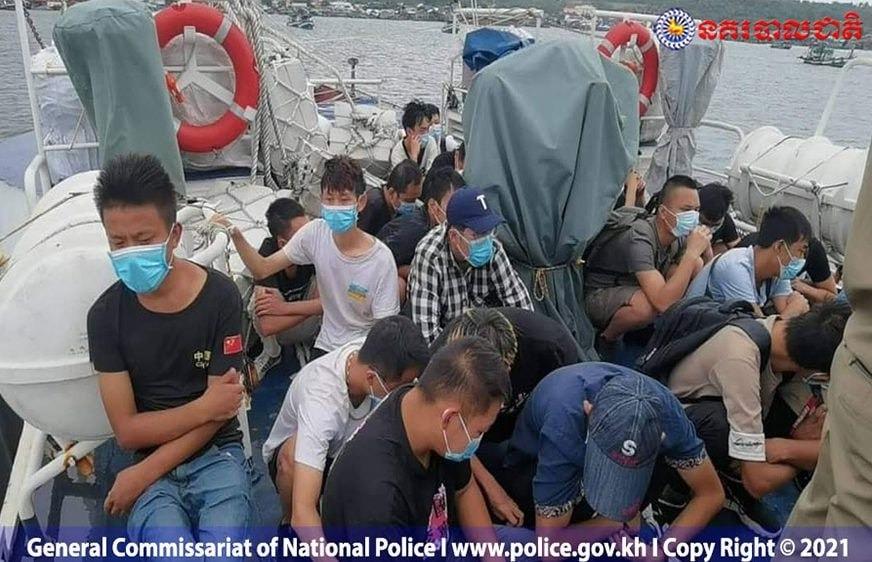
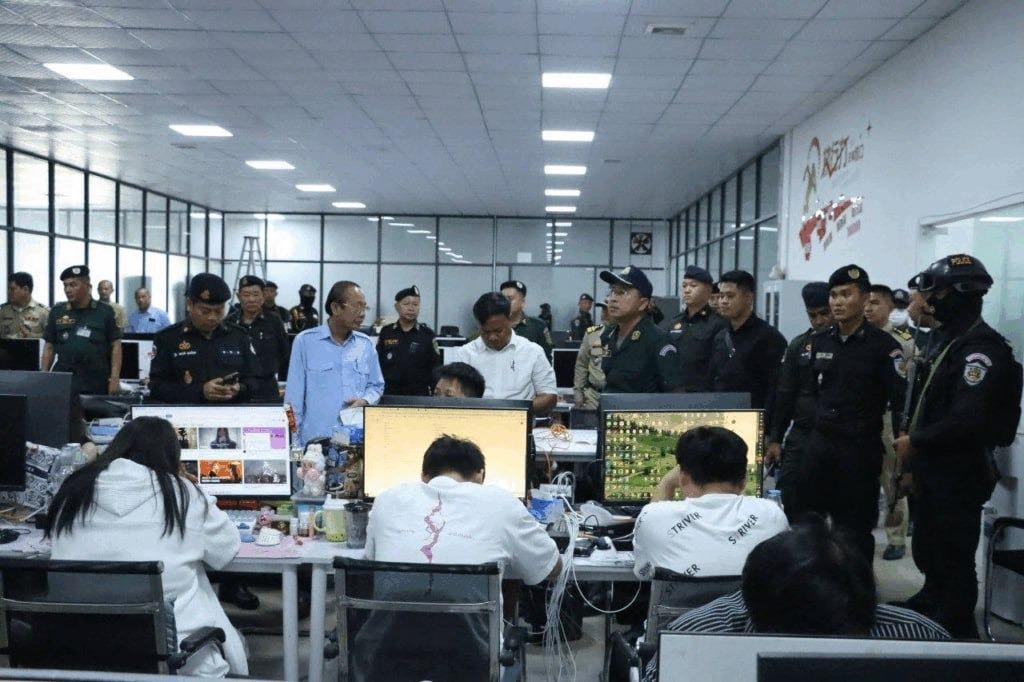
Senior Minister Chai Sinarith stated that Cambodia has cracked down on approximately 250 online scam cases, equivalent to 250 locations, including 92 casino-related locations.
During the operations:
• More than 800 people were detained
• Nearly 700 individuals are under arrest warrants
• More than 11,000 foreign nationals linked to online scams were deported
• Over 10,000 suspicious locations were inspected nationwide
These figures show that Cambodia’s anti-scam operations are not small-scale operations, but rather a nationwide campaign aimed at dismantling cybercrime networks operating across the country and across borders.
Strategy: Not Just Arresting People, but Cutting Financial Networks
Cambodia’s strategy against online scam is not limited to arresting criminals. The government has implemented multiple measures, including:
• Asset confiscation
• Closure of scam operation locations
• Deportation of foreign suspects
• Immigration control and inspections
• The drafting and implementation of the Law on Combating Online Scam
These measures show that the fight against online scam is a multi-sector battle, involving law enforcement, financial investigations, immigration control, and national security agencies.
Prime Minister Hun Manet has clearly stated that Cambodia will continue to eliminate online scam activities and that Cambodia is not a safe haven for cybercriminals.
In this context, Cambodia’s strategy is not simply about arresting criminals, but about dismantling networks, shutting down operations, and cutting financial flows, which is the most effective approach in fighting organized crime.
International experience shows that if authorities arrest criminals but fail to cut financial networks, the crime will return. Therefore, asset confiscation and financial tracking are among the most effective strategies in combating online scams.
Cambodia and the Global Fight Against Cybercrime
Cambodia is not alone in fighting online scams. Many countries such as Singapore, China, Thailand, Vietnam, the European Union, and the United States are also aggressively combating cybercrime and online scams.
These countries have implemented similar strategies:
1. Arresting criminals
2. Shutting down scam call centers
3. Confiscating criminal assets
4. Passing cybercrime laws
5. International cooperation
6. Financial tracking and anti-money laundering operations
This shows that Cambodia’s crackdown on online scams is part of the global fight against cybercrime, not an isolated effort.
Online scam is a transnational crime, and it requires international cooperation to effectively combat it.
Conclusion: The War Against Online Scam Is a Security and Economic War
Online scam is not a small crime or simple fraud. It is organized transnational crime with financial networks, technological infrastructure, and international operations.
Global losses from online scam amount to hundreds of billions of dollars each year, making cybercrime one of the largest criminal industries in the world — comparable to drug trafficking and human trafficking.
For Cambodia, online scam is not only a legal issue but also:
• A national security issue
• An economic issue
• A tourism issue
• An investment issue
• A national reputation issue
Cambodia’s recent crackdown — involving arrests, closure of locations, asset confiscation, deportation of foreign criminals, and new legislation — shows that this is not a short-term operation but a long-term national strategy.
In the digital economy era, countries that fail to control cybercrime risk damaging their economy and international reputation. Therefore, the war against online scam is not just a police operation, but a national security, economic, and national reputation battle.
In other words, Cambodia’s crackdown on online scams is not only about arresting criminals — it is about protecting the country’s economy, security, and international reputation.