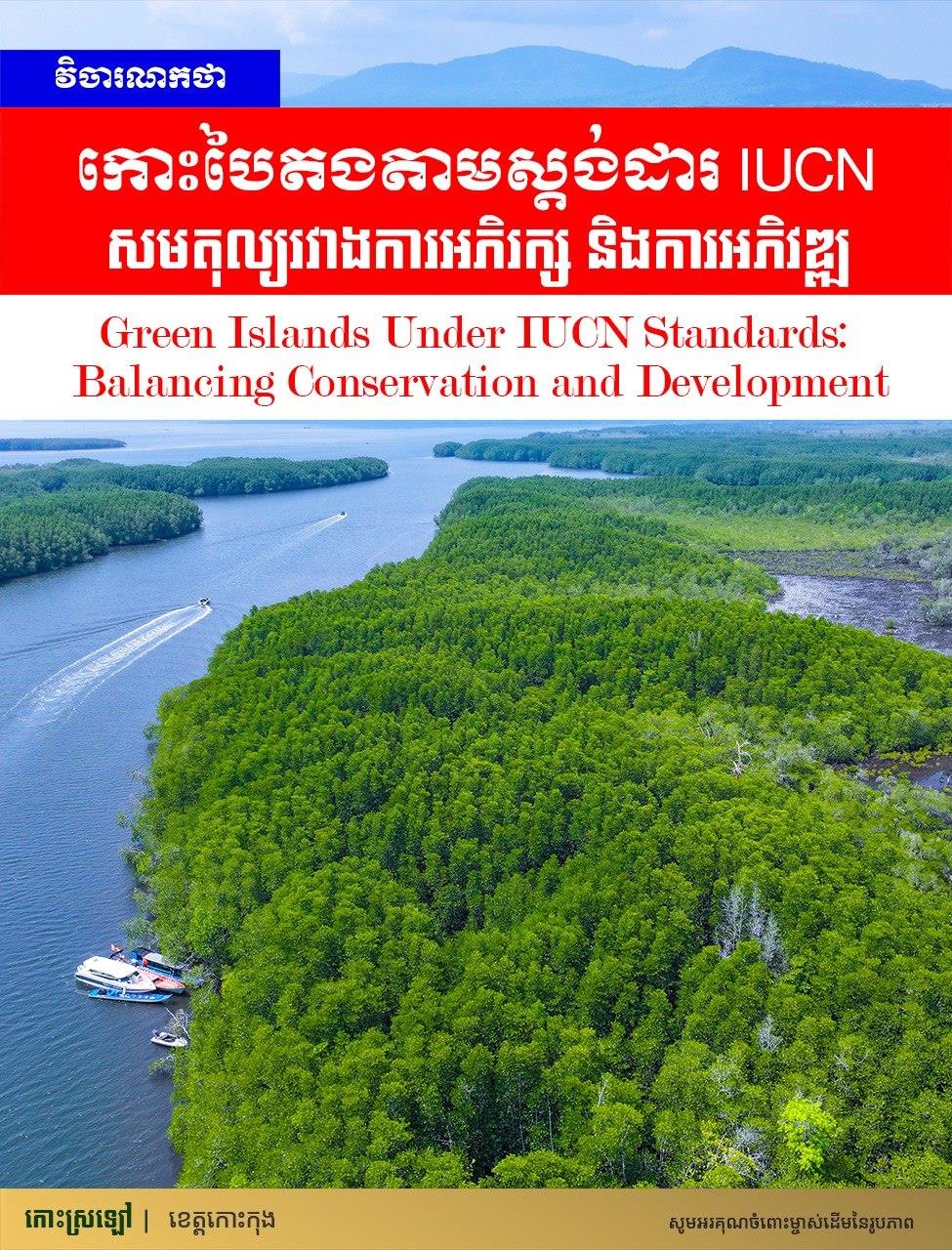
(Phnom Penh): Transforming an island into a "Green Island" according to the standards of the International Union for Conservation of Nature (IUCN) involves implementing sustainable management measures to ensure a balance between economic growth, natural resource protection, and the well-being of local communities.
1- Biodiversity and Ecosystem Protection At the core of IUCN standards is the preservation of vital ecosystems, including forests, wetlands, mangroves, and coral reefs.
Monitoring rare and endangered flora and fauna is strictly conducted using the IUCN Red List to develop effective protection plans and strengthen natural resilience against climate change.
2- Sustainable Resource and Energy Management Green Islands must implement clean energy strategies, such as solar and wind power, to reduce toxic emissions.
Simultaneously, water resource management is executed through wastewater treatment technologies and water conservation practices to ensure long-term water security on the island.
3- Pollution Mitigation and Community Engagement Community participation is a fundamental pillar. Citizens must be involved in conservation efforts and directly benefit from the green economy, such as through eco-tourism, sustainable fisheries, and green agriculture.
Finally, effective governance and monitoring are essential; clear policies, law enforcement, and continuous environmental audits ensure that conservation goals are met efficiently.
Conclusion
Ultimately, an IUCN-standard Green Island serves as a model for "Smart Development," where nature, people, and the economy thrive together.
Through clear policies and regular monitoring, we can guarantee a precious natural legacy for generations to come.
=FRESH NEWS