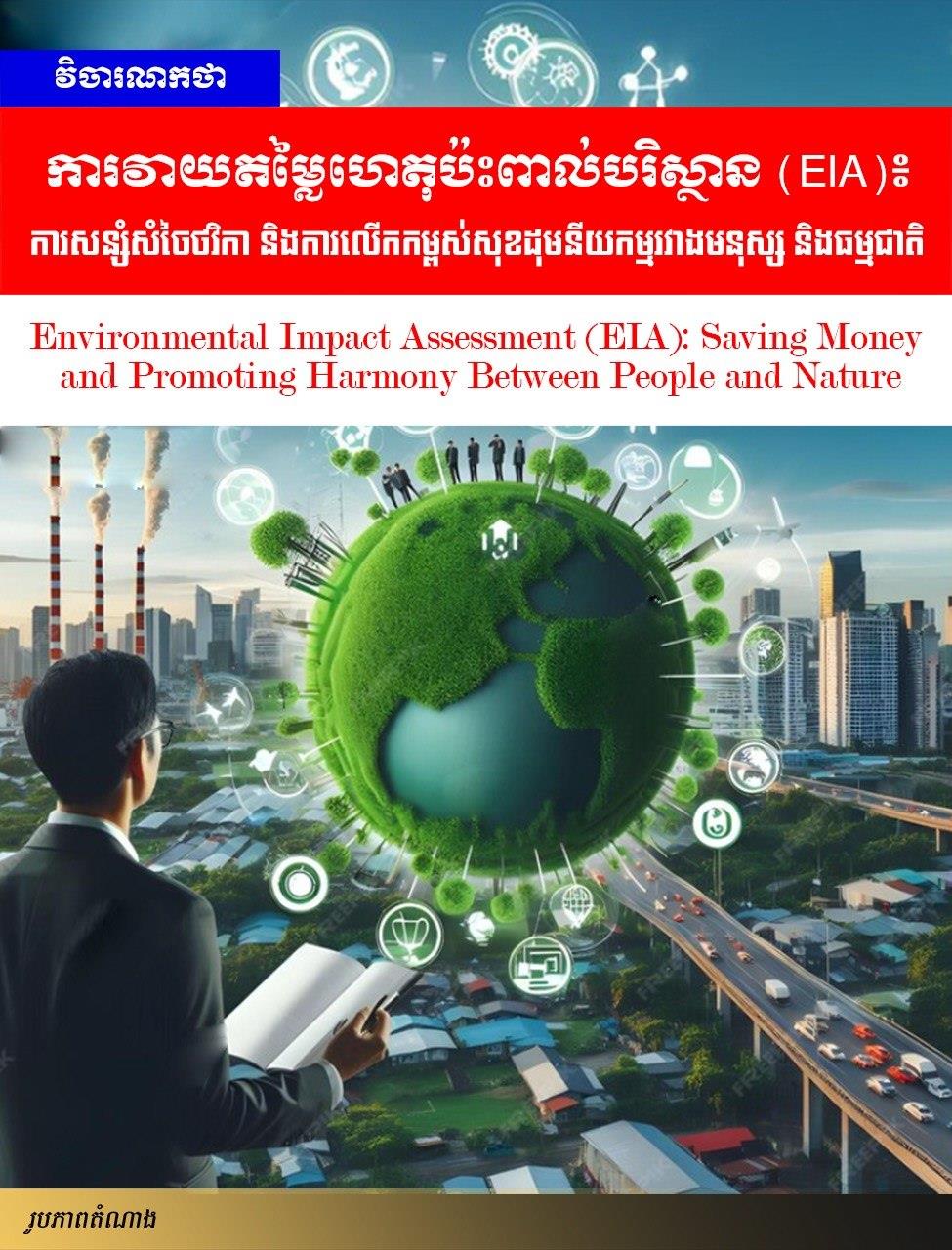
(Phnom Penh): Environmental Impact Assessment (EIA) is an important tool that helps ensure development projects are planned in a way that protects the environment while also benefiting society. Beyond reducing environmental damage, EIA can save money and promote harmony between people and nature.
One of the main ways EIA saves money is by preventing environmental problems before they occur. If industrial or infrastructure projects are developed without proper assessment, they can lead to pollution, health issues, and damage to natural resources.
Fixing these problems later often requires significant financial costs. EIA helps identify risks early, allowing planners to design projects more carefully and avoid expensive mistakes.
EIA also encourages responsible use of natural resources. By understanding how a project may affect land, water, forests, and wildlife, developers can take steps to reduce harm. This ensures that natural resources are preserved for future generations, while still supporting economic activities in the present.
In addition, EIA promotes harmony between people and nature by involving local communities in decision-making. Public participation allows people to express their concerns, share local knowledge, and help shape projects that affect their lives. This process builds trust and ensures that development respects both human needs and environmental protection.
Furthermore, EIA supports sustainable solutions that balance growth with conservation. Projects may include green spaces, pollution control systems, and environmentally friendly technologies. These measures create healthier living environments, improve the quality of life, and maintain the natural beauty of surrounding areas.
In conclusion, EIA is more than a regulatory requirement; it is a pathway to sustainable development. By saving money, protecting natural resources, and encouraging cooperation between communities and developers, EIA helps create a balanced relationship where people and nature can coexist in harmony.
=FRESH NEWS